

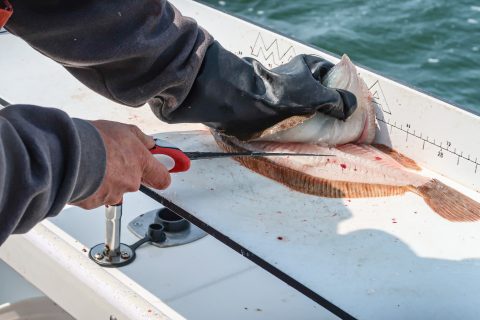
Fillet knives are like fishing rods. When choosing a fillet knife, there’s no one model that’s perfect for everything. In general, I prefer knives that are made of high-carbon steel over stainless steel. High-carbon steel is more prone to rusting than stainless steel, but it’s easier to sharpen and maintain a smooth edge.
I keep a selection of different fillet knives for the many types of fish I cut and clean over the course of a season.
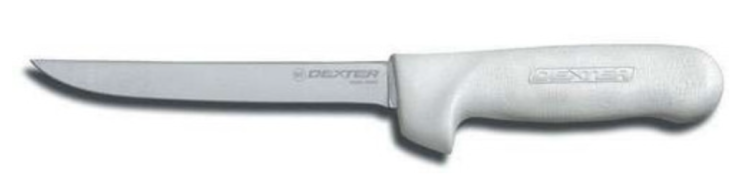
Dexter Russell SofGrip 6-inch Narrow Boning Knife
This is my go-to knife for smaller fish like sea bass, fluke, scup, and tautog. I am a longtime fan of Dexter knives, which are made locally, and their prices can’t be beat. They sharpen easily and hold a good edge.

PENN 8-inch Standard Flex Fillet Knife
For filleting fish that are generally mid-size, such as striped bass or a cocktail bluefish, an 8- to 9-inch blade is best suited. A thin blade with slight flex allows for a smooth, even cut, and a comfortable, ergonomic grip helps to keep a steady hand.

AFTCO 10-inch Stiff Blade Fillet Knife
For larger fish such as bluefish, cod, and mahi, a longer 10-inch blade is in order. This knife’s blade allows for a steady, even cut, and the extra length comes in handy when skinning the fillets.

Bubba Blade 12-inch Flex Fillet Knife
When it comes time to dice up a big swordfish, shark or tuna, a regular fillet knife isn’t going to cut it. For these applications, you’ll want a longer, thicker blade that doesn’t have too much flex to it.

Mercer Sport 8-inch Tiger Edge Slicer Fillet Knife
Generally, I’m not a big fan of serrated knives, other than for cutting bread or tomatoes. But, when used on large fish with heavy scales like striped bass or black drum, a serrated fillet knife shines. Thick scales make starting a fillet difficult, and they also dull your knife quickly. When filleting a striper, I’ll use a serrated knife to begin the fillet and cut through the skin. I then finish the cut with my 9-inch fillet knife.
Because serrated knives are difficult to sharpen, this is one place where I favor choosing a fillet knife with stainless steel construction over high-carbon steel.
Related Content
Tips to Clean, Sharpen and Maintain Your Fillet Knife
The pictured knife by Dexter is also part of their “Sani-safe” line which is designed to not allow any food or other particles to get between the blade and the handle thereby making for a more hygienic knife which is easier to clean.
I have the 9 inch stiff blade Sani-Safe by Dexter to allow for easier penetration of tough skin as well as a useful length for fluke and tog, by favorite fish.
Carbon steel is harder than stainless not softer.