
Long Island and NYC Fishing Report
You know we’re in a deep freeze when the NYC Ferry services shut down due to excessive chunks of ice in the East and Hudson rivers and New York Harbor. As we head into February, anglers on Long Island and in the greater NYC area are eager to wet a line and with even colder weather ahead, ice fishing will be the only option.
It’s not just cold outside, it’s frigid. Frigid enough to put ice on some of Long Island’s largest bay systems. Great South Bay is frozen over and Jamaica Bay is on its way, so the ponds that harbor largemouth bass, perch, crappie and pickerel should be plenty fishable this weekend.
View this post on Instagram
View this post on Instagram
Before the freeze, the only option for active anglers was to book a beat on the Connetquot River or visit one of the several other trout-stocked streams on the island. Now, between the chunks of ice and frozen overhangs of skim ice, even the flowing waters of those rivers will be challenging to fish.
If there were ever a time to gather a group of friends with ice fishing traps and jigging rods (and of course, safety gear), it’s now. Tag us in your ice fishing photos on Instagram @onthewatermagazine for a chance to be featured in an upcoming report!
Bundle up and be safe out there.
UPDATE: 1/22/2026
According to OTW’s Nick Cancelliere up on the North Shore, Long Island’s lakes and ponds remain free of ice for the time being, which has allowed cold-weather freshwater anglers to continue fishing for bass, pickerel, and panfish. White perch are also a popular option as they populate many of the brackish tidal creeks and streams on the South Shore and, to a lesser degree, the North Shore. Some of those rivers and streams are also stocked with trout, and for anglers like Sean Conway (@long_island_fishing_guy) who keep a fly rod rigged and ready, they’re the primary target this time of year—at least until the ponds lock up with fishable ice.
View this post on Instagram
With a winter storm on the way and temperatures well-below freezing in the forecast until early February, Long Island fishermen should have their first legitimate ice fishing opportunities of the season very soon. Allow some time for the ice to thicken before checking your local spots this week, and as a general rule of thumb, stick to smaller, shallower ponds early on. The same species we’ve had the luxury of casting to for the past few weeks—namely bass, pickerel, and panfish—will soon be available through the ice. Ready your traps and jigging rods, and check in with your local shop for ice fishing bait.
Stay warm and stay safe.
UPDATE: 1/15/2026
Although our ponds remained thawed this week, Long Island’s trout streams continued to prove the most productive option for freshwater anglers and, more specifically, fly fishermen. The Connetquot River is giving up big stocker rainbows, while smaller rivers like the Carmans and Carlls are yielding some decent brown trout. Double-check the regulations before you go, as certain sections of the Carmans River are subject to different regulations, which you can review here.
View this post on Instagram
Trout fishing is certainly the most reliable option, but for anglers who prefer to employ ultralight spinning tackle, freshwater lakes and ponds in Nassau and Suffolk are loaded with chain pickerel, yellow perch, and some quality largemouth bass. The best way to target those bass and pickerel while there’s open water is with shallow-diving suspending jerkbaits, spoons, float-and-fly rigs, and small soft plastics like Ned rigs or micro jigs. Ponds that are choked with weeds during the summer months are far more accessible this time of year, and with a pair of waders or a kayak, they can fish incredibly well under the right conditions. Walleye, crappie, and bass will also chew at night for those willing to brave the elements and deal with some ice in their guides. Walleye in particular tend to feed in the shallows after dark, making them a great target for fly and spin fishermen. Jerkbaits, white paddletails, and curly-tail grubs are productive cold-water walleye baits.
All that said, skim ice will likely form on the ponds again over the next several days. Overnight temperatures will remain below freezing, so keep a close eye on your neighborhood honey hole. There may be safe ice in some areas by early next week, but use extreme caution when testing the ice’s thickness, and do it with a pair of ice picks and a friend for good measure.
UPDATE: 1/8/2026
After a week of ice covering most ponds on the island—which had many anglers hopeful for early January ice fishing—the recent warm-up has melted away much of it, and anglers again have access to open water. Until Thursday of next week the island’s lake and ponds should remain free of ice, making largemouth bass and the big chain pickerel Long Island is known for fair game for wading and kayaking fishermen. Suspending jerkbaits, small chatterbaits, micro plastics, and spoons and inline spinners should be the first lures to go in your ice-out tackle box.
With many tidal rivers also free of skim ice, white perch will be a popular choice over the next week. Grab an ultralight rod and reel, load it up with 4-pound-test mono or fluoro mainline, and cast hair jigs, curly-tail grubs, spoons, and sub-2-inch soft plastics in slow-moving brackish creeks. These fun little panfish are relatives of striped bass school heavily and pack a powerful punch for their size, which can make for some exciting and fast-paced action on ultralight tackle. Rivers like the Connetquot and Nissequogue will continue to fish well for trout as long as temps remain mild enough to keep the edges from icing over.
Enjoy the open water while it lasts, because by the end of next week, overnight temps begin dipping back into the 20s and teens, and ice fishing will once again be feasible. When the ponds start to lock up, look to smaller water bodies first; if sub-freezing temps persist into late January, deeper lakes like Lake Ronkonkoma and Fort Pond should have more than enough ice to safely target bass, perch, and even walleye.
Hopefully, this time around, the cold snap lasts longer than a week!
1/1/2026
Paul McCain at River Bay Outfitters in Baldwin reports: “There aren’t too many options on Long Island at the moment. The tidal sections of the Nissequogue and Carmans rivers have stocked trout. That said, white perch are slowly funneling in too, but it’s been so cold that it’s tough to have a productive session. The most productive fishing on the island is, by far, the Connetquot River. The go-to choices are streamers and nymphs fished super slowly. Other options are the Farmington and Delaware rivers, and be sure to pack heavy, small nymphs!”
Andrew Bernat (@tactical_bassin26) reports: “As winter settles across Long Island, freshwater anglers willing to brave the frigid air are being rewarded with some surprisingly consistent action. While ice coverage remains thin and dependent on overnight temperatures, open water opportunities are still very much in play across lakes and ponds. Cold water has pushed largemouth bass into their true winter patterns. Fish are holding deep—often relating to drop-offs, old creek beds, and submerged structures. The bite is subtle but steady for finesse anglers. Ned rigs, small jigs, blade baits, and suspending jerkbaits are the move. Slow is the name of the game; long pauses and bottom contact are a key factor to achieving a bite. Winter freshwater fishing on Long Island isn’t about numbers, it’s about high quality bites, and dialing in techniques you likely aren’t used to employing. Dress extra warm, fish slow, and take advantage of the opportunity. The anglers who are putting in the time are still finding success despite the cold. So if you have cabin fever get out there and give it a shot.”
Joe R. (@nothingeverchanging) reports: “I try to treat winter as a learning season. It’s typically the time of year I discover new spots. Driven by desperation as the typical areas stop producing, we are forced out of our comfort zones. Even known winter staples are sometimes out of the question due to ice, construction, or even just a sheer lack of fish in a given year. The scarcity of fish and low expectations allows me to spend time exploring and casting around new areas where maybe I wouldn’t have even looked if I had better options. More times than not, the winter grind lands me in new locations where I discover populations of overwintering fish that completely up-end what I thought I knew about their patterns and movements during the “off season”. This info often carries over into early season, allowing me to anticipate their paths and hopefully intercept some of the earliest spring movers once old man winter inevitably loosens his grip. It’s no secret to anybody that this time of year, looking for holdover stripers should be focused on the extreme back bays or freshwater/tidal rivers. I spend most of my winter in the freshwater rivers that flow into large bay areas—further upstream than most would probably expect. And slow is the name of the game… Just as Mother Nature has come to a slow crawl during these months, so should your retrieve. These holdover bass are cold and lethargic, their metabolisms are at an all-time low, and they don’t need to eat much. Although they WILL feed in icy waters, they’re not about to expend precious energy chasing down your lure. Slow it down, choose lures that have subtle action at slow speeds like SP Minnows, Mag Darters, and plastics with large paddletails or curly tails. Retrieve it as slow as you can, then slow it down a little more.”

Bill Falco (@fishlongisland) at Chasing Tails Bait and Tackle in Oakdale reports: “The ice is already melted away and anglers are taking advantage. The local lakes are getting active with largemouth bass, pickerel, perch, trout, smallies and walleye. Plenty of species to target, just downsize your lure and move it slowly. Slow and low will pull you some solid wintertime action. I like small swimbaits and jigs, and of course some small baitfish imitation flies. Connetquot is loaded with bulldog brookies and hearty rainbows, and they’re eating all day. Bring a little arsenal of nymphs and small streamers to ensure a great outing.”
Derek Monfort (@derek_sucks_at_fishing) reports: “I’ve been going out when the weather permits, with not much to show for it. I’ve run into a couple of white perch when the winds died down, and a couple of small holdovers. Everything has been caught on 1/8-ounce jigs or jerkbaits.”
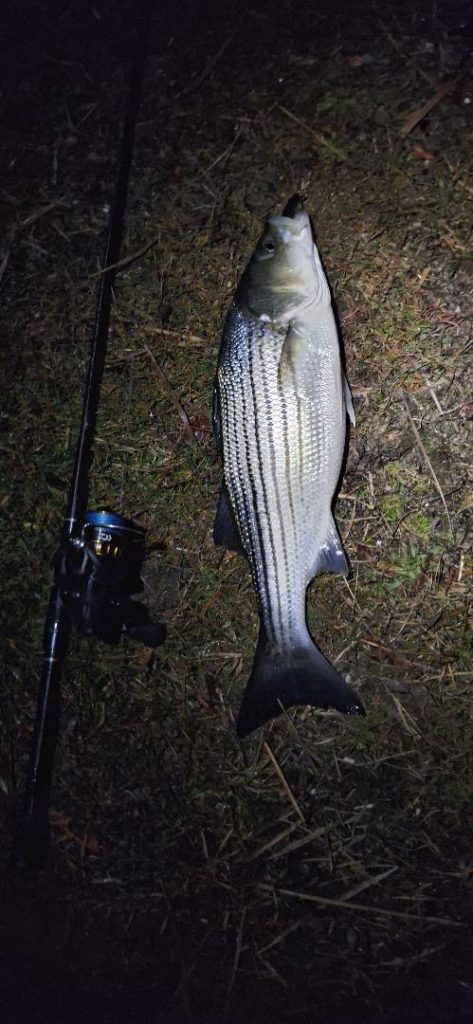
Jeff Lomonaco at White Water Outfitters in Hampton Bays reports: “Guys are catching white perch in the tidal creeks; that said, they are fishing WAY up in the back. Little 2-inch curly-tail grubs on 1/16-ounce jigheads, trout magnets, and ultralight backwater tackle is the gear of choice. Color wise, white, chartreuse, and gold are killer. Some guys use nightcrawlers sometimes. Most fish are a pound to a pound and a half.”
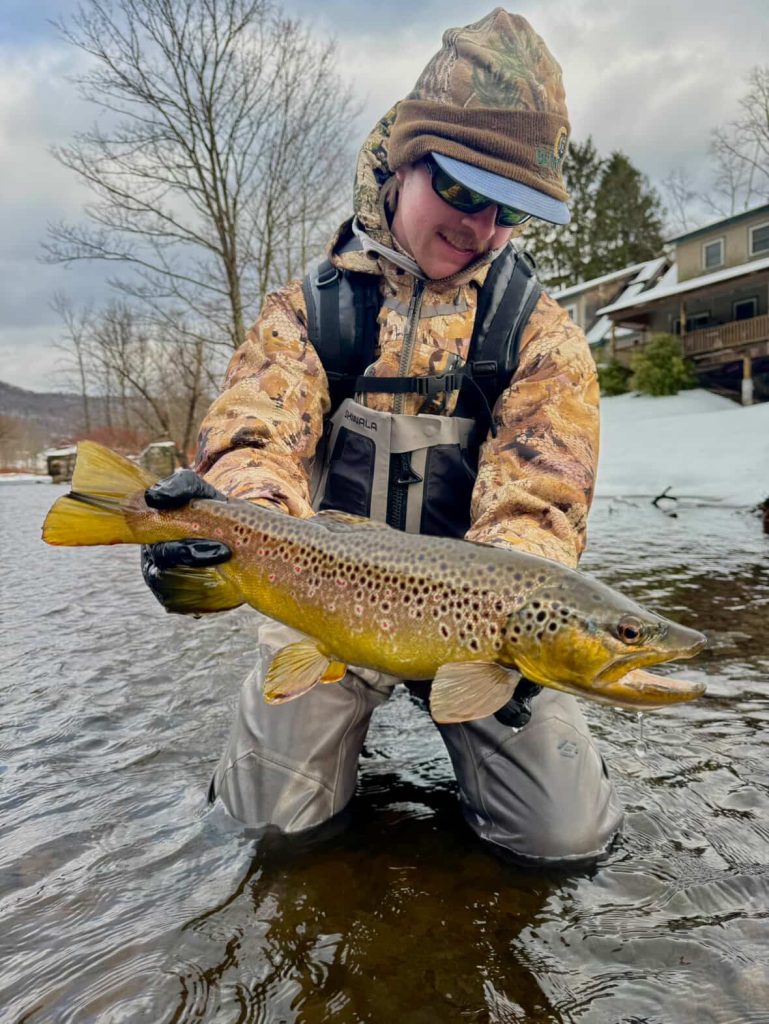
Ryan Thomas (@rmtfishing) hit the upper Delaware River and reported: “Temps on the Delaware watershed are cold right now! We set out for some winter fishing on Monday, the warmest day of the week and got into them pretty good. A few fish from 18- to 22-inches were enough to put a smile on everyone’s face. During winter months, the majority of fish are caught with low and slow presentations, so we fish with eggs and midges on light tippet bobber rigs in deep buckets where fish congregate. It was cold out there, but good to see a few willing fish!”
-
Want to get in on the bite? Find an OTW-approved Charter Fishing Captain around Long Island and NYC!
The Author’s Experience
Is it just me, or is it colder than usual? We’ve had more snow already on the island and in the city than we did last year! Fisheries science indicates that cold years with heavy snow translates to more runoff in the spring, contributing to a stronger striper spawn. Let’s hope for a good spawn in 2026.
I can’t say I’ve been out fishing, I’ve still been chipping away at fly tying. Large hollow flies and Monster 8/0 NYAP poppers are on the menu. As I prepare to pursue tuna on the fly next season, I’ll rest easy knowing that I have more flies than I know what to do with.
While fly tying is fun, I understand that not everyone fly fishes. But it’s also a great time to make some bucktail jigs for next season. Grab yourself a large table vise, some unpainted “smiling bill” lead heads, bucktail, kevlar thread, UV Resin, and purple light. Simply disperse small clumps of bucktail hair all around the shank, just behind the head of the jig, and wrap tightly for a flared out finish. Once you’re done, apply a generous amount of UV resin and hit it with a UV-curing flashlight. While UV resin cures fast, it’s always best to leave the bucktail out in the sun for a few hours in order to really harden the glue. Once you dial in the basic bucktail tying skills, you can put your own twist on it by adding long hackles, Krystal Flash, or different belly tones and upper wing tones. I recommend making a handful of sizes ranging from 1/4 to 3 ounces.
One thing to keep in mind is that fuller bucktail jigs with more hair will sink slower than jigs with less hair, even if the jigheads are the same weight. If you’re looking to dredge bottom in an inlet, tie with less hair. If you prefer a slow-sinking bucktail that will glide over bottom strucutre, load it up with a bunch of hair.
Aside from tying, I’ll also be looking to improve my knot-tying skills. If you’re looking to learn a super strong line-to-line knot, the FG knot with a Rizzuto finish is where it’s at. This knot is no joke; it’s a great tuna knot but also doubles as an indestructible surf fishing knot or bottom fishing knot. Not to mention, it looks super cool when it’s finished.
Long Island and NYC Fishing Forecast
I’d like to say our prime fishing season is right around the corner, but we have a few months before our striped friends migrate back into our local waters. That said, there are still plenty of options on the Island to stay bent. Certain sharpies are chasing holdover stripers and white perch in salt ponds and brackish rivers. These fish make for an entertaining fight on light gear with 8- to 10-pound braid and 15- to 20-pound leader at most. The goal is to fish small and slow. Micro plastics and small jerkbaits and swimming plugs always do the trick.
For pickerel, jerkbaits and small spinners should get them fired up. However, the weather has been brutally cold lately, so make sure your local lake isn’t frozen before trekking the rods down there. Hopefully we get a few warm days to prevent all the ponds from icing over.
If cold temperatures do persist across the Island, we might even get a shot at ice fishing! Gauging safe ice can be tricky. Check for 4 or more inches of ice; telltale signs of sketchy ice include slush and cracks. Be sure to avoid any spring-fed areas or areas with moving water/current. As it pertains to safety, having ice safety picks will ensure you can self rescue should the ice break. When it comes to gear, a hand auger and Ugly Stik Ice Series spinning combo paired with 6-pound ice fishing braid or 6-pound fluoro will get the job done. Standard 4- and 8-carrier braids can absorb water and freeze on your spool. For lures, I recommend micro jigs tipped with a meal worm or micro plastics dipped in Pro-Cure scent. Berkley Atomic PowerBait Tubes are pre-scented and are also a great choice for panfish or bass. Whatever you choose, drop it down, and give it a super light jig once and a while.
We have 4 months before the spring striper and tautog seasons kick off in April. Whether you hit the salt or the sweet water, I hope you find success this winter. For a chance to be featured in a winter report, send me your photos on Instagram @jack.lariz. We’ll be providing brief weekly updates throughout the month before our next winter fishing report in early February!
Thanks for reading and Happy New Year!