
Each year since 1985, the NYSDEC has recorded a Young of Year (YOY) Striped Bass Abundance survey using equipment including a 500-foot haul seine net and electrofishing practices in the Hudson River. The study takes place between April and June when striped bass are heading upstream toward fresh water on their annual spawning migration. During this time, there should be more striped bass in the Hudson River than during any other time of the year, providing fisheries biologists with the most accurate judgements of striped bass abundance.
But, after another year of poor recruitment from the Chesapeake Bay stock of striped bass, anglers up and down the coast hoped for good news from the Hudson River YOY survey. Unfortunately, the most recent YOY abundance index for Hudson River striped bass recorded more low numbers. Based on the chart shown below, this is the lowest number of striped bass recorded per haul since 1985, when annual YOY surveys were first implemented for Hudson River stripers.
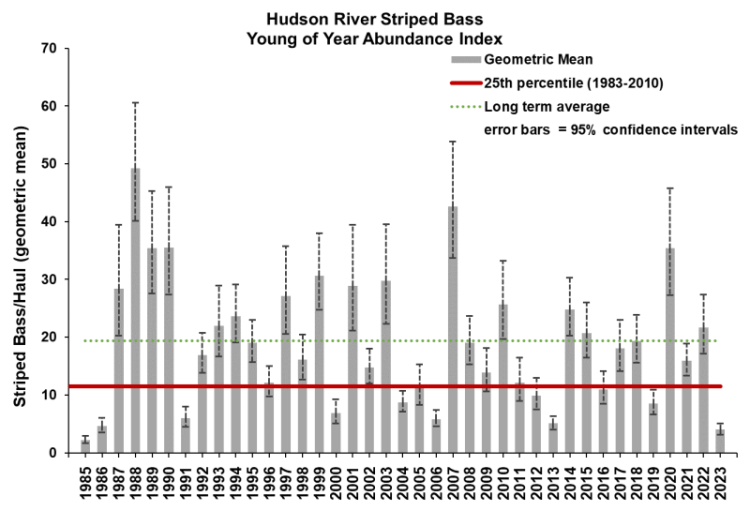
This year, the haul numbers of Hudson River stripers were considerably lower than the year prior, leaving anglers hopeful that a cold winter with lots of precipitation and snowmelt will provide ideal spring spawning conditions.
The Atlantic States Marine Fisheries Commission (ASMFC) is aiming to rebuild the coastal stock of striped bass by 2029, but to do so, further adjustments to striped bass fishing regulations are in order. Draft Addendum II of Amendment 7—which aims to address overfishing while providing solutions to rebuild—offers several potential courses of action to help achieve the rebuilding goal by 2029. Some of those courses of action consider reallocation of commercial striped bass quotas, adjustments to the existing recreational slot limit (28-31 inches) and implementing recreational seasons, among other management measures that will help to reduce release mortality.
Anglers looking to help Hudson River stripers on an individual level can:
- practice catch and release
- keep fish wet: avoid dragging striped bass over sand or dry land. If possible, keep the fish in the water while handling during hook removal.
- minimize time out of the water: when handling striped bass prior to revival and release, hold your breath and aim to get the fish back in the water in one breath.
- keep a log: if keeping a personal fishing log is not your thing, NYSDEC offers an online logbook where you can easily record data from your trips. They will even send you a physical waterproof logbook if preferred to e-logs.
- join the Striped Bass Cooperative Angler Program: New York anglers who fish for striped bass south of the George Washington Bridge are eligible to volunteer to this program, which provides valuable feedback to NYSDEC throughout the course of the season.
- speak up for striped bass: anglers can submit comments to the ASMFC during public comment periods about how they’d like to see the striped bass fishery managed.
Related Content
Chesapeake Striped Bass Reproduction Lowest in 10 Years

Stop allowing harvesting along the Hudson and all spawning rivers…
we all complain when there are no fish but won’t take the high road and do the right thing…
Take 2-3 years and fish stocked lakes or ponds for trout…
Until we take the initiative to stop catching spawning fish it won’t improve ..
ban commericial fishing for them, damn, do the right thing, and let recreational fisherman enjoy the land . but that would mean all the money hungry politicians would lose out stuffing their pockets !!!
The data collection process is prone to high error rate. The fish fry are. Usually seine netted in designated areas collected yearly for decades. The fries are then counted by hand and the results are inputted into a calculation model and applied as an estimate across the entire region. So if the hatching fry decide to settle in an area outside the designation area, then that population is omitted. This technique is used in the Chesapeake Bay also.
WE SHOULD PASS A LAW THAT YOU CAN ONLY USE BARBLESS RUBBER HOOKS . AND GET RID OF THE GILL NETTERS .