
Western Connecticut
By Captain Chris Elser – Fishing Guide, Elser Guide Service
As I reflect on the past several seasons, there are a few positive trends related to our fishery and a few sore spots I must highlight. The most obvious downward trend is the menhaden shortage we experienced last season in most areas of the western Long Island Sound. Their numbers were off in 2024 as well, but 2025 was by far the least bunker I have witnessed in our waters in a very long time. I believe this is partially due to the commercial harvesting of bunker schools along the East Coast. I hope to see reductive measures put into place on the bunker harvest, and I am hopeful that in 2026 we will see an uptick in bunker numbers in Long Island Sound.
Lack of Bunker, Loads of Mackerel?
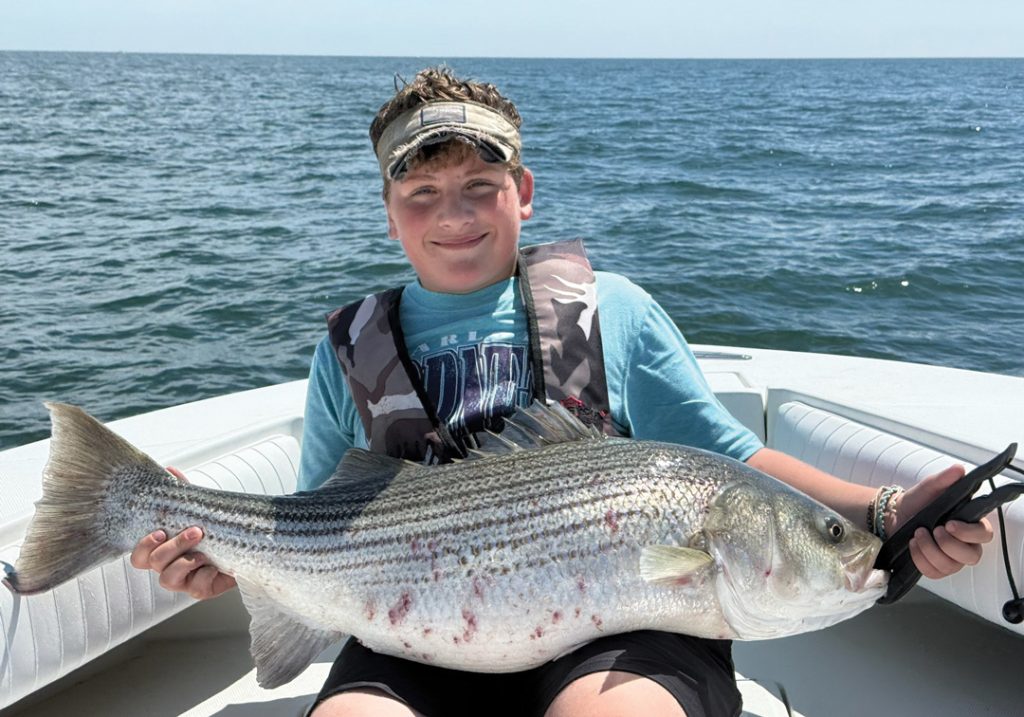
Despite the bunker shortage, we have had consistent fishing for striped bass of all size ranges, but mostly larger fish. Those big bass stayed tight to schools of mackerel into the summer months. The macks were a blessing; they filled the baitfish void left by very few bunker. We also had a good early run of herring, and the influx of both bait sources in each of the last five seasons is a welcome trend. I look forward to this positive swing continuing in 2026. Bass and blues, which fed heavily on the mackerel, were targeted by bait fishermen at night and trolling and jigging fishermen during daylight hours. We had a slow year when it came to fish feeding on the surface, but again, I attribute that to the lack of bunker.

The mackerel schools spent most of the time subsurface, and we had a blast targeting them with Exo jigs and, when the current was ripping, traditional A47 diamond jigs. Typically, jigging macks is reserved for the fall, but for the past several seasons, it has been a pleasant surprise to experience great mid-day jigging on several deep-water rips. Occasionally, bass and blues would push mackerel to the surface, and we enjoyed casting topwaters like the Game On X-Walk, as well as poppers and weightless soft plastics, around the schools of mackerel.
Proven Trolling Tactics: The Tube-and-Worm Rig
When it came down to producing big bass for my clients, trolling tube-and-worm rigs could not be surpassed. It has been a highly effective and long-standing method for catching bass and blues. Trolling tubes effectively is all about presentation and boat handling to ensure the tubes are at the level the bass and blues are holding without hanging up on the bottom. Often, it is a fine line that requires the captain to stay alert to achieve success. I still prefer using metered lead core line over braided line with a weighted drail because it leads to far fewer hang-ups and more accurate depth calculations.
Summer Bottom Fishing: Room for Improvement
Over the past several seasons in my part of the Sound, black sea bass and fluke have had a few decent windows, but the bites were short-lived. I am looking forward to this fishery getting back on track in 2026, along with the sand eel population. For three years in a row, sand eel numbers had been on the rise, but lacked a little in 2025. We need a solid return this year, as they are critical to our inshore fly- and light-tackle fishery for stripers and bluefish, as well as fluke. Weakfish action has continued to improve for the past several years, and 2025 produced fish up to 8 pounds for us on inshore rock piles and sandy structure. Their return has been another welcome addition to the inshore scene.
The Return of Bonito and False Albacore
The star of our fall fishery in recent years has been the incredible Atlantic bonito. We have almost reverted to the way it was 20 to 30 years ago, when bonito were much more prevalent than false albacore. Albies owned the roost for about 20 years, but once again, bonito are the more viable target. For the past couple of years, bonito have concentrated closer to the North Shore of Long Island and over deep water in random mid-Sound areas. We did find some on the Connecticut side in 2025, but not nearly as many as we had on the New York side.
We had a pretty good season for albies as well, but it was tough to locate them, and I attributed much of that struggle to the extraordinary wind cycles from week to week that started in early September. Here in the western Sound, we were spared by any direct hits from tropical systems, but we paid the price in rough seas and wind. Those storm systems remained offshore and pushed against high pressure over Canada, resulting in many cancelled trips for months. Locating albies and bonito in a rough chop requires a lot of luck, as birds have trouble spotting the bait, and anglers have a much lower chance of success without birds following these speedsters. After a few years of abnormally windy fall weather, I look forward to 2026 providing us with more opportunities to sight-cast fish that are busting on the surface.
Season Wrap-Up: Looking Back to Look Ahead
With all the weather fronts and rough seas, bluefish and striped bass were fast on the move, and from mid-September through October, fishing became more like hunting. We found some true gator blues in late October, along with random schools of migrating stripers in the same areas, which led to some real “fall run” moments to remember.
With the 2025 season in the rearview, I recall several noteworthy moments catching monster stripers, big blues, and abundant bonito, along with the comeback of Atlantic mackerel and weakfish. In the western Long Island Sound, we have good reason to anticipate excellent fishing beginning in late May 2026.
Eastern Connecticut
By Josh Rayner – Kayak Fishing Guide, CT Fish Nerd
There were some incredible angling opportunities throughout the region last year, and Eastern Connecticut had more than its share. Conversely, there were holes in the action that are normally filled with reliable bites, and many areas that were void of adult menhaden where they are normally bountiful. Niches are slowly being filled by rebounding species in place of those in decline. Nature’s checks and balances in response to, or coinciding with climate change, various factors in habitat, water quality, poor management, and overfishing are what we are witnessing firsthand up and down the Atlantic Seaboard. Recreational anglers, light tackle guides and charters have been forced to adapt to the striper’s ever-changing migratory timing, patterns, and abundance to stay productive each season. Here are some takeaways from last season to give some insights as we head into 2026.
Less Bunker, More Herring
Every spring I look forward to figuring out where the best striper fishing is in my local area. There are many varying habitats in which to look, that all have at one time or another, been my go-to area for at least a couple weeks out of the spring each year. Usually, the driving forces are baitfish, water temperatures, and conditions that allow me to visit the area via kayak. Small and large rivers, salt ponds, boulder fields, and reefs all have periods of reliability in the spring. The last few springs have been the most productive on shallow reefs in Central and Eastern Sound. The conditions aren’t always right for a kayak trip, but when I can make the several-mile journey out and spend most of the day there, it is normally worthwhile.
There were roaming schools of adult bunker moving between reefs this past May and June, but they were still alarmingly sparse. Large bunker schools around the Connecticut River mouth used to be the norm, until suddenly, they weren’t as consistently dependable. Overfishing is likely to blame for the sparse and uneven dispersion of bunker, but there are other ecological factors that may effect where they show up. The commercial quota has been reduced by 20% for 2026, but it isn’t the 50% reduction we had hoped for. An inadequate amount of bunker, the fish that nearly everything in the Atlantic Ocean depends on, could have devastating consequences. I expect another season of sparse bunker ahead. Striped bass and other species who are reliant on menhaden will seek out other forage species.
One bright spot in our inshore waters last year was one of the strongest showings of river herring we’ve witnessed in a decade, which felt like a win considering how abysmal the herring runs have been in recent years. There aren’t giant bass involved in these herring bites, but slot to overslot fish with the occasional 40-incher mixed in.
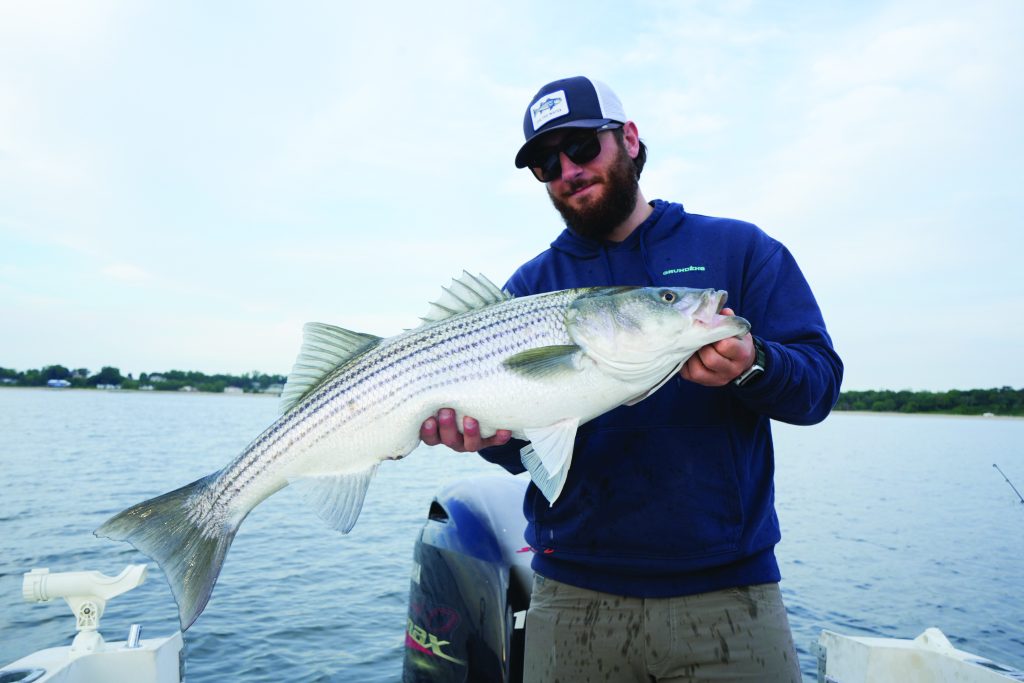
My go-to presentation this past spring around the herring runs was a 9-inch Berkeley Nessie, which is a soft bodied glidebait. I upgraded the swivel, split rings, and hook, along with making some aesthetic upgrades such as adding more realistic eyes, a black spot, and a blue/purple coloration along the back using a Sharpie marker. That lure was tough to beat most days, outfishing most other presentations. There were instances when I had multiple fish fighting over the lure, and the hits were on a different level of aggressive. Hopefully, river herring continue to climb and fuel the early season inshore bites for years to come.
Weakfish
With two off years in a row for spawning weakfish, I suspect we will see them in their springtime haunts this year. From mid-summer into September, I found solid weakfish bites, some in water as deep as 80 feet, others were as shallow as 10 feet. They have rebounded nicely, and there are plenty who have reached spawning size. With striped bass and bluefish being more localized, dictated by forage with fewer numbers of each species inshore, I expect weakfish numbers to go up. Weakfish are as opportunistic as they are picky, so targeting them can require making the slightest of adjustments to find the right presentation. Upon landing one of the larger weakfish I caught last year, it expelled a spine from another fish, which measured approximately 7 inches. Based on the size and the presence of snapper blues in the area at the time, I believe the spine most likely belonged to a snapper. This could have been the weakfish’s meal from the previous night. Initially, I received only several hits using a 5-inch soft plastic, but when I switched to a 4-inch version in the same color, the action improved dramatically, resulting in one of the best weakfish bites I’ve ever experienced.
Resident Summer Stripers and Brown Sharks
Summer striped bass fishing in Connecticut’s inshore waters left many anglers disappointed this past season. There were fish around some of the usual haunts, but a large body of our local fish took up residence on the south side of Fisher’s Island, The Race, and Plum Gut.
June through September are typically red hot on shallow boulder fields and reefs throughout Connecticut waters, but last year was a grind. Again, there are many factors to consider. Lack of bait, above average water temperatures, and fewer striped bass in general are all part of it.
I found bass on just about every trip this past summer, but whether they would eat was another story. Their dispersion was localized to only a few areas, and many schools had brown sharks lurking nearby.
I observed more seals in the sound in 2025 than ever before. On many trips, especially during daylight hours, the stripers would lay with their bellies on the bottom, and if you were lucky enough to visit them during a bite window, those windows were sometimes very short-lived. Live eels, GT Eels, Game On Duratech Eels, and tubes were some top producers both day and night, but when the bass were picky during the day, I would downsize my offerings. Ned rigs and freshwater bass sized jigs and plastics on 15-pound-test fluorocarbon leader would, at times, be the thing to throw, using a deadstick presentation.
Nighttime was more productive, but the bass were almost never what I would consider “aggressive.” Getting bit meant dragging eels or large plastics along the sandy, bass-strewn bottom. With brown sharks hanging around, bass quickly recognize they are not the top predator, and will hunker down along the bottom, or tuck way into the rocks and try to blend in. Overall, many of the fish that spent the summer inshore were smaller than usual for our waters. There were some very large fish peppered in, but many of our local summer bass were in the 30- to 40-inch range as opposed to the normal 40- to 50-inchers. My biggest bass last summer was 49 inches. It was in about 3 feet of water, tight to a shoreline that is comprised of nothing but large boulders. Coincidentally, seconds before hooking into that fish, I saw a brown shark’s dorsal fin break the surface out of the corner of my eye, no further than 15 feet off my kayak’s portside. Luckily, the bass pulled me toward the rocks instead of open water where the shark was.
Albies, Bonito, and Bass
Albies were just about right on time this year, as they charged into Eastern Sound by the middle of September. It was a treat to have them locally, since the year before our waters were just about void of any hardtails. If you’re serious about targeting albies this year, set some PTO aside for the week they show up, and try to figure out their routine. It is different every year, in a multitude of areas, and they key in on varying species of baitfish. The first push of albies is usually a strong one, and it helps to know where to be and when, and exactly what to throw when given the chance. Oddly, in 2025, some of the best albie feeds took place in late afternoon. This behavior lasted for about a week, then as tides shifted and storms rolled through, things changed. When they first showed up, striped anchovies were the main forage, and were tough to mimic with spinning gear given their small profile. The albies did however have a strong preference for Game On Exo Jigs in the ¾-ounce size and the Electric Chicken color. It seemed to be the thing to throw certain days. Later in the fall, albies were found on larger bay anchovies, silversides, and what I would consider large peanut bunker, and would at times take a variety of offerings.
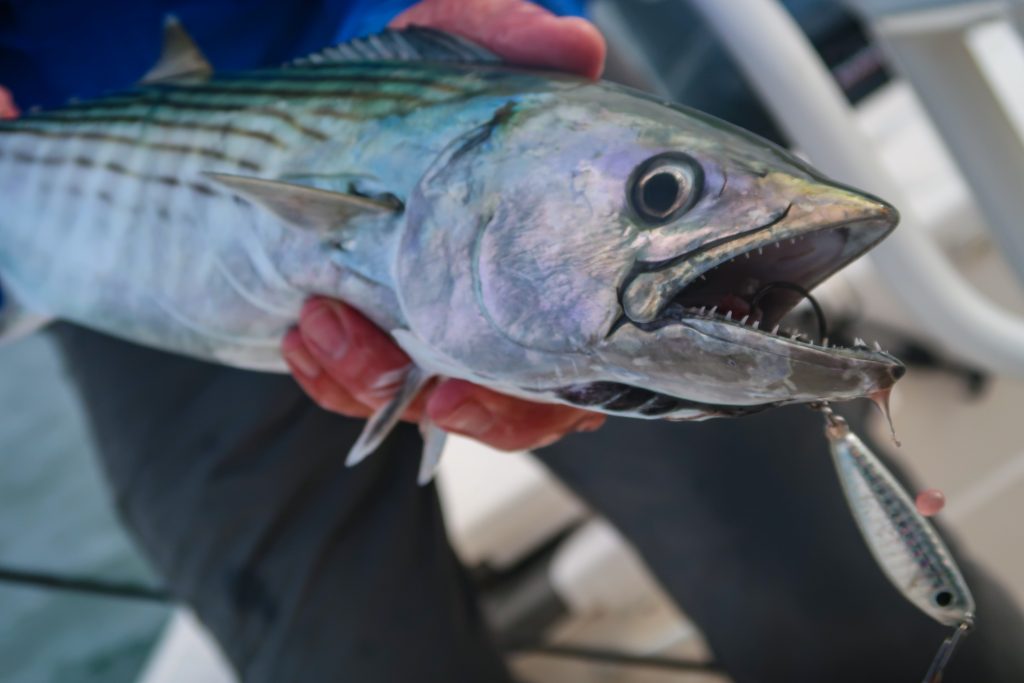
Bonito were a nice addition to the fall run this past year. Their whereabouts in late season is commonly random at best, so I’m always happy to get a shot at them locally. Just like albies, timing the best bites can be clockwork, and being in the right place at the right time can be crucial. It’s always fun to catch them while they’re blitzing, but my favorite bonito hits are blind. I did well blind casting an Albie Snax on a 5/0 BKK hook, much better than on resin jigs, which seemed to work better in blitz situations. It’s hard to say if we’ll see them locally this year, but you should never hit the water in the fall without a rod set up specifically for hardtails.
Fall run stripers, again, were pretty localized in comparison to other years. It seemed difficult to find fish in many of the usual fall spots. It was very much an all or nothing situation. There was a noticeable lack of bait in many normally productive areas, both large and small profile species. Other areas were loaded. The “90% of the fish are in 10% of the water” saying never rang more true than it did this past fall when talking about striped bass, and I expect this trend to continue.
Fall Blackfish – Get ‘Em While You Can
For many, the fall blackfish bite started off slow, with water temperatures in the high 60s well into mid-October. Heavy wind was another factor, taking precious trips away in the twilight of the season. Once water temps dropped and good weather windows presented themselves, the bite really took shape. My best trip was an impromptu “I guess I’ll go for a few hours” kind of trip, knowing more wind and storms were coming, and my crabs would go to waste. I chose a shallow area that can be hit or miss, but I liked my odds with the tide and wind setup, and water temps being just right. A small depression in 14 feet on a rock to sand transition surrounded by outlying boulders was “the spot on the spot,” and if I was slightly off, my offering wouldn’t get touched. I secured a quick limit plus another nine released keeper-sized fish and countless shorts. Without side imaging on my Lowrance, it’s unlikely that I would have figured out exactly what that structure looks like without freediving the spot. I should mention that when I target blackfish from my kayak, I do not anchor for a variety of reasons. On windy days or in areas with too much current, I know this is a disadvantage. On the contrary, if I’m able to effectively fish this way, I find it advantageous because I will move around to find the right spot, instead of staying stationary and hoping the fish eventually come to me. This also allows me to freely move toward blitzing fish that are just out of range. As water temps drop, expect to find better fish on much deeper structure, but occasionally check the shallow spots late in the season too, assuming the inevitable fall winds cooperate.
READ MORE


