
Another season has come and gone, and as we head into the depths of winter and prepare for the spring migration, it’s good to look back at how things played out here on the North Shore. We had a relatively cold winter last year, and we were fortunate to have some local ice to fish on, so I made sure to take advantage of it. Once the ice melted, freshwater fishing was a little slower than usual for me, which I partially attributed to low water levels at many of the ponds I fish in the spring. It seemed like forever until things finally warmed up and started to “pop.”
Spring: Searching for Backwater Stripers
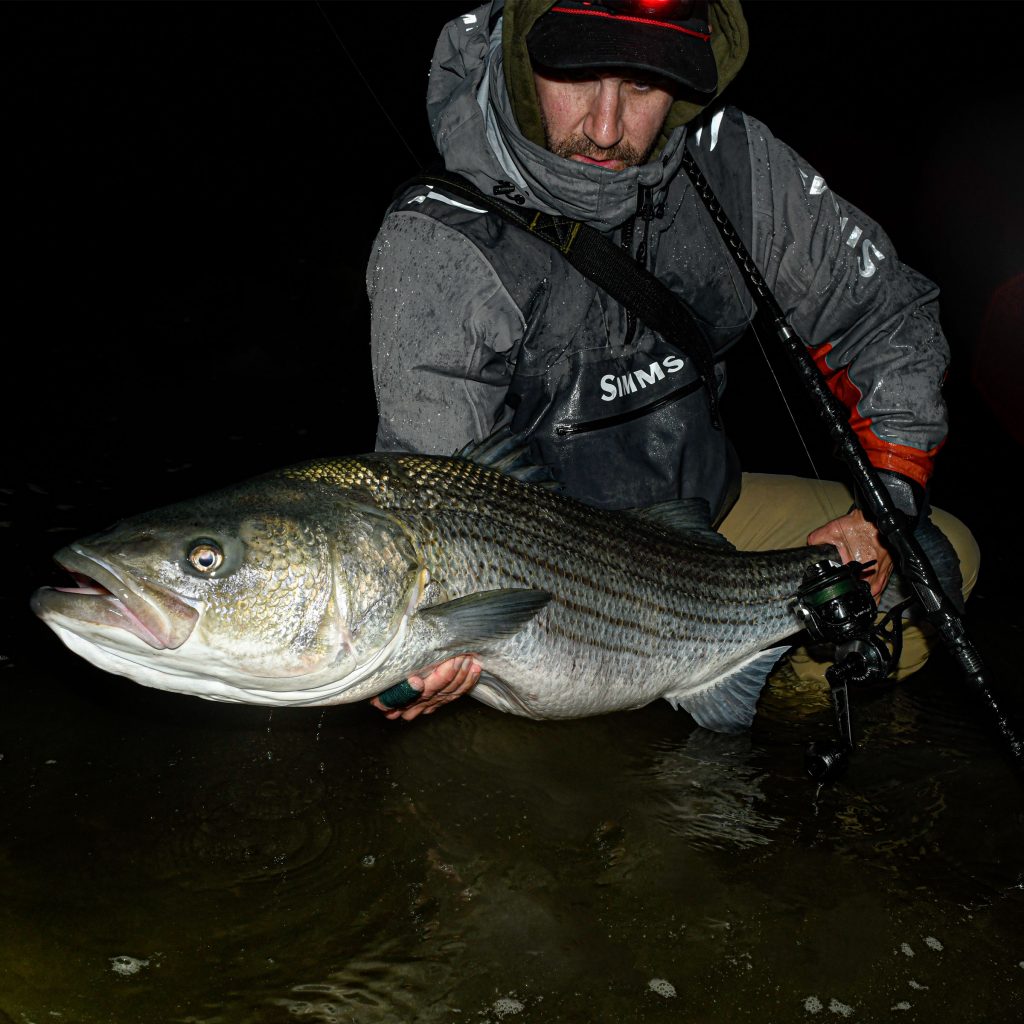
The saltwater season unfolded as it does most years. I ran into my first local migratory stripers during the second week of May, despite getting out and poking around beginning in the last week of April. I had a couple of weeks of skunks under my belt before I connected. Similar to recent years, the size class of the first wave of fish was in the 30- to 40-inch range.
In the past, we were typically greeted with waves of 16- to 28-inch fish, which were a blast to target on light tackle, but gone are the days of bringing out your light, early-season schoolie setup. I’ve found myself under-gunned a few times over the past couple of years, so now I bust out the 9-foot surf stick right out of the gate. I usually pursue the first waves of bass in our local estuaries, where they are chasing schools of river herring, so 5- to 6-inch paddletails or Gravity Tackle eels are my go-to presentations in the spring. It should come as no surprise that live eels will also result in some tank-size bass. Topwaters can also be effective in the early morning or late evening, but I find these spring fish can be a little more finicky and tougher to fool in the quiet backwaters.
In my opinion, this is the best time of year, as a surfcaster or boat angler, to catch trophy stripers here on the North Shore. Several local rivers and estuary systems hold big fish. Sure, there are other times and places where one can catch fish of the same caliber, but the patterns become far less predictable, and the search area is much bigger at other venues. My estuary season ran until late June, but with fast-warming water temperatures and increasing boat traffic, that bite dried up.
Summer: Surfcasting on Sand Beaches
The highlight of my season was a pretty good beach bite during July and August. It’s been a few years since I’ve been able to string together some successful tides in my favorite sandy spots. When I used to fish beaches more often, it was almost always with live eels. I was curious if my switch to artificial eels the past few years would affect my catch ratios, should I get in front of some good bass on the sand again. I was happy to find that the Gravity Tackle 13.5-inch eel imitations worked just as well as the real thing used to—and I can add some weight without worrying about an eel tearing off the hook when I cast. All my beach fishing took place after dark, but I know a few boat anglers who did well along the beaches during broad daylight. Their offering of choice was live mackerel.
Fall Run… Doldrums?
Hot off the heels of the highlight of my season came the low point, which was the fall run. Locally, it was the worst that I have experienced in my time as a surfcaster, including the early years when I had no idea what I was doing. We had some sporadic bait balls pass by, as well as some birds to tease you as you were looking. Perhaps trying some different areas or live bait would have yielded other results, but I wanted to see things through the way I usually fish during the fall.
2026 Striper Season Forecast
Looking ahead to the 2026 season, I think the most crucial time to get out and hit it hard will be spring through early summer. As I mentioned earlier, spring is, historically, the most consistent time to find fish. The areas that they tend to frequent (like estuaries and rivers) lend themselves to narrowing down where the bass can be found at various tide stages. To further improve your chances, get out and do some scouting in April to see which herring runs are the most active. Once you identify the run(s) with the best numbers, you can then infer which estuary might have herring once they start to dump out post-spawn.
Another place to put in some time in 2026 will be the beaches, particularly those in proximity to where our rivers and marshes empty. You can also do some scouting in April to try to find some fishy-looking sandbars, cuts, and channels. It’s much easier to find them during the day as opposed to the middle of the night.
Late summer and fall fishing will be the biggest toss-up next year. I’m crossing my fingers for a decent season, because we are certainly due for one!
READ MORE