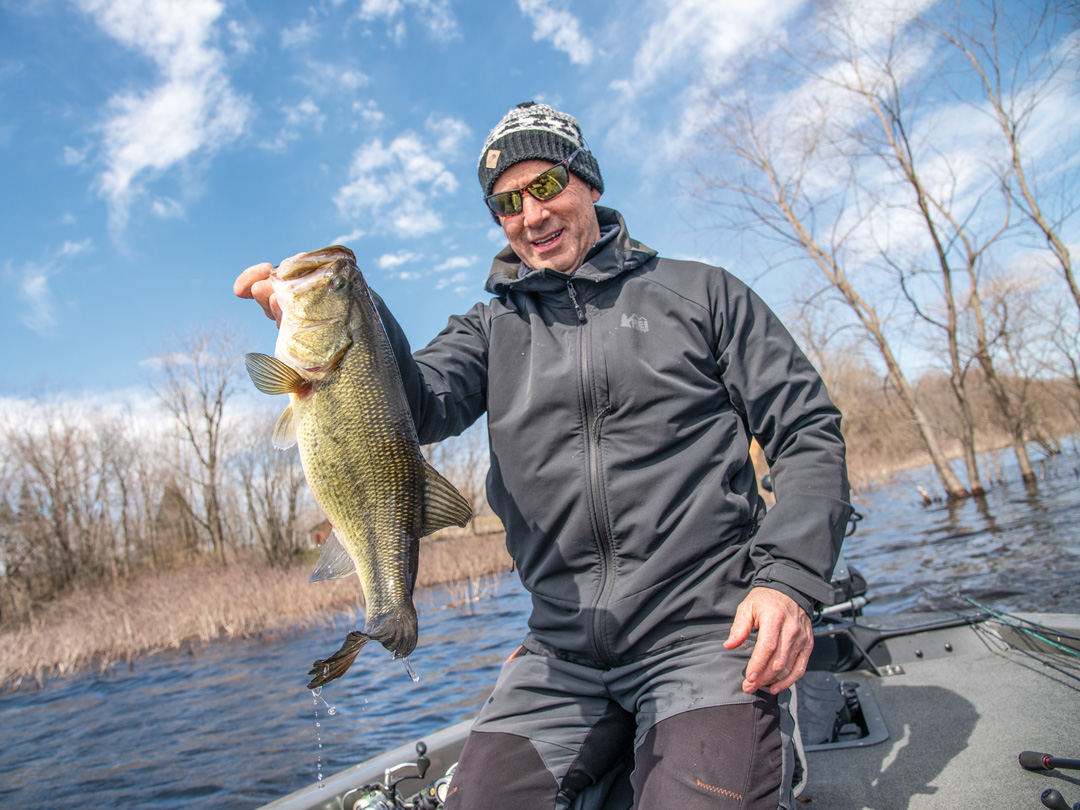

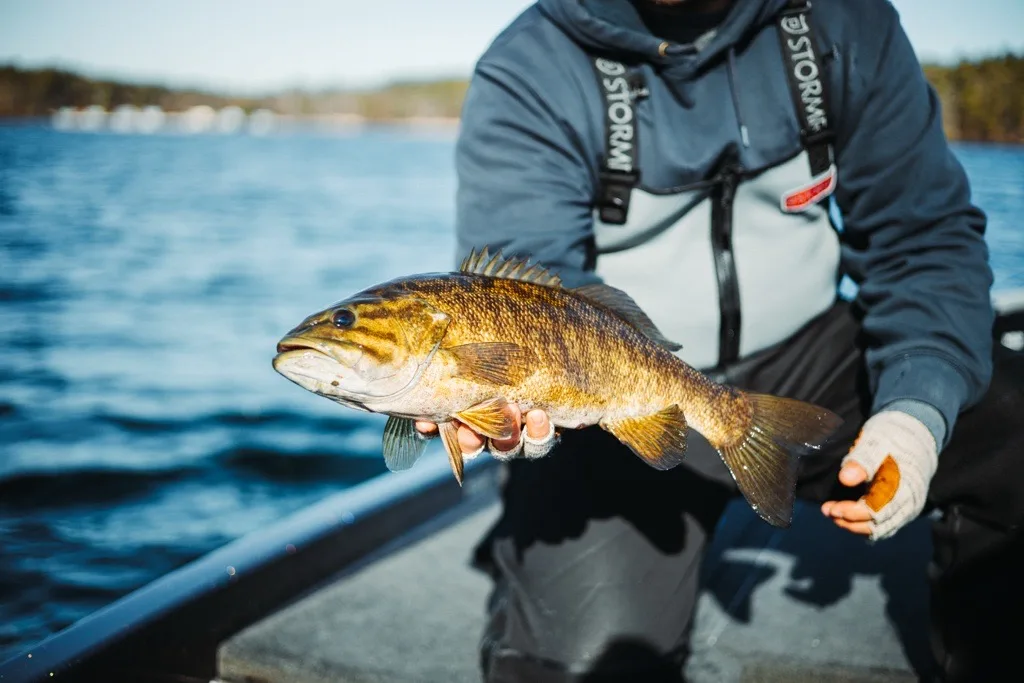
Winter smallmouth fishing can be one of the most rewarding forms of bass fishing there is. The fish may not be as willing to chase a bait as they are in the warmer months, but once you figure out where they spend the winter, you can find some of the biggest and most concentrated smallmouth of the year.
For me, winter smallmouth fishing is all about structure, something the bass can relate to. When water temperatures fall and the days get shorter, smallmouth often abandon the shallower areas they spent much of the year using. They migrate toward areas that offer deep water, stable conditions, hard bottom and access to food. In many northern lakes and Great Lakes fisheries, wintering fish can be found in 20 to 50 feet of water, with some fisheries requiring anglers to look even deeper.
The key is realizing that “deep” doesn’t mean simply finding the deepest water in the lake. You want to find deep water that holds food and good structure for them to winter around.
Look For Humps, Reefs & Rock Piles
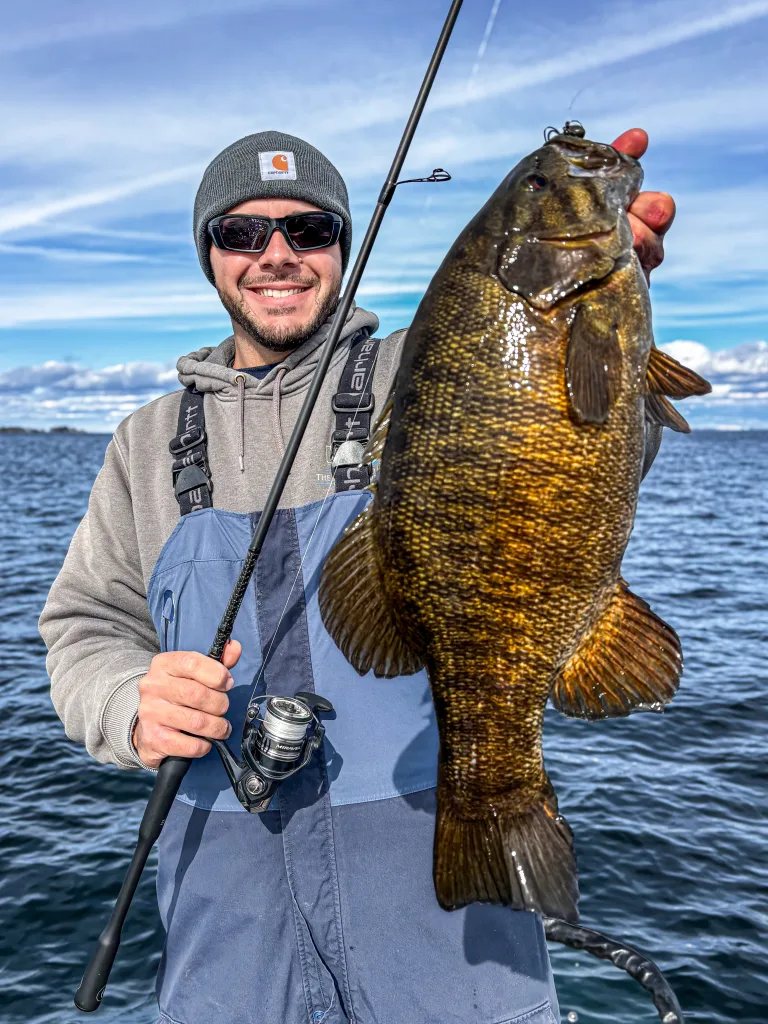
Some of my favorite winter smallmouth locations are offshore humps and reefs. These areas are essentially underwater islands, and they can be absolute magnets when the water gets cold. They hold everything a big bass would want: plenty of food, warmer water, and structure.

I like a hump that tops out somewhere above the surrounding basin and has a hard bottom. Rock, gravel, and other firm substrates are especially important for smallmouth. A hump topping out at 15 or 20 feet but surrounded by 40 or 50 feet of water can be much more attractive than a massive flat that runs for hundreds of yards.
Don’t just fish the top of the hump, either. I want to identify exactly where the structure transitions into deeper water. Often, the fish will position along the deeper edge, particularly when they’re inactive.
Rock piles are another favorite. An isolated pile of boulders sitting in otherwise featureless deep water is exactly the kind of subtle structure that can hold a surprising number of bass. These are the spots that are nearly impossible to find without good electronics, but once you locate one, it’s worth marking precisely.
Follow The Breaks
Deep offshore structure becomes even more attractive when it is located next to a major depth change. Think about an underwater point extending into a basin. Perhaps the point extends to 20 feet before dropping to 40 feet. That break gives smallmouth multiple depth options without requiring them to travel far.
During winter, bass aren’t necessarily sitting in the shallowest portion of that structure all day. They can slide up and down the break depending on activity level, weather and forage. One day you may find them sitting right on the edge of the drop. The next, they might be 10 feet deeper.
This is why I like structure with a range of depths. A good winter spot gives the bass somewhere to go without requiring them to completely leave the area.
Electronics Are Your Best Friend
Winter offshore fishing is not the time to simply pick a waypoint and start casting. I spend a lot of time looking before I ever wet a line. Mapping helps me identify potential humps, points, channels and breaklines. Side imaging can then help me determine what is actually sitting on the bottom.
I’m also looking for bait. One of the biggest lessons I’ve learned is that you don’t necessarily have to see a pile of bass on the screen to know you’re around fish. If I find good structure with baitfish nearby, I’ll pay very close attention. Winter smallmouth may be tight to the bottom and difficult to distinguish from the structure, while bait suspended over a reef or hump can be an excellent clue that predators are nearby.

Forward-facing sonar can also be extremely useful for determining how fish are positioned around the structure. It allows me to see whether fish are sitting directly on bottom, suspended slightly above it or moving up and down the structure.
Slow Down Your Presentation
Once I find the fish, the next challenge is getting them to bite. Winter smallmouth don’t always want to chase. Their metabolism slows as water temperatures fall, meaning they generally don’t need to feed as frequently and often aren’t interested in burning energy chasing a fast-moving bait.
That’s why finesse presentations are such a big part of my winter arsenal. They help me slow down and pick apart every pebble on the bottom to catch a big smallmouth’s attention.
One of my main staples is a little boot-tailed swimbait on a football-shaped jighead, baits like a Keitech 2.8″ Fat Swing Impact or a Strike King 2.75″ Rage Swimmer. This is a bait that works for me during the cold weather months. The ability to have incredible tail-wagging action to mimic a crayfish or a lethargic baitfish is key to making big smallmouth bite. Big smallies will follow a bait a long way before they decide to eat it, making it a perfect presentation. This, coupled with a finesse football jig, can be a deadly combination when slowly dragged on the bottom. Jigs like a Beast Coast OW Sniper or a T’s Tackle Smallie Football Jig are perfect options to pair with finesse swimbaits to draw lethargic strikes.
A hair jig is another outstanding option. It can be crawled across rock or slowly hopped along the bottom. The subtle movement of the hair gives a winter smallmouth something to eat without requiring the fish to chase it very far. Hair jigs have become a proven cold-water option specifically because they can be fished extremely slowly around deep offshore hard structure. I’m a huge fan of tying them myself with different hair materials, but there are a few good over-the-counter options, like the Black Sheep Tackle Bear Hair Jig or the Great Lakes Finesse Marabou Jig.
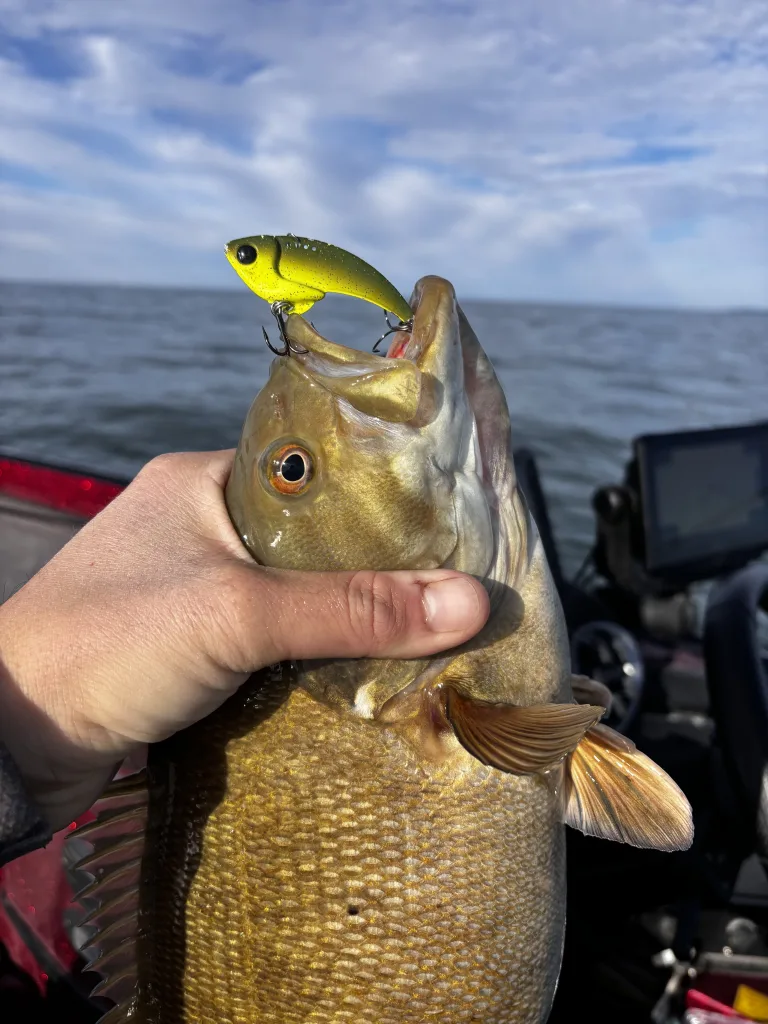
Blade baits and jigging spoons can also shine when the fish are more willing to react. I’ll use them around deep humps and breaks, especially when I can see fish on my electronics. The key is keeping the presentation controlled rather than ripping the bait through the strike zone. My top blade baits include a Fish Sense Binsky, a Molix Trago Vib, or an original Silver Buddy. Sizes range from a quarter ounce for shallower humps to a half ounce for the deepest edges.
Pay Attention to Warming Trends
Even though we’re talking about winter fishing, I don’t completely abandon a little bit shallower water during a warming trend. Smallmouth are opportunistic. During extended periods of warmer weather, some fish can move shallower (in the 10- to 15-foot range), especially if baitfish become active. Winter smallmouth can have very different behavior from one lake to another, and even populations within the same system can use different wintering areas.
That’s why I don’t want to get locked into the idea that every smallmouth in the lake has to be sitting at 30 feet all winter. Deep offshore structure is my starting point, not a rule carved in stone. Don’t be afraid to experiment shallower on known structures during the warmest part of the day.
The Winter Smallmouth Mindset
For me, successful winter smallmouth fishing comes down to three things: find the right structure, find the fish and slow down. I’m not looking to fish 50 spots in a day. I’d rather find three or four areas that have everything a winter smallmouth needs—deep water, hard bottom, structure and food—and fish them thoroughly.
When you finally get that first thump, all that time spent staring at the graph suddenly makes sense.
Winter smallmouth may be cold, deep and difficult to find, but that’s exactly what makes catching them so satisfying. Once you learn to read the underwater landscape and understand how those fish use offshore structure, some of the toughest days of the year can also become some of the most memorable.
READ MORE