
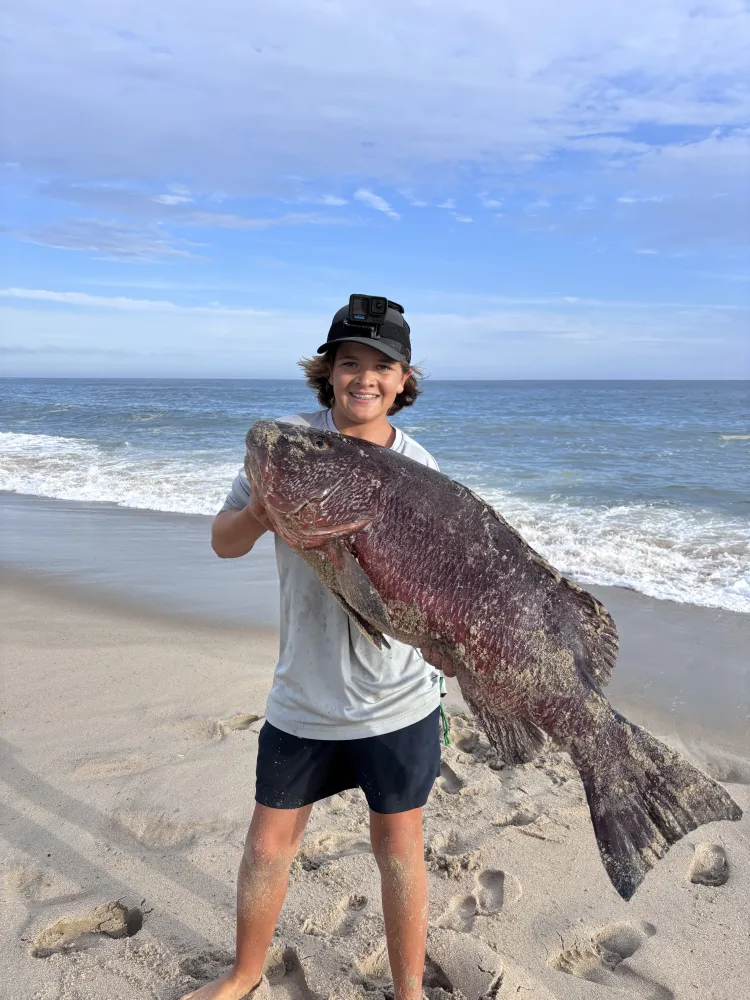
Stone Fornes has a knack for catching fish that make headlines. In August 2024, the Nantucket angler — then 12 years old — boated a white marlin so big it shattered the IGFA junior world record. On Friday, August 28, he topped it with something stranger: a 14-year-old Fornes wrestled a cubera snapper out of the surf on Nantucket’s south shore, a tropical species that, in his own words, “has no business being in the Northeast.”
The Catch
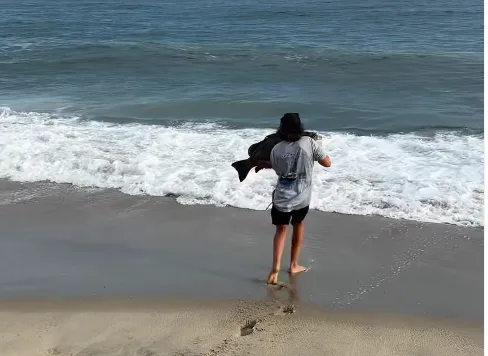
Fornes was fishing shark bait on a spinning rod when something hit that clearly wasn’t a shark. After a roughly 10-minute fight, he worked the fish into the wash and got his first look at it: a thick-bodied, olive-brown snapper with a mouthful of teeth built for crushing crustaceans and reef fish, not swimming around 40-degree-latitude sandbars. “I said, ‘Oh my goodness, that’s a cubera snapper, and I’ve wanted to catch one of those since I was six years old,’” Fornes told Nantucket Current, which first reported the catch. Fornes captured video of the fish, estimated to be around 40 pounds, and released it.
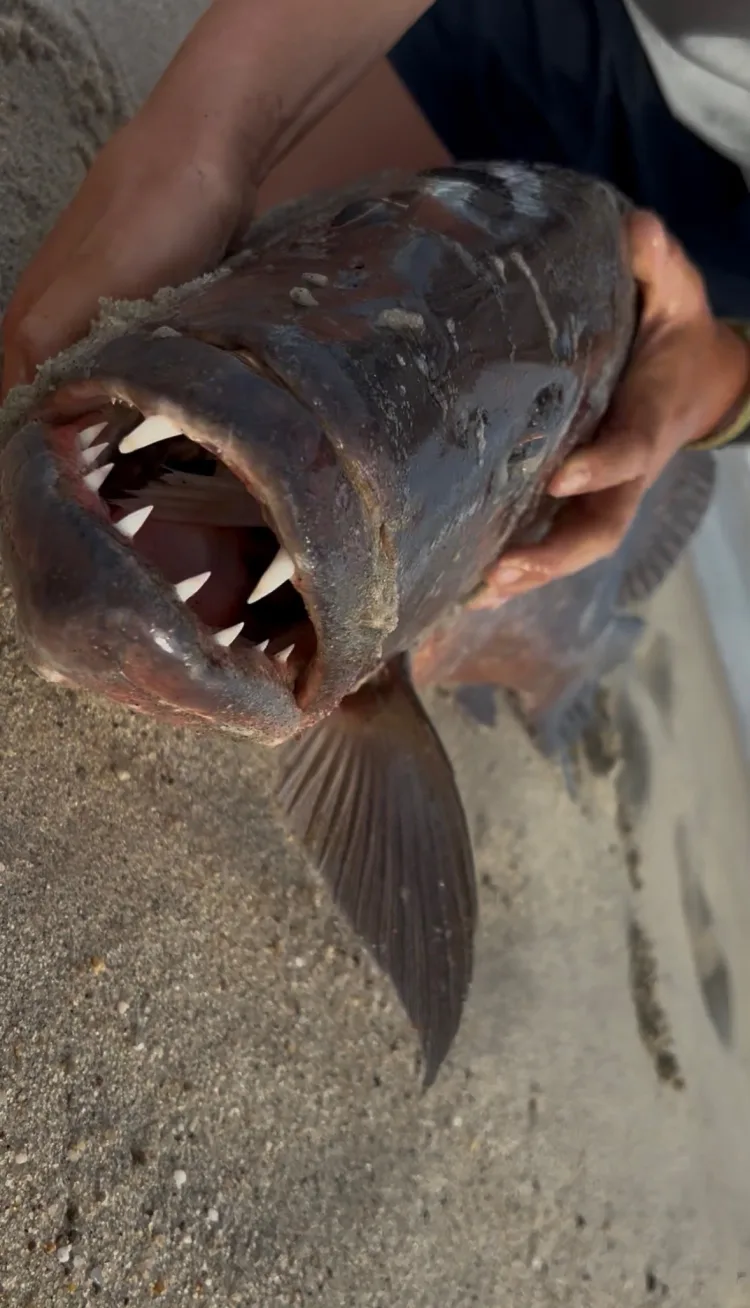
Longtime island anglers told Nantucket Current they’d never heard of a cubera snapper coming out of Nantucket waters before, and Massachusetts doesn’t even carry a state record for the species. Cubera snapper are a Caribbean and Gulf of Mexico staple that are only rarely encountered north of Florida and the Carolinas, even though their documented range technically stretches all the way to Nova Scotia. “It has no business being in the Northeast,” Fornes said, “and that’s what I’m trying to figure out now — how did it get here?”
We can help with that.
Why an Adult Cubera Snapper Shows Up in New England
Every summer, the Gulf Stream ships a wave of tropical hitchhikers into New England waters. Spotfin butterflyfish, angelfish, damselfish and other reef species that begin life as eggs and larvae in Caribbean and Gulf of Mexico spawning grounds and simply drift wherever the current takes them. As we wrote in Gulf Stream Riders, most of these “larval drifters” never choose to be here — they’re passengers, and nearly all of them die off when the water cools in fall.
A 40-pound adult cubera snapper is a different story. Cubera larvae have a pelagic drifting stage of only about 29 days before settling as juveniles, according to DNA barcoding research on the species published in the journal Zootaxa, and those larvae and juveniles were sampled off the coast of Panama and around a spawning aggregation in St. Thomas, U.S. Virgin Islands, not anywhere near open Atlantic currents that reach New England. A one-month larval window isn’t nearly enough time to ride the Gulf Stream from the Caribbean to Nantucket. A fish that size got here on its own power.
That distinction matches what On The Water has long noted in Gulf Stream Riders, which lists cubera snapper alongside gray triggerfish, tarpon, barracuda and sailfish as active adult swimmers that push north chasing warm water and bait — not passive drifters. Peer-reviewed research backs it up: a 2025 study in the American Fisheries Society journal Fisheries, which analyzed more than 1,200 citizen-science reports of tropical and subtropical fish found in the Northwest Atlantic, found that while eggs, larvae and juveniles are routinely swept north by Gulf Stream eddies and warm-core rings, species documented as adults in temperate waters are most likely there because of active, seasonal migration, with Gulf Stream dispersal playing only a supporting role. In other words: the babies get pushed north. The grown-ups swim there.

A Pattern Along the Northeast Coast
Fornes’s fish is unusual, but it’s not a total fluke — On The Water has covered a small but real string of adult cubera snapper turning up well north of their expected range, going back decades:
- Cape Cod Canal, MA (several decades ago): A large adult cubera, predating most digital records, per our own reporting on the 2018 Rhode Island catch.
- Island Beach State Park, NJ (August 2015): Surfcaster Mike Szabo landed a 25-pound cubera on a bunker head after a 15-minute fight. Read our coverage.
- Point Judith, RI (September 2018): A 70-pound adult turned up in a fish trap off the West Wall — big enough that we noted at the time that juvenile tropical fish drift north on the Gulf Stream, but adult cuberas that size are a different phenomenon entirely. Read our coverage.
- Block Island, RI (August 2019): Spearfisherman Willie Baun speared a 28-pound cubera — the first ever taken by spear in Rhode Island waters, and the third sighting in the region in recent seasons at the time. Read our coverage.
- Off Hatteras, NC (2022): A New Jersey angler landed a state-record cubera snapper, a reminder that the mid-Atlantic sees its share of wandering adults too, as reported by WITN and Coastal Review.
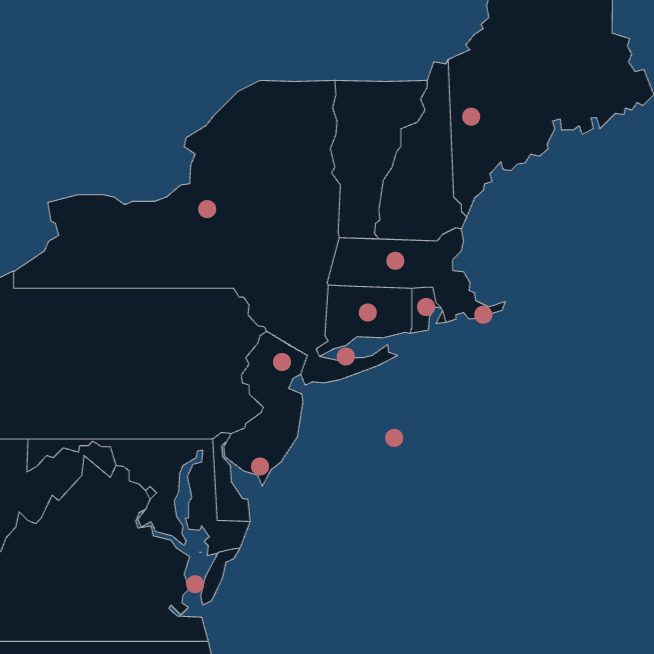
- Nantucket, MA (August 2026): Stone Fornes’s catch, the first documented cubera snapper from Nantucket, per Nantucket Current.
Whether it’s warming Gulf Stream water pushing baitfish and the predators that follow them farther north each season, cubera snapper have made a habit of showing up where the field guides say they shouldn’t.


Does this mean that Cubera Snapper will be getting added to the “HMS” roster needed to catch palegics like tuna?
Great story, and I know I might be beating the “ proverbial dead horse “ with my comment, but if the waters are warming to the pain that those southern species are moving northward, why would it be a stretch to thing that some of our northern species of fish wouldn’t also move farther north ??