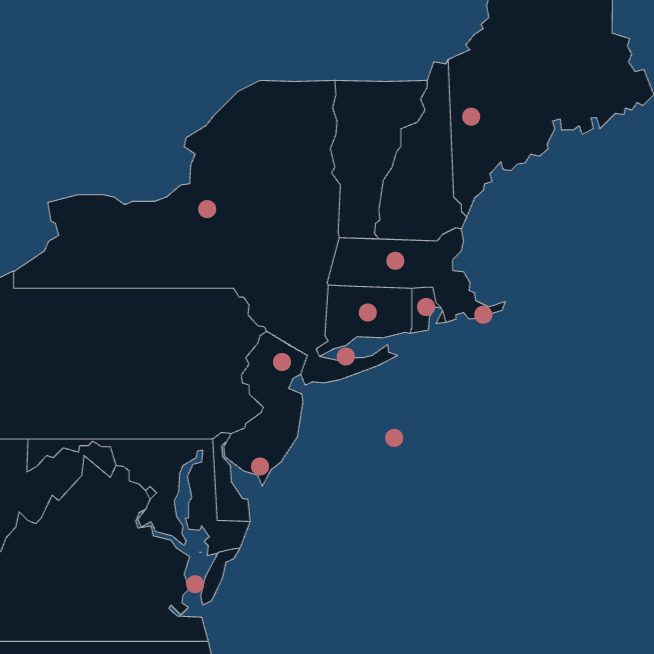

One of the largest successful dam removal efforts in recent years was on Maine’s Penobscot River, where the Veazie and Great Works dams came down, allowing salmon and shad to reach historical spawning grounds. A 2023 report indicated that in the decade since the dams were removed, shad populations had increased by more than 400%, while salmon returns increased by 125%.
Now, there’s a chance to open up another iconic Maine River, the Androscoggin as the Brunswick–Topsham dam comes up for relicensing in 2029. In early 2025, a group called Free the Andro formed to raise awareness for this opportunity to “fix” the Androscoggin. Read more below:

BRUNSWICK, ME – January 2026 – Free The Andro, the Maine non-profit, community-based group driving the effort to create free swimming fish passage between the Androscoggin River and the ocean after more than a century of neglect and blockage at the Brunswick–Topsham dam, publicly launched at a meeting here Tuesday and invited individuals, groups, schools, companies, governments, and others to join.
“Today’s Androscoggin River is broken and needs to be and can be fixed to benefit Mainers and the marine environment that we all love,” said Charles “Chip” Spies, Founder of Free The Andro (FTA). Spies was joined by involved citizens and FTA founding members American Rivers, Friends of Merrymeeting Bay, Maine Rivers, Merrymeeting Bay Chapter of Trout Unlimited, and RESTORE: The Northwoods.
“This is truly a once-in-a lifetime opportunity as the dam faces federal relicensing which will determine the fate of the river, its fish, commercial and recreational fishing, and the many communities along its shores for generations to come,” Spies said.
At the meeting, FTA premiered “Allowing Fish Back into the Androscoggin River: What To Do with a 50 Year Old Dam.” The video examines the rich history, decades old challenges, and future opportunities for the Androscoggin River’s 175-mile watershed and the gateway to that watershed at the Brunswick-Topsham dam.
Concerns About Brookfield Research
Also at Tuesday’s meeting, FTA voiced its comments and concerns about preliminary research released this month by current dam owner, Brookfield Renewable, as part of the relicensing process.
Those comments and concerns include:
Agreement with Brookfield and other parties that current fish passage structures at the dam do not work.
Disagreement with the narrow scope of alternatives included in the scope of research. Specifically, lack of dam bypass structure and dam removal as possible options, among others.
Disagreement with lack of included contingent metrics by which effectiveness of any fish passage solutions and ongoing approval of any dam relicensing can be evaluated
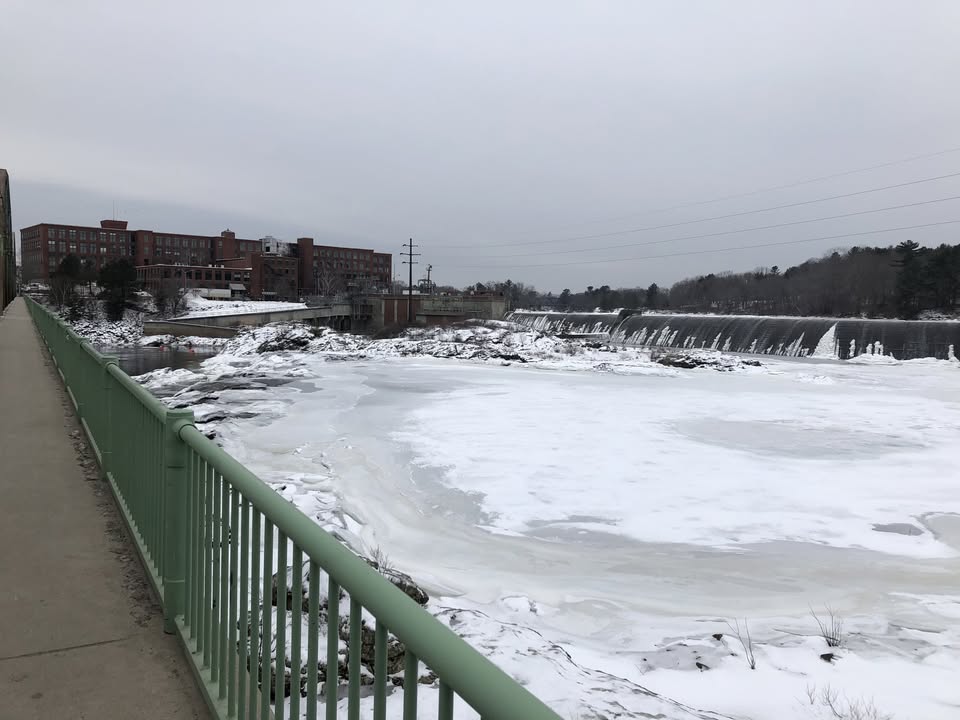
The Brunswick-Topsham dam with its active hydro-power facility is well documented as a significant obstacle to both upstream and downstream fish passage. The just-beginning relicensing process of this dam by the Federal Energy Regulatory Commission (FERC) creates an impactful opportunity to work with all parties involved to assure that free swimming fish passage is restored to the lower Androscoggin River to the benefit of fish, wildlife of every kind, commercial and recreational fishers, and everyone who cares about healthy, abundant rivers in our beautiful state.
“We must use the 2029 expiration of the Brunswick-Topsham Dam federal license to assure that any license renewal is dependent upon the ability of abundant, sustainable populations of native, migratory fish to access the upper reaches of the Androscoggin,” said Spies.
In the wake of recent wins to restore fish passage on the Kennebec River, Yarmouth’s Royal River, Camden’s Megunticook, Freeport’s Frost Gully Brook, and many others, FTA is a voice for the Androscoggin’s migratory fish including river herring, shad, sturgeon, and Atlantic salmon that historically used Maine’s third largest river to access inland spawning grounds. Fish populations in the Androscoggin — and the wildlife and commercial fishing operations that depend on them – have collapsed due to man-made obstructions blocking migratory fish moving to and from the Gulf of Maine.
River Towns Support FTA
FTA was unveiled in early 2025 with a mission to create a voice for the survival of migratory fish that use the Androscoggin River to access spawning grounds by raising community awareness and taking action to improve migratory fish passage as a critical means of returning the river to a functional ecosystem.
Also in 2025, the towns of Brunswick and Topsham each voted unanimously to commit to actions supporting improved fish passage at the Brunswick-Topsham dam as part the federal relicensing. The Androscoggin River forms the border between the two towns and the dam spans the river between the two towns.
The citizens of Maine and the residents of the Androscoggin River towns have a real opportunity to reverse 150 years of damage to the river and its fresh and saltwater fish populations caused by the current Brunswick-Topsham dam and those that came before. When the current license was issued in 1979, Maine US Senator Ed Muskie’s Clean Water Act was just seven years old and the badly polluted Androscoggin’s ability to ever support a thriving migratory fish population was in question. In the decades that followed, Maine has dramatically improved the river’s health to the point where today FTA is focusing on restoring vital and abundant fish populations.
Migratory Fish Runs Gone
The Androscoggin River at Brunswick Falls – located immediately upriver from the Route 201 bridge linking Brunswick and Topsham — has been fully or partially blocked by dams since the early 1700s. The current dam was opened in 1982 and includes a fish passage ladder hoped to enable substantial upriver fish movement. However, despite sonar readings and other observations below the dam that show as many at 10,000 shad in a holding pattern, only 14 passed the fishway in 2023 and only 91 in 2024. Similarly, as many as 180,000 river herring pass the dam each year, but habitat analysis and historical records show that this number could easily approach 2.7 million fish if migration barriers are removed. An increase of that magnitude has been seen on other rivers in Maine when fish passage is significantly improved. But for now, migratory fish runs on the Androscoggin are essentially gone.