

This week, the Atlantic States Marine Fisheries Commission (ASMFC) had a real chance to protect bunker, the fish that feeds nearly everything we love to catch, and it didn’t take it.
The Commission’s own science said catch needed to drop by roughly 40 percent to give us even a fifty-fifty shot at leaving enough bunker in the water. The Board received more than 48,000 public comments, and the overwhelming majority called for exactly that cut. Instead, the Board voted for a nine percent reduction. And here’s the problem: that nine percent isn’t likely to have any real-world effect on how many bunker are harvested.
Look at the numbers. In 2025, the coastwide quota was 233,550 metric tons, but the commercial fleet only landed about 147,000 of it, 63 percent. For 2026, the Commission trimmed the quota by 20 percent, to 186,840 metric tons. That’s still nearly 40,000 metric tons more than the fleet caught last year. A cut on paper, with no change on the water.
This week’s vote repeated the trick. The Board approved quotas of 170,000 metric tons for 2027. Measured against the 2026 quota, that sounds like a 9 percent reduction. Measured against what was caught in 2025, the 2027 quota is about 16 percent higher, roughly 50 million pounds more bunker than the fleet landed.
The ASMFC’s own projections show a 99 percent probability that we’ll still take more than the level their scientists say keeps enough bunker in the water for stripers, bluefish, tuna, whales and ospreys.
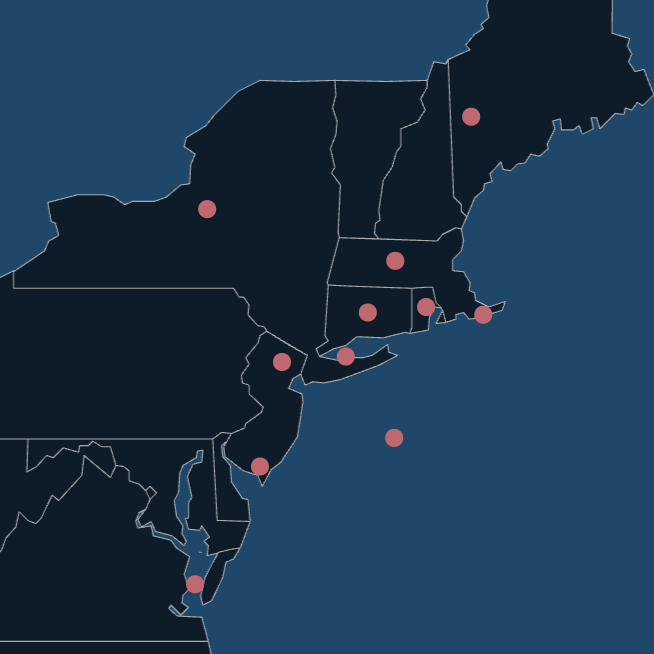
Massachusetts offered a better plan: a 15 percent cut in 2027 and 2028, for a total reduction of nearly 28 percent. It failed 8 to 10. NOAA Fisheries and the U.S. Fish and Wildlife Service voted no, and with their votes it would have passed. In the end, only seven states, Massachusetts, Rhode Island, Connecticut, New York, Maryland, North Carolina and Florida, voted for deeper cuts. I’m proud that Massachusetts led the push, and that On The Water’s home state stood up for these fish.
Bunker feed the stripers, blues and tuna that fill our boats, keep tackle shops open, and put charter captains to work. And we allow the last industrial reduction fishery on the Atlantic Coast, run by Omega Protein, a subsidiary of Canada’s Cooke Inc., to reduce that fish into meal and oil.
The ASMFC missed this one, and our fisheries will pay for it.
Visit foragefishcampaign.org to learn more and add your voice to the outcry for better science-based management of vital forage fish.

