
At the beginning of last season on Lake Champlain, I was fired up to focus on largemouth. I was excited to keep learning the bite and add more locations to my rotation. Spring showers brought high water, and things seemed stable in July. Then the rain stopped, and the lake dropped to one of the lowest levels in years throughout the fall. During the drought, however, one upside was that the grass had time to grow.
Charlie and I have been fishing together since we first met in 2018. He was 6 years old but already loved to fish. Early on, we spent as much time on the water as we could. Over the years, that turned into fishing more seriously and, eventually, fishing tournaments. This season, we decided to commit fully and fish the entire Inland Sea Bass Anglers trail on northern Lake Champlain.
This trail has been around a long time and, over the years, it’s grown into one of the most competitive tournament circuits in the area. There are seven events from June to October throughout different weather (and wind), water levels, and boat ramps. Charlie and I decided to give it everything we had, leaning on what we learned in 2024 when we scrapped our old approach and focused solely on largemouth. We decided that the season was going to be 100% focused on tournaments.
Starting With the Spawn
The first tournament was scheduled for late June. Knowing that the smallmouth spawn would likely be in play, I wanted to find as many bedded smallmouth as possible. I’ve always enjoyed the spawn— the Easter egg hunt of finding bigger fish. Charlie and I enjoy June every year, but this year was tougher. Many fish were shallow and easy to find, but they were small. We spent our time looking in new areas for better-quality fish.
A week before the event, Charlie and I fished the Lake Champlain International Father’s Day Derby and had fun, but we never found quality fish. We tried to fish after work in the week leading up, but a north wind shut things down. The few fish we did find were a long run from Missisquoi Bay.
Our last day was Saturday morning before the event so we focused on high-percentage areas. There were fish everywhere, but finding one over 3.75 pounds was a chore. We started down a shoreline, knowing that the south wind would make it rough. If we found anything, it would be hard to reach and hard to fish. We found our first 4-pounder, but after that, it was back to small fish.

Event #1
June 22, 2025
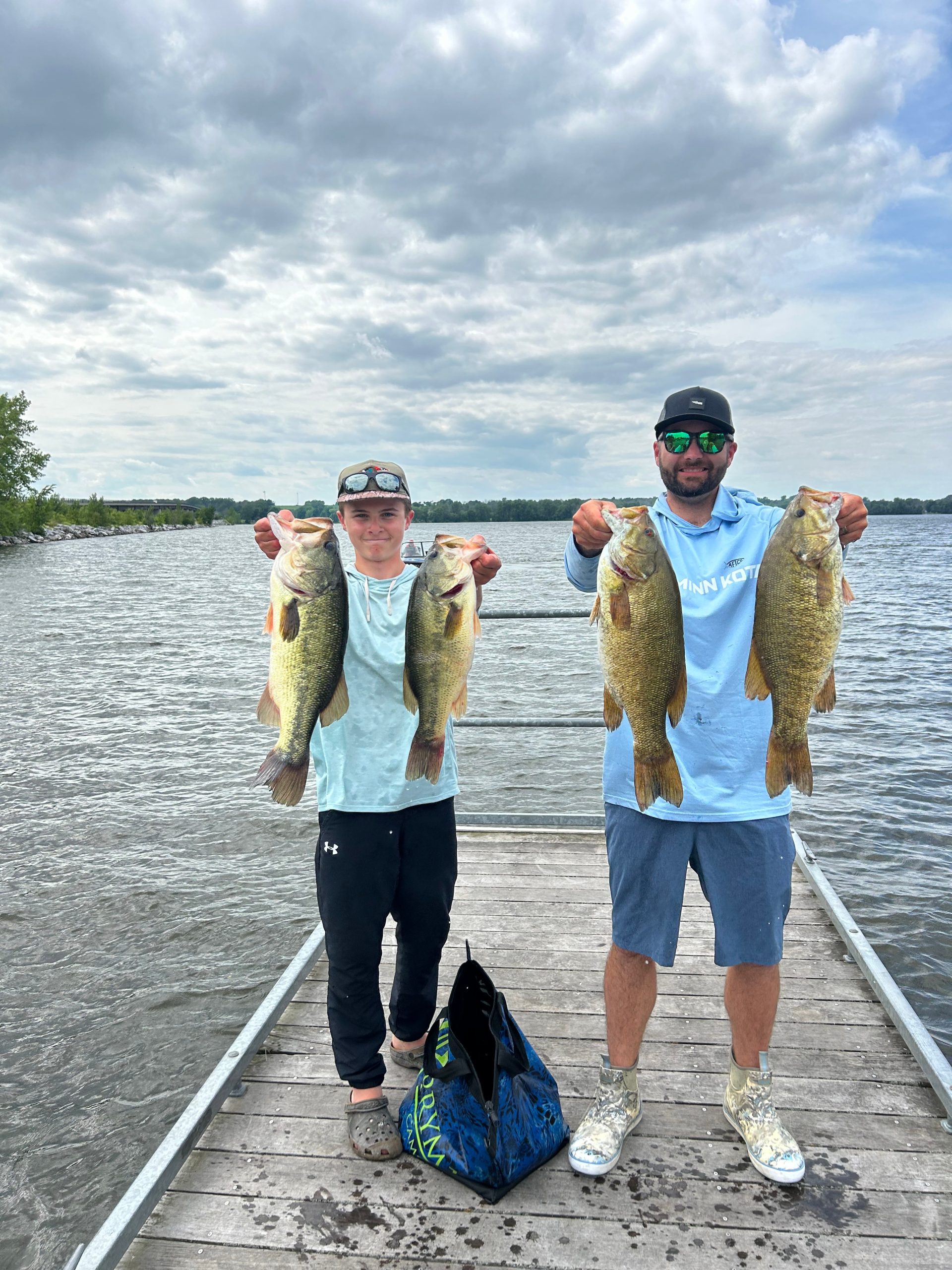
2nd Place, 20.99 Pounds
Tournament morning, we weren’t thrilled with what we had. The plan was simple — catch the big one first, then fill out a bag. The south wind was worse than expected. When our number was called, we turned under the Missisquoi Bridge, and I knew it wasn’t happening. I called an audible: We were staying in the bay and fishing blind.
A friend mentioned that the bridge held fish, so we dropped down there to regroup and think through our approach to Missisquoi Bay, which we hadn’t fished yet that season. Within an hour, things clicked. We boated a few smallmouth, including a 4-pounder and a high 3. With the wind ripping, we decided to tuck out of it and try for largemouth.
Working through a stretch of grass and rock, we filled out a limit, including a heavy 3-pounder. Toward the end, I got my Beast Coast Gorilla Swim Jig stuck in shallow rocks. Rather than disturb the area, I had Charlie cast in. Four or five cranks later, he hooked up our best fish of the day, a 4.9-pounder.
It was still early, and with a 19-pound bag, we knew we were doing well given the conditions, but we also knew we had to head south to try for the big smallmouth we’d marked the day before. It would take about 45 minutes each way, so we stowed the rods and made the run.
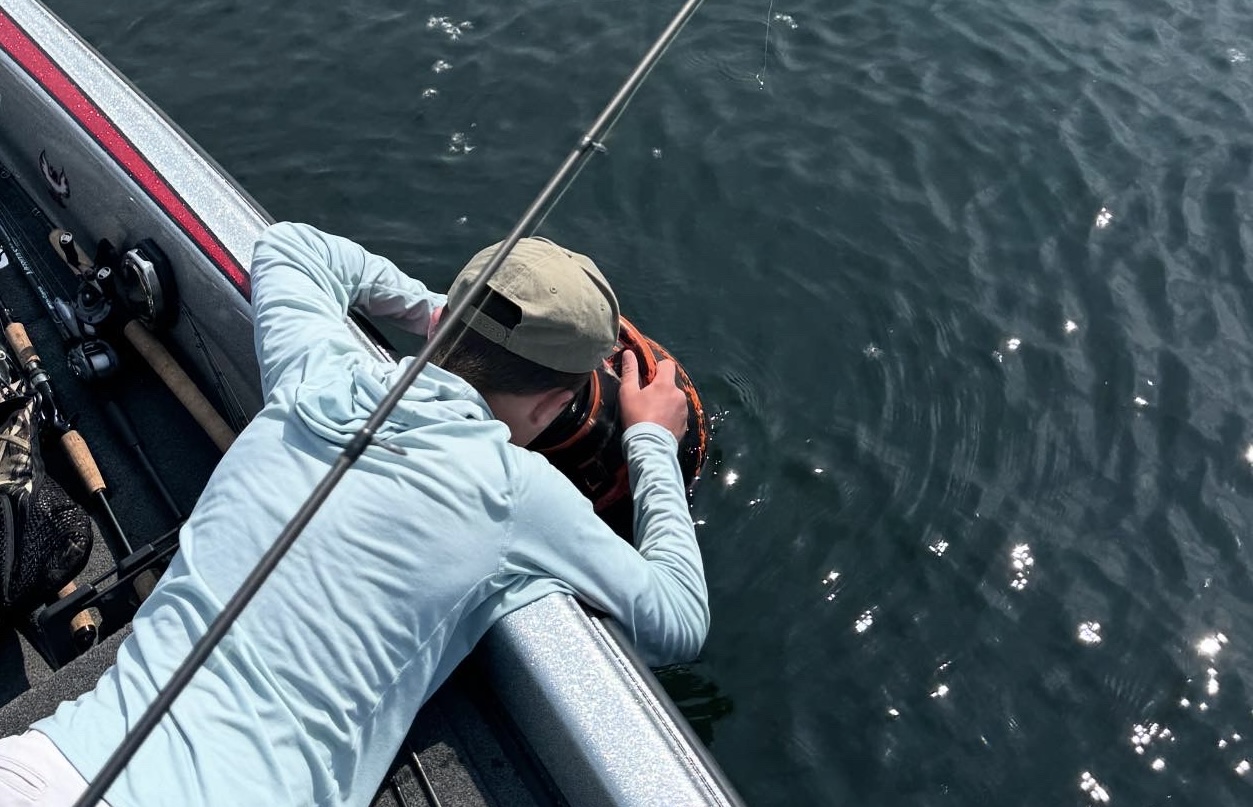
It took some time to get positioned, but Charlie spotted a fish with the flogger; and within minutes, it was in the livewell. We culled up to almost 21 pounds on the Bubba Scale and headed back. A second-place finish to start the season wasn’t bad and, more importantly, we learned we could make decisions on the fly and trust our instincts.
A Post-Spawn Bite
I’ve never loved the post-spawn. With MEGA Live 2, catching smallmouth during this time has never been easier, but it’s still not my favorite. For largemouth, it’s all about the swim jig. With the lower water level, though, there was far less shallow cover than normal.
For our second event in mid-July, I knew it was early to fish the grass, but that didn’t stop us from trying.
During the Friday practice day, on Charlie’s suggestion, we found a small jerkbait bite. Later, we located an area where we could fill a limit dragging a Carolina rig along a rocky vein. On the way back to the ramp, I looked for grass. Casting a jig around anything that looked promising on XPLORE and MEGA Live 2, Charlie and I each caught a fish, including a 4-pounder. We felt good heading into Sunday.
Event #2
July 12, 2025
7th Place, 19.64 Pounds
We started tournament morning around a small island and then a sunken car, but caught nothing. We found a deeper boulder that was loaded with perch, where I managed to coax a 4-pound smallmouth on a Beast Coast OW Sniper Jig. On the Carolina rig spot, Charlie quickly filled a limit dragging the grass edge.
At the end of a short drift, I noticed a big rock buried in the grass while using MEGA Live 2. I pitched the Sniper Jig past it, felt a tick as it crept up the backside, and set the hook. Another almost 4-pounder.
Three casts at the jerkbait spot resulted in three smallmouth. We culled three times on a jerkbait and pushed the bag over 18 pounds. With three hours left, we headed back toward St. Albans to fish the jig, but it was slow. Charlie kept getting smaller bites blind-casting a Beast Coast Lil Magnum. We hit a small patch of shallow milfoil, and in five minutes, added two more quality fish that pushed our limit close to 20 pounds. We finished seventh and knew the grass would only get better.
Still No Grass
Event #3
July 27, 2025
9th Place, 17.36 Pounds
The third event was the toughest. I fished with my longtime partner, Ben, and with no practice, we struggled. We lost a few key fish, but finished ninth with just over 17 pounds.
Event #4
August 7, 2025
10th Place, 19.84 Pounds
By the fourth event, the largemouth had started to set up. Eight teams cracked 20, including a 24-pound bag of largemouth from Missisquoi Bay. Things were getting right.
Game Time
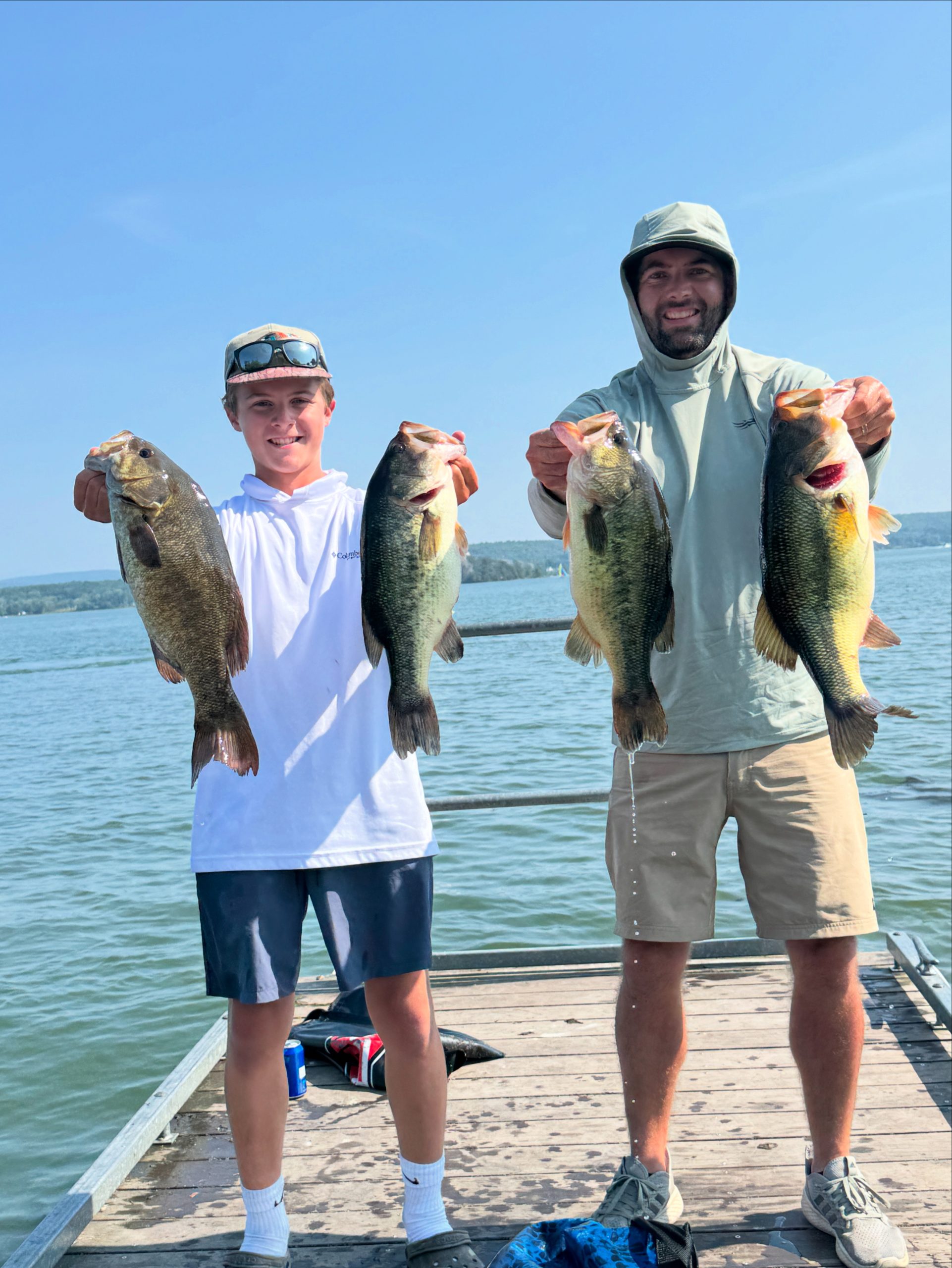
August brought a postponed event and a long gap. With limited time to fish, Charlie and I focused on dialing in on the grass. Conditions were tough, but we found several productive areas including a new area closer to the takeoff point.
Event #5
September 7, 2025
1st Place, 24.91 Pounds
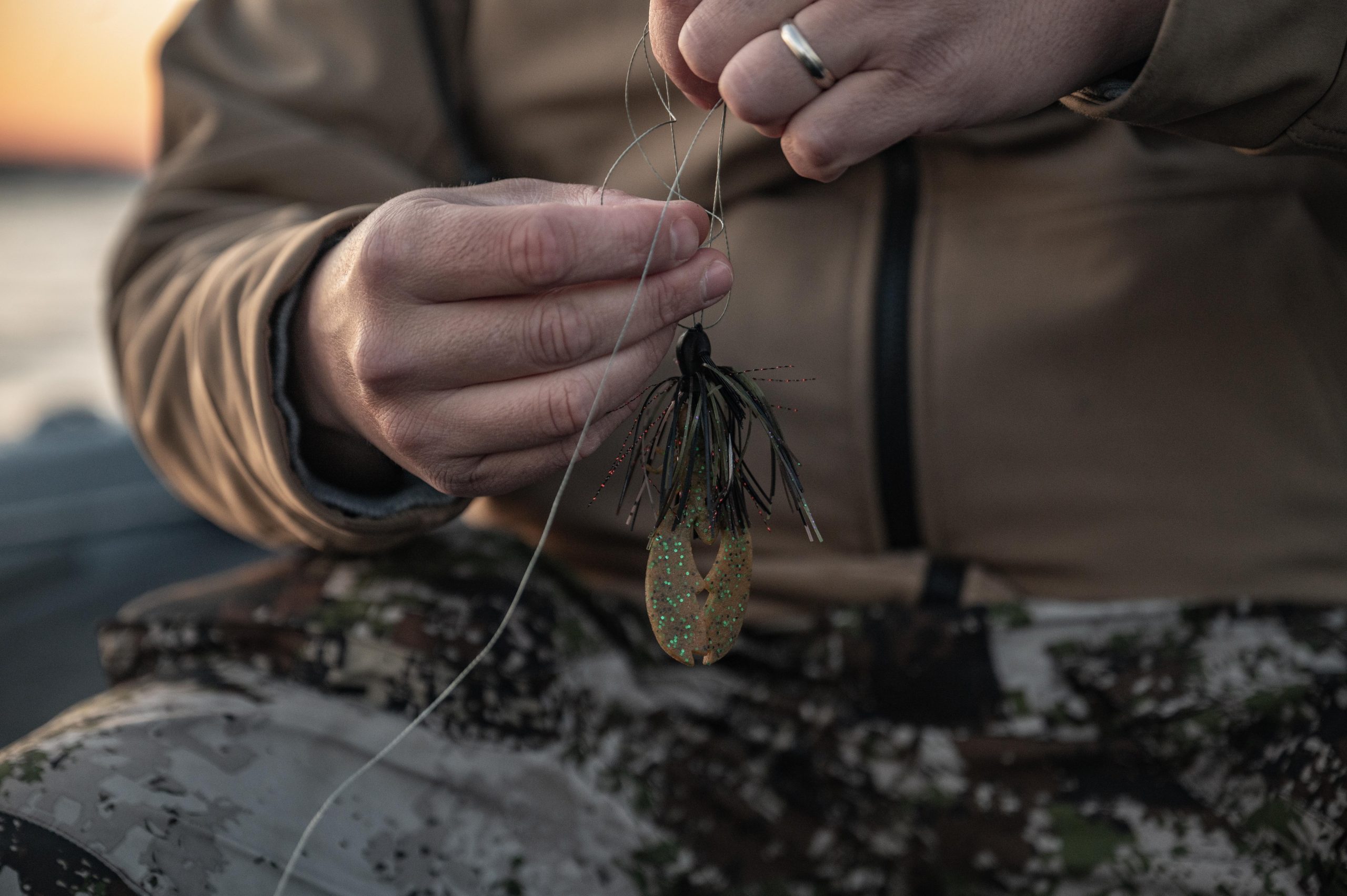
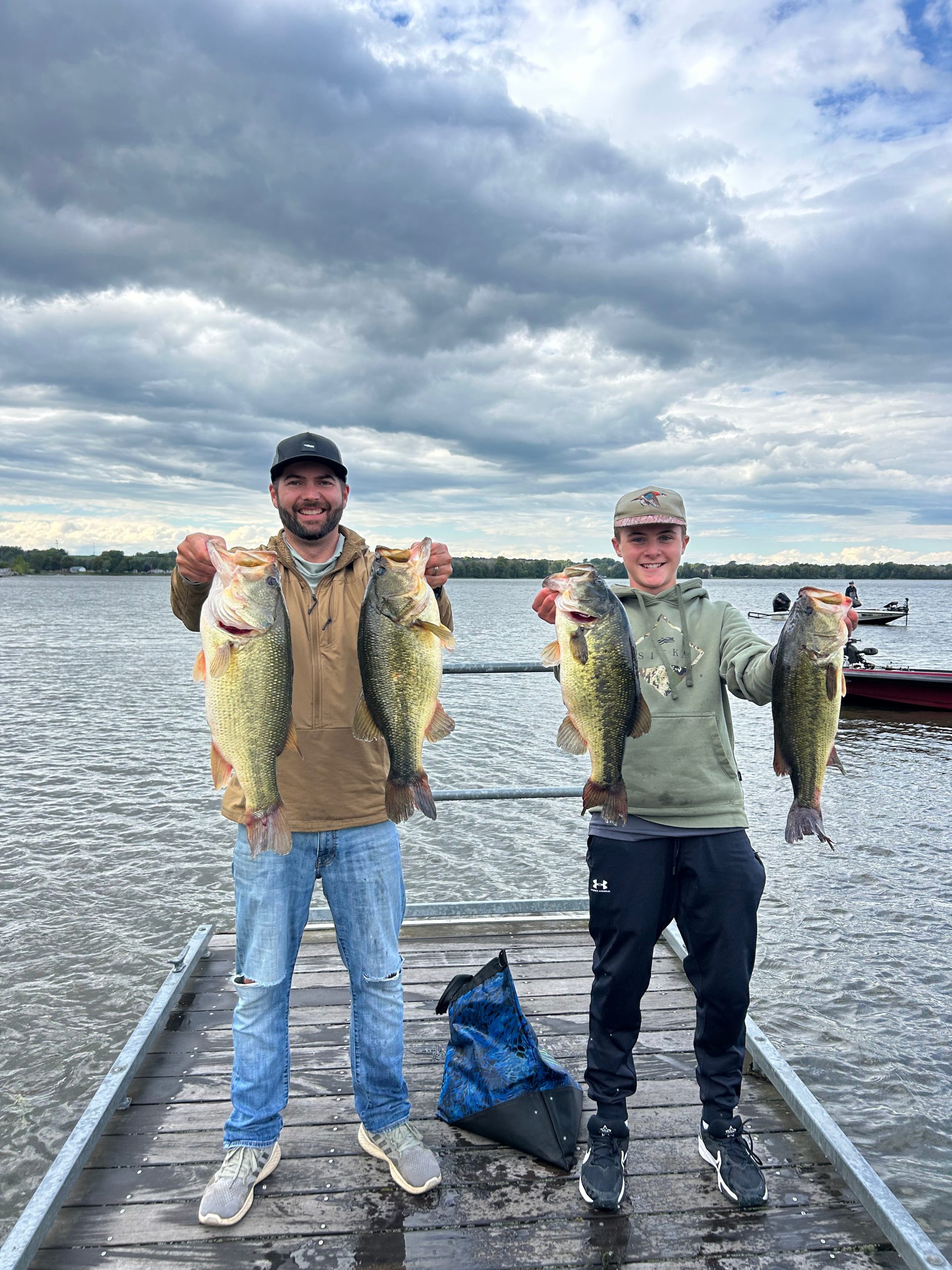
On tournament morning, we hit it first and it was happening. We boated four fish quickly, including two 5-pounders and a 4.5. The bites were sparse, but the clouds had big fish high in the water along the edges of the grass. We trimmed a ¾-ounce Lil Magnum and paired it with a Berkley MaxScent Chigger Craw.
Charlie struggled to get bites that day, but he ground out our limit as we began to rotate through some additional areas. We knew we had a good bag, but needed one more fish. A few spots later, I added another 4.5. The Bubba Scale now read over 22.
“Do you think we have enough to win?” Charlie asked, as he culled our small fish.
“We still have work to do,” I said.
We began working through much of the stuff we had fished earlier that morning. At one spot, using XPLORE, I noticed a fish sitting in the shade of a grass clump. One flip, another cull — almost 23.5.
An hour before weigh-in, we pulled into a boulder stretch. We had found this spot earlier in the year and hoped it would pay off at some point. Today was the day. I hooked another fish and Charlie quickly netted it, our third 5-pounder of the day.
It was our first win as a team and our biggest bag at 24.91.
Closing Out Strong
The final two stops were also out of the far north end of the inland sea, and Charlie and I were nestled into second place in Angler of the Year (AOY) points. The points are calculated based on the best five events out of the seven total. We had some good finishes and a solid lead over third place, but things change when teams drop bad finishes and replace them with better ones. We needed to do the same, so our 9th– and 10th-place performances had to go. First place was out of reach thanks to the dominating performance by Jed Worthington and his father. They were unstoppable all season and dedicated a lot of time to perfect their approach.
Event #6
September 14, 2025
5th Place, 20.38 Pounds
The 6th event was solid. We fished our milk-run of locations and put together more than 20 pounds, good enough for 5th place, dropping that 10th-place finish. With deer season upon us and motivation diminishing, Charlie and I decided to fish the final event freely, and we planned to stay in Missisquoi Bay.
We began shallow and Charlie started off a limit with a few nice fish. We rotated from shallow to offshore rock, and the fish were biting. Between the two of us, we boated more than 15 fish off the same boulder, including two 4-pounders. We were having fun, with little pressure, and closed out the season strong.
Event #7
October 5, 2025
Our efforts in the final event were enough to lock up 2nd place in AOY. Our almost 20-pound bag capped off our most consistent performance to date. We weighed in more big bags than ever, made good decisions, were very strategic, even with little to no practice time, and capitalized on big bites. It took a lot of focus, working through ups and downs, periods of hours between bites, but we never gave up.
Year-to-Year Changes
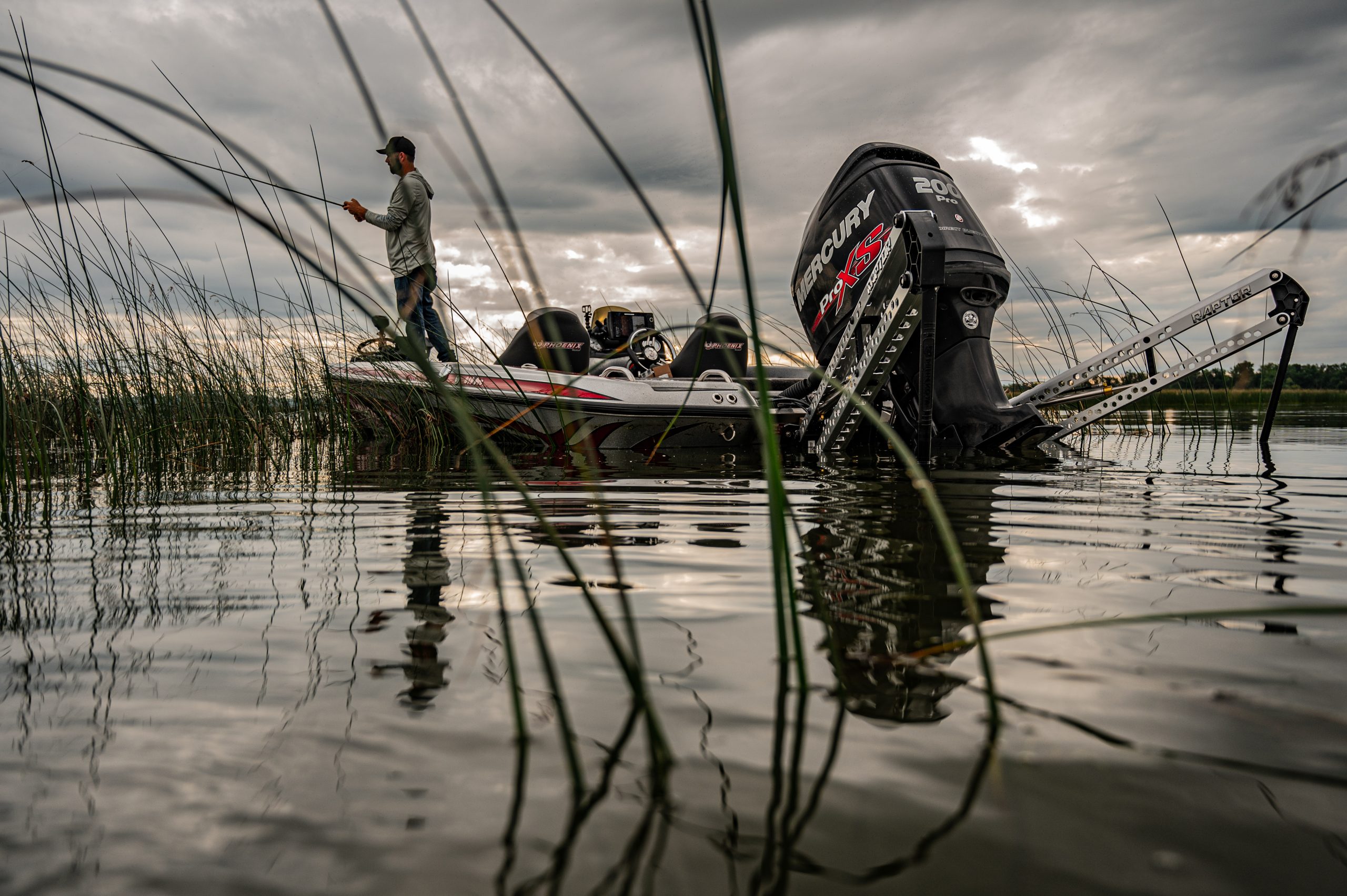
The lake changed drastically from 2024 to 2025. While some of the areas we fished were similar to 2024, the majority were not. The grass grew differently and didn’t produce good fishing until August. It grew thicker in some places and less so in others. Areas that should have been good simply were not. In 2024, the grass became slimy later in the year but still held fish. This season, there was less slime, but the bigger schools of bass never showed up.
More than ever, we had to thoroughly fish areas to get bites. There were more singles and doubles and fewer schools. There were only a couple of times when we caught multiple keepers from the same stretch of grass.
With more events launching up north this season, we dedicated more time to learning water in that direction. We became comfortable going off script and fishing what felt right. We left when we needed to leave, and we stayed when we needed to stay.
Gear for Success
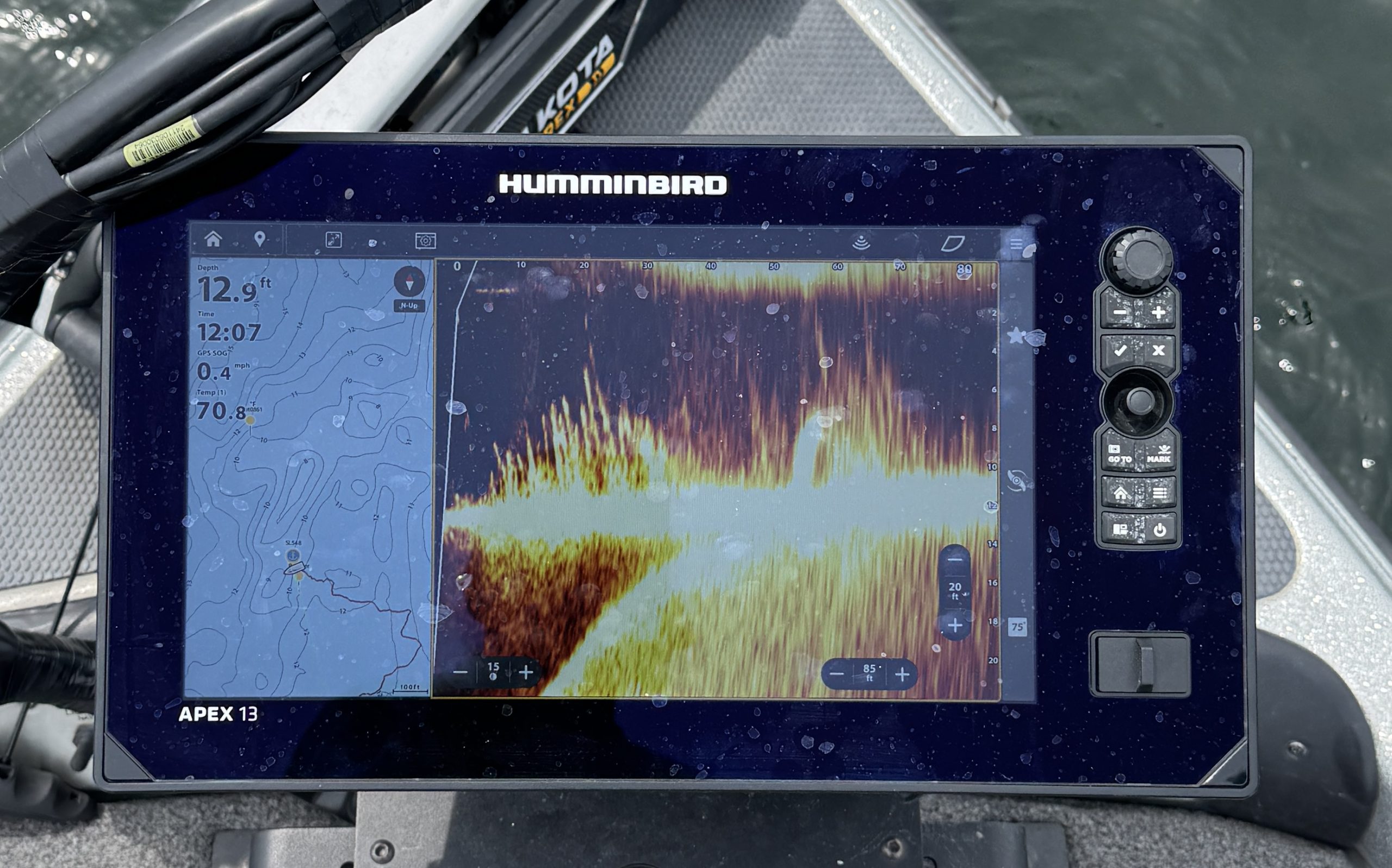
Forward-facing sonar has always been fun to use for smallmouth, but MEGA Live 2 has changed the largemouth game, too. Being able to scout with limited time and find grass beds was key. Seeing fish sitting within and adjacent to the grass put some key fish in the boat.
In 2024, we fished quite a few ½-ounce Beast Coast Lil Magnum jigs, swapping to ¾-ounce as the season progressed. In 2025, we needed to switch to ¾-ounce much earlier. The same combination of jig and Berkley MaxScent Chigger Craw produced every single jig fish. Color didn’t matter much, but we prioritized black and blue as often as possible.
Lots of bluegill were high in the grass each morning before the sun came up, and this pulled bigger largemouth up with them. The ¾-ounce jig punched through the matted sections and then fell fast to the bottom. Often, the jig would stop falling, and we had a split second to react.
With our growing focus on targeting largemouth over smallmouth, we rigged several rods for each event with assorted colors and jig sizes. Being able to keep fishing and switch quickly kept our baits in the water and brought us that much closer to the next bite.
For rods, we used a variety, and both Charlie and I had our favorites. Mine were a Fenwick 7’5” HMG fast action and a Daiwa Tatula Elite 7’5” heavy action. Charlie leaned on a Daiwa Tatula Bass 7’4” heavy and a Fenwick Eagle rod.
For really thick clumps of vegetation, I was fortunate to have early access to the new Berkley Flux Gill. I rigged it on a 1½–ounce weight and punched it with a Fenwick Elite Heavy rod. While we weighed in only one fish on it all year, it helped us get going with limits several times. Overall, the fish were more spread out than grouped tightly in thick clumps.
During practice one afternoon, I caught my biggest Champlain largemouth, a 5-pound, 15-ounce lunker on the Flux Gill. It was in a new area I had found and hadn’t produced to that point. Still, we kept it honest and were able to weigh in a few bass from the grass in the final two events.