
After purchasing his first home, my good friend and co-worker, Matt Ryan, received a celebratory housewarming gift from his realtor. It was a stained and resin-coated wooden serving tray decorated with crashing waves and personalized with his laser-engraved initials. The platter exuded an incredible coastal aura. Curious as to who created this functional home decor, I discovered Timber and Flow—John Hallinan’s LLC, under which he designs and builds these pieces in his home workshop.
“Nobody wants a boring charcuterie board,” joked Hallinan. But the scope of his work goes far beyond custom-made vessels for serving cheese and olives. Wall art, coasters, cutting boards, welcome signs, rustic wooden flags, tables, and Adirondack chairs made from discarded hockey sticks are just a few of the everyday items into which he has etched and epoxied his own personal flair.
Hallinan was raised in Mashpee, Massachusetts, just a few miles down the road from his current home and spacious, two-story woodworking shop. His workspace, where each marine-themed creation is cut, coated in resin, and set out to dry, sits in the shadow of a full-size replica of Nobska Light in Woods Hole. The towering structure was imagined and erected by his father, former naval officer Dan Hallinan, over five years, and is just a hair taller than the actual lighthouse, which has been a familiar beacon to fishermen since its restoration in 1876. The building features three layers of brick stacked over 40 feet high, and it is crowned with one of the old lamps from Gay Head Light.
“My dad was always building something and showing me how to use different tools, so I learned to work with my hands through exposure,” he said. Over the years, he has built vinyl in-ground pools, repaired cars on their home lift, and helped a family friend put the finishing touches on an 86-foot Schooner named Larinda.

A business management major at UMass Dartmouth and Bridgewater State College, Hallinan sought a career that would merge his half-learned, half-inherited craftiness with his interests. “I’m just a hands-on person who has always loved working outdoors, and I got my start in woodworking by fulfilling random projects for friends of mine.” After experimenting with his family’s wooden kitchen island, his early endeavors into resin-treated carpentry (and most popular recurring requests) were customized weather-proof cornhole boards. “I’ve probably built over 125 sets of them,” said Hallinan. However, each set required two weeks of work, so he struggled to find time for projects that offered more creative flexibility. “I stopped making them for years and moved on to river tables and eventually, home decor, which is what I do now.”
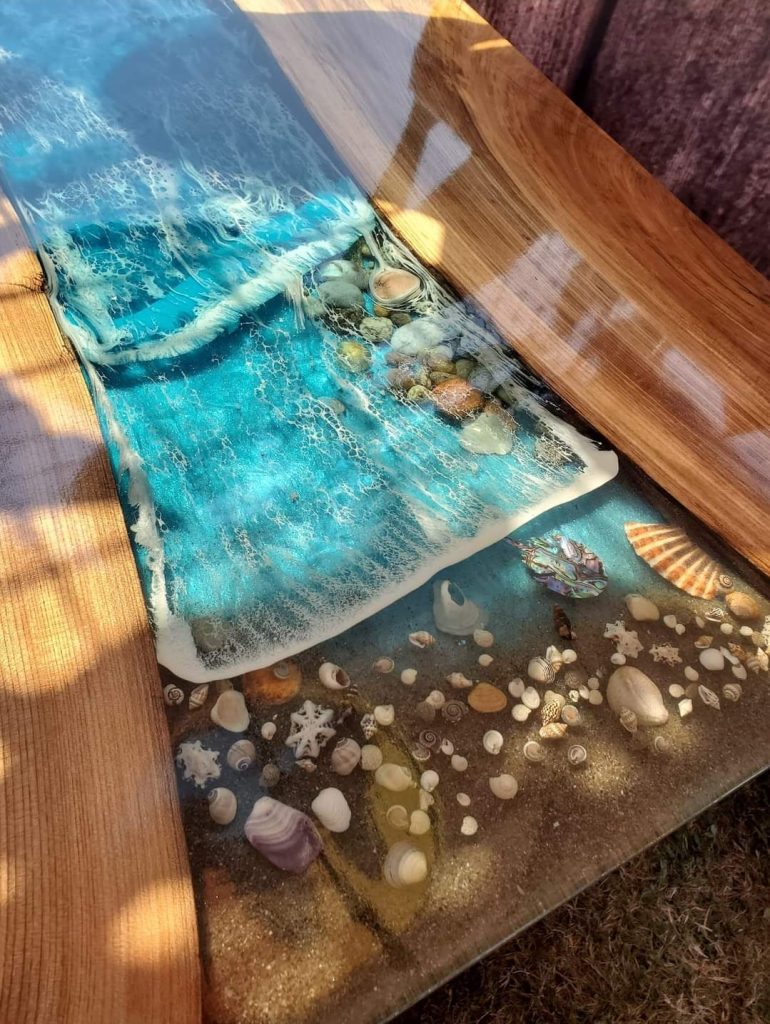
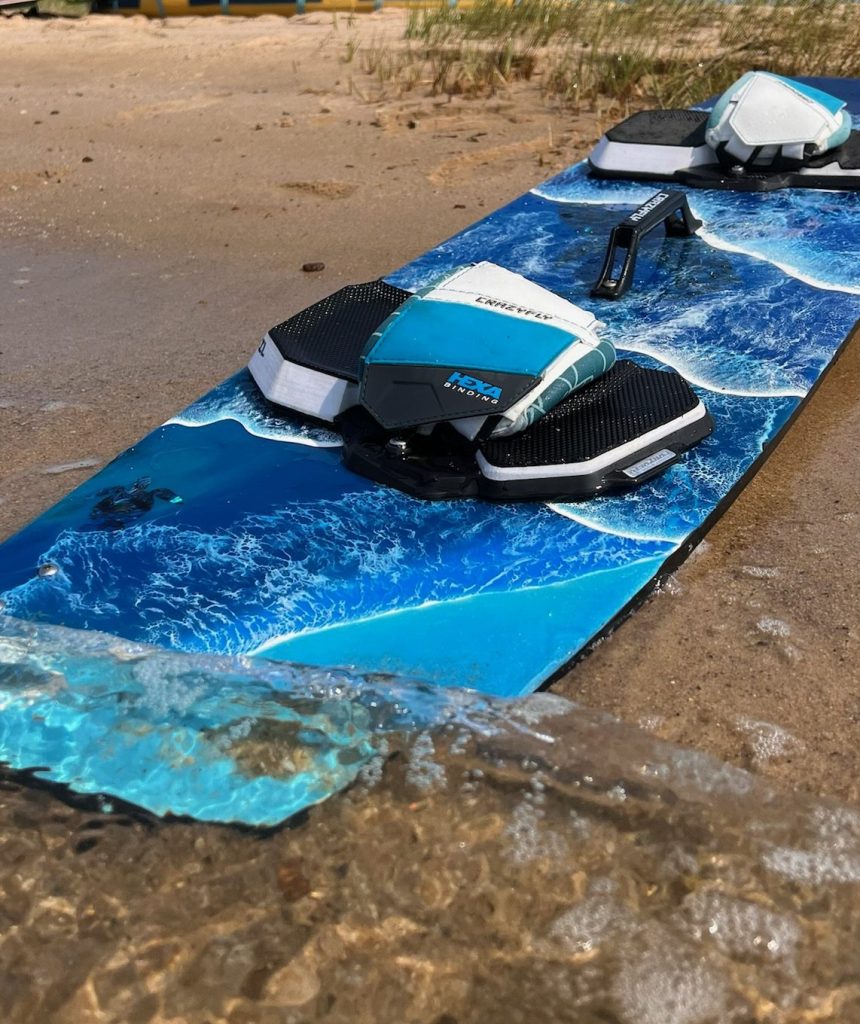
Hallinan’s “river tables” featured the path of a meandering riverbed, painted in turquoise, navy, and royal blues, beneath a shield of resin. His depiction of water using different shades of blue not only creates depth within each piece but also provides a unique contrast against the wood’s natural grain. The style was well-received, and eventually, he expanded his canvas to include cutting boards. “Before the ‘cutting board boom, ’” he chuckled, “I had seen a few people on Instagram mess around with paint and resin to create this look of a wave crashing on the beach. The wood base with ocean waves is inherently nautical, so I made a couple myself and kept practicing. It took me around six months to get my particular wave pattern to a place I was happy with.”

For home furnishings like dining tables and chairs, Hallinan collaborates with customers to create exactly what they want, and this process begins with selecting the right type of wood, such as black walnut or maple. However, most pieces of wall art—whether it be a sea creature, a lighthouse, or a profile of Cape Cod’s landscape—are made with plywood. “I like plywood because it’s very uniform. It’s layered, so it doesn’t break easily and doesn’t warp,” — two factors he must consider when building outdoor displays.
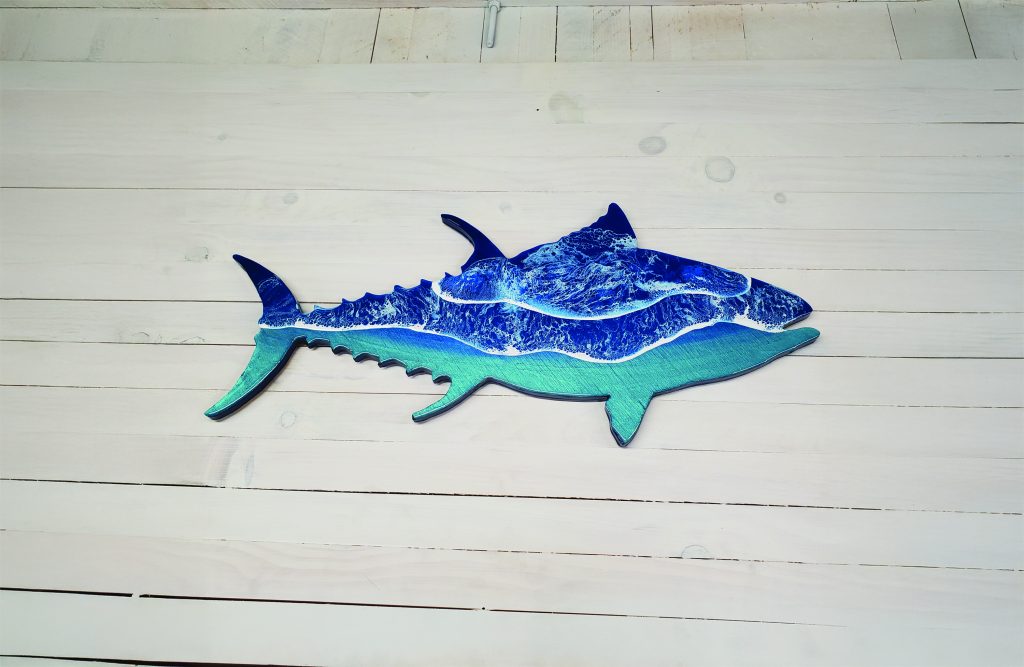
Each piece begins with a template that he traces and cuts out of plywood before applying the base layer of paint. “I try to add a variety of colors that fit the animal, fish, or object I’m building.” A bluefin tuna, for example, may receive a base of deep-sea blue to illustrate the offshore waters in which they dwell, before the first layer of epoxy. Through trial and error, Hallinan found that mixing paint directly with liquid epoxy didn’t achieve his desired effect. “Instead of mixing the two, I tint every layer by adding ink, which helps to blend every color change. Different colors represent different depths.” He adds a wave between each color change to disguise the transition, and the result of this layering technique—paint, dry, epoxy, dry, and repeat—leads to a finished product that perfectly illustrates the natural, ever-changing flow of ocean swells.
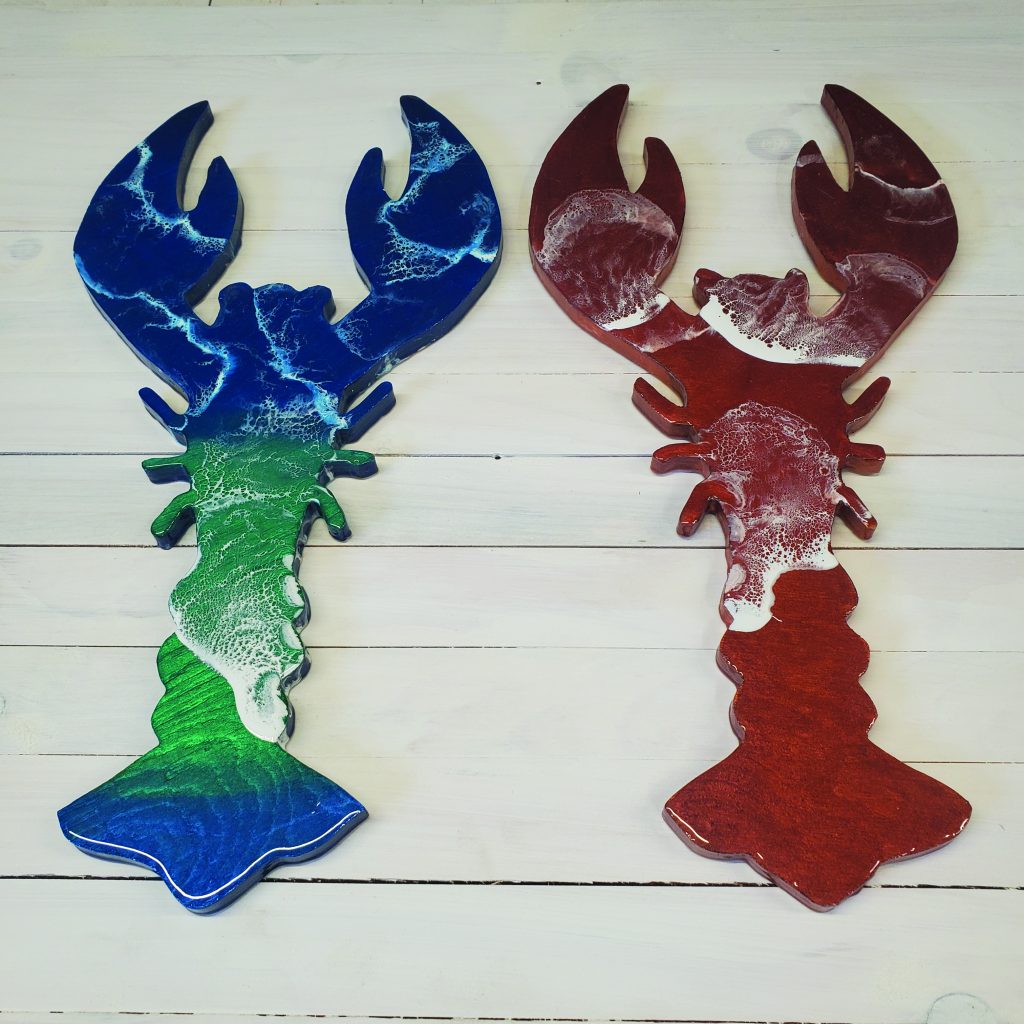
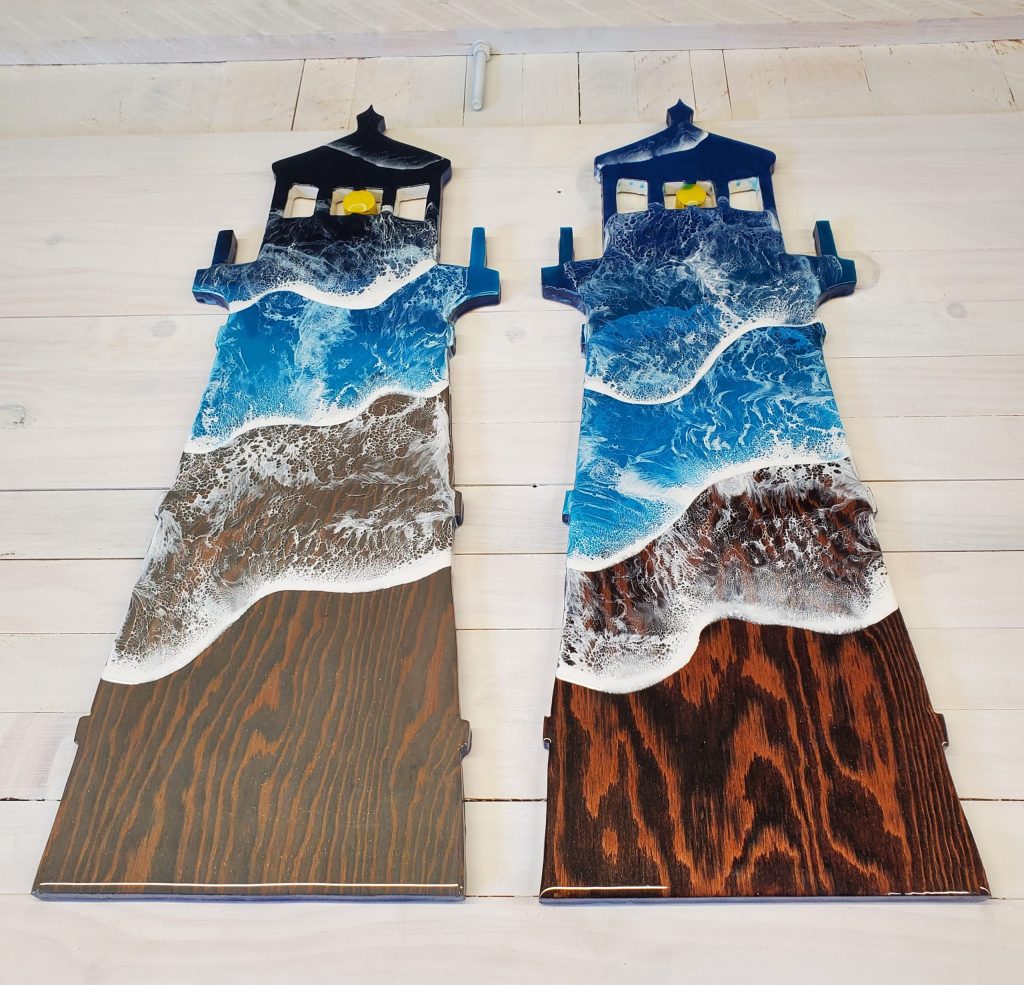
Much like his father, Hallinan knows no limitations when it comes to what he can build. What started as constructing tables and cornhole boards evolved into an outlet where he shares his unique wave designs on welcome signs, bar tops, serving platters, coasters, and wall displays in the shapes of marine animals, ships, and more. “Each piece is truly 1 of 1. I have an entire wall of templates, allowing me to use the same size and profile of a shark or sea turtle for events like craft fairs. However, no two wave designs will ever be exactly the same. Plus, I have a laser engraver on permanent loan from a friend so that I can customize each piece with text or numbers.”
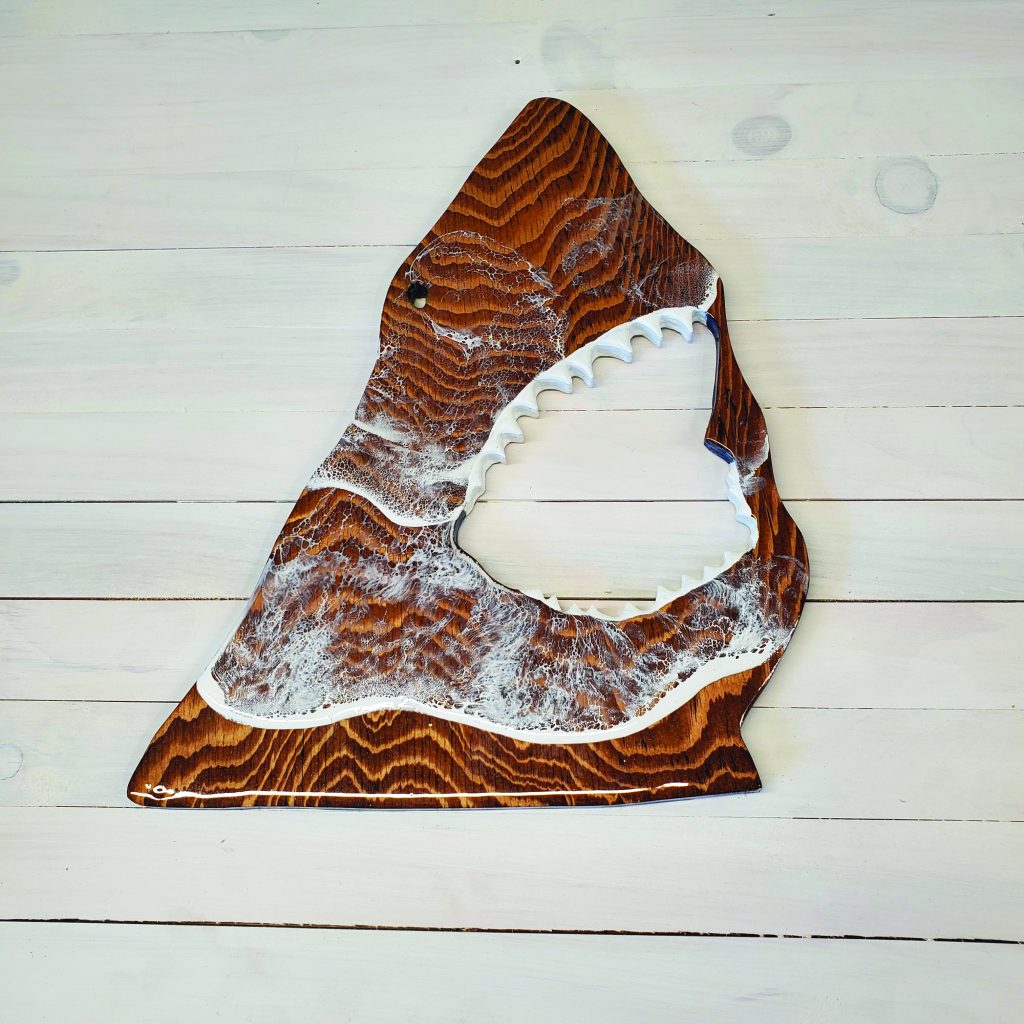
Aside from creative freedom, Hallinan’s favorite part of the job is working on heirloom pieces, which grant him the opportunity to give new life to important items that have been passed down through a family for generations. He also enjoys the inevitable happy accidents that occur while designing template pieces intended for craft fairs and art shows. “When starting from scratch, mistakes are sometimes a good thing. Everyone’s taste is different; what I don’t like, someone else may enjoy.”
www.timberandflow.com
Instagram @timberandflowllc