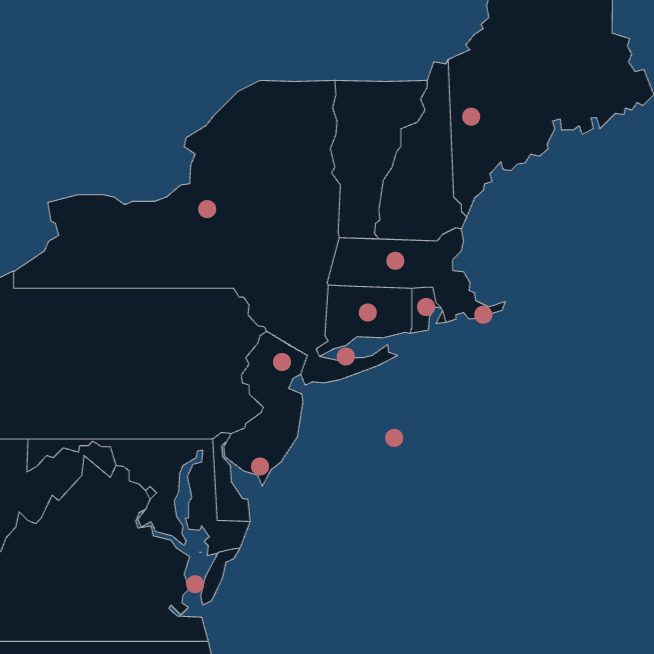

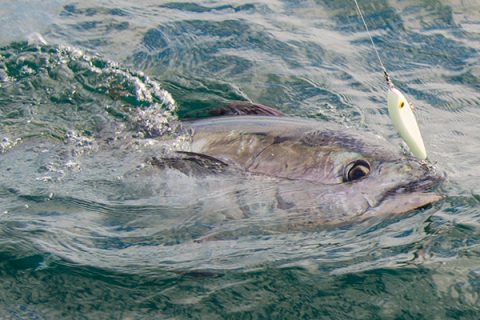
When most fishermen think of tuna, they think of clear blue water and long runs offshore in the middle of a hot summer night. But what if I were to tell you that there was a new fishery that has developed over the past five years where you can catch 80- to 200-pound bluefin tuna within sight of land, in the late fall and early winter no less. Crazy, right? Not at all.

Welcome to the New Jersey shore, where everything you thought you knew about tuna fishing, you can throw right out the window – well, at least from October to December. To start with, forget the long runs. This fishery is ideal for 20- to 24-foot boats capable of fishing between 2 and 5 miles off the beach. Second, don’t bother trying to find warm, cobalt-blue water. This time of year, our waters are cold and green. And finally, don’t worry about those hot, muggy warm summer nights – you’ll need to pack fleece and Gor-Tex, because this is wind-in-yourface, ice-on-the-deck bluefin tuna fishing at its best!
Why Fall?
When most people think of tuna fishing, they swear if you are not in Gulf Stream water, you are not in the right place. This is true for all but one of the tuna species. You won’t find yellowfin, longfin or bigeye tuna running the beaches of the Jersey Shore in November and December. What you will find, however, is the “cold-water tuna,” Thunnus thynnus, the Atlantic bluefin tuna.
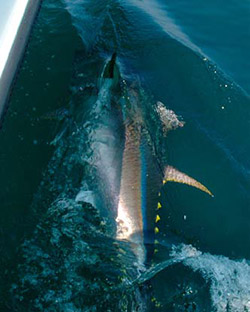
Atlantic bluefin are warm-blooded – a rare trait among fish – and are comfortable in cold waters. Bluefin are a highly migratory species, capable of traveling upwards of 40 miles an hour. Bluefin migrations take them from summer and fall feeding grounds in Newfoundland and Iceland to their winter and early spring breeding grounds in the tropical waters of the Gulf of Mexico and sometimes across the ocean to the Mediterranean Sea. To fuel their massive bodies, bluefin are constantly on the feed. The need for energy-rich food drives them to the bountiful waters of the North Atlantic, where they feed on oily baitfish such as mackerel and herring to fatten up before their journey south or east to their spawning grounds.

During the months of October, November and December, the coast of the Jersey shore comes alive with massive migrations of gamefish and baitfish. While the majority of anglers this time of year are busy chasing striper and bluefish blitzes up and down the beach, a select group of tuna hunters are lurking just outside of this action in search of a different kind of “feed” – one that involves 200-pound, purple-backed locomotives slashing the surface.
The primary baitfish that draw these bluefin to New Jersey’s inshore waters are sea herring and large sand eels. As long as these baits are present in good numbers, the bluefin won’t be far off.
Right Place, Right Time

Timing is everything when targeting inshore bluefin. Because the fish are not holding on structure, it can be tricky zoning in on the bite each day. While one day the tuna could be three miles off the beach, the next day the same body of fish could move 10 to 15 miles north, south or east. The good news is that when big bodies of sand eels and herring arrive, the fish will feed in the same general area day after day until a storm, or a strong wind or current moves or scatters the baitfish.
Finding birds is critical to finding feeding tuna. Many captains will search for miles until they see the right kind of activity. Unlike the all-out blitzes with thousands of birds everywhere, which is common over bass and bluefish, birds over tuna seem to hover high in the air in small groups until the fish come the surface. At that time the birds, all at once, will dive toward the water and hover a few feet above the surface, looking for stray or stunned baitfish.
Northern Tactics
Unlike the summertime bluefin that are caught with traditional trolling and chunking methods, these nearshore tuna simply do not respond to these tactics. For years, anglers would see fantastic tuna feeding frenzies in the fall and try to use the tactics that worked so well during the summer offshore season. Despite long hours trolling lures, chunking, and fishing live bait, anglers could not consistently put these nearshore bluefin in the boat.

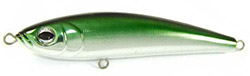
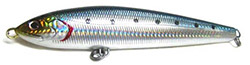
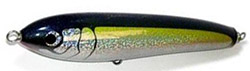
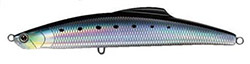

It wasn’t until two years ago when Captain Adam Sherer went out on his first day as a part of Shore Catch Guide Service and put three fish on the boat, all on lipless stickbaits. Having spent the previous two years on Cape Cod honing this technique, Captain Adam introduced a new tactic to the Jersey crew and changed the game of this late fall/early winter inshore bluefin fishery. Stickbaits, most of which are expensive imports from Japan, are lipped and lipless swimming plugs with tremendous finish and super-strong components. Plugs like the Gunz Tailwalk, Shimano OCEA Pencil, Daiwa Saltiga Dorado Sliders, Carpenter, Mangrove Studio Volador, and Shibuki quickly became hot items and anglers began to scramble to purchase as many as possible from shops like True World Tackle in Bayonne, New Jersey and Saltywater Tackle in Brooklyn, New York.
These stickbaits come in a wide variety of sizes and colors and also come in floating and sinking models. Some anglers favor one over the other, but most anglers let the water conditions dictate what type of stickbait they throw. In calm water, most anglers prefer floating stickbaits.
On the retrieve, the lure will dart under the surface then come up to the top and create a commotion. In rougher conditions, sinking stickbaits get the nod because they do not get lost in the surface chop and track better a few feet below the surface. When herring or halfbeaks are the primary baits, stickbaits are tough to beat.
Soft-plastic baits are also very popular among anglers chasing the Jersey beachfront bluefin. Once again, the nod goes to tuna fishermen on Cape Cod who have been using Hogys, RonZs, and Slug-Gos to catch these fish on top for some time.

A number of factors need to align perfectly in order to “get tight” on these tuna. First and foremost, boat positioning is crucial to hooking up. Approach the fish from up-wind or up-current. Since tuna will generally move into the wind while feeding, boats should come up ahead of the feed a good 50 to 100 yards when possible and drift into the feeding frenzy. At times this can be frustrating because even perfect boat positioning does not automatically guarantee a cast at the fish. When the fish are moving quickly or are not staying on the surface long, you should motor in at an angle ahead of the fish to get within casting range quickly. Sometimes, driving right on top of the fish will put them down, but when they are moving quickly or are only staying on the surface for a short time, it may be your only shot at getting in on the action.
Once in front of the breaking fish, get a cast in quickly and start to work the plug or soft bait with a steady darting motion. Even if the fish have gone down by the time you get into casting range, still make one or two casts. Just because you can’t see the fish on the surface doesn’t mean they aren’t still around and in a feeding mood.
There are times when the surface lures do not work, but jigs will fish well, particularly if the fish are feeding on sand eels. When these slender baitfish are abundant, bluefin will feed on them on the surface early in the morning, but as the sun comes up, the sand eels will go deep to burrow into the sand and the bluefin will follow them to the depths. When this happens, my go-to jigs are the Stingo PBJ and the Jersey Jay Tonno Jigs.
While jigging serves as an effective secondary option when chasing tuna along the beaches, the most effective way to catch these fish at this time of year is definitely with topwater stickbaits and soft baits, hence the need for strong, long spinning rods.

The Right Stuff
The key to getting tight is to quickly get the lure into the melee while the fish are on the surface. This is much easier said than done, and wind, boat traffic, water conditions and “speed of the feed” all present tremendous challenges to getting close enough to present the lure. This requires a 7½- to 8½-foot rod capable of casting a plug or soft-plastic lure accurately and for distance. There are a number of good options for tuna popping rods, and my favorite is the Spinal Rods Popping Series.

Spinal Rods Popping Series SPM8
www.spinalrods.com
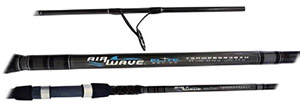
Tsunami Airwave Elite 862 Tuna
biminibayoutfitters.com

Shimano Terez TZS78H
www.shimano.com
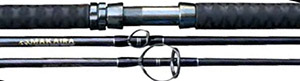
Okuma Makaira Popping Rod
www.okumafishingteam.com
The 8-foot, medium-action Spinal Rod is a great fit for our fall New Jersey fish, as it perfectly handles bluefin in the 100- to 175-pound class. The 7-foot, 8-inch heavy-action Spinal popping rod is best suited for fish over 200 pounds.
I match the popping rods with either the Van Staal VSB 250 or the Shimano Stella 18000, both of which have the drag power and line capacity needed to tame a runaway bluefin.
Line selection is also critical, and I have begun using FINS Hollow Core line for both jigging and popping. This is splicable line that gives anglers the ability to create loop-to-loop connections or splice leaders into them for the strongest and cleanest connections possible. For most of the popping outfits, I use 60-pound-test FINS Hollow Core and then splice in a 100-foot section of 100-pound-test FINS Hollow Core as a topshot before the leader. This gives me a stronger connection when I need it most, as the fish gets to the boat and I have to apply the maximum amount of pressure to get the fish to the boat. My leaders are 8- to 12-foot, 100-pound-test fluorocarbon wind-on leaders.
Once you hook up, be ready for the battle of your life. Fighting 100-poundclass bluefin on 8-foot spinning tackle is no easy task. Let your legs and core do the work. Keep your knees bent and your back straight. Allowing your upper body to lean forward too much will give the fish more leverage and power over you. Pace yourself as well. The fight will last a while, unless you are very experienced at fighting big fish on this tackle. As the fish gets to the boat, expect at least one fierce burst of energy. When it comes time to land the fish, only take it out of the water if you intend to kill it. When releasing bluefin of this size, use a lip gaff to hold the fish in place while the boat is in motion, and get the hook out quickly.
When the water chills, and the fall migration of striped bass arrives along the Jersey Shore, take a peek a mile or two beyond the striper blitzes. Those birds hovering high in the sky could very well be spotting big bluefin, well within sight of land!
Like to more info on gear and were to go.
Have you ever thought about adding a Zeebaas reel to the line up?
Can you provide information on best locations, easiest inlets, etc?
Thank you