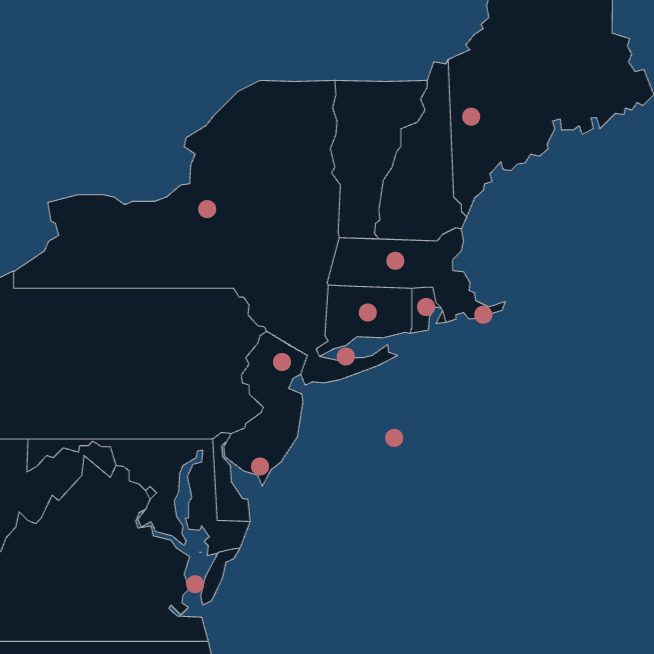

This year, the month of May could be very different from years past. With the water temperatures not reaching their regular winter lows, the fishing may progress more quickly. The last time we had a mild winter and an early spring, the black drum bite was on by Mother’s Day, and this could very well be the case this year.

The really big addition to the fishing in Cape May the past couple years has been the excellent striped bass bite on the beaches. In May, the surf bite has ranged from good to red hot with plenty of fish in the 20-pound range hitting the beach. For the most part, clams pinned to the bottom has been the best way to target these fish, although anglers have also found success by casting plugs around the jetties from Cape May Point to the where the Cape May Canal enters the Delaware Bay.
Most days, the best fishing has been during the last two hours of the incoming and the first two hours of the outgoing, as this is usually when the water is the cleanest. But remember, this is not carved in stone. If you put in your time, you will most likely be rewarded with a nice surf-caught striper.

This fishery has been improving each year, and there is plenty of area to fish. The stripers run from the ocean-side jetties around the point and up along the bay’s shoreline. Parking and beach access is very good in most places, but there is no driving the beaches, so walking is a must. All you need is a couple of 6- to 8-ounce sinkers, a 9- to 11-foot surf rod, some hooks and clams for bait.
My favorite springtime target is the black drum. All bets are off as to when they will start to bite if the trend of warmer water continues. Most years, you wouldn’t miss much if you held off your drum fishing until the middle of the month.
Drum enter the bay long before they begin to bite, but when the water temperature reaches 60 degrees, they will begin to feed consistently. Usually the first fish to bite are the smaller 12- to 25-pounders, followed by drumfish in the 40-to 60-pound range, with some fish pushing 80 pounds mixed in.
The sooner the water warms, the sooner the bite will turn on. Once the water warms into the upper 60s, the drum will again become picky and bite only at the end of the incoming when the water cools a bit. You will continue to hear them drum under the boat, but the fish won’t aggressively feed in the warmer water.
Fresh clams are the bait. The rig is very simple – all you need is a fish-finder rig with a 30-inch leader and a size 8/0 to 10/0 hook with the whole surf clam attached to it. Just make sure you use enough weight to keep the bait on the bottom.
Most years, the best of the bite will be in the late afternoon and after sundown. Figuring out where to fish is easy because as soon as you leave the canal, you will see boats anchored over Tussey’s Slough and to the west of there. Slaughter Beach is another good spot on the Delaware side of the bay.
Another option in the bay will be the fluke fishing. Most of the good fishing will be in the upper bay northwest of Egg Island Point and above Miah Maul Shoal Lighthouse. Like everywhere else, the throwback-to-keeper ratio will be the best early in the season – since the keepers only get caught once.
Strip baits such as squid and bluefish or dogfish belly are the best, but it doesn’t hurt to have some minnows. The combo of a strip of cut bait and a minnow is often deadly. Some days a bucktail with a strip of cut bait or a piece of Gulp will also be very productive.
Last but not least will be the black sea bass fishing in the ocean. The season will open May 19 and there will be some excellent fishing early on, before the most popular structures are picked over. Almost all of the wrecks will be holding large amounts of sea bass, as will the Cape May and Wildwood reef sites. The water temperatures will determine how far off you need to go to find the keeper-size sea bass. Most likely, by this time of the year, the wrecks in 60 to 70 feet of water or less will be filled with these fish ready to bite as fast as you can get bait to them. A high-low rig baited with a small piece of clam and a strip of squid will get the job done. Salted clams work the best because they will stay on the hook the best when small sea bass or other reef-dwelling fish pick at the bait.