
Originally published in the September 2010 Issue of On The Water Magazine.
When it seems as if the entire nation has migrated to the beaches of the East Coast, a surfcaster needs an escape plan. Block Island may no longer be the secret fishing spot it was in my youth, but it remains a special place where I can go to get away from the crowds and reconnect with the essence of surfcasting.
At one corner of the island, past miles of rocky shoreline, far away from house lights and car traffic, lies Southwest Point – a place where the bottom is covered in slick rocks, the currents are wild and the fishing is worth all the effort that getting there demands.
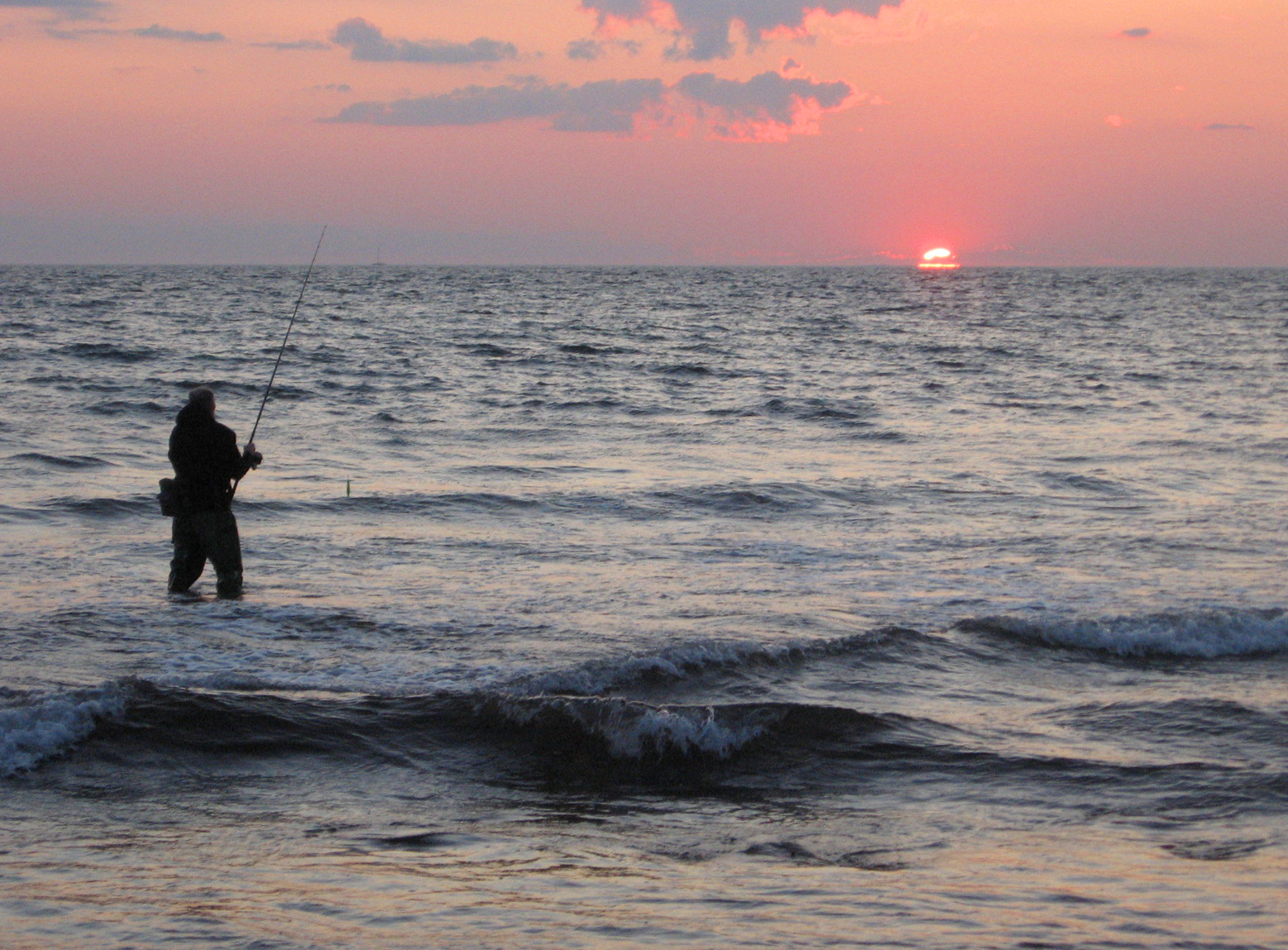
My numerous experiences at Southwest Point have been so magical, I now refer to this corner of Block Island as “The Church.” Spending a few hours alone in the water, taking in a sunset and casting at the moving shadows, can be as peaceful and communal as going to church. The bumpy drive, the anticipation of coming over the bluff and spotting birds working over the waves, and the feeling of being encompassed in water teeming with life make Southwest Point my personal sanctuary.
Although water access has changed over the years, Block Island is fisherman-friendly, and the residents have done an admirable job preserving recreational use of the ocean through public access points. Respect is key in these parts, as some roads are town-owned and some are private. Tread lightly, and you will have a much better experience on the island.
On the west side of the island, marked by a blue-topped post at the end of Cooneymus Road, there is a public path that grants access to the curve connecting the southern and western sides of the island. It’s a short path, smelling first of beach plum and salted beach grass and then of dried seaweed. At the end of the path, head south and walk over a thousand rocks the size of bowling balls, past mounds of storm-washed and sun-bleached logs, planks and fractured boat hulls, and you’ll reach the turn in the coastline that is Southwest Point.
Do not fish this location unprepared. It’s not that you’ll need an EPIRB or a satellite phone, but you will want to bring a bag full of lures, a wallet full of leaders and a couple bottles of water. One forgotten piece of fishing tackle means a long ride back to a tackle store and, possibly, a lost opportunity.
The best lures for Block Island are not much different than the mainland mainstays: needlefish plugs, in green during the day and black after dark, bottle plugs, topwater poppers in assorted colors, soft-plastic stickbaits, and, if you are of the mind, live eels. Keep your bag stocked with broken-back Bombers as well. They have the action needed to draw bass out from rocky corners where they’re feeding on lobsters and crabs. A jointed “broken-back” Bomber is my primary lure both day and night, especially when the waves are large enough to force the plug toward the bottom. Use a steady medium-speed retrieve with the occasional snap of the rod tip to keep the lure swimming just off the bottom. It may serve you well to have a swimming plug or two loaded with water or lead shot to swim low in strong swells. This extra bit of weight will also help you toss it beyond the surf line when you have a face full of wind.

If you fish rocky shorelines regularly, you already know how critical tide and timing are. Wading out onto weed-covered boulders at Southwest Point with nothing but water in front of you requires a little homework and a lot of respect. At the start of the ebb tide, the outline of the Southwest Point boulderfield is barely a shadow, a subtle change in wave angles at most. In time, the point opens with the fade of a color break and a line where the surf begins to pitch over rising rocks. Slowly a triangle appears, pointing the way to the shallowest parts of the walk out toward deeper water.
This is not a place for those leaky waders you swore you’d fix. Keep your wader belt tight. Progress over the rocks is slow, as the water hides piles of slick, dark weeds. Felt soles are the absolute minimum; metal-studded soles or cleats were invented for substrates like this. Every few steps seem to land in a boot trap between rocks, one that will make you lurch forward and backward like a dancing sailor.
The view all around will remind you of why we fish through deep summer sunsets and into the cold nights of fall. Fish “The Church” mid-summer, watch the sun give up the sky and the stars come to light, and I promise you will understand how special this spot really is.
The point itself extends southwest. Baitfish are usually active on both sides. Choosing a side to work is all about the look of the water, where the birds are, and deciding where you’ll have room to let a fish run and how you’ll get it to shore.
The hard south side is slight in her drop, sandy to rocky, weedy, challenging and typically not as productive in close. There are several big boulders out there ready to grab your line and burn up your time mending leaders. As is the nature of oceans and islands created by pushy glaciers, the stripers will have ample places to ditch, stall and snap your line. A keeper bass can drag your leader across rocks and through piles of weed, so stick to a heavier mainline with a fluorocarbon leader in the 60-pound-test range. And keep the rod tip up.
The northern side of the point features a more extended curve and a longer fetch, with a sandy shoreline that drops off quickly. Weeds often stack up here along a bottom made up of soupy sand and iceberg-like boulders hidden just beneath. You have your boulderfield full of structure to your left and the sweeping wash holding jammed up bait to your right. Wade out on the point as far as you feel comfortable, plant your feet and cast. Throwing the lure to the north side and pulsing it through the wash has always worked best for me. When there is a hook up, don’t forget about your feet. This is slippery territory, and you will have a long walk back to the truck in wet waders if you aren’t careful.
This side offers one major benefit: if you need a change from boulder dancing and wearing out your cleats, you can slowly cast your way up the sandy beach. This stretch is a prime fishing area and, if it’s your time, the stripers will hold up in a thousand different places. Swing a broken-back Bomber or Rapala west toward the point, and you will be rewarded with a steady retrieve through active, open waters. Push it a bit closer to the point, and you can work the plug right across the whitewater. The deeper water here is also a great place to throw a Hopkins metal. While it’s a moldy-oldie now, this dimpled wonder has helped me land several big fish, and I always keep one on hand. When the water is hot and the fishing lukewarm, slow down the retrieve and take a breath. With so much structure and eddies of cooler water, the bass are in there somewhere.
If the waters are calm, a personal favorite of mine is casting a blue-and-white popper and working it across the surface. Watching the lure splash, feeling your heart race, and then seeing it get smashed and submerge – it’s just perfect! Keep working the popper as it gets closer to the surf line. Don’t give up on the popper or reel too quickly for the last 30 feet; a fish just may decide as the water gets thin to inhale the lure and head for safer waters.
The bottom around The Church is perfect for swimming soft-plastic baits and pulling mid-lipped swimmers. Bucktails are proven favorites for many of us, but beware, this bottom will take more than its share if you don’t keep the tip up. Toss your chartreuse or white soft-plastic into the wash, letting it smack off the rock tops on the retrieve. If the tide is in your favor, throw a big Danny plug or a pencil popper. Even in a head wind, the long-distance cast you will get from these plugs gives you more water to work.
When the sky begins to give way, all the colors around you will slowly change. Montauk Point will light up in the distance. Fireworks for some unknown celebration can appear like fireflies on the horizon. Slow green and red dragger lights will appear. Suddenly, it feels like a new corner of the beach. Bigger fish emerge from deep-water lairs and feed in the darkness. This is the time to throw a black needlefish plug or a live eel. Even though technology has exponentially increased our lure options, you should not forget what works. If I had to, I could fish The Church with just two plugs: a black needlefish and a broken-back Bomber.
When you do hook up on the point, it will serve you well to work the fish to the right or, if you must, straight back to the beach on the left side. Work hard to keep the fish from straying into the rocky minefield. That first keeper emerging from the rocks will be an image never to be forgotten, and if you return, you might just understand why this little place became my sanctuary.