
At the annual 2025 International Commission for the Conservation of Atlantic Tunas (ICCAT) meeting, the quota for western bluefin tuna (our bluefin tuna) was increased, which theoretically should avoid closures to the recreational fishery like we faced in 2025. This increase is due in part to the results from the University of Maine’s Pelagic Fisheries Lab’s Close-Kin Mark-Recapture (CKMR). This project enlists the help of recreational and commercial tuna fishermen to take fin clips of tuna they’ve caught, both giants and smaller juvenile fish, which are then analyzed by Pelagic Fisheries Lab to identify individual tuna by the DNA profiles of closely related family members, such as parents, siblings, and half-siblings.
As the fin clips are analyzed from juvenile, what we more commonly call recreational sized tuna, researchers can get an idea of the population size of spawning, adult tuna. If a higher percentage of the juvenile tuna are related, that indicates a smaller spawning population. If a low percentage of the sampled tuna are related, that indicates a large population of spawning size fish.
Recreational tuna fishermen have been crucial to this work, as they predominantly target the smaller, juvenile fish, and therefore can provide more fin clippings for fish of this size. If you tuna fish, and would like to contribute to the Pelagic Fisheries Lab CKMR, then you can request a sampling kit here. Your contribution can help better manage bluefin tuna, both to keep these fish abundant and to maintain our access to the fishery.
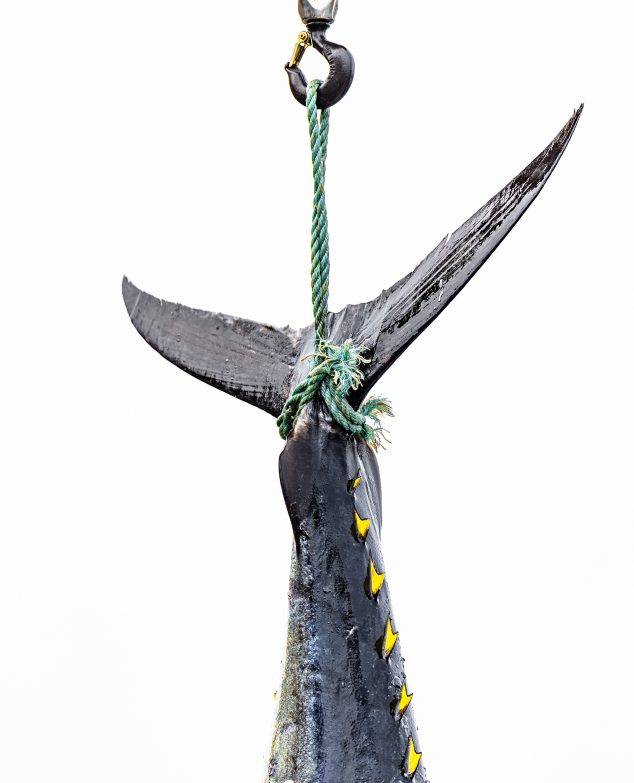
(Cover photo from the UMaine Pelagic Fisheries Lab)
To follow along with the Pelagic Fisheries Lab’s work, be sure to follow them on Instagram, where they occasionally post the incredible journeys that tagged bluefin tuna have made.
View this post on Instagram
Learn more about CKMR from our podcast with Dr. Walt Golet here:

And check out an example of the fin-clipping process for juvenile bluefin tuna, check out this episode of OTW TV, where Anthony DeiCicchi and I collected more than 10 samples during a great day of jigging and popping south of Martha’s Vineyard. Note that the pelagic fisheries lab now asks that you only remove a small portion of the finlet, not the entire thing, as Anthony and I were doing back in 2024.
