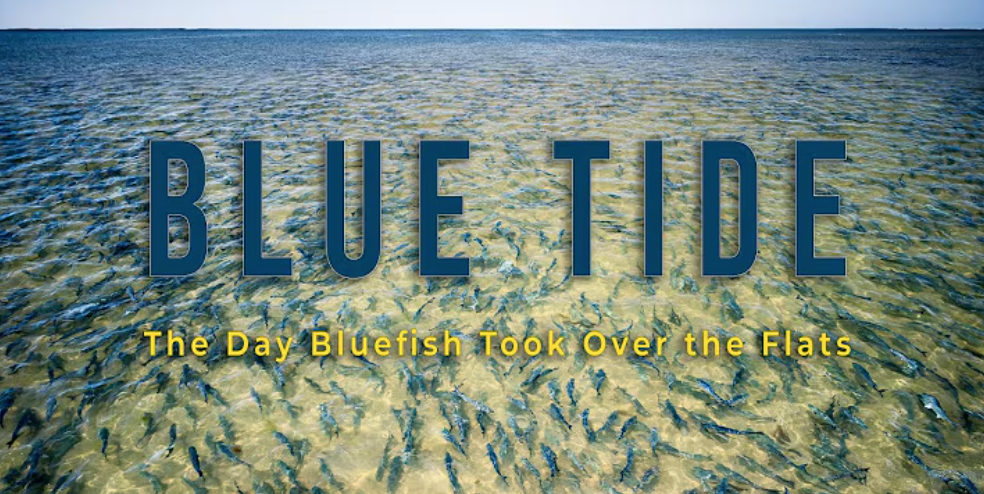

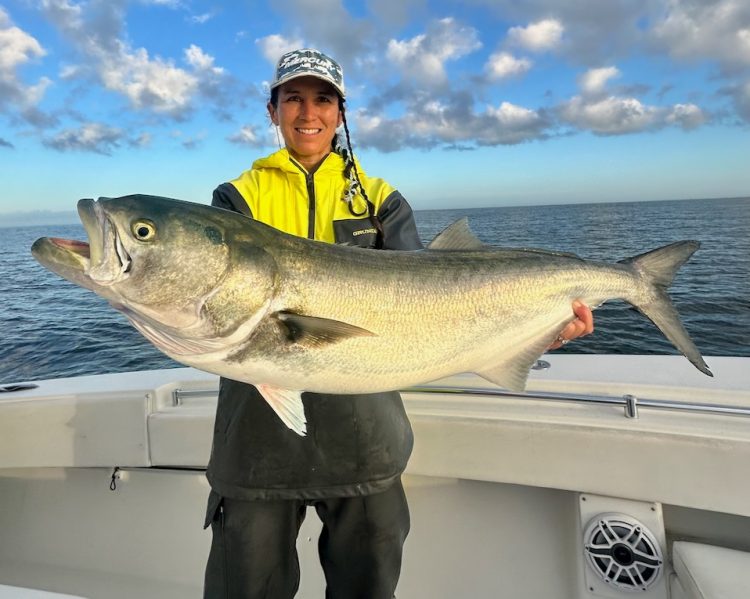
Anglers will be able to keep more bluefish in 2026, with new regulations increasing bag limits for private anglers and those fishing aboard for-hire vessels. After several seasons of tight limits, the change gives fishermen more flexibility when encountering a bluefish blitz this season.
2026 Bluefish Regulations (At a Glance):
- Private/shore anglers: 5 fish per person
- Anglers on For-hire vessels: 7 fish per person
- No size limit
- No closed season
Atlantic bluefish are currently under a rebuilding plan. While the stock is no longer considered “overfished” as of 2024, it has not yet reached its target biomass, meaning rebuilding measures remain in place.
How are Bluefish Managed?
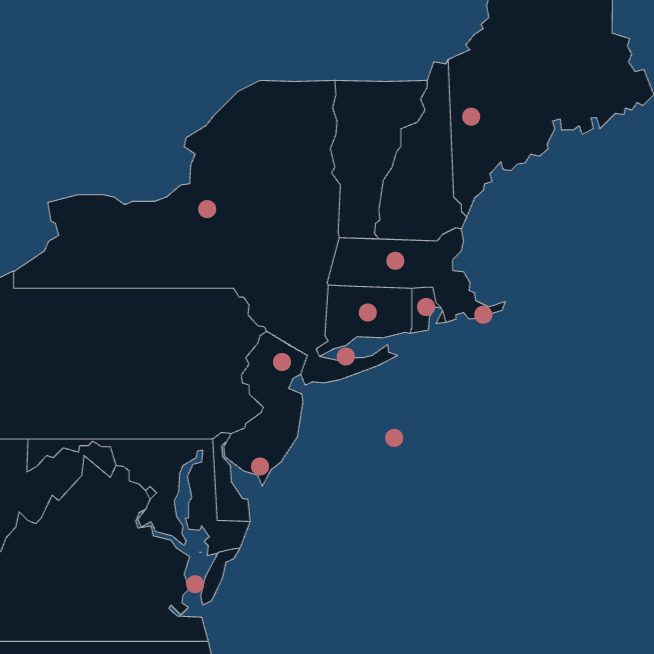
Rather than state-by-state quotas, bluefish are managed with a coastwide possession limit. There is no size limit or closed season—bag limits are the primary tool used to control harvest.
That limit was historically 15 fish per angler regardless of fishing mode until 2020, when it was reduced to 3 fish for private anglers and 5 fish for for-hire trips to meet a required 28% harvest reduction.
The higher limit for charter and party boats was approved and remains in place (despite concerns about equitable access) largely because those trips depend on customers being able to keep fish, and because that sector accounts for only about 5% of total recreational harvest.

Why Are Limits Increasing?
- Stock assessment showed improved outlook
- Recreational harvest limit increased by ~40%
- Managers chose a moderate increase (not full expansion)
Heading into 2026, the Recreational Harvest Limit increased by about 40%, giving managers room to loosen restrictions. Rather than fully expanding access, the MAFMC and ASMFC increased possession limits by two fish per angler, bringing them to 5 fish for private anglers and 7 for for-hire trips.
This change is expected to increase harvest by roughly 15–30%, depending on how it’s measured. Managers took a cautious approach due to the ongoing rebuilding plan and uncertainty in recreational catch estimates. While limits are increasing, the fishery remains under a rebuilding plan, meaning future regulations will continue to depend heavily on stock performance and harvest estimates over the next few seasons.