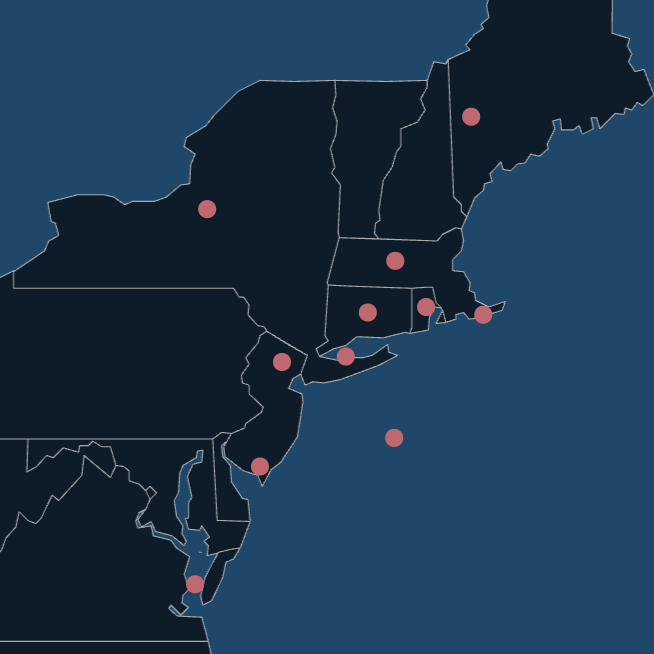

My truck scared up a flock of brant as I pulled into the unpaved parking lot at the East End of the Cape Cod Canal. After breeding and feeding in the high tundra over the summer, these small, short-necked geese use the coastal Northeast as southern vacationing grounds. They’re part of what I call the “winter birds,” along with the eiders, scoters, and mergansers, and they are the harbingers of doom for the striped bass surfcaster.
That may be a bit melodramatic, but the arrival of these birds usually coincides with the departure of the striped bass, which never fails to leave a hollow feeling in my gut. After a few decades of surf fishing, you’d think I’d be used to this by now, yet it always seems to catch me by surprise. After my last local striper trip of the year, I loaf around for a week, not ready to settle for the other nearby options. Eventually, the urge to fish overrides my feelings that nothing compares to striper fishing in the surf, and I accept my fate as a freshwater fisherman for the next few months.
But this past year, the salt proved harder to rinse off, which led me to the Canal on a frigid late-November morning. During my years of calling bait and tackle shops for the weekly Cape Cod fishing report for OnTheWater.com, the stock answer from the Canal-adjacent shops between November and January included vague news of someone catching mackerel in the East End. As a former tackle-shop employee myself, it sounded like the type of thing I would have told a reporter because it sounded better than “No one’s fishing, and I really don’t know.”
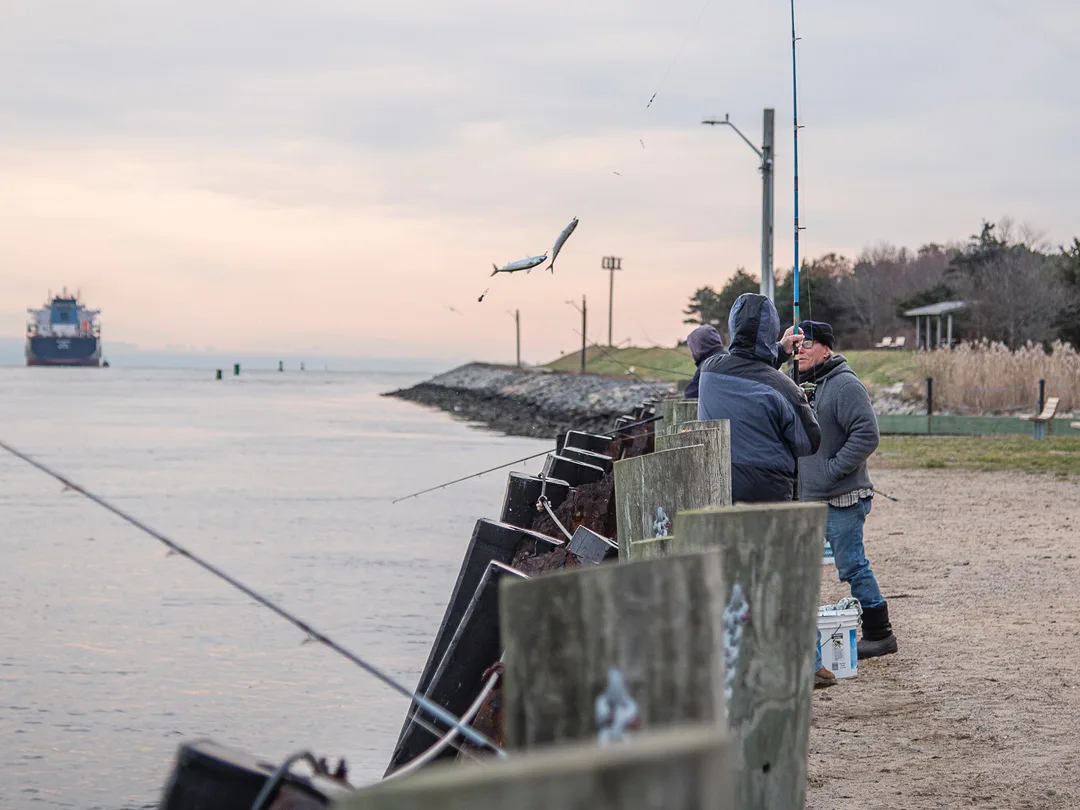
The brant settled on a small patch of grass as I parked and took in the scene. Spread unevenly along the bulkhead, a dozen fishermen had staked their claims with two to three buckets apiece as they cast multi-hook Sabiki rigs into the west-flowing current. I watched one of the men catch a mackerel, toss it underhand into his bucket and then lower a smaller bucket on a rope to fill it with water that he then poured over his catch. While I was bemoaning the stripers’ departure, these serious, organized anglers were keeping the saltwater season alive on Cape Cod.
I took my rod from my truck and walked down the bulkhead to find an open spot to cast. There was plenty of space in front of my truck, but by walking behind the other fishermen, it gave me a chance to peek in their buckets to see just how well the mackerel were running. This is a time-honored tradition among pier and bulkhead fishermen, but I still feel the need to be sly about it. When my kids are with me, I send them on the bucket-peeking missions since most fishermen have a soft spot for young, aspiring anglers, and tend to provide more honest reports on the fishing.
Most of the fishermen greeted me with a gloved-hand wave, and many of them offered advice when I asked how the fishing had been. All seemed to agree that my rig, a standard “mackerel tree” with its five, two-inch-long tube teasers, was too large, while the 1-ounce diamond jig I’d rigged as a sinker was too small. One even offered me one of his Sabiki rigs.

In the middle of the lineup, I recognized a man casting a conventional rod with a smooth, effortless stroke that sent his Sabiki rig nearly halfway across the Canal. Ron Arra, devoted outdoorsman, rod designer, and five-time national distance-casting champion said he tries to get a look at the salt waters of Cape Cod every day through the offseason, even when there’s nothing left to fish for. On that day, however, there were plenty of fish left to catch, Ron said, as he gestured toward the four mackerel in his bucket. He’d planned to fry them up later that night, one of his favorite late-fall meals.
Ron recommended that I get Sabiki rigs tied on 30-pound test and teasers in the 1- to 1½-inch range. Green was generally the most effective color, but on some days, another angler chimed in, they wanted red. Before I left, Ron dropped three torpedo-shaped sinkers, custom-made for him, into my hand and said to try them as a weight next time.
Leaving the bulkhead, I marveled that, even in the 2020s, a small, but dedicated fishing culture could fly mostly under the radar. It helps that mackerel fishing is not a YouTube-able or Instagram-able undertaking, which keeps the GoPro-wearing “influencers” at bay. Also, the practitioners, all over 70, were catching these mackerel to eat. Younger anglers, by contrast, consider mackerel neither sport nor food, catching them for bait if they catch them at all. Unless we all develop a taste for mackerel in our golden years—a taste that drives us to the water’s edge in the depths of winter—will there be anyone left to fish the Canal for mackerel in 30 years?
I then thought of other winter surf fisheries we’ve lost—winter cod in New England, frostfish in New Jersey, pollock in Montauk—and wondered what other fisheries have disappeared not because the fish were gone, but because the fishermen had moved on. This type of thinking is a slippery slope, and by the time I pulled into my driveway, I was so deep into a daydream about what other undiscovered or forgotten fisheries might exist that I’d forgotten to pick up the groceries my wife had sent me out for in the first place. So, I backed out of the driveway and made for the supermarket by way of the tackle shop, where I needed to buy Sabiki rigs.
A symptom of the declining interest in shore-bound saltwater winter fisheries is the inconsistent hours of the local bait shops after the stripers leave. None within a reasonable radius of the supermarket were open, which left me buying the rigs online through Amazon.
Two business days later, I was back at the Canal, feeling the torpedo-shaped sinker tick along the bottom as the five green teasers of my Sabiki rig danced. Fishermen on either side lifted mackerel over the rail two and three at a time, and without too much buildup, I soon had my own stringer of mackerel fighting against me and each other as I reeled them toward the rusty, crumbling bulkhead.
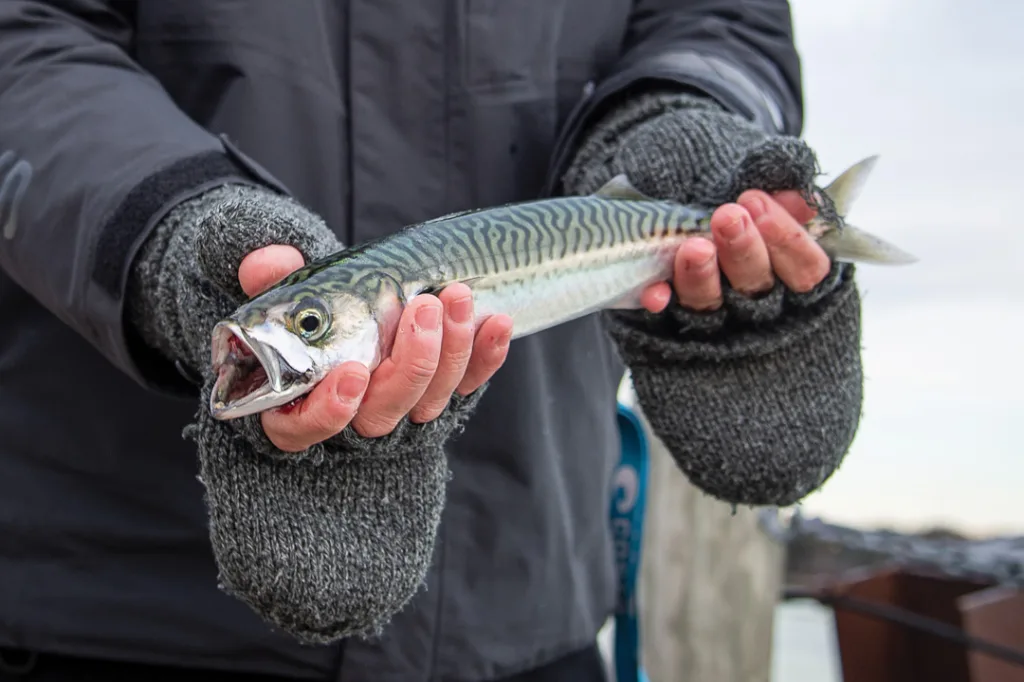
Atlantic mackerel, for their size, are voracious predators. They gleefully terrorize small sand eels and spearing, zipping through the baitfish schools in chaotic fashion. Their color shifts between deep blue and emerald green, and that, along with the tiger stripes dripping down their sides, make them our most beautiful and interesting-looking baitfish. I admired the pair I caught for a moment before dropping them into my bucket. I’d end up losing my nerve to serve my family a mackerel dinner that night and instead settled on making Gyotaku prints with the kids before freezing the fish to use for bait next spring.
Perhaps for the first time ever, I’ll still have a surf rod in the truck on New Year’s Day this year, a rod with five dangling hooks, ready at a moment’s notice to keep the flame of the saltwater season burning and keep the flame of the mackerel fishing tradition alive for at least one more generation. Winter birds be damned.


