

Mid-Cape Striper Action Starts Early In Spring.
It never gets old. Each spring, the anticipation builds until it is nearly unbearable. I’ve never been able to show patience when it comes to waiting for the return of striped bass to the waters of Cape Cod, and I am certain I’m not the only one with this problem. Every spring, anglers fed up from the long winter will head out in search of the first stripers to show, sporting sea lice on their striped flanks, a sign they have just arrived after a long journey along the coast.
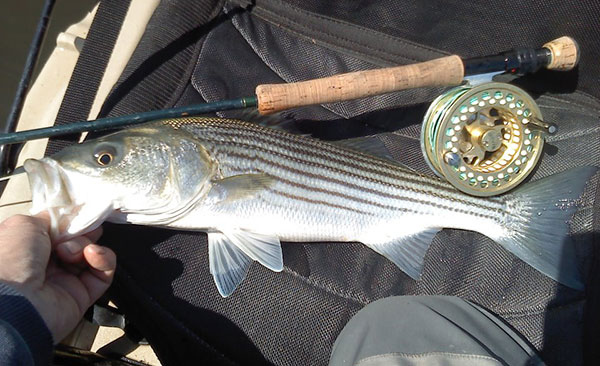
Most anglers know at least a few locations that are among the first to draw migrating bass, and they will frequent these spots every spring. I’ve lived in the town of Harwich all my life, so the shoreline of the mid-Cape is my backyard. I do most of my early-season striper fishing on the south shoreline of Cape Cod, between Yarmouth and Chatham.
Bass on the Beaches
The mid-Cape offers a tremendous amount of shore access, and venturing out on foot is a great way to get in contact with newly arrived stripers. Drive to any one of the Cape’s south-facing beaches during the month of May and chances are you’ll see other fishermen.

Places to set up shop while in search of early-spring stripers are not difficult to find. Jetties are fantastic platforms for finding fish, and this stretch of shoreline is littered with them. Jetties interrupt the current and create excellent habitat for striped bass to gather and feed. They also offer shore-bound anglers a way to fish slightly deeper water. Early in the season, focus on any jetties that outline the mouth of a harbor or river, as these can be extremely productive areas.

When wading open beaches, look for changes in the bottom topography. Troughs, or slight drop-offs just off the beach, will attract and concentrate striped bass. The south-facing beaches in Harwich and Chatham offer up many examples of this type of structure.
A predominant southwest wind during the month of May can make for some pretty large surf on these southside beaches. Although this wind can be tough to cast into, it often brings in active, feeding fish. On days with a southwest wind, there is often an increase in bluefish action. Whether you love them or hate them, be sure to have some wire leader material on hand.
Estuaries and Rivers
The mid-Cape offers some of the most productive rivers and inlets for spring fishing. River herring (alewifes and bluebacks) migrate from the ocean back into freshwater to spawn by traveling through these brackish rivers in April and May. The abundance of these baitfish in the backwaters will attract stripers, large and small. Connecting with these fish often requires a stealthy approach, and there might not be a better approach than to walk the river shorelines with a fly rod in hand. Timing the tides is often the key to success. Although every river will fish differently, I’ve found an outgoing tide late in the day is usually very productive.
A popular spot worth mentioning is Bass River, which separates Yarmouth from Dennis. This major river always produces a good number of schoolie stripers with the potential for bigger fish. Some great fishing spots along this river include the Highway Bridge, Highbank road, and the end of West Dennis Beach at the mouth of the river. When the schoolies first arrive, this is your absolute best bet for action.
Bass by Boat

If you have your boat in the water before Memorial Day, you can get into some fantastic fishing along the southside of the Cape. Most boaters head to the popular shoals, rips and dropoffs to find stripers, but I opt to stick tight to shore in the early spring. A smaller center console or skiff can bring you into the productive areas close to jetties and submerged boulders just outside harbors or rivers, and also put you in position to fish the large sand flats off the mid-Cape’s beaches. Early in the season, these areas tight to shore can even produce topwater blitzes, so keep your binoculars handy and scan the water for feeding birds.
Techniques and Tackle
In the early spring, striped bass rarely set up and remain in a particular area for a length of time. They are on the move, and you should be too. Plan to move among a half-dozen different spots and cover as much ground as you can to increase your odds.
For most of May, a light-tackle approach is most appropriate and the most enjoyable, as the majority of the fish will be less than 30 inches in length. If you haven’t already, consider fly-fishing as an option when targeting early-spring striped bass. The mid-cape has some tremendous spots for fly-fishing. May brings bass into these backwaters, estuaries, and rivers where fly-fishermen will find easy casting. However, do not be afraid to venture to the surf armed with a fly rod, and don’t think that a fly rod is only appropriate for small stripers—a big fish on a fly rod will make an incredible memory.

A 9-weight rod is standard for striper fishing, however an 8-weight is usually enough. You will want a large-arbor reel, ideally with a sealed drag. You will pay more for a sealed drag, but in the long run it will save you money in repairs and replacement. I’ve had great experiences with gear from Orvis, G.Loomis, and Cheeky. One of the most important pieces of gear to purchase is a stripping basket. I never fly-fish without one.
Of course, you can also use spinning gear to get the job done. Leave the heavy tackle at home early in the year; the fun of catching stripers on lightweight inshore rods and reels will be worth it. There are many choices in inshore saltwater rods. A 7- to 8-foot spinning rod matched with a saltwater spinning reel spooled with a 20- to 30-pound braided line is an ideal setup. I fish with an 8-foot Shimano Convergence inshore rod matched with a Shimano Stradic 5000 spooled with 30-pound-test Power Pro. I use this combo through the entire fishing season, from early season schoolies to summer stripers on the flats, and it also gets a workout in the fall when false albacore show up.
I recommend using a high-quality fluorocarbon leader, and don’t be afraid to go light on your leader. There aren’t many threats to your line on the sandy flats of the mid-Cape, so 15-to 20-pound-test fluorocarbon is usually sufficient.
Lures and Flies
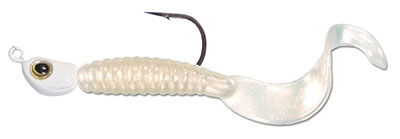
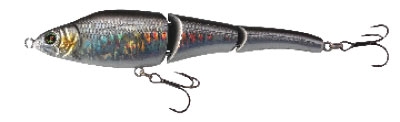
The best lures to use are the most simple. Early-season fish are rarely picky. Every year, I start with a white curly-tail grub rigged on a white jighead. It may just be tradition, but I never leave home without one. Other successful lures used on the southside include herring imitators like the Sebile Magic Swimmer or Lunker City Fin-S Fish. The most productive colors seem to be white, pink, or anything that mimics the blue and silver of a herring or the olive and silver of a sand eel.
Striper Lures that Imitate Herring


My advice for choosing a selection of flies this time of year is to keep it simple. A white-and-olive Clouser Minnow has never let me down. Any type of sand eel imitation, like the Surf Candy or Half-and-Half, is also likely to work. Pack a selection of flies tied with and without flash, as sometimes this subtle difference can make the difference between catching and getting skunked. Pay attention to the depth at which you are presenting the fly. Sometimes, the fish will have a small and specific strike zone. With that in mind, always carry a sinking line.
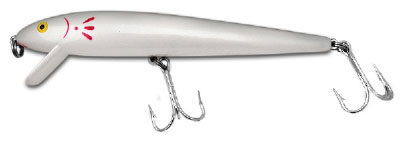
When trying to find bigger fish on the southside in May, your best bet is to imitate a river herring. Before the possession of river herring was banned, using a live herring as bait felt almost like cheating because it was so successful. You can mimic river herring with artificials; if you are fly-fishing, a large herring imitation can be deadly, especially when fished at night in close proximity to a known herring run. Spin-fishermen should try minnow-type lures and swimbaits. The Sebile Magic Swimmer, Daiwa SP Minnow, and Cotton Cordell Red Fin can all successfully mimic an injured herring.
Ever since fishermen were banned from netting herring to use as bait, it seems that fishing live bait or chunks of fresh bait has become less popular. However, bait is still very effective. If you are looking for your first “keeper” striper of the year, and you have the patience to fish with bait, it can pay off. Clams and squid are popular early-season chunk baits and can be very productive when fished from the south-facing beaches.
Excellent information and opinions. Thanks for the spirit lifting ‘LETS GO FISHING”
Ralph
Excellent Reading . Will help lot of novices and experienced fishermen visiting Cape Cod .
Thankyou.
A lot of the lures shown here have treble hooks. It’s a lot easier for these small fish to survive after being released from a single hook lure. Removing it causes a lot less damage to the small fish’s mouth…. Catch/ release, catch again. Have fun !