

Shallow and mid-depth weed flats are a prime area largemouth stalk prey during twilight. In these zones, the tops of the plants rarely touch the surface, and this space above the greenery is where the action unfolds at dusk.
As with daytime flat strategies, concentrate on spots containing something different than the overall uniformity of the area. Rock piles, changes in plant species, old creek channels, patches of pencil reeds, and sandbars are examples. Finding these areas during the day and entering them as GPS waypoints will payoff come evening.
This was the strategy my friend, Craig Lister, and I used last summer. We got on the water in the afternoon and soon patterned largemouth around isolated sand patches and pencil reeds tuffs within weed flats. Many of these zones coughed up bass at dusk.
Craig did well using a 5-1/2-inch bait rigged on an unweighted 5/0 swimbait hook with a screw-lock keeper. Other solid body, paddle-tail swimbaits are the Berkley Powerbait Ripple Shad, Keitech Swing Impact FAT, Reaction Innovations Skinny Dipper, Z Man Scented Paddlerz, and the Rapala CrushCity The Mayor.
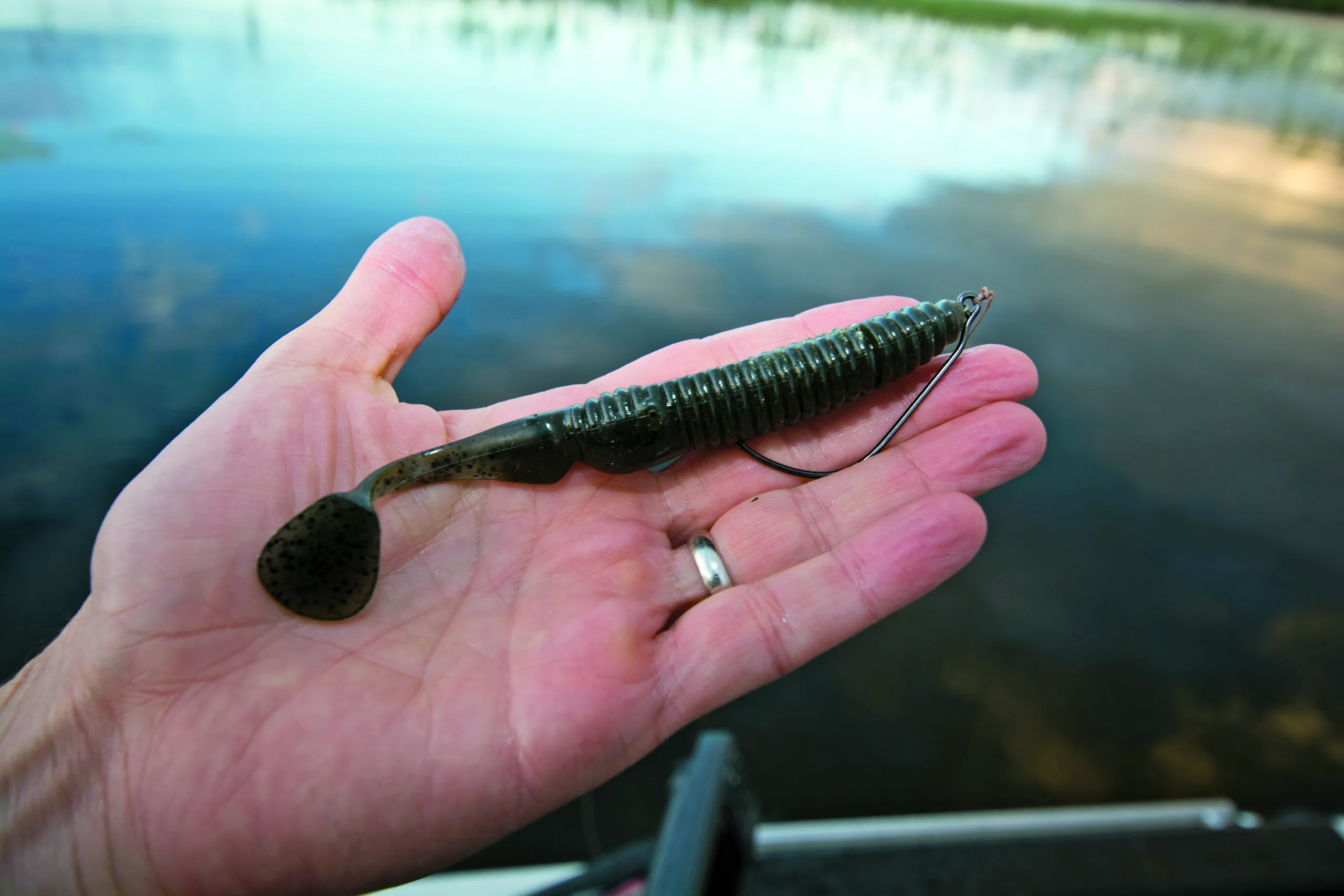
Craig ties the swimbait to 50- to 65-pound test PowerPro. The braid floats and helps the swimbait stay on top. Here is how Craig described working the swimbait.
“The basic retrieve is like hopping a plastic worm across the bottom but in this case it is across the top of the water,” Lister said. “Make a cast, point your rod tip towards the bait and as soon as the swimbait hits the water lift your rod tip from a nine o’clock position to an eleven o’clock position reeling at the same time. This is how you get the swimbait to start swimming on the surface. Keep reeling and dropping, then raising, the rod for the whole retrieve. It’s not meant to be fished at a super-fast speed but more of a steady pace. The swimbait’s tail will flicker on the surface. Then when your rod tip drops for a second before retrieving more line, the swimbait pause before swimming again. This is usually when the bass will strike. The retrieve makes a swimbait look like bait fish trying to flee flickering on top.”
Working the surface-subsurface zone, combined with lots of vibration and splashing from the bait’s tail, make this presentation well suited for low-light largemouth. Weedless rigging lets Craig work it around vegetation and timber without hang ups.