

Bluefish are no longer the predictable target they once were in New England waters, and when they do show up, it’s often in places kayak anglers haven’t seen them in years. From shallow flats where you can sight-cast to cruising fish, to 60-foot depths where heavy jigs get crushed on the fast retrieve, the kayak game for blues has quietly gotten a lot more interesting. Here’s how to find them and what to throw.
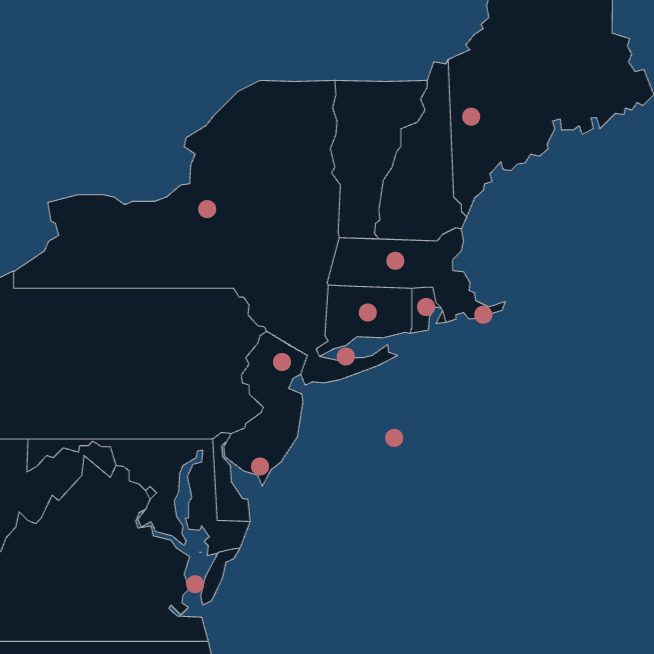
Throughout New England, blues have always been a local bite. In some areas, they show up early in the season chasing squid; in others, they follow schools of bunker into the bays and harbors. They also vary in size from jumbos chasing bunker to snappers targeting spearing. Over the last couple of seasons, bigger fish have been making a comeback — and it’s still great fun to catch blues of any size.
Reading Bluefish on Sonar
Bluefish have a reputation as being easy to catch, but since I’ve been running side imaging on my kayak, I’ve realized that they are often nearby but not biting. Recognizing that they are around is key to dialing in on the fish. Blues usually look very different from stripers on side-scanning and down-scanning sonar — they are typically on the move and higher in the water column than striped bass. Bluefish usually show as elongated streaks on side-scanning sonar because they are swimming through the water rather than slowly hovering as bass often do.
Sight-Casting Blues on the Flats
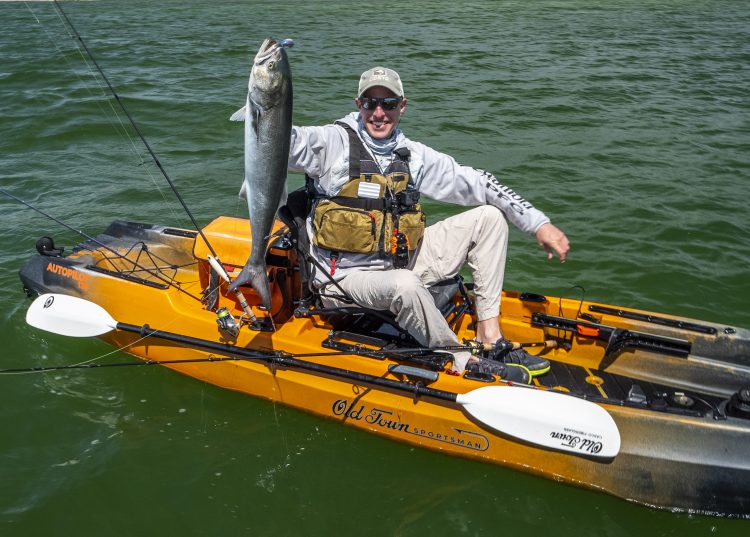
Blues on the flats are always the most exciting to catch. They can sometimes be spotted cruising, and sight-casting always gets my heart pumping. When these fish move into the shallows, they are usually there to feed — actively chasing baitfish. Poppers and walk-the-dog-style lures are especially fun in shallow water because the hits can be spectacular.
An ultra-high-speed retrieve will usually result in fewer bites but may bring some crazy hits with fish launching themselves out of the water. When the fish are picky, an extra-slow retrieve will produce when nothing else does.
Deep-Water Jigging
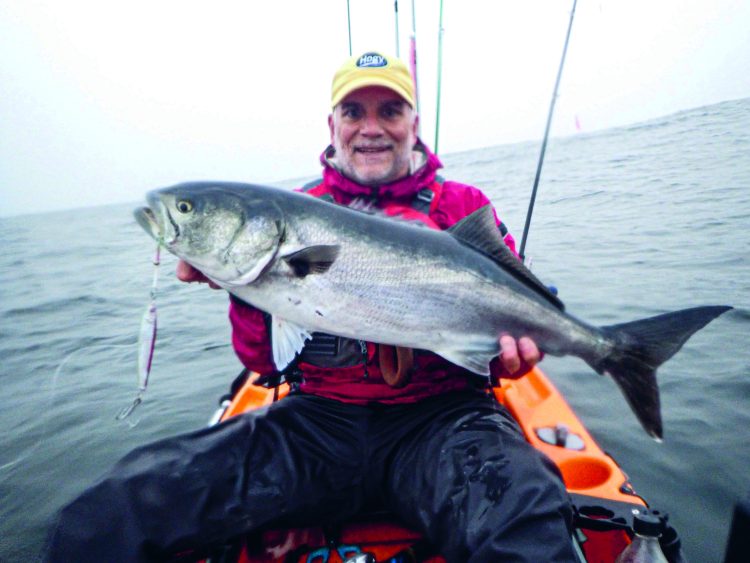
Last year, I found bluefish in deep water — jigging for cod in 60 feet when I started picking blues off the bottom. It didn’t take long to realize I could watch the side-scan for fish and yo-yo jigs for them. It was a great chance to break out heavy West Coast-style jigs and get bites on the fast crank. There’s nothing like the thud of a fish on your jig when you rip it through the water column.
Blues really like to chase mackerel, so if you have favorite mack spots, it’s worth checking them as the season moves on.
Trolling for Bluefish from a Kayak
Trolling is a great way to find bluefish close to shore, where they often cruise and move quickly. It helps you bump into schools and identify where the fish are holding. A wide variety of lures work on the troll, but one of my go-to baits is the SP Minnow. Blues love the flash and vibration of lipped baits, and plastic-body minnows hold up well to their teeth. I don’t usually use a wire leader, but a Tactical Angler clip on the front will help prevent bite-offs — especially if I remove the front hook.
A tube and worm is also a productive trolling bait for blues, with the added bonus of occasionally picking up a large striper. If you don’t have worms, a Fat Cow strip in white is all you need. The strips are really durable and will stand up to multiple fish. The tube itself is nearly bite-proof — through-wired and tough — so the only way blues will get it off is if a second fish hits the front end.

Night Fishing for Bluefish
Bluefish are generally thought of as daytime fish, but they can definitely be targeted after dark. Last year, I found big schools in deeper water along the beaches at night. It was a really fun bite because the blues weren’t mixing in with the stripers — I could target stripers close to shore, then move to deeper water for blues. I found the fish using side-scan and caught the most on sub-surface lures like swimmers. Those fish consistently hung out in the same areas at night, then moved along the beach chasing baitfish in the morning.
Landing Blues Safely from a Kayak
Removing the front hook on lures gives you a handle for landing fish — a smart move when a bluefish is thrashing boatside. Blues are always challenging to handle, especially getting a large one into the kayak. I’ve seen more than one angler ruin a favorite fluke net with a big blue. Instead, tail-grab the fish and drag it in with its teeth and the lure facing away from you. More than once, I’ve had a blue jump into the kayak as it was leaping boatside. That’s always a bit unnerving.
Bluefish can be caught from July through October in every New England state. Keep a few beat-up striper lures in your kayak hatch just in case — they really paid off last year, and the way things are trending, this season looks even better.