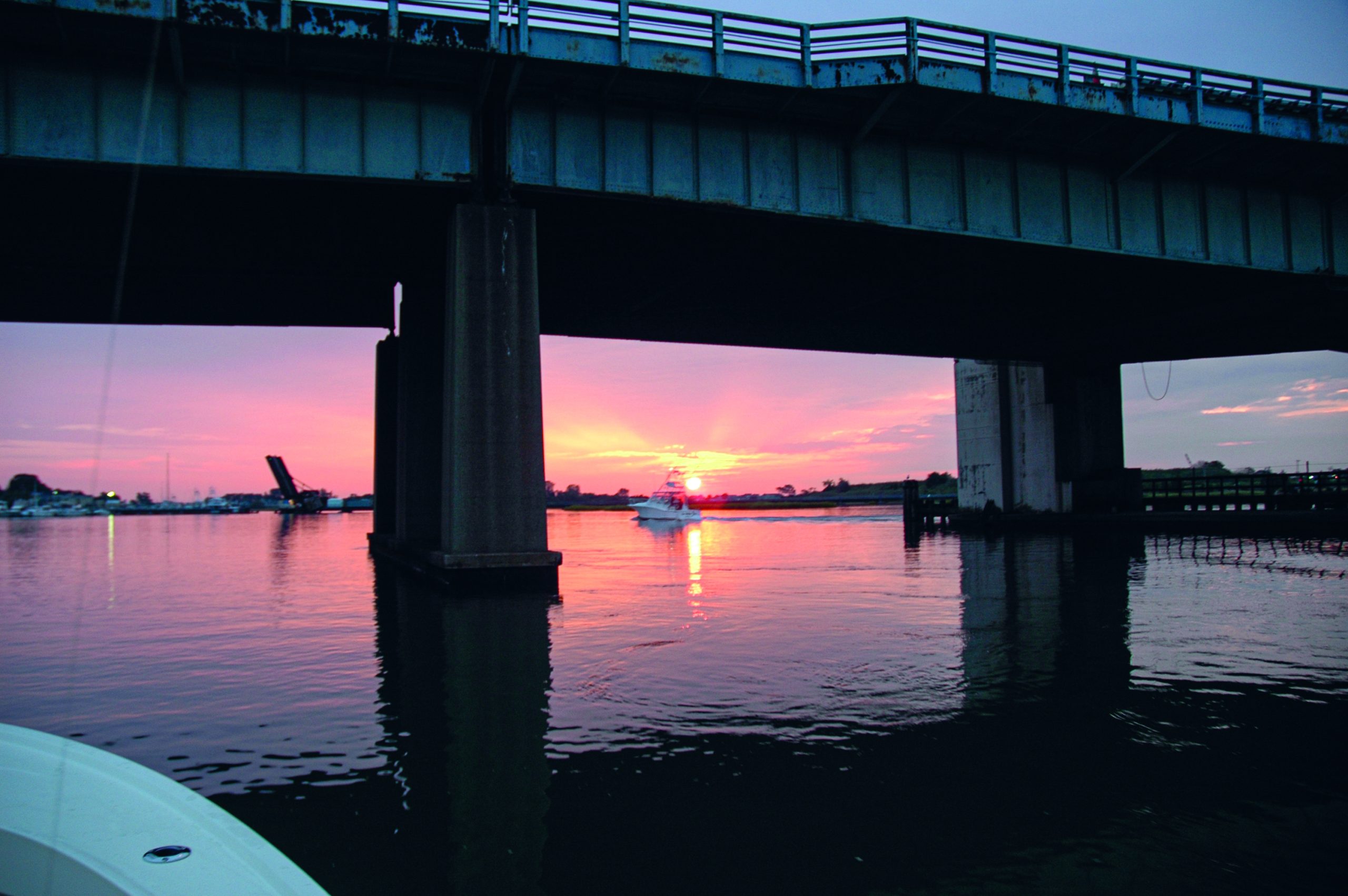

It was a cloudless, early September morning in South Jersey with just enough breeze to keep the greenheads away. The plan for the day was to fish a few bridges around the slower parts of the tide with my three brothers.
We had plenty of Asian shore crabs, collected at low tide the day before, so the bait was secure when we splashed the 17-foot Triumph. The boat was on the small side for four adults, but we wouldn’t be running far, and it was a calm morning. After a half-dozen attempts at backing the trailer into the water, we were on our way. The goal of the trip was sheepshead, but tog would be a likely bycatch; for that reason, I’d brought my 8-weight fly rod.
The scenario had played out in my head all summer long. Sometimes, the tog bite gets so good that you can’t have a crab in the water for more than 10 seconds without getting a bite. That was the scenario I needed to make something happen that I once thought was impossible—catch a tog on the fly.
Summertime Toggin’
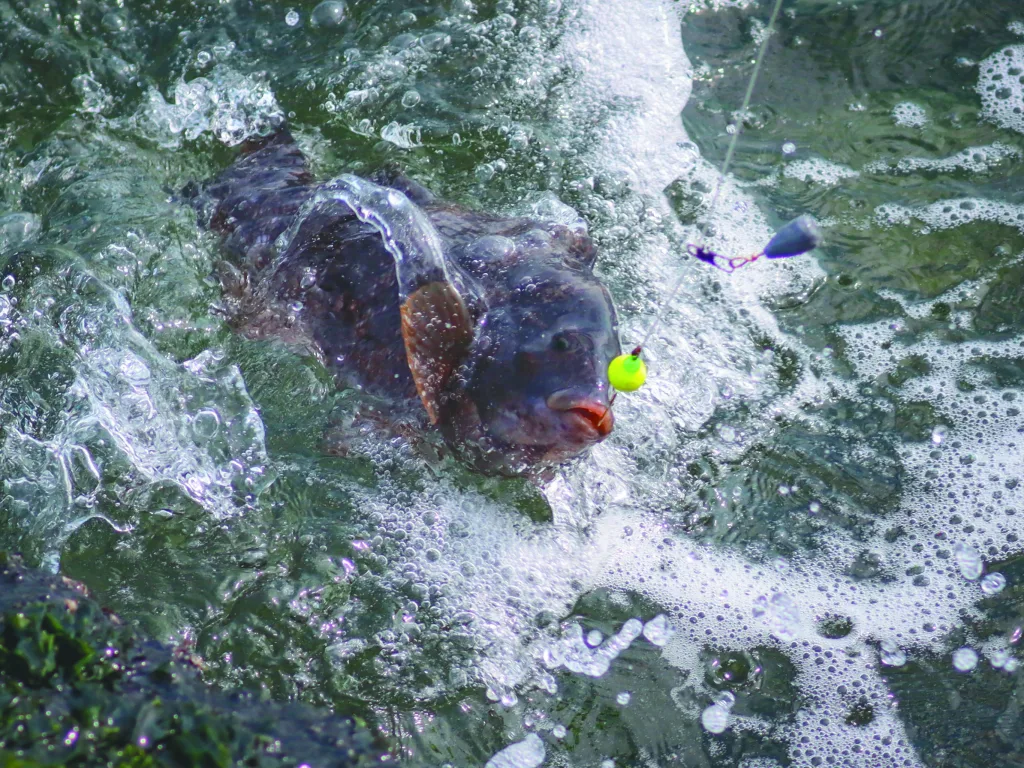
While most fishermen associate tog fishing with cold November winds, oilskins, and crabs dropped to oceanfront reefs and wrecks, these fish are available throughout the summer.
In New Jersey, tog season reopens with a 1-fish limit on August 1. The fish will be available on the oceanside reefs and wrecks that hold fall tog, but fishermen don’t have to break the inlet to find keepers.
Many tog spend the summer around structure in the backwaters. Large artificial structures like dock pilings and bridge stanchions hold big numbers of tog from 6 to 18 inches throughout the summer. Around these vertical structures, tog often suspend, plucking crabs and scraping mussels just a few feet below the surface. Fishermen target these fish by using small whole crabs—either Asian shore crabs or mole crabs—on 1/8- to ½-ounce jigheads and fishing them in different parts of the water column until they find the fish. Given the light gear, spinning tackle is preferred for summertime togging, with leader strengths of 20-pound test usually enough.
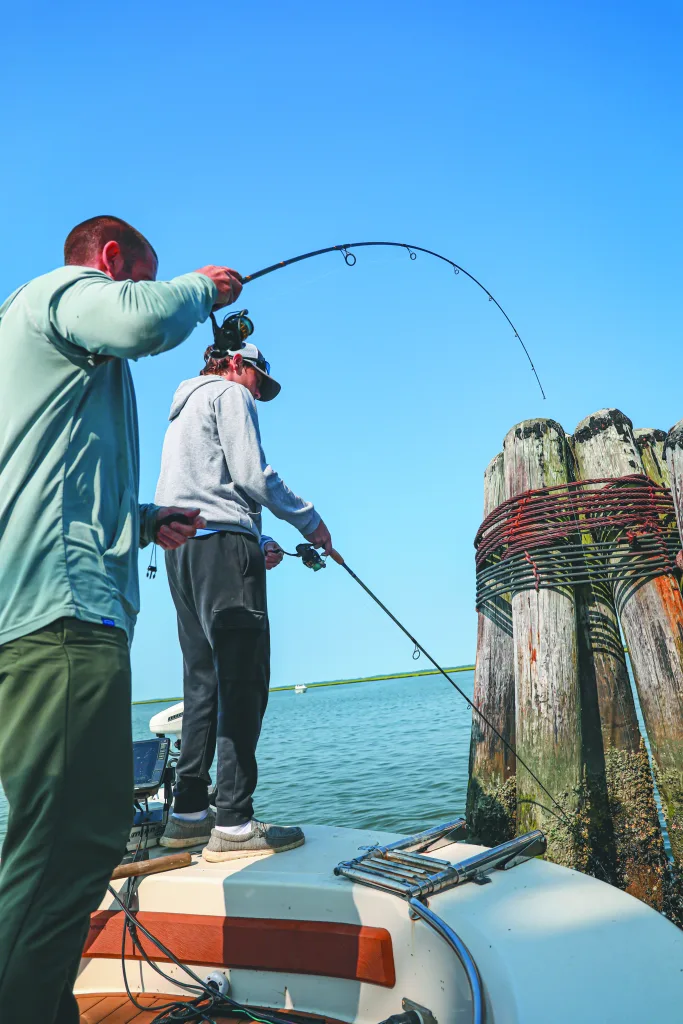
Blackfish also hang on natural backwater structures, such as rocks and chunks of sod that have fallen off the banks into deeper water.
Short tog and other small bait stealers are abundant in New Jersey’s backwaters in the summer, and they will quickly run through your supply of crabs if you don’t bring enough. To gather the bait, fishermen can pluck fiddler crabs off mud flats, rake sand fleas from the surf, or snatch Asian shore crabs from exposed rocks at low tide. These are the baits that backwater or jetty blackfish are most likely to encounter.
The tog bite was there almost from the beginning. The fish were feeding heavily in the upper part of the water column, so it seemed like the perfect opportunity to present a fly. I fished with spinning tackle and crabs for a few more minutes to see if the bite would hold up, and after landing several fish including two keepers up to 17 inches, it was go-time. My brothers knew the goal and kindly gave me the space I needed to make the cast.
I clipped on a Flexo Crab Fly that I chose because of the internal dumbbell weight inside the flex material. The weight would help the crab sink while appearing to be a small crab swept up in the current. Plus, with an intermediate or sinking line, I knew I could get down 6 or 8 feet if that’s where the tog were feeding. It was just a matter of whether they would eat an artificial lure/fly.
Still, the tide needed to be fairly slow—as in the last or first hour of moving water in an area with structure that further blocked the current.
On the first roll-cast off the side of the boat toward the edges of the bridge piling, the fly couldn’t have drifted more than 4 feet before it was destroyed. I was surprised it happened so quickly that I didn’t even set the hook. I checked the fly and saw that part of the mesh was slightly torn. Time to go again.
The next few casts came up empty but helped me figure out how to achieve a natural drift. I missed three more fish in the following few casts. It was happening, though—I was fooling tog with a fly! Some of the bites dragged my rod tip underwater as the fish took the fly and bolted for structure. I obviously wanted to land a fish, but just getting them to chew made me the happiest guy on the boat.
My brother, Seth, who is a fly angler in fresh water and occasionally in salt water, told me I need to strip-set the heck out of that fly line into order to hook the tog. “Reach up as far as you can on the fly line to set the hook.”
Lee’s Tackle for Tautog on the Fly
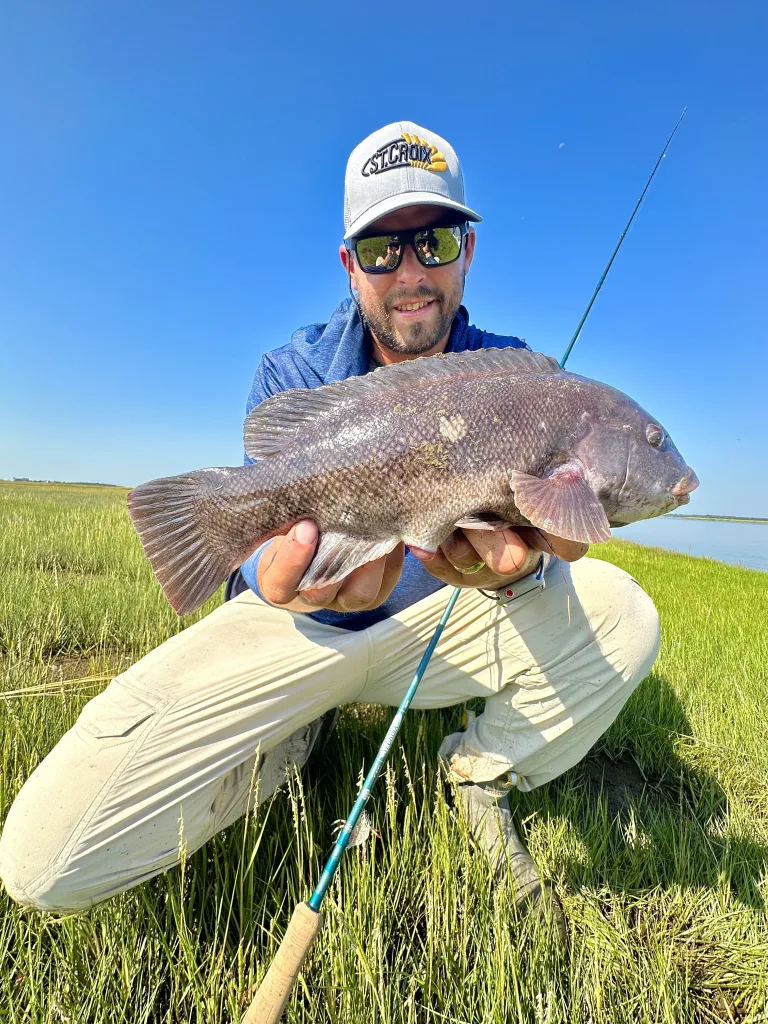
Rod: St Croix Imperial Salt 8-weight

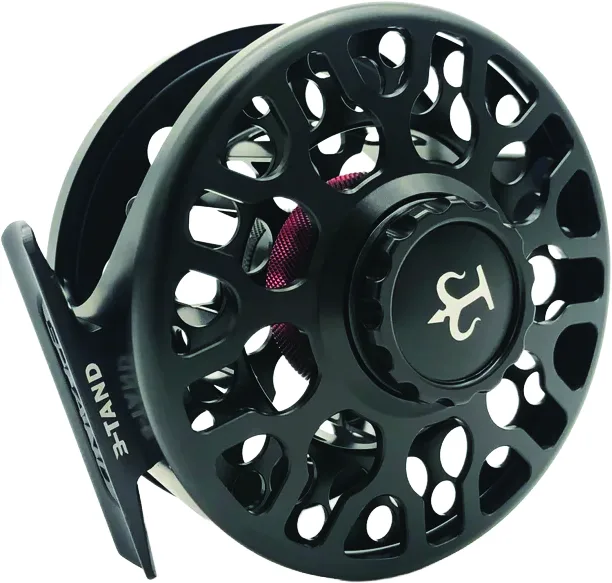
Reel: 3-Tand TF-70 (fully sealed)

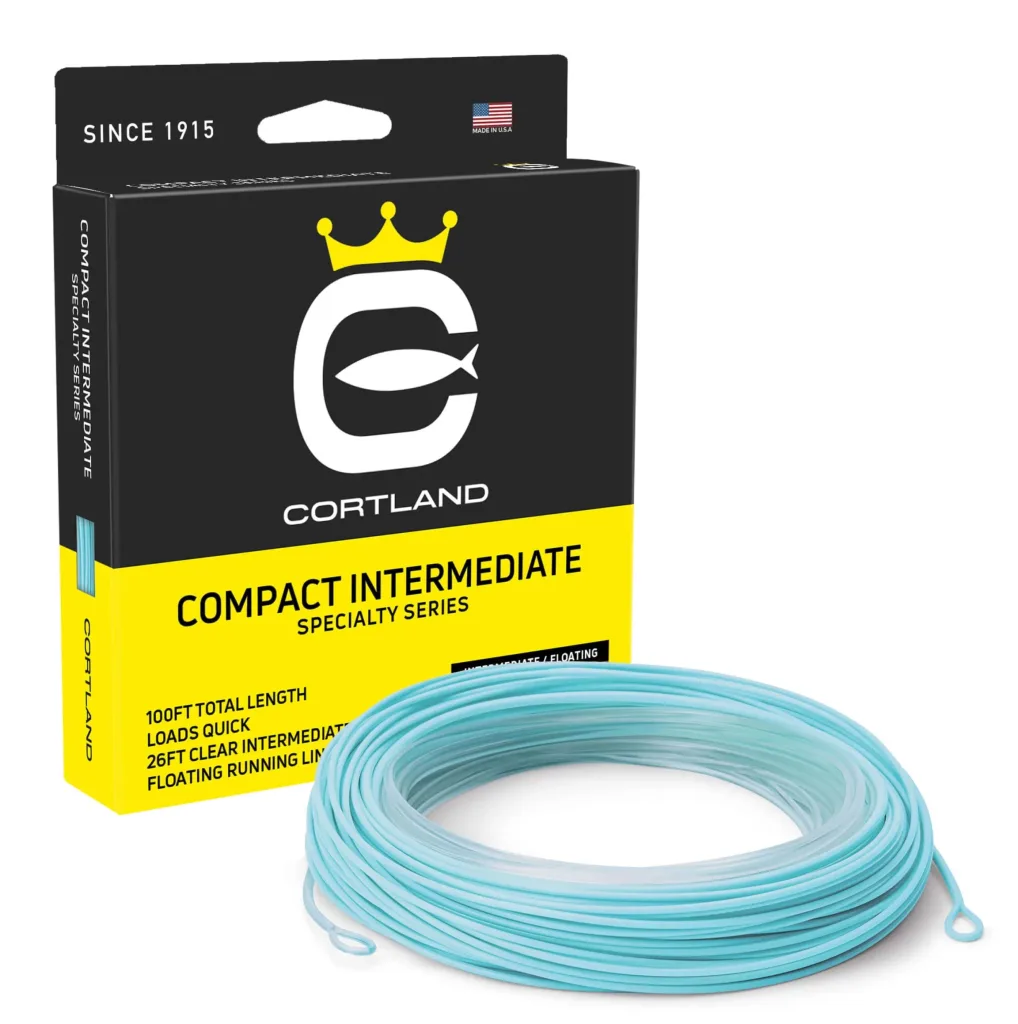
Line: Cortland Compact Intermediate

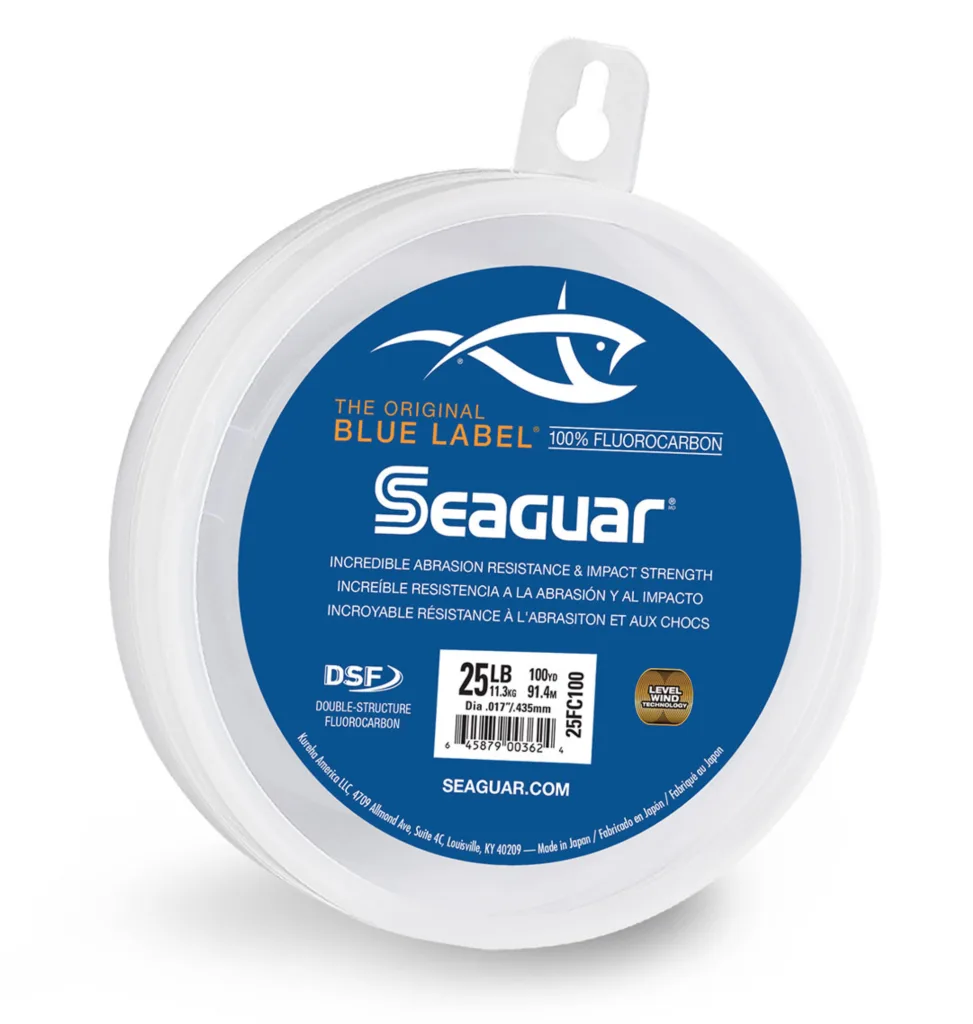
Leader/Tippet: 5-foot section of 25-pound Seaguar fluorocarbon

Fly: Fast-sinking Flexo Mesh Crab fly with internal dumbells for weight


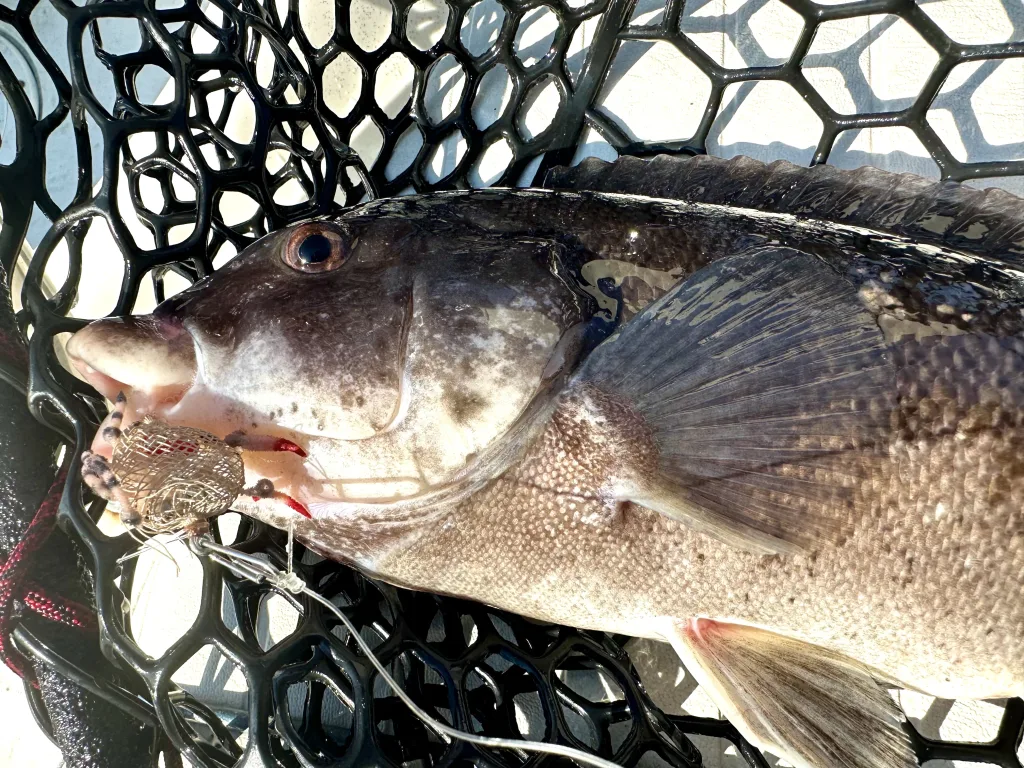
On the first bite after Seth shared his advice, I drove the hook home, the rod bent in half, and it stayed bent. I had no idea how big the fish might be because I didn’t know what to expect from a tog on a fly rod. I did my best to pull it away from structure, but it still peeled some drag. I can’t even say how long the fight lasted, but it felt like an eternity. I needed to land this fish. All the prep work I had done wouldn’t matter if we didn’t net the fish. When it appeared boatside, Joel made a perfect scoop with the net, and I did a silent celebration, trying not to bring too much attention to our boat.
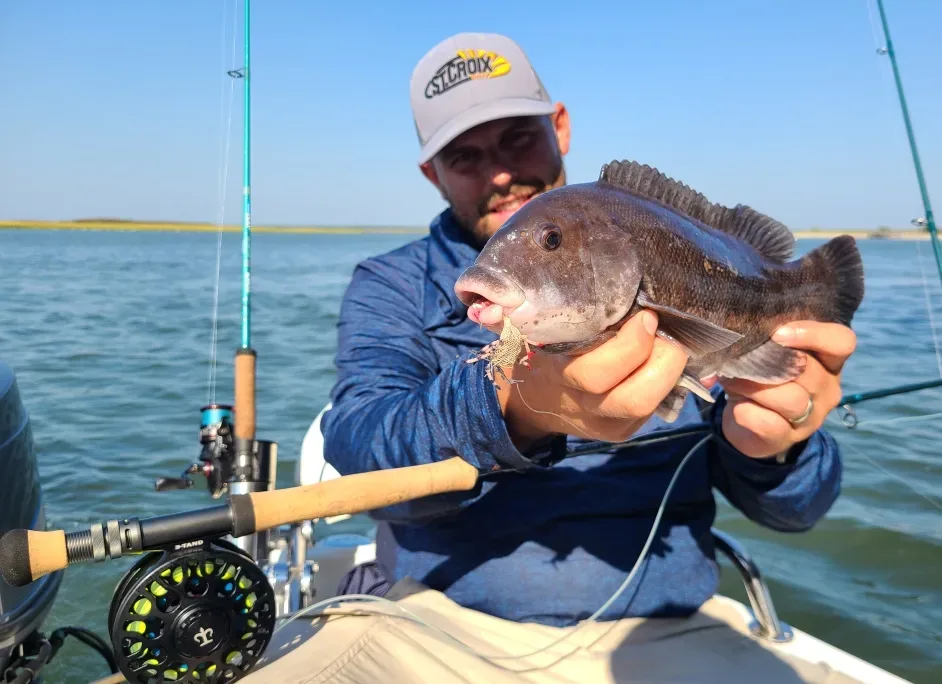
I knew it was close to legal size, so we got out the tape measure and confirmed the tog was 15 inches on the dot. I don’t think the fish would have meant any less to me if it had been smaller, but it was satisfying to be able to share it with my wife and family later that day at dinner.
The bite died out not long after I landed that fish. I didn’t even care if I caught another fish the rest of the day. I’ll never forget that one for the rest of my life.
Maybe it was all luck. Maybe it was because they were all fired up by the smorgasbord of real crabs being fed to them. Maybe it was the preparation of having the crab flies and 8-weight onboard that day. Maybe it won’t ever happen again; either way, it was a catch I’ll remember forever.
READ MORE