

“You’re nuts, man!” It’s a refrain I’ve heard more than once while adrift in the middle of a Chesapeake Bay shipping channel, typically shouted by a captain high atop his perch on a tower boat. In fairness, it’s a sentiment I’ve agreed with more than I care to admit, usually while pedaling at full speed to avoid being sucked under a monstrous cargo ship.
True, my tiny plastic kayak floating miles from shore can feel a little out of place among the fleet of tower boats, cargo ships, and naval vessels. It’s also true that I don’t really care because I’m having a blast sight-fishing for giant cobia.
What started out as a low-expectation, shot-in-the-dark-style mission to fish for open-water cobia in my kayak last spring has quickly snowballed into a full-fledged addiction. Having some experience chasing these fish on boats, I was prepared for a challenge. I knew how difficult it can be to simply find a free-swimming cobia, let alone get one to eat. I was so prepared to fail, in fact, that I was caught completely off guard when I actually began spotting fish.
The term “buck fever” is often used to describe the moment a hunter freezes up and blows his shot. I can say with confidence that “cobia fever” slammed me hard on that first trip. I thought I was prepared, but after blowing at least a dozen shots on cruising fish, it was clear I was not. Despite my failure to hook a cobia, I was over the moon with excitement (the giant school of bull redfish I stumbled into on my way back to the launch didn’t hurt). While my preparation was lacking, my game plan for finding the fish had been a success, wildly so. I’m a firm believer that when attempting to dial in a new fishery, success should never be measured in fish brought to hand. While humbling, that first attempt taught me plenty about the way these fish behave around a kayak.
Armed with this newfound knowledge, I was confident in success sooner rather than later. I spent the rest of the summer dialing in my program and landing more cobia on a little plastic boat than I could ever have dreamed of. Here are a few of the crucial things I learned if you want to attempt to tangle with these brown bombers from a kayak.
(Note: On The Water is reader-supported. When you buy through links on our site, we may earn an affiliate commission.)
Motors aren’t necessary, but they sure don’t hurt
To be clear, you can absolutely tackle this fishery with a paddle kayak, but be prepared to suffer. You’re typically looking at a 4- to 8-mile round-trip paddle, usually in heavy current. Depending on your skill level, that may not sound too daunting, but keep in mind that you’ll also need to be moving constantly while fishing. Having at least a pedal-driven kayak will make a world of difference toward finding success.
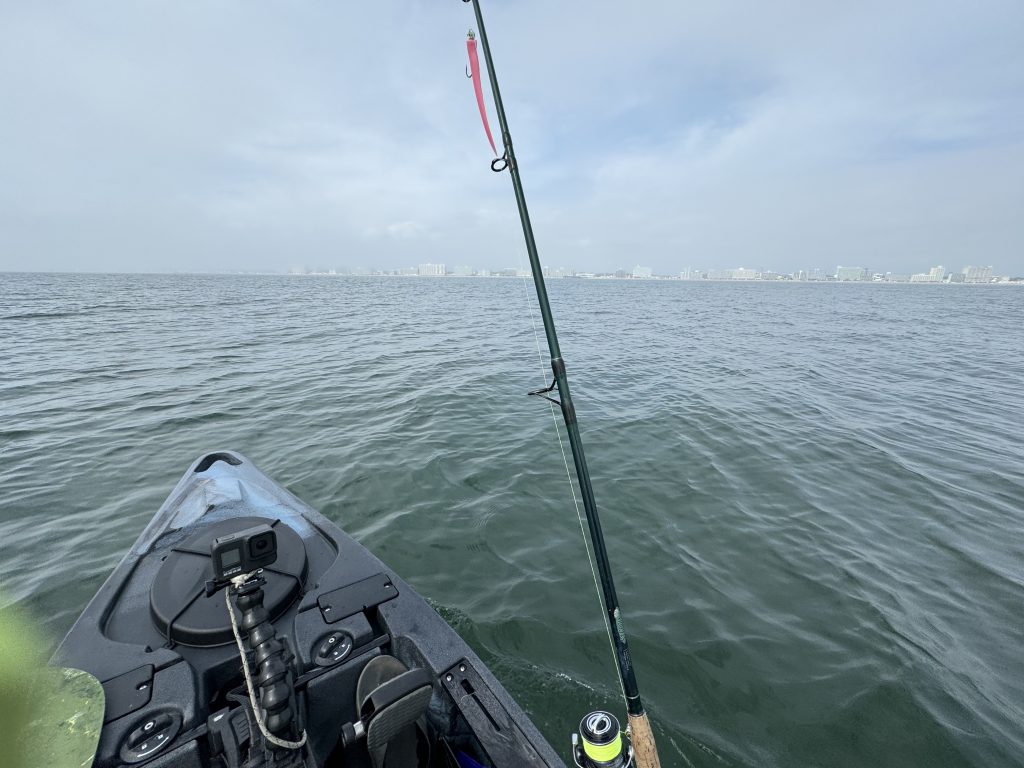
Even better than pedals, having a kayak motor is a huge advantage when it comes to properly targeting cobia. Motorized kayaks have grown in popularity, and while still the subject of some controversy in the kayak-angling world, there’s no denying the benefits of a motor in certain situations. In addition to the obvious time and effort saved, a motor can also drastically increase your ability to properly search for these fish as they cruise near the surface. There are many good options for kayak motors these days, with brands like Newport, Torqueedo, and Bixpy leading the way for kayak-specific propulsion.
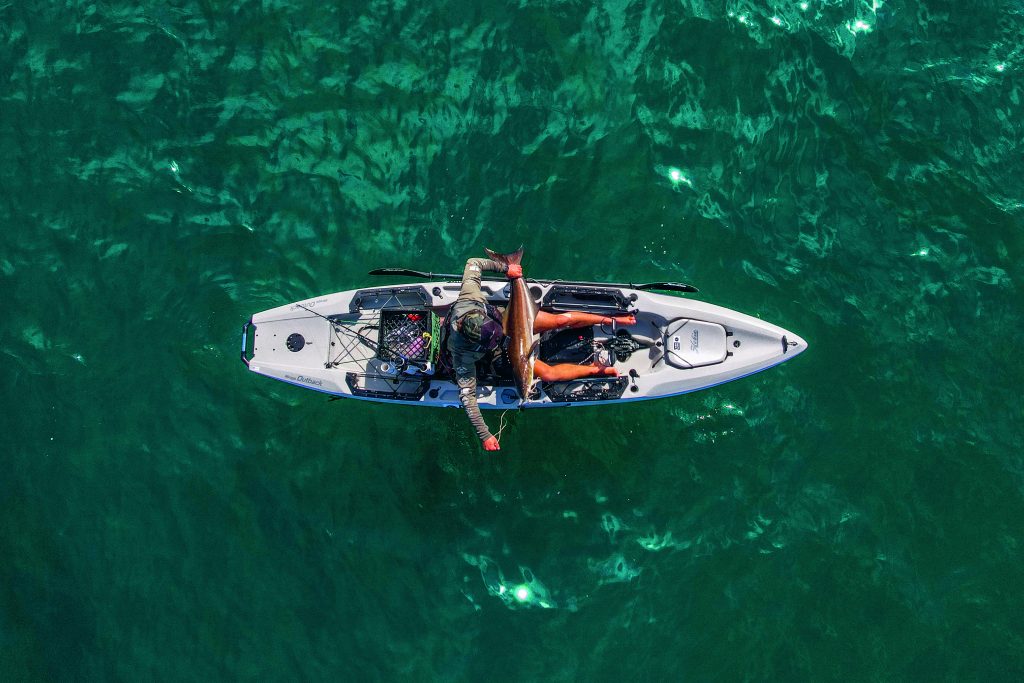
Traditional motors are great, but I personally found that the Old Town BigWater ePDL+ electric drive system was the perfect open-water cobia option for several reasons. First, as the name implies, the hull itself is incredibly stable and suited to the big water of Chesapeake Bay. Being able to stand and search for these fish is a huge advantage, and this boat provides impressive stability to do so. Next, the electric pedal-drive system has a nice blend of the intuitive control of traditional pedals with the speed and comfort of a motor. This allows for more minute hands-free adjustments when getting in position to cast, something that is critical for making a good presentation to a cruising cobia. The ePDL+ also has a cruise-control feature that keeps the motor moving while I stand and search for fish, giving me better visibility while covering water. Lastly, the 36V Amped Outdoors lithium battery that powers the motor lasts an extremely long time, important given the distance I’ll need to cover.

While electronics like sonar can be helpful for locating schools of bait, they aren’t a requirement. It never hurts to have a better visual of the water column, but these fish cruise solo or in small schools near the surface, so your eyes are your best tool for finding them. Additionally, keeping your boat lightweight is hugely beneficial so that you can cover distance faster and stay nimble for quick position adjustments when casting. The less gear you weigh yourself down with, the better.
Give them what they want – pride is the barrier to success
Cobia migrating into Chesapeake Bay during the summer months are doing so for one reason: spawning. They’re on a mission, and that mission isn’t related to food. When cobia first enter the bay in the early summer months, they’re typically far less focused on feeding than when they leave in the early fall. As such, they move far and fast, so getting into the right position with the proper presentation is vital to getting bites.
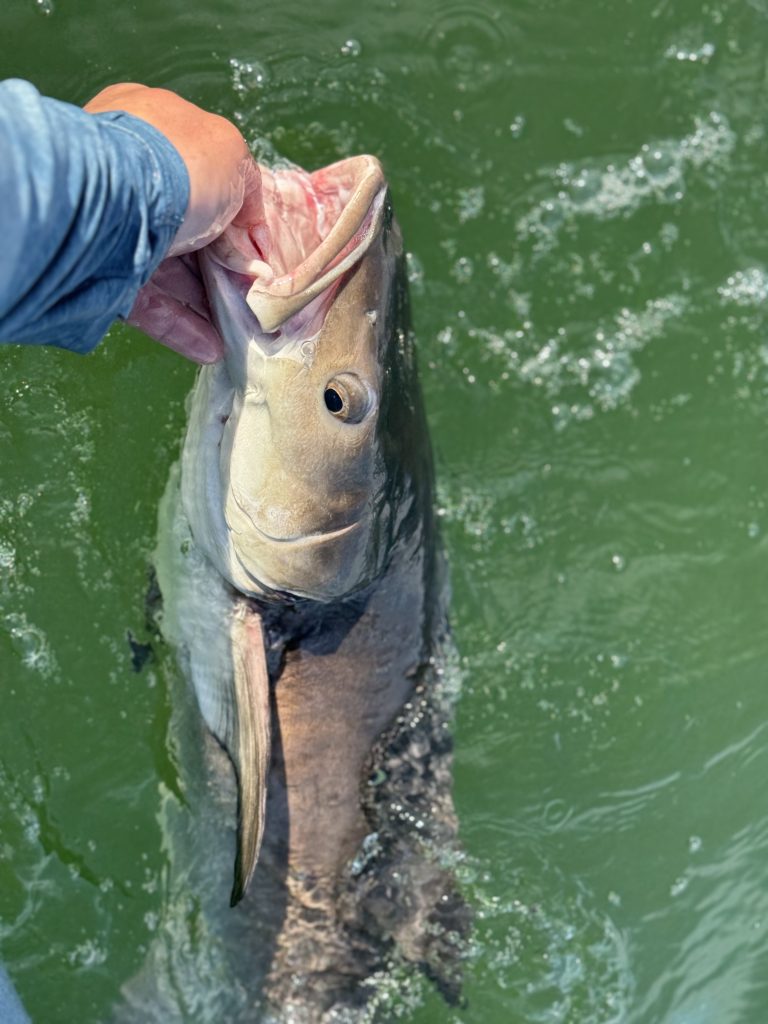
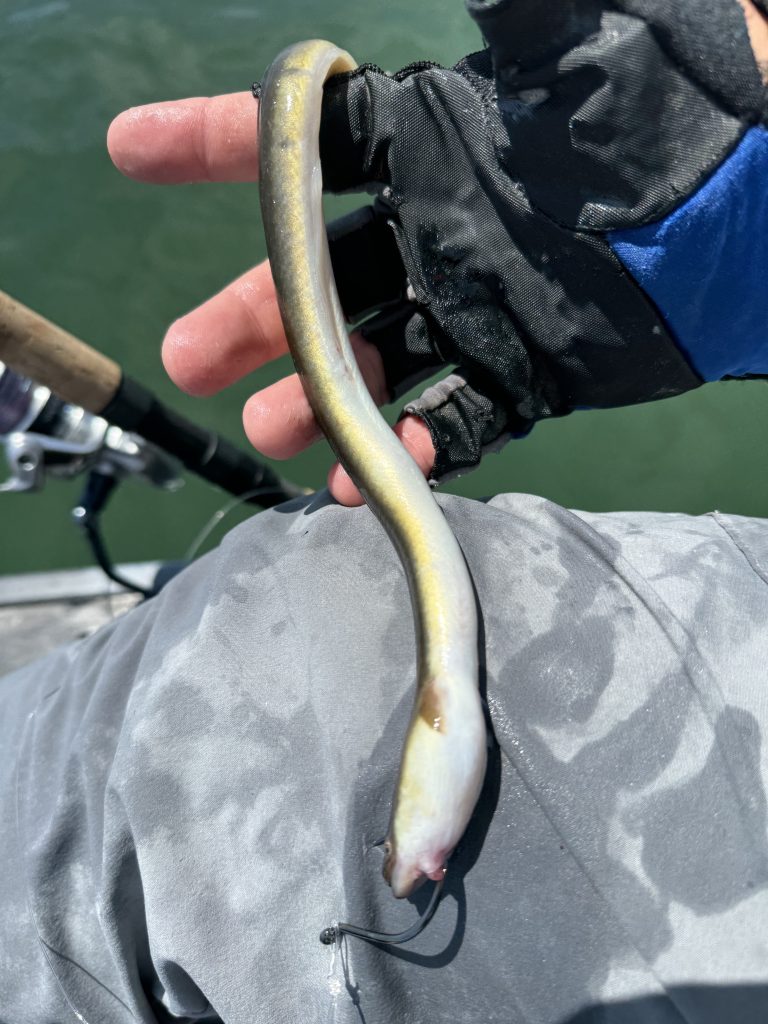
In a kayak, you may have only a split second to put a lure or bait where it needs to be before a fish is out of range or dives. Given their finicky nature during this time of the year, it can pay to be open-minded about how you catch them. Hooking one on an artificial may be your goal, but having live bait ready is a must. Live eels are the preferred bait because it’s rare that a cobia will refuse a fresh, wriggling eel once it’s spotted it. While sight-fishing with eels is lethal, it also pays to toss one out on a flat line behind your kayak. Having a nose-hooked eel on a simple, weightless rig trailing 20 to 30 feet behind your boat can help you hook up to cobia that you never even knew were there. For sight-fishing, I prefer an ultra-sharp octopus-style bait hook ranging in size from 3/0 up to 8/0, depending on bait size. For flat-lining eels, you can shift to a circle hook in the same range to help prevent gut-hooking. Live croakers are another great bait option, particularly if you are trying to fish deeper on a weighted rig.
In the late season, typically the end of July through August and early September, the fish that have spawned begin moving back south toward the mouth of the bay. These fish are usually hungrier and can sometimes be found in larger schools or stacked behind structure like pilings and buoys. This time of year also coincides with larger numbers of bunker moving into the bay, and they become the primary forage species for most predatory fish. Being familiar with, and having a cast net at the ready, can supply you with more than enough bait for the day.
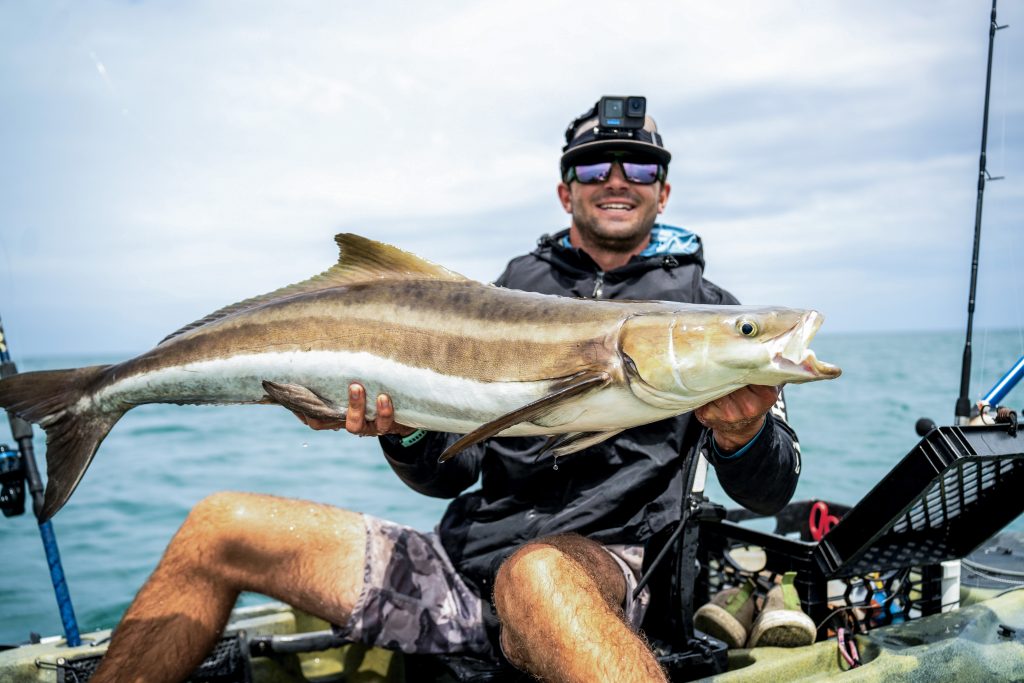
While bait fishing is effective, there’s no denying that sight-fishing with artificials is the most exciting and sought-after way of targeting Chesapeake cobia. Their size, willingness to eat, and proximity to the surface make them the ideal candidate for this style of fishing. This combination of factors can result in some of the most visually stunning and heart-stopping eats imaginable and is a huge reason for the popularity of cobia fishing in the bay.
The most popular lure for throwing toward cruising fish is undeniably the classic “cobia-style” bucktail jig. These jigs come in an infinite range of size and color variations, with vibrant pinks and oranges being some of the most popular patterns. While bright colors are usually effective, natural colors like olive and white or black and silver can also be good choices, particularly when the fish are picky and have been heavily pressured. In addition to jigs, soft-plastic eel lures are also popular. I prefer the 10-inch Z-Man HeroZ for its durability and action, but any soft-plastic eel can do the job. I prefer throwing plastics over bucktails because I have a little more freedom in how I rig and weight the lure.
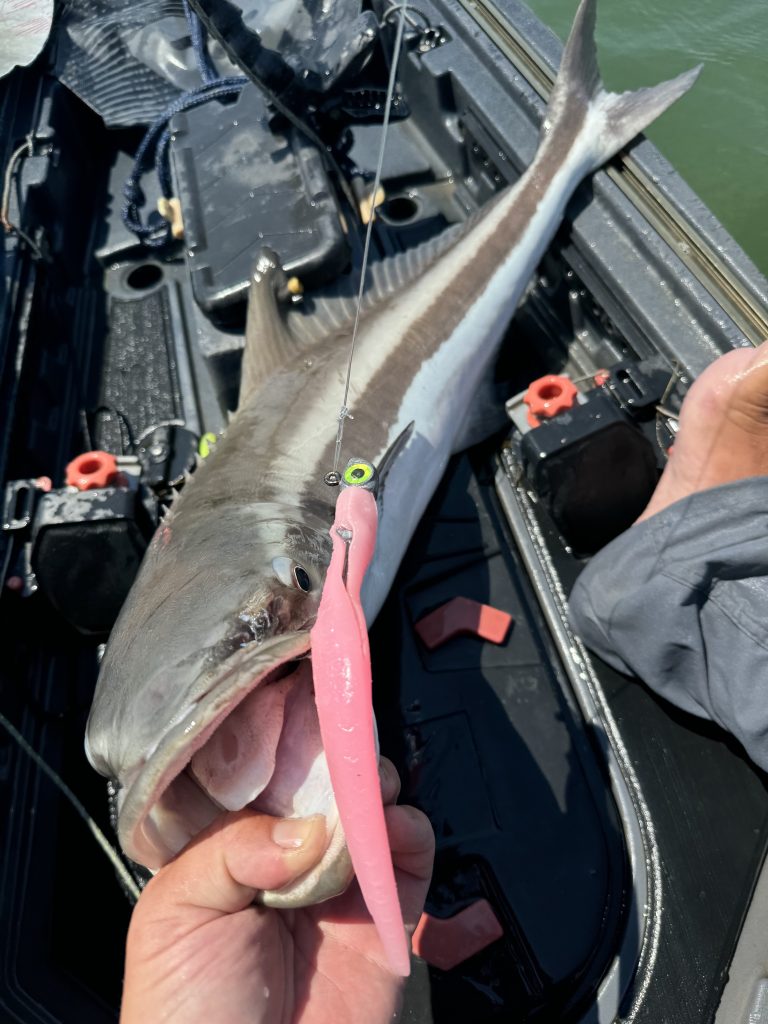
Regardless of pattern, the technique for fishing these lures remains the same. Some days, the fish will be accommodating, immediately inhaling or crushing them on fast retrieves near the surface, leading to the misconception that cobia are mindless and eat anything. Though awesome, these days aren’t as common as most cobia anglers would like, and there is an art to getting finicky fish to commit. The best method is to give your lure a quick retrieve past the face of the fish, getting its attention. A cobia will often follow the lure momentarily but not eat, which is when you stop the lure dead in its tracks, allowing it to fall straight down. Fish that are hesitant to eat at the surface tend to chase the lure down, becoming much more willing to commit once out of sight. If you don’t feel an eat after 5 to 10 seconds on the drop, give the lure a hard stop and start quickly popping it up. This is usually the magic moment that triggers a bite, so hold on tight and be prepared.
Gear and Rigging
We’ve gone over the basic presentations, but having the right gear is also crucial to success when landing these wily gamefish. As with kayak rigging, simplicity goes a long way, with a basic spinning setup the preferred option. A 5000- or 6000-class reel paired with a 7.5- or 8-foot rod in medium-heavy or heavy power and fast action is the ideal setup, allowing you to fish both artificials and live bait effectively. This combo gives you the line capacity and power for fighting large fish while maintaining a light enough weight to make accurate casts and delicate presentations. Investing in a quality reel with a good drag system is worthwhile because you have the potential to encounter a truly giant fish with a substantial amount of power. I love Shimano reels, and the Saragosa or Twin Power are both excellent options with high line capacity and smooth drag.
When it comes to line, I typically spool my reel with 30- or 40-pound braid. This helps with casting distance and accuracy, though upgrading to 50- or even 65-pound can be a good idea if you’re fishing around structure.
Lastly, leader material can make or break your day. Cobia are known for their crafty nature once hooked, so having a quality fluorocarbon leader will help prevent break-offs. You can usually get away with a 40-pound fluorocarbon leader in open water, but I recommend leveling up to 50 or 60 to avoid heartbreak, particularly if you see a larger class of fish around. You may even consider moving up to 80- or 100-pound leader if you’re fishing around structure, as cobia are smart fighters and know exactly where to go to break you off.
Know what to look for and have a plan, but be willing to adapt
This is a very intuitive fishery, where reading the water and understanding the tide goes much further than having all the latest bells and whistles. There’s a rhythm to it, and once you get a feel for how the fish are moving and what’s driving them, you’ll be able to dial in where to focus your efforts.
To start, it’s critical to understand how these fish move throughout the bay in order to place yourself in the right position to come across them in a kayak. Cobia are pelagic and move with the currents, generally using the large shipping channels of the Chesapeake as highways. Unlike boat anglers, you don’t have the ability to run and gun to another area if the fish aren’t around. Spending quality time reading navigation charts and apps like Google Maps before heading out is essential to understanding where to fish.
Learning and understanding the tides of the bay is also extremely important, not only for knowing where the fish should be, but also for your own safety. If you plan it right, you can ride an outgoing or incoming tide throughout the day, minimizing your own effort and maximizing your fishing potential.
While the tides and conditions vary based on where you’re fishing and time of year, there are a few general factors to look for when searching for cobia.
First, look for current seams. These can be created by things like depth changes, tide movement, or wind. Cobia love to ride current edges, picking off easy prey as they go along, and any seam in the water can create an ideal area to fish.
Next, look for bait. Like any gamefish, cobia are drawn to easy forage, something the Chesapeake has a wealth of in the summer. Large schools of bunker or threadfins congregating near the surface often have a cobia or two following them, so be alert and look for any signs of life. Life doesn’t just mean bait, either, as cobia tend to follow large stingrays and sea turtles, using them as cover for feeding and shelter. In a body of water as vast as the Chesapeake, looking for even the smallest variation in surface activity can be rewarding.
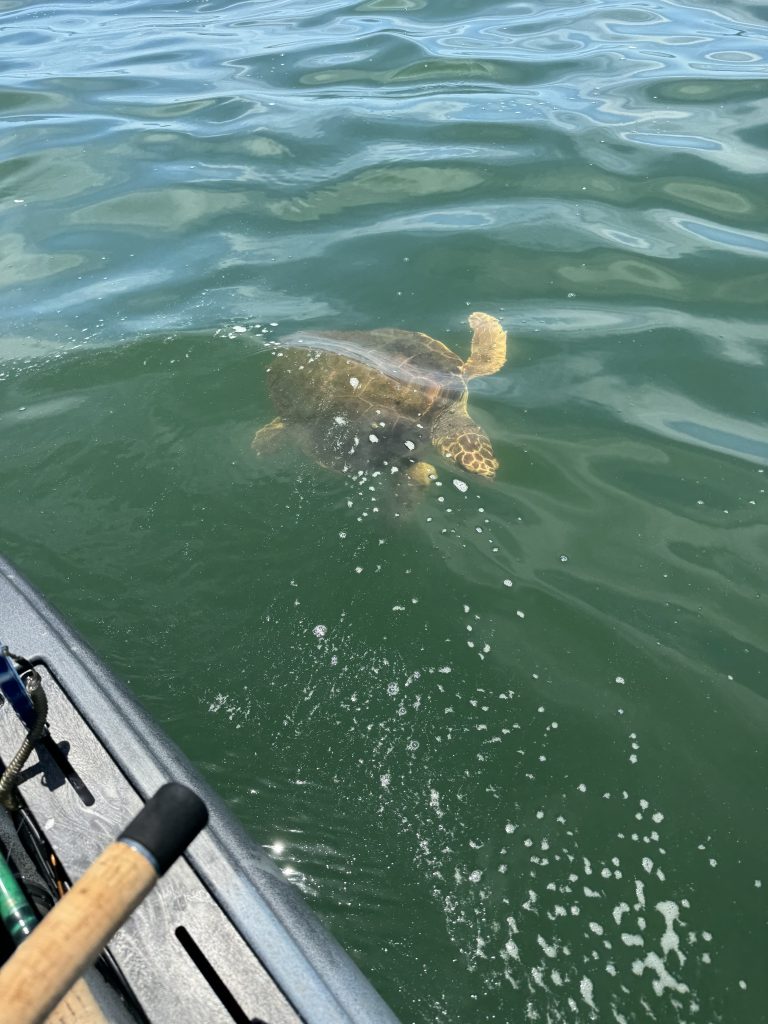
Lastly, while it’s important to consider all these factors, there are no hard and fast rules for these fish. I once heard cobia described as “the honey badger of the sea” in that they do what they want and go wherever they want. The more I target cobia by kayak in the Chesapeake, the more accurate I find that description. The number of times I’ve been caught off-guard by these fish is astounding, from cruising past my kayak before I’ve even left an inlet to swimming directly behind me on a grass flat in just a few feet of water. Always be on the lookout, because you never know when you’ll have a shot.
Final Thoughts
Targeting cobia from the kayak may seem daunting at first, but having persistence and being willing to learn is the key to success. Believe it or not, a kayak has a few key advantages over fishing for cobia from a larger boat. Not only does a large boat with a running motor often spook these fish, it can also act as a crutch for boat anglers who aren’t willing to wait out the conditions. While slow moving, a kayak forces you to really dissect and fish a smaller area of water. My best day of cobia fishing from the kayak came when I found myself alone after the fleet of tower boats that had surrounded me all blasted off to greener pastures. Suddenly, the wind died and a current seam formed as the tide swung. Almost instantly, what had been a dead zone was bursting with life. I had large fish swimming past my kayak every few minutes, nearly all of them willing to eat. After landing two on live bait, I switched to an artificial and hooked up again. The fishing was so good that I pulled out my 10-weight fly rod and managed to accomplish one of my ultimate goals—sight-fishing a big cobia on a fly from the kayak. As I released that fish, watching its large brown shape disappear under the calm surface of the Chesapeake, I couldn’t help but smile to myself and let out a loud laugh. Not a soul in sight, I began the long pedal back to shore, leaving plenty of fish behind me.

Having patience in your game plan and learning to read the conditions can give you a chance and lead to the best day of cobia fishing you’ve ever had, all from a little plastic boat.
Related Content
Tactics for Trophy Red Drum in Chesapeake Bay