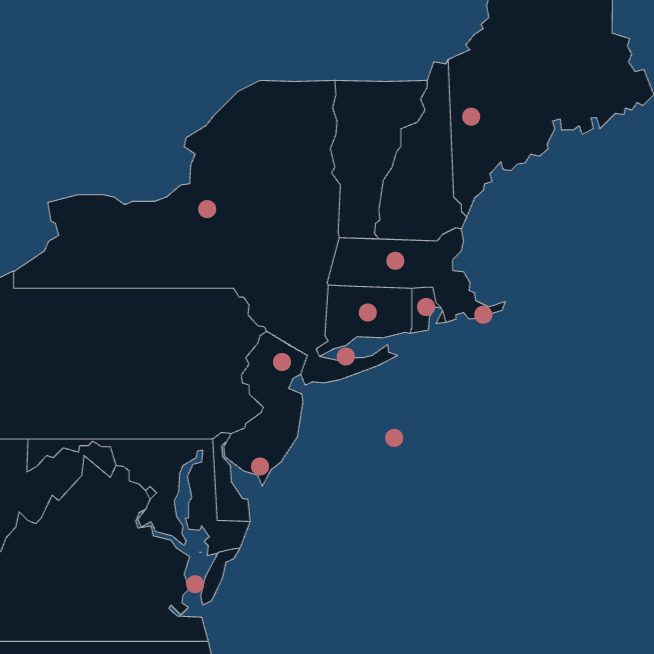

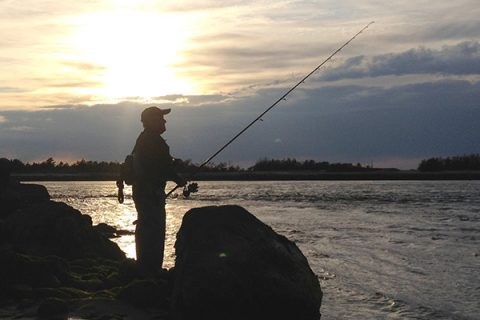
Pictured above: With a running tide and a setting sun, the author begins a productive night of fishing the inlets.
Find and catch stripers At Shinnecock And Moriches Inlets
At the young age of sixteen, I found myself behind the wheel of my first beach buggy. My fishing was concentrated on the beaches from Shoreham all the way to Orient Point. These were the days when the only thing that hampered beach access was crossing jetties or getting around boulder fields at the top of the tide. Very rarely would I encounter another beach buggy while fishing for bass, blues, mackerel, and weakfish. Inspired by adults in my North Shore hometown of Wading River, I began to expand my fishing grounds. The stories spun by Jeff Falonious and Jamie Keilor of the monster bass they caught on a nightly basis at Montauk and the South Shore inlets made me feel like I was destined to get my share of the cows if I made the trip. Driving off in my 1965 Jeep CJ5, I rode eastward bound for Shinnecock Inlet.
Upon arriving in the wee hours before dawn, I suited up and began my walk out to the fabled “jungle” at the end of the east side inlet jetty. Pumped, both from the anticipation of what I might catch and two coffee’s worth of caffeine, I crawled, slid, skidded and climbed over the weed-covered rocks to the tip of the jetty. Now I knew why they called it “The Jungle.” Upon arriving, I was spotlighted by the weak amber light of three miner lamps that fishermen used back then. Out of the darkness, a voice yelled out, “This jetty belongs to the fishing club. Find another spot, buddy!”

In utter dismay, I crawled my way back out and headed to another well-known hotspot – the rock pile on the back corner of the east jetty. Here, a small pile of rocks were accessible by wading out on the dropping tide. Finding only one other fisherman there, I trekked out to chest-deep water and climbed onto the pile of rocks. I began casting up-tide with my bucktail, allowing it to sink into the ebbing tide, which would swing my bucktail toward the widest part of the inlet and hopefully into the mouth of a waiting fish.
It has been over 35 years since that dawn when I was pushed away from that jetty tip. I would like to think that I’ve matured and learned a lot since I was that eager, naive kid. Over the years, I learned to seek information that would make me a better fisherman. I learned from reading fishing magazines, where I poured over articles by guys like Al Reinfelder, Doc Muller, and Fred Garafalo, and I learned from fishing next to guys who were learning just like me. I even joined the fishing club that “owned” the jetty some years later, and I still fish with the same lone fisherman on that corner rock pile. That dawn, I caught a few bluefish on Gibbs Needlefish and felt like I learned something of value, and I most likely did. However, it is all of the things I overlooked that I reflect on back on today. I hate the idea of telling someone how to fish because some day, I am going to look back at this and realize what I missed again. With this in mind, this article is not about about how you should fish, but rather how I fish, and what you may learn from it.
The inlets on Eastern Long Island, Shinnecock and Moriches, have been my stomping grounds for the last 35 years, and I along with my friends have caught many big fish in these moving waters.
Suiting Up

When inlet fishing, I start out by dressing for the night’s coolest predicted temperatures; you can take off what you’re wearing to cool off, but you can’t put on what you don’t have to warm up. I wear a dry top from Aquaskinz (neoprene if cold, breathable if warmer). For my feet, I’ll wear a pair of rubber knee-high boots with a pair of Korkers cleated sandals secured with zip ties and stainless steel screws. Over this, I wear a set of bibs. I go with gray Aquaskinz bibs because I want to blend into the rocks and not call too much attention to myself. I am big on stealth and I always dress to conceal myself (except when I am fishing on a boat—in this case, I wear bright colors that I call my “get me out of the water” colors). Using a combination of calf- or knee-high boots equipped with Korkers and slicker pants is a safe choice. Should you slip while negotiating the jetty rocks and end up in the inlet water, getting free of boots is easy. Getting out of your rapidly filling waders, however, is not. I always carry a diver flashlight on a neck lanyard and a diver’s signal whistle. Being prepared for the worst is the best way of surviving a fall into the water. Some jetty fishermen also wear inflatable vests, which is a great idea.
Tackle
My inlet setup is a Lamiglas GSB 132M 11-foot custom rod with a Van Staal VS275. This outfit will handle bucktails up to 6 ounces when needed and the line pickup of 40 inches per turn gets that bucktail off the bottom before it snags as it swings out of the tide at the end of your retrieve. Pencil poppers are productive when bass have pushed fish to the surface during dawn and sunset trips.

A Lamiglas GSB 120M 10-foot rod with a Van Staal 250 is my eel slinging rod of choice, although I also use a 10-foot conventional and 8-foot conventional built on the 120M blank. Both sport Newell reels with 60-pound-test braid.
CTS has a great rod that I have been using this past season that lets me combine the benefits of all my inlet rods into one. The rod is a fast-taper blank, model number PJ 1008-1. It has enough backbone to punch plugs and bucktails up to 6 ounces through the stiff southwest wind that is so common at these jetties. The rod is sensitive enough to let me flip eels out and feel the slightest pick-up.
For toting my tackle, I use a quick release belt. Here, I mix up various plug bags, some carrying bucktails and pork rind, others stuffed with monster 10- and 12-inch swimmers. I’ll also carry water during the summer months when closures caused by nesting piping plovers force me to walk long distances over the sand. When I am bringing eels to the jetties, I like to carry them in a six-pack cooler. In the six-pack cooler, I place an ice pack or ice cubes wrapped loosely in a damp bath towel. On top, I place my selection of eels ranging in size from 16 to 18 inches, which seem to be the best size for casting and getting the attention of inlet stripers. A bait that makes a great fallback, should eels be hard to find, is cunner or bergall. I collect these on bottom-fishing trips and keep them frozen until they are needed. These I cast parallel to the jetties at the end of the tide where cruising cows gulp them down like candy. Now I’m going to have to keep a low profile after letting this local secret out!
I always bring along a 6-foot gaff for those large fish, as I find mouth-gaffing safer for me and the fish if you plan on releasing them, as I do.
Planning A Trip
When planning an evening of fishing the inlet, I’ll look at the tide tables and the moon phase. I am not a big fan of the full moon, but some guys do well during it.
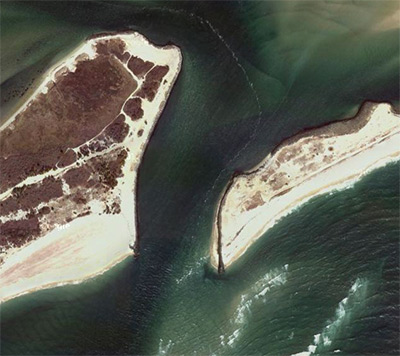
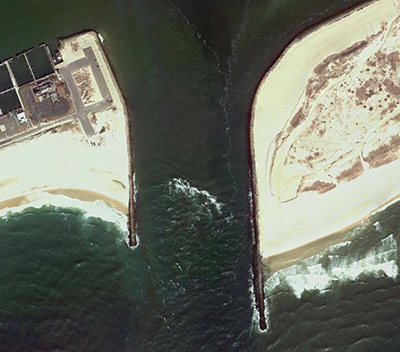

Whether I’ll be fishing an ebbing or a rising tide is the first decision. Then I’ll look at the moon phase. Finally, I consider if my work schedule will allow me to fish. For example, high tide is at 7:00 p.m. on a late June day and experience has taught me that because it’s around the new moon, the tide will be rising a little higher than normal, so I’ll show up just before 5:30 to 6:00 p.m. This should allow me at least an hour to two before the current stops flooding at the spot I am targeting at the inlet. I will start out casting bucktails up-tide of the bottom I want my bucktail to swing over – usually a ridge line on the bottom, a rock pile or a drop off. These places are found over time by watching the water. Rips will form and dissipate with the changing tide stages. You will most likely see a fisherman hang a fish or two at a spot. Make a note as to what rock he caught it from and during what part of the tide it was caught. If you should hook up, remember the details of exactly when and where. This is information you will be able to use later.
The weight of the bucktail is critical to your success. Adjust your bucktail size based on the tide stage and current speed. Start with a lighter bucktail, fishing structure you already have a good feel for. Increase the weight until you start bumping rocks every so often, but not so heavy that you are hanging up. Experience and losing bucktails will teach you the right size. It is this tuning into the depth that is the key to catching or not; too high in the water column and the bigger fish will let your bucktail slide past, as they wait for a closer meal. The larger fish will not give up a position in the current unless there’s a meal worth energy expended to obtain it.
Once I have found the right bucktail size, I begin altering my casts, first in distance from long cast to shorter, making sweeps of different parts of the water in front of me until I feel like I have sufficiently covered an area. Next, I’ll move up or down tide to a different rock and repeat the process over and over until the tide starts to slow. Once again, I change bucktail weights to keep from hanging on the bottom. The toughest part of bucktailing is what I call the “negative hit.” The negative hit is when a feeding bass takes your bucktail and swims uptide, causing you to lose touch with the jig. This is when you want to crank fast and swing the rod hard – though it may look a little funny, responding like this will keep you hooking up while others draw blanks. When the tide is almost slack, I switch to throwing live eels.
Fishing Eels In The Inlet
Fishing eels in an inlet can range from extremely challenging to super easy. I prefer the easy route, throwing live eels during very slow parts of the tide. This eliminates the need for weighting down the eels. Like bucktails, you’ll need to vary the amount of weight based on the tide and current speed. When the tide is nearing high slack, I fan-cast a large eel along the length of jetty that has the best structure (located while the tide was running). These fish that were holding on the structure will begin to wander about, rooting out crabs, blackfish, cunners, and lobster along the rock-strewn jetty. Later, when the tide begins to run in the opposite direction, these fish will return to structure in the inlet and feed there.

I have had as many as six fish in the 30-pound range attracted by a drifting eel while I watched in awe. These techniques can be repeated again on the ebbing tide, giving you anywhere from two to four hours of prime fishing at the jetty.
The moon phase affects both tide height and current speed. I recommend getting a good tide program which shows the complete tidal information for your inlet. I use an app on my cell phone called “Tide Graph” by Brainware. This program shows the tide in both graph and table format. The program also includes how high the tide will be for that phase. This will give you an idea of how much longer the tide will run past the posted high tide. Remember that high tide does not always mean that the current stops flowing. I learned this mistake by expecting high tide slack at the reported time, only to wait an hour-and-a-half or more for the slack tide. There are several other programs available for your smart phone or computer. “MoonPhase” by RomanDuck Software gives you an instant look at the moon phases, allowing you to plan your fishing in advance. “Fishing Calendar” by SMS Software gives a graphic format of tide heights against moon phase, showing possible peak feeding times. While I haven’t found any real connection from the program information to my results, it does offer a log selection for recording catch as well as non-catch data. These programs will help you as you chase the tides where you fish.
After a night or two of pinning down the bite, you can now repeat the trip an hour later or earlier depending on the tide phase. I call this chasing the tides. I have found bass feeding patterns that lasted weeks. The only thing that stopped me was the need to work and sleep.
Bill,
Great article – very informative and interesting. After 40 years of being a boat fisherman in Shiinecock Bay I’ve given it up and am taking up surf casting. So your article was very timely. If I’m not asking too much of your secret spots – what is the best area for stripers on the West jetty? The point is always jammed with guys bottom fishing so I stay away from there. BTW, I’ve yet to get a striper off the jetty although I’ve caught many in the inlet from my boat. Another question I have is do you add weight to the eel you are casting?
Thanks for the article and any response you care to provide.
Sam
Excellent article, indeed…
Nice article. I’m 73 and switching to more surf than boat. I believe I learned something here.
finally an article that shows exactly how to access the moriches inlet , I’ve been coming from staten island and fished the Shinnecock inlet for the first time in 2016 but have caught more stripers under ponquogue bridge and ponquogue beach, next time ill try moriches inlet at the end of dune road thanks so much for the tip.