

Many serious anglers consider late-season blackfishing in deep water to be the ultimate test of bottom-fishing skill. I’m one of them, a die-hard tautog-tugging fanatic who finds limitless joy in doing enough simple things right under diffi cult fishing conditions so that a small, short-barbed hook can pierce the tough, leathery jaw of an 8-pound bulldog 90 feet below the surface.

“There are a lot of things that have to go perfectly for a successful blackfish trip once those bruisers move out into deep water,” agrees Mike Boccio, skipper of the Orient Point, New York charter boat Prime Time II. He should know, he’s one of the top skippers around when it comes to pulling big blackfish from offshore wrecks and rockpiles.
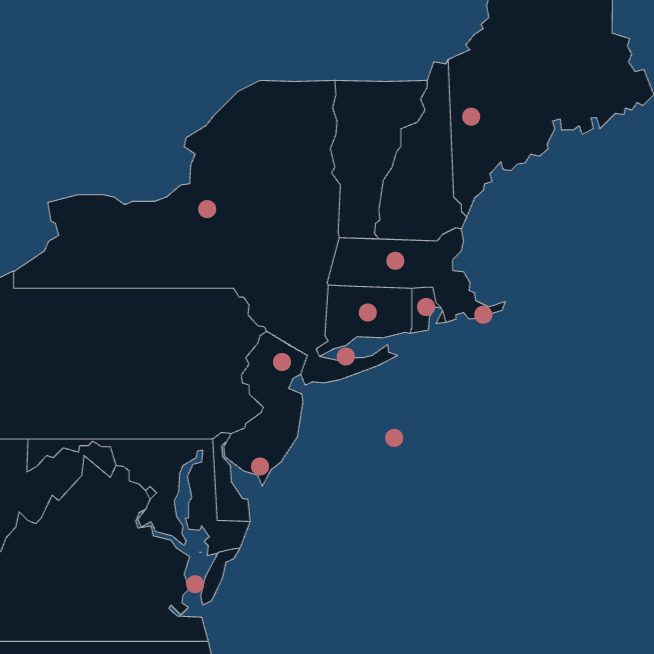
Boccio pursues the biggest white chins from the eastern end of Long Island Sound all the way north and east to spots along the Connecticut and Rhode Island coast. “You’ve got to know which direction the fish are heading, set your vessel to settle over the most productive slice of structure, keep your line still on the bottom, and turn the biggest fish before they dive into the snags. A lot of this is the same as when targeting inshore blackfish except the gear is heavier, the fish are bigger, and the water depth and current strength greatly magnify any miscues.”
Indeed, the variables are many. Attention to detail as you set the drag, tie knots, slide green crab baits onto the hook and check leaders for frays also comes into play. It’s missing the little signs that causes anglers to forfeit strikes from possible record-class fish or bust off bulldogs before they even get the bends.
Take baiting up, for example. Don’t even consider sliding a crab over your barb before inspecting the hook point to ensure it is razor sharp. Fishing around heavy structure dulls points in a hurry, and most anglers don’t take the time or make the effort to change hooks. Even fewer bother to sharpen them throughout the day. But consider that point must be driven through a set of lips that have the consistency of a sneaker sole – 100 feet beneath the surface – and the need for a razor’s edge becomes quite obvious.
“It’s not the little fish that slip the hook when points are dull,” explained Boccio. “It’s the biggest fish with the toughest lips that escapes unscathed. Even when using braided lines, there’s still some stretch and scope between the hook and your rod tip. There’s no way to make up for that when hooks aren’t sharp.” Improperly set drags are another reason anglers lose big offshore blackfish. Set the drag too light and any respectable tautog will power back into the boulders or wreck from which it came. A drag with too little give, on the other hand, encourages hooks to tear free and knots or frayed leaders to part during the rock- ’em, sock-’em, straight-up-and-down battles for which bulldog blackfish are so beloved.

Then there’s the hook set: straight overhead works best to raise a monster tautog above the snags at the beginning of the battle. Many anglers get this part right, but then make the mistake of lowering the rod tip too quickly, giving back just enough line that a tackle-busting white chin can power back into the snags. Drop the rod fast enough to allow momentary slack in the line, and your sinker will fall below the fish, often tearing the hook right out of the crab-crushing maws of a trophy specimen.
Finding the right bottom can be a problem for skippers searching for blackfish at any depth but, again, the task is magnified significantly when probing deep waters.
“We look for large back-eddy areas,” explains Boccio, “because that’s where our lines can cut through the current and get to the bottom. Poke around and you’ll find some expansive eddies off Orient Point, Plum, Gull, Fishers and Block islands. Mostly, they form on the second half of flooding water.”
Back eddies can be surprisingly large, sometimes measuring two or even three miles in diameter. While the water may push hard around their outer perimeter, the center point often sees a more forgiving current on incoming tides. This allows for better mussel sets because shellfish larvae get a chance to settle to the bottom soon after hatching.

“Dense mussel coverage is a key we look for when setting up for blackfish in any deep water,” relates Boccio. “Heavy mussel coverage means the bottom is thriving and alive, and that draws and holds more big fish. You can assume you are over mussel-encrusted bottom when you start catching starfish because they are a primary shellfish predator. That’s a tip I learned from Captain Dave Brennan on the Greenport open boat, Peconic Star II.”
Like Boccio, Highlands, New Jersey charter skipper Al Ristori of Sheri Berri II Fishing Charters makes it a point to zero in on living bottom when searching for late-season blackfish in deep water. “Just about any rocky bottom up to 120 feet deep that is covered in mussels will hold big blackfish,” notes Ristori, “but a lot of the biggest fish in our area end up in the New York Bight at 17 Fathoms because that place has a very fertile bottom.”
Famous for producing outlandish bulldogs – at least four fish in excess of 16 pounds were decked in the area last winter, including a 20.65-pound monster – 17 Fathoms is an expansive, rubblestrewn area shared by blackfish hounds from both New York and New Jersey. “Our blackfish tend to slide west to east as the water gets cold,” notes Ristori. “It’s usually December before they reach the 80- to 100-foot depths in this area. Once they arrive, however, the fishing can be fantastic, at least until the daily poundings take their toll on the high profi le pieces.”
In other words, get out as soon as you learn the action is heating up. With heavy pressure from mid-December through late January, the biggest fish do get culled. Making it a point to head out a day or two following heavy winds that can push fish off the structure long enough to reshuffle the deck while keeping the fleet at bay often refreshes the action.
“The best thing about blackfishing at 17 Fathoms is that there are plenty of productive pieces scattered around,” continues Ristori. “Even if you don’t have a good set of numbers, you can use your electronics to fi nd a pile of rubble that may be worth a drop. Keep an eye out for the highest peaks and sharpest ledges. The more different it looks from the surrounding bottom, the better the odds it will hold good fish. If you aren’t catching after giving a spot a little time to produce, pull up and move a few hundred yards.”
BEEF IT UP
Whether you fish at 17 Fathoms, off the east end of Long Island or between eastern Connecticut, Block Island and the Rhody coast, it’s important to beef up your tackle and dress for the elements when planning an offshore blackfish excursion.Dress in layers, with a knit hat, turtleneck shirt or sweater, waterproof gloves, boots, and a change of clothes in case you catch a wave. Carrying foul-weather gear is always a good idea.
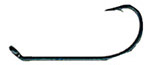
On the tackle front, you’ll need a stiff conventional outfit with 40 to 50 pound braided line, 4/0 Gamakatsu octopus or Virginia-style hooks, and 10 to 12 ounces of lead to hold bottom.

Bait up with green crabs during November and December but switch to Jonah crabs, known locally as “whites”,as the new year approaches if 17 Fathoms is your destination. Both the green crabs and whites stay on the hook better than fiddlers and hermits, allowing slower, wary lunkers more time to commit.
Ristori offers two tips for anglers intent on catching the blackfish of a lifetime in these deep-water bulldog haunts. First, he suggests leaving a little slack in your line and rolling the rod tip with the swells to keep baits stationary on the bottom. Second, use a two-hook rig but only one piece of bait.
“The blackfish on these deep pieces are sluggish and deliberate due to cold water temperatures, so hooking them can be a little tough,” explains Ristori, adding that the bite at 17 Fathoms heats up in mid-December. “To improve your chances, run both hooks through a single, de-shelled green crab by sliding the barbs through leg sockets on opposite sides of the body. Ensure the points of both hooks extend completely through the crab.”
To be honest, this rigging looks pretty funky – but it works, and success, after all, is the true measure of any fishing technique.
Of course, winter fishing means you’ll need to pay extra attention to any meteorological cautions and dress appropriately for a long, often cold, run offshore. But the rewards can be sweet, especially if catching the ‘tog worth bragging about is on your agenda. Be sure before heading out to check your state’s blackfish regulations as there are differences in season closures and size limits.
“Stick to your game plan and be fully prepared to stay at the rail in cold, sloppy seas,” reminds Boccio, who hits his biggest bulldogs around Thanksgiving but loses the fish soon after. That way, after a productive day on the water, you’ll be satisfied and comfortable enough to relax on the ride home and discuss the multitude of blackfish questions that continue to haunt blackfish aficionados.
Questions like: “Where do the big ‘tog go after they push out beyond 120 feet?” top that agenda.
“There’s plenty I’ve learned about big blackfish over the years,” chuckles Boccio, but that’s one big riddle I’d still like to unravel. Once those fish move out, even the draggers don’t catch them – and those guys work all the way out to the continental shelf.”
Like Ristori, and hordes of other dedicated late-season blackfish fans, Boccio knows the bulldogs are out there waiting to be uncovered. I just hope he’ll give me a call when he finally stumbles across the mother lode.
Thoughts on using a hi low Jig Rig for CT rocky shoreline November Tog?
68 years old and never caught one but it’s on my “bucket list”. What’s a good “tog” rig look like for example. I do some boat and surf fishing for flounder and I have a custom Crafty spinning rod with a penn clash 4000. I also have a 5500 fisher for bigger stuff .. thanks for taking time to give me your suggestion for the tog gear I might need to look at giving Santa a hint about… God bless and thanks….
I have switched to jigging for them with as light a set up as I can in ct. s and s makes a new atomic that is pretty cool. When the current is to strong ill go with a heavy sinker and a snafu rig. We have a lot of rock piles so keep moving and you’ll be happy.