“This is what we want to see,” said Captain Mike Littlefield as he traced the thick red line forming at the bottom of his fishfinder screen. “That’s sand eels. We don’t want to see sea bass. They’ll beat the fluke to the hook.”
Two hours and a couple-dozen Gulp Tails later, the black sea bass were undefeated in racing the fluke to our baits. “There’s going to be a window,” Littlefield said, “when the fluke turn on. We just need to have our rigs in the right place when they do.” Mike had also said this at the dock that morning, but it bore repeating to keep effort high and hope afloat.
Depending on the timing and location, a species of fish can either be a prized catch or a nuisance. In May, in Buzzards Bay, the opening of the sea bass season attracts a large fleet of boats and kayaks happily seeking the hump-headed bottom fish. In August, in Rhode Island, when an endless supply of just-short sea bass overrun fluke grounds, sea bass are pests. We quickly filled our two-fish limit, in some cases with a single-drop double-header, while going through an alarming number of the 6-inch Gulp Grubs.
At the start of the trip, the jug on the right was filled with colorful Berkley Gulp Grubs. By mid-morning, sea bass had taken a heavy toll on Littlefield’s Gulp, leaving less popular colors like “Fusilier.”
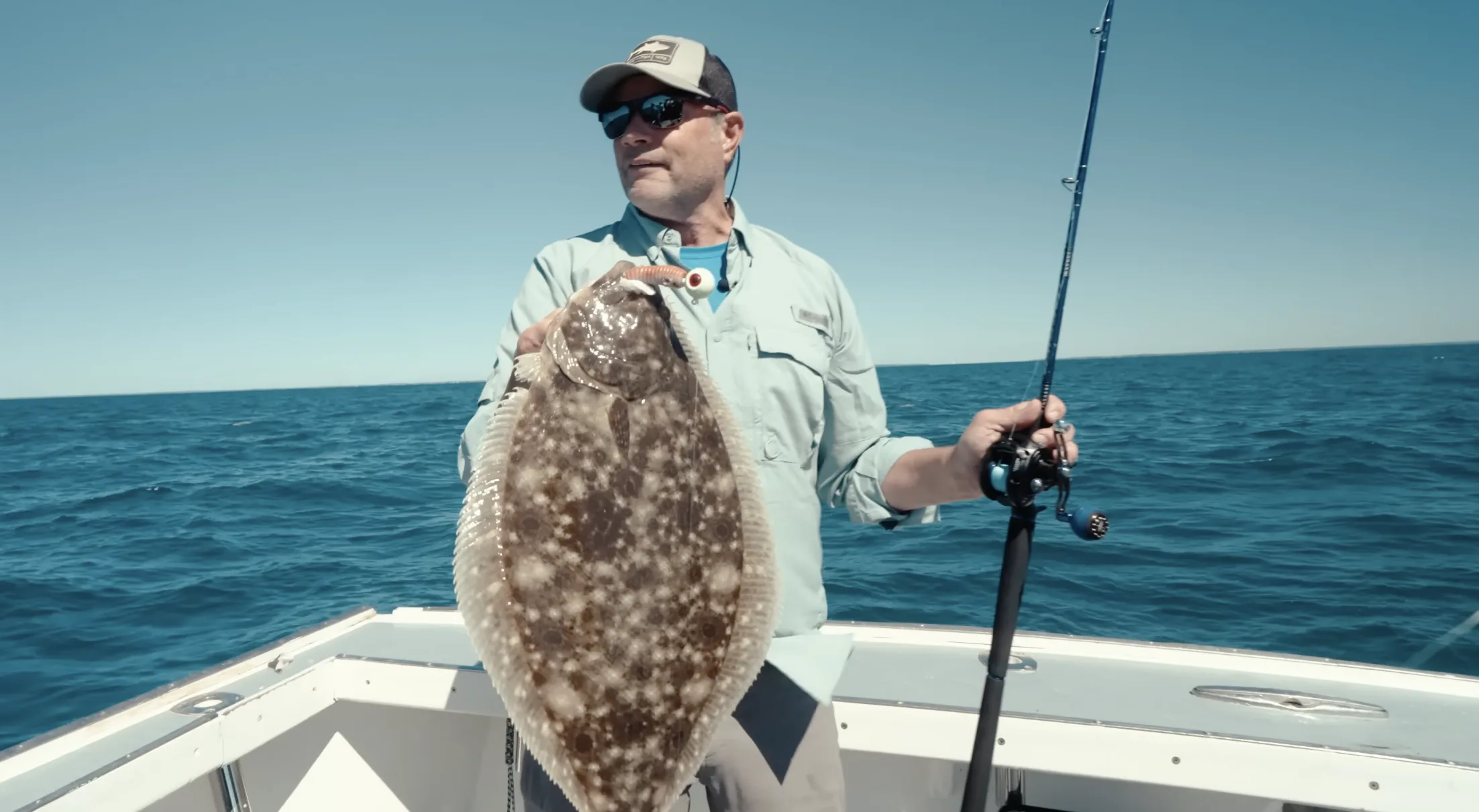
We’d arrived at the fluke grounds armed with at least two rods apiece—spinning and conventional setups for each angler on board. The conventionals were rigged with dressed high-low rigs, known as popcorn or chicken rigs, while the spinning rods sported “PowerBall” jigheads; bare, brightly colored leadheads with large thin-wire hooks that easily accommodated the 6-inch Gulp Grubs.
The Power of the Powerball
Bucktail jigs make excellent fluke lures. The pulsing hairs imitate all types of fluke forage from crabs and sea robins to snapper blues and squid. However, those flowing hairs also slow down the sink rate. While this can be an asset in shallow water, in deeper water, especially during fast drifts, this extra drag can cost you fish.
That’s why for deep-water fluke jigging, many anglers prefer “PowerBall” style jigheads. The brightly colored round ball jigheads have big eyes and sink quickly. Just as important is the “collar” which needs to hold the artificial in place, even during missed hooksets and short strikes.
Fluke Grubs You Need
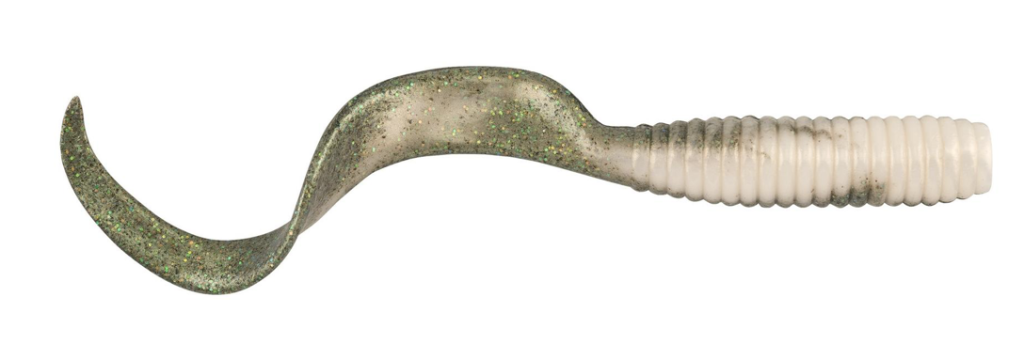
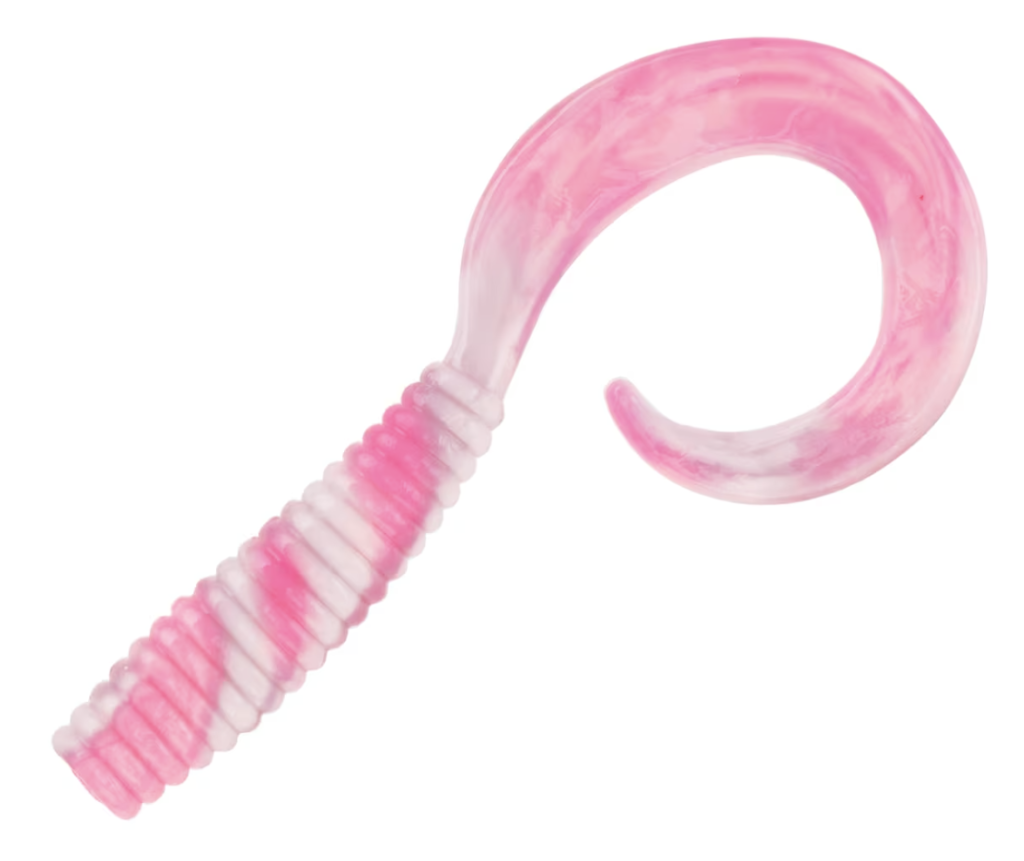
The 5- to 6-inch curly-tail-style grub has emerged as the favorite scented artificial among fluke fishermen. The undulating action and slim profile get fluke interested, and the scent and taste keeps short-strikers coming back. Fitted on a jighead or bucktail, or used to bulk up a high-low-rig, here are the top options for fluke grubs.
When we first arrived, the fast drift demanded the use of rigs, which would better hold bottom and fish effectively in the 100-foot depths. As the current slowed in the late morning, jigs became the better choice, as the rigs had less action in the dying tide.
Littlefield keeps his rod low while bouncing a jig on spinning tackle. He works the jig with constant, small twitches, giving perpetual motion to the curly tail below. He spools his spinning reels with 30-pound-test braid, the thin diameter of which helps keep the 3- to 6-ounce jigs as close to vertical as possible.
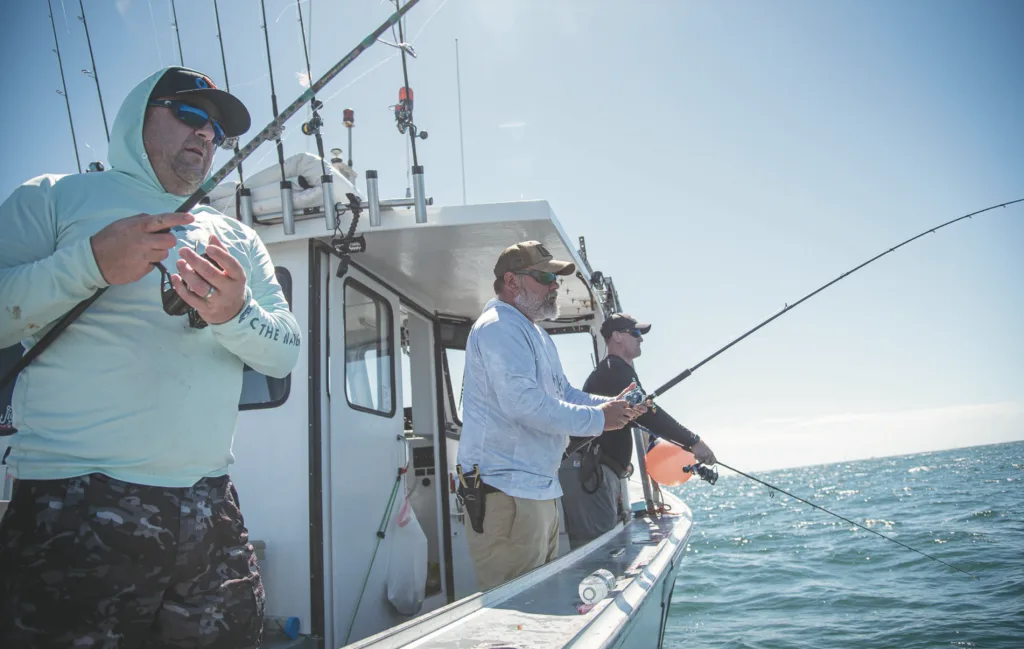
Higgy, Mark, and Captain Mike display three-different jigging styles for fluke, from long sweeps to short hops.
Around mid-morning, Mike had just finished explaining the “no whistling on a boat” superstition (you’ll whistle up the wind) when he and his friend Higgy simultaneously planted the hooks into the target species. The pair of 19-inch fluke let us know that the window had opened.
Captain Mike Littlefield broke through the sea bass to catch this 19-inch keeper fluke that kicked off a flurry of great fishing.
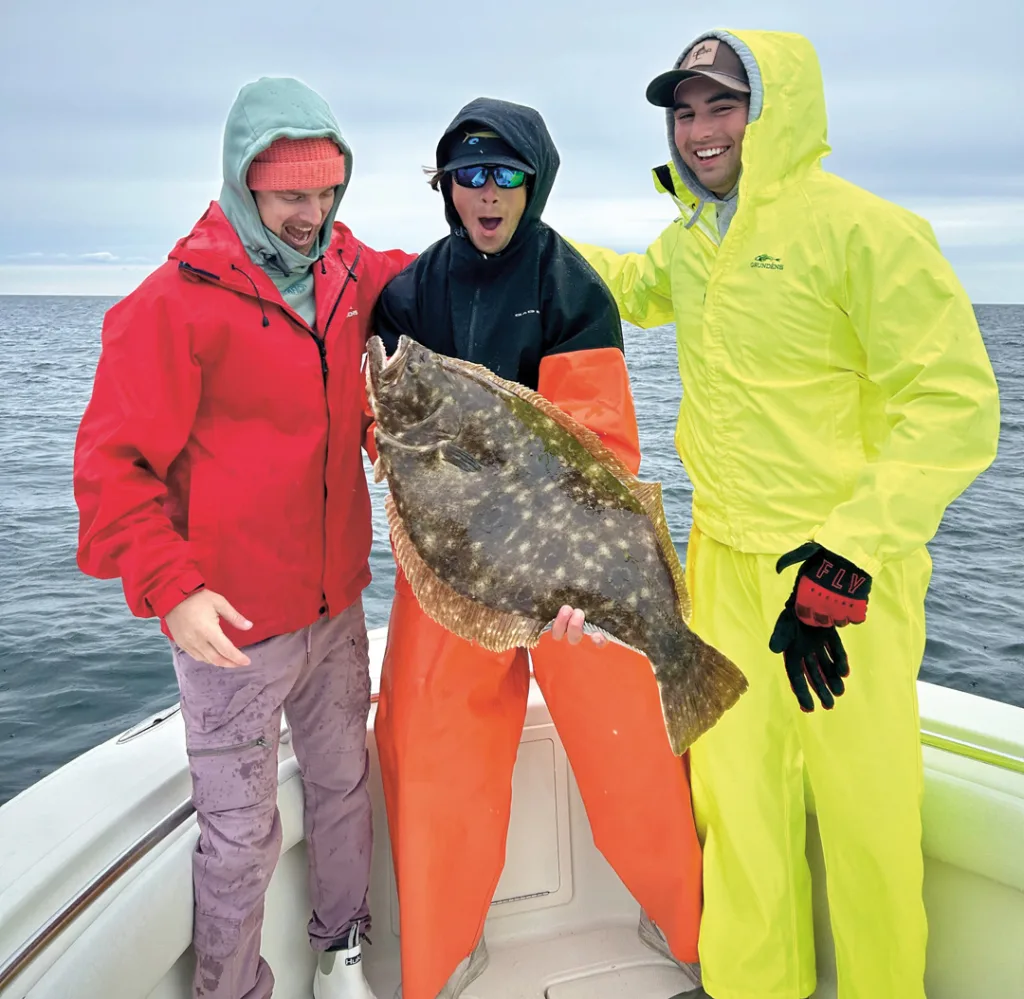
Like a switch had flipped, the fluke outnumbered the sea bass, as everyone in our crew of five caught fish that exceeded Rhode Island’s 19-inch minimum size. We high-fived and celebrated, and marveled at how, with fishable seas and a bottom paved with fluke, we were the only boat in sight.
Timing a Rhode Island Fluke Trip
While New York and New Jersey anglers eagerly await each year’s fluke-season opener in early to mid May, the Rhode Island fluke fishery opens to no fanfare every April 1, and then ends quietly on December 31, months after the last angler dropped a fluke rig.
But even with six months to work with, the heart of Rhode Island’s fluke season aligns with New Jersey and New York’s. In May and June, most fluke hang close to the coast or in the bays, taking advantage of the warmer water and abundant bait. In late summer and early fall, the fish group up to feed heavily as they move offshore, which is when anglers intercept them at deep structure around Block Island and beyond.
However, anglers do sometimes catch doormats beyond the traditional fluke time. After watching a friend catch a short fluke on a late-October cod trip in 2023, Spencer Faucher tried a fluke rig and caught a 16.38-pound doormat, just a pound shy of the state record set in 1962.
Spencer Faucher with his 33-inch, 16.38-pound doormat fluke, caught off Rhode Island in October 2023.
Fluke swim under the radar of many Rhode Island anglers. May-to-October availability of big stripers, abundant mid-shore tuna, and world-class tautog fishing distract from the Ocean State’s summer flounder fishery.
But that’s not the full reason the Arch Angel, Littlefield’s 40-foot Osmond Beal, drifted alone off Rhode Island that day. Had we headed for Block Island, we’d have found a modest fleet of bottom bouncers, including a couple headboats, working the waters for fluke. The real reason we had the place to ourselves was because we weren’t at a fluke spot.
A couple seasons back, with a chum slick meandering down the drift like an oily river and baits bobbing lazily under balloons, the anglers aboard the ArchAngel had settled into the “hurry up and wait portion” of a shark trip. Of course, a good captain never just waits around. Littlefield had an eye on the fishfinder as he drifted, seeing clouds of sand eels amassed over productive-looking bottom. He grabbed a bottom-fishing rod and handed it to one of his clients who promptly hooked a big fluke. The next drop produced another. The following day, Littlefield returned with his buddies, without the chum and shark tackle, and went to work on big fluke.
Littlefield found his productive fluke spots while fishing for sharks and watching his fishfinder.
In the seasons that followed, Littlefield refined his approach, looking for more good bottom and bait in 100- to 120-foot depths that might hold big fluke. His deep-water fluking is now a reliable late-summer fishery that takes him right up until tog season ramps up in late September. The trips have produced quantity as well as quality.
As I’d boarded the ArchAngel the morning of our trip, Mike said the fishing had been “pretty good.” After some nudging from his friend Mark and Higgy, he fessed up that he’d caught a personal best 12-pound doormat the day before, and we were headed right for those numbers. To keep the expectations in check, Mike said we’d have to work for the bites, but when the window opened, we should have an hour or so of great fishing.
To account for changing conditions, fluke fishermen bring a mix of spinning and conventional tackle to fish rigs or jigs depending on the drift speed.
That prediction proved dead on. A flurry of 19- to 22-inchers attacked our jigs, showing no clear preference for color. Littlefield landed a good fish on “New Penny” while Mark hooked up on “Pink Shine.” Worried I would exhaust Mike’s supply of the good colors by feeding tails to the relentless sea bass, I tried out the neon blue and yellow “Fusilier” color, named for an Indo-Pacific Baitfish. At least one fluke had exotic taste, and following a big upward sweep of the rod, I had a solid take on the jig. The fish bent the rod to the cork, as I slowly worked it to the surface. Mike had the net ready to scoop the 26-incher, the best fish of the day.
The good bite continued for another 20 minutes before the wind picked up, the drift speed increased, and the droves of sea bass returned. Mike pointed the ArchAngel for Newport, but not before congratulating the crew for fishing hard and being ready for when the bite turned on—graciously, and unnecessarily, sharing the credit for what was his hard work, finding the fish, and getting us there in the first place.
» Book a Trip with Captain Mike Littlefield: ArchAngel Charters, Newport, RI
Jimmy Fee is the Editor of On The Water and a lifelong surfcaster. He grew up fishing the bridges and beaches of Southern New Jersey before moving to Cape Cod in his early 20s. He's pursued striped bass from North Carolina to Massachusetts. He began with On The Water in 2008, and since then has covered a variety of Northeast fisheries from small pond panfish to bluewater billfish through writing, video, and podcasting.