
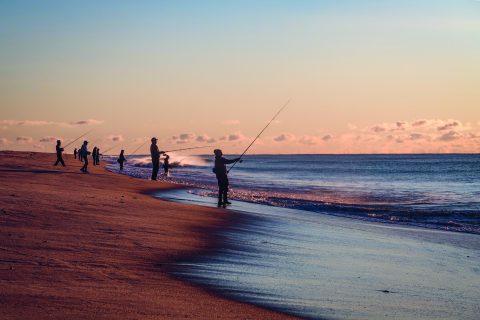
Boots on the sand. Sets of breaking waves rolling in beneath the dunes. A single rod and a sky full of stars over my shoulder. Sand-beach surfcasting is one of the purest experiences an angler can have. However, selecting lures for this form of fishing can be daunting.
Plugs for stripers on sand beaches vary widely from ubiquitous, mass-produced plastic lures to hard-to-acquire wooden works of art. Stepping out onto the sand with a well-stocked plug bag is only the first step toward success in the surf. An array of lures is only useful when complemented by an angler’s arsenal of knowledge regarding the conditions and structure for deploying them.
(Note: On The Water is reader-supported. When you buy through links on our site, we may earn an affiliate commission.)
Pencil Poppers and Topwater Walkers
My walk-the-dog plug swayed back and forth without a care in the world, oblivious to the school of stripers eyeing it through the fast-moving water. Long stretches of sand beach are typically punctuated by bars, troughs, and current rips. On this morning, all three were visible as the rising sun peeked over the horizon. The strong full-moon tide, and the fish that followed it, had already been on the move for quite some time. It was late April in southeastern Massachusetts, and schools of big striped bass were scouring miles of shoreline for forage after a long trip from southern waters.
Behind my walk-the-dog lure, a boil appeared amid the current and chop. A healthy slot-sized striper proceeded to blow it out of the water, missing two more hits before it was finally hooked solidly enough to be retrieved and revived. After this fish was released, a dozen or more of its friends also succumbed to the same plug. While I had covered miles of good-looking shoreline before this catch, the tantalizing action of the topwater lure I was using found the only active fish on the miles-long stretch of sand beach.
Topwater plugs are ideal tools to find actively feeding fish on the move. Dawn, dusk, or in the middle of the day, no actively feeding striped bass can resist the commotion made by a well-worked pencil popper or walk-the-dog lure. Sure, the fish might take a swipe at another presentation, but the ease with which an angler can cover water and find fish with topwater lures is unparalleled. Even if a fish does not fully engulf the lure, it will still reveal its presence with a boil in the water behind the plug. Topwater lures have the added advantage of floating over weedy waters that would otherwise be unworkable with subsurface baits.

A factory-built lure like the Drifter Tackle Doc has a loud knock to call the fish in, while widely available pencil poppers like the Gibbs Pro Series Pencil cast well, even into a strong headwind. As a general rule, pencil poppers work well in rougher water, while the walk-the-dog action of lures like the Doc can call fish up from the depths in calmer conditions. Even if the available forage is relatively small (say, sand-eel- or peanut-bunker-size), giant knocking, splashing plugs can be extremely effective tools for revealing the location of any fish that may be around.

Slim-Profile Soft Plastics and Needlefish
A broad expanse of glass-calm water gently receded past my wading boots as the tide ebbed through a channel cut in the sand flats of Cape Cod Bay. The occasional shimmer of a silverside could be seen in the light of the full moon but, otherwise, the water seemed lifeless. Calmer conditions such as these sometimes make finding the structure—and the fish—more challenging.
The 9-inch soft plastic I threw could have imitated any number of bait species, from the slim underneath silhouette of an Atlantic herring to the slender shape of a sand eel. My cast targeted an area on the opposite side of the channel where the current appeared to move a bit faster. My suspicion was confirmed when the lure was swept hard down-current. A straight, slow retrieve was met with a hard bump and the first fish of the night. Though they did not make a single splash as they stealthily swam through the current, bass to 20 pounds violently thrashed the soft plastic until the tide slowed to a trickle.

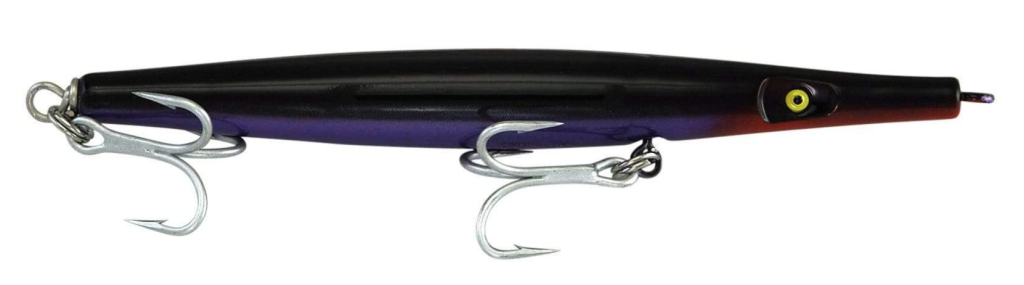
Slim-profile soft plastics and needlefish plugs often fill a similar niche in calm conditions. They are a subtle presentation and can be swung laterally and slowly retrieved against the current. This is a deadly presentation in the dark. Excess commotion appears unnatural to a striper sleuthing through tranquil waters, so a thinner, quieter presentation may work for fish that would reject louder offerings.

Both needles and soft plastics work extraordinarily well for this application. Weightless or lightly weighted soft baits, including the 9-inch Slug-go and GT Eel rigged on a screw-lock hook, are perfect for swinging in slower-moving current. A stout screw-lock hook, an 8/0 to 10/0 BKK Titanrider or Owner Beast, has the strength needed to subdue a striper in current. If a needlefish is your weapon of choice, the Super Strike Super N Fish, a surfcasting staple, comes in a variety of weight options suitable for different current conditions.
Darters & Bottles
Each cast landed into an onslaught of white water as an offshore storm swell battered the oceanside sand beaches of the Outer Cape. Soft plastics and lighter plugs were merely skimming across the surface, unable to penetrate the strong wave action and reach the fish feeding below. My angling partner, Anthony, clipped on a darter that would dig in against the tall waves.
His first few casts earned a couple of bumps, and the fish he landed in short order caused me to reach into my plug bag for a facsimile of the same darter he’d thrown. Among the slot-sized bass, a single, drag-screaming fish that threw the hook was the highlight of the night and kept us coming back to resume this dialed-in darter bite on subsequent evenings.
A darter creates the commotion needed to attract big fish in the most arduous conditions. Its sloped front digs deep beneath the rough surf and causes the plug to “dart” side to side so that a striper can hunt it down with ease, even in the pandemonium conditions of a storm swell. To correctly fish a darter in heavy surf, cast it as far as possible into a trough between big waves or a cut between bars. Keep a steady pressure on the lip. The more pressure on the sloped nose, the slower the darter should be worked. Hits often come when the lure is slowly darting back and forth behind a big wave.

A broad array of darters are built to work quite well right out of the package. The Super Strike Zig Zag can be found in almost every plug bag from Maryland to Maine, while other molded plastic options like the Tactical Anglers Sub Darter include an internal rattle to call in fish. Most darters cast fairly well and are easy enough to work and feel on any standard surfcasting rod. For even rougher conditions, bottle plugs like the Super Strike Little Neck Swimmer dig harder in heavy waves and hard current. It’s smart to carry a few of both when faced with storm-swell conditions on open sand beaches.

A Plug Presentation for Every Set of Conditions
As illustrated by the examples above, there is a plug for every set of sand-beach surfcasting situations. From bar and trough-filled shorelines to more subtle channels cut in the sand, to raging, heavy surf, the successful surfcaster must tailor the presentation to the conditions at hand. Knowledge of the spot you choose to fish and the conditions you will find when you wade into the water is critical. Even more important, however, is the ability to adapt to different conditions.
A plug bag equipped with the essentials described in this article gives the adept surfcaster the tools to tackle the toughest bite. Having the correct tools attached to your surf belt is only one piece of the puzzle that we all assemble each night as we step out into the surf. Knowing how to use each and every lure in your bag is another. The final puzzle piece required for surfcasting success is the knowledge and faith that, at the end of every cast, a trophy-sized striped bass is ready to pounce on your plug.