

The backwaters can provide prime light-tackle fluking—if you know where to look.
I took a deep breath as we cut across the mud flat at full speed—so refreshing! A beautiful early morning, calm wind, sunny sky. It was the day of the Grassy Sound Marine’s annual summer flounder tournament. The crew was silent as we approached the backwater hot spot, but the adrenaline rush had begun. All the conditions were perfectly lined up for catching summer flounder. Yet the crew kept silent until Justin yelled, “I got him, get the net!” Conversation, laughter and high fives followed and continued throughout the day.
After tying up the boat, I was admiring some beautiful summer flounder. We’d had a great day of fishing and ended with an envelope of tournament winnings. At that point, I had a realization. Given a choice of fishing any place on the planet during the summer flounder run, I would pick sounds of South Jersey.

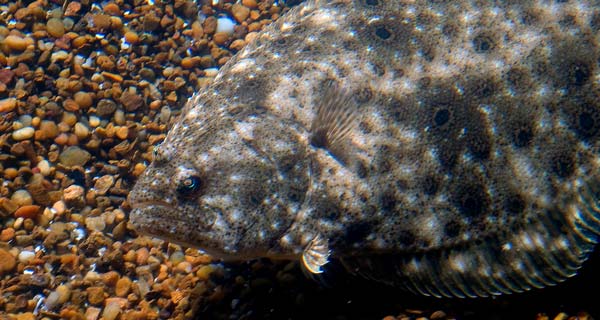
The back-bay waters provide a spectacular environment for Back-Bay Waters summer flounder fishing. The water is shallow, which allows the angler to use light tackle appropriate for the size of the fish. The runs to the fishing grounds are short, and most of my flounder trips are less than two hours in total, making it great for a before- or after-work outing. Calm waters are the norm, and the backwaters are fishable even on windy days. The best part about the backwaters, of course, is the incredible fluke fishing to be found there. I have won or placed in 25 high profile fishing tournaments without leaving the back bay. How is this possible?
Pulling from generations of knowledge of my fishing area and factoring in time of year, water clarity, salinity, water temperature, oxygen content, and baitfish activity, I am able to narrow down where the fluke will be holding on a given day. I will bounce from spot to spot, sound to sound if necessary. When I find good conditions. If I find fish, I will stay until the bite slows. If I don’t catch within 10 to 20 minutes, I move on.
By building your knowledge of your back bay fishing area, coupled with the few tips I have to offer. You can also enjoy this excellent backwater fluke fishing.

Homing In
A nautical chart of the back bays is a good starting point. Although most overlook some structures like tributary creeks, holes, and drop-offs, I have found the missing information to be an asset, as when I locate a piece of structure that’s unlisted on the charts, I have a hotspot all to myself.
The bottom type will be marked on the chart. Silted bottom is extremely poor flounder habitat, avoid it. This really saves time—there are some large areas of silted bottom in the back waters. Harder bottom structure such as sand are better for fluke. This type of bottom with structure such as mussel beds, submerged pilings, rocks, holes, and edges will be a hotbed of flatfish activity. Lastly, take a look at the Google Earth satellite image of your area. This will give you a better view of the creeks and choke points in your local waters.
For your day on the water, make a plan for the areas you plan to hit. You may want to fish the mussel bed area first, and then run to a hole just off a mud flat, trying different structures until you find fish. You also improve your odds by eliminating certain areas where fluke will not hold. These include areas with 80-degree or warmer water temperature, silted bottom, and areas with low dissolved oxygen content.
Once you find what type of structure the fish are holding on that particular day, you can narrow down what areas you fish. If you aren’t catching fish in an area, don’t linger there for too long.
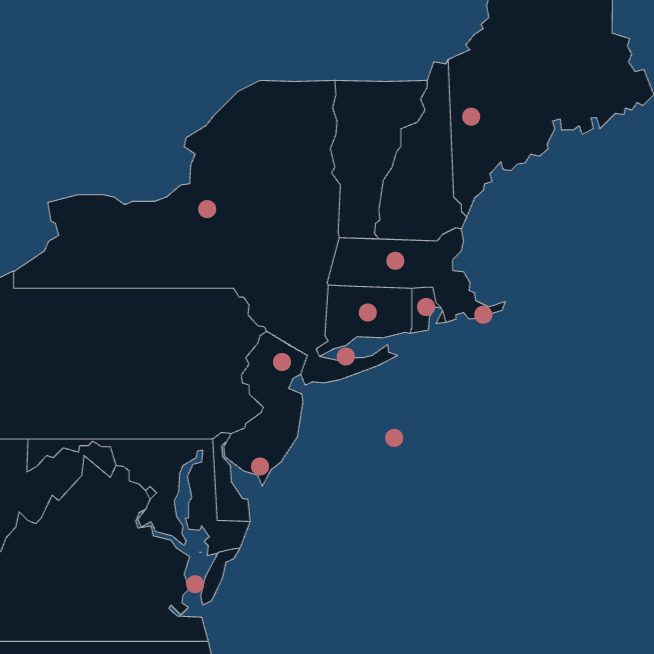
My home waters of Cape May County are broken up into different sounds, Grassy, Ludlum, Jenkins, Jarvis, Taylor, Great and Richardson. Each contains about 20 square miles of habitat. Some years summer flounder there will be fluke in Taylor Sound, yet they will be stacked up in Grassy, and vice versa, so don’t be afraid to make a big move if your go-to spots aren’t producing.
Mark all the spots that produce fish. Make note of the date, time, tide phase, water clarity, water temperature, wind direction. In doing so you are building your arsenal of summer flounder knowledge that can be used during future trips and seasons. Maybe even by your kids or grandchildren.
Conditions
Understanding how conditions and water temperature will affect fluke movements is important as well.
Salinity
While salinity is something that ocean-side fluke fishermen never have to consider, in the backwaters it can play a big role in where fluke are holding. There is a wall of fresh or brackish water that summer flounder will not cross as they migrate through the back bays. It moves farther up the bays during dry spells and pushes toward the ocean during rainy weather. Rain is the enemy of the backwater fluke fisherman. A week of rain will slow the bite and push the summer flounder close to the inlets. Stay clear of areas where the fresh water tributaries spill into the back bays. These areas are great for stripers but bad for flounder.
Water Clarity
Fluke need relatively clear water to feed, so when I’m seeking back-bay keepers, the clearer the water, the better. Murky water will severely slow down the bite. There is usually some clear water somewhere in the back. If the water is dirty in most of the areas, but you can find a section of clean water, you are going to catch fish.

Tide
I catch 90 percent of my flounder on the dropping tide. However, it can vary with location and time of the year. In May, the last hour of the outgoing tide, just off a mud flat would be best. In August the first hour of the outgoing tide, just inside the inlet is prime time.
Water Temperature
Based on my experience, back bay fluke fishing is best when water temperatures are between 58 and 72 degrees, with 68 degrees being the sweet spot. Water temperature in the backwaters will vary widely from the inlets to the upper reaches of the bays, and even with the tide. Fluke will move to areas where the temperature is most to their liking, especially early in the season when ocean waters can still be below their preferred range.
Wind Direction
A light and variable is best, but a wind from the northeast tends to shut down the back-bay flounder bite.
Back Bay Tactics
Effectively fishing the structure is seldom achieved by just drifting along with the tide and the wind. Flounder stack up tight to the structure, so to get more bites, you’ll need to adjust your drift so you spend more time on top of the productive bottom. When fishing an edge, make sure you’re on the edge. I had one spot around a channel marker that produced a tremendous amount of flounder. All the action was in a 10-foot by 10-foot square around the pole. By working the engine in and out of gear, I was able to stay in that small strike zone. An electric trolling motor makes it even easier.
I keep my engine on the entire time I’m fishing. On larger pieces of structure, I use my engine to move the boat as slowly as possible against the tide. It may be necessary to pull the boat in and out of gear, to keep your rig on the bottom. On large stretches of structure, the fish usually hold in just one small area. Once you hook up, stay close to the spot, crisscross and circle the area to stay on the fish. Usually you can catch multiple fish before they spook or move. When a good spot slows, give it a few minutes, and then hit it again, before moving on.

My flounder rig consists of a 1-once white bucktail with an 8-inch 25-pound-test fluorocarbon leader tied to a three-way swivel finished off with a trailer hook attached to an 18-inch 25-pound-test fluorocarbon leader. The bucktail and the trailer are tipped with Berkley Gulp—I do best with the 4-inch Swimming Mullet in white. The 4-inch Gulp Shrimp in New Penny is a close favorite. I used live minnows for years and caught many summer flounder with them, but once I began using Gulp, I never went back.
Keep the jig moving to attract flounder, either with a slow lift and drop or a fast tap. Never let it drag the bottom! When using a jig and Gulp, I set the hook as soon as I feel the hit.
[…] post Find World-Class Summer Flounder In Back-Bay Waters appeared first on On The […]
Great article,thanks for sharing the info!!
Nice article my friend. NJ was my party hole in the 70’s. Salinity was my lesson of the day.
I fish Rhode Island and all the ponds are 100% salt. So we have to look for contour drop offs.
Enjoy the fall migration.
Steve
`Steve, the party is still going for many this weekend in Cape May, NJ . Weather conditions killed the last few days of our flounder season .
Fall fishing sounds good!
Great article. I am new to the flounder fishing world and trying to learn as much as possible by reading articles like this. I’ve tried to tie my own rigs such as the one in this article with fluorocarbon line and have been experiencing a lot of snapped line with fish on. Can anyone provide any reason why? Am I tying the knots too tight?
What type of knots are you tying? Improved clinch for floro, palomar for braid, and uni to uni for floro to braid. I have never had a problem with those knots if tied correctly.
I do a two foot floro leader 15 pound test. A loop at the bottom for the bucktail. A dropper loop about 12 inches higher with about 7-8 twists. The line keeps snapping at the loop.
Great article BUT you now will have the weekend warriors running all around you
I use the same type of rig HOWEVER I use a 2 way swivel instead of the 3 way,,, Much less turbulence in the water when drifting and it catches less weeds… Very little twisting of line as long as you separate the lines after a catch.
Good size fluke will hold in these areas as late as late Oct. These will be the late spawning fish that arrived inshore in august
LEAVE SOME FOR BREEDERS
Ken, looking for a good guide, not a boat ride, for flounder fishing over Labor Day weekend in AV, NJ. Know anyone?
Murray, a boat ride is exactly what you will get from 90% of them. All of the guides that I would recommend are booked. You could rent a boat from Grassy Sound Marine and fish the back waters on your own. Jim and Debbie the owners are always tuned- in to the flounder bite .
Great peice this information is invaluable to the Bay Angler. I’m sure flounder is isn’t your only expertise..maybe give us something on striper season next article!
Keep them coming!
the back bay is in Boston
New to the game .need all the tips i can get
Lose all that hardware….
Less is always better
..
Yes, just tie a loop on the rig. Put the swivel on the line and clip to loop. Minimal hardware stays on line, not rig.
Great article! I have fished with & against Kenny in tournaments. He really knows his S**T !
My grandfather & his father fished & hunted together. He’s the real deal.