

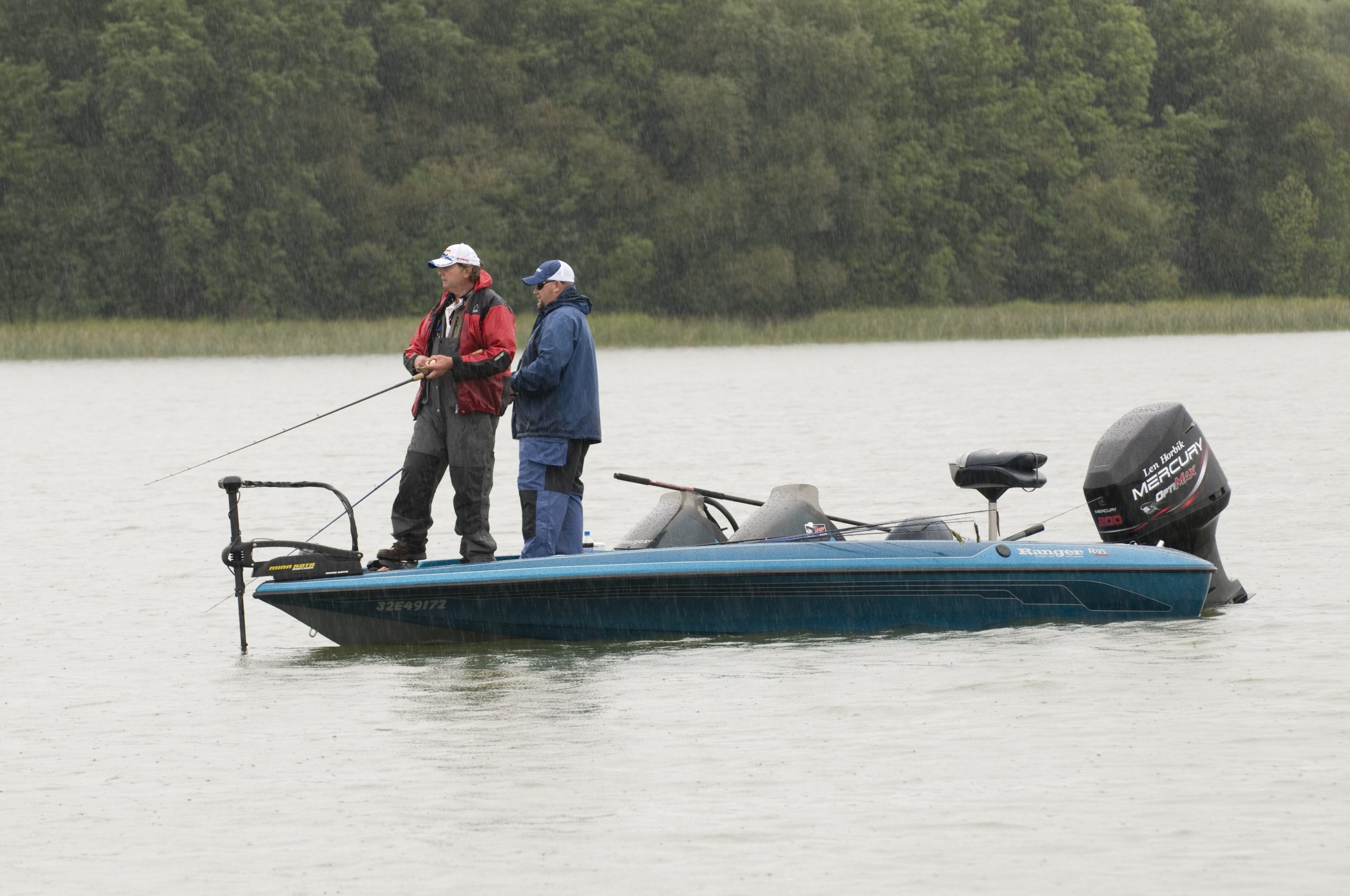
“So Wally, it appears the question is no longer if it will rain, but when,” I said to my fishing partner as we worked a weed flat for largemouth. Wally’s the third generation in his family to own a cottage on a jewel of a bass fishing lake, and we were approaching one of his honey holes. For the past hour we’d each been occasionally scanning the horizon, eyeing the rolling dark clouds. Up to this point, the ongoing debate between casts had been whether the forecasted late-afternoon thundershower would hit us or if we’d escape its wrath. The last glance ended the discussion because it was apparent we were going to get wet if we hung around much longer. Wally, ever the gracious host, floated the idea of a dry escape.
“If we leave the bay now, we can get back to the cottage in time to miss the rain. What do you think?” he asked, tossing out a spinnerbait. “Hey, if you want to pass on the soaking that’s fine with me, but I’m just as good sticking it out to see if the rain will turn the fish on,” I replied. The fact is we both knew we’d stay out. If anything, the dialogue was only to confirm our assumptions. Together we’d fished while being pelted with wind, rain and occasionally sleet on various multi-species adventures. “I figured as much, Allard,” he said, “but if we see lightning or hear big-time booming, we’re pulling the plug and racing back.”
We were fishing a large, sheltered bay on the far end of the lake. Being an overcast day, we focused our efforts on working a series of large weed flats ranging between three and ten feet of water. We threw spinnerbaits, shallow-running crankbaits, and soft-plastic jerkbaits. The day’s action had been average. We both hoped the approaching storm would be the tipping point. It was.
Like the start of a rock concert drum solo, the rain began with a few drawn out taps. Each drop was isolated, but with the foreboding tone that a more aggressive downpour was imminent. Soon, heavy drops fell. They pelted the water and the boat, sounding off pings, plops and tings as the tempo increased. I love drum solos.
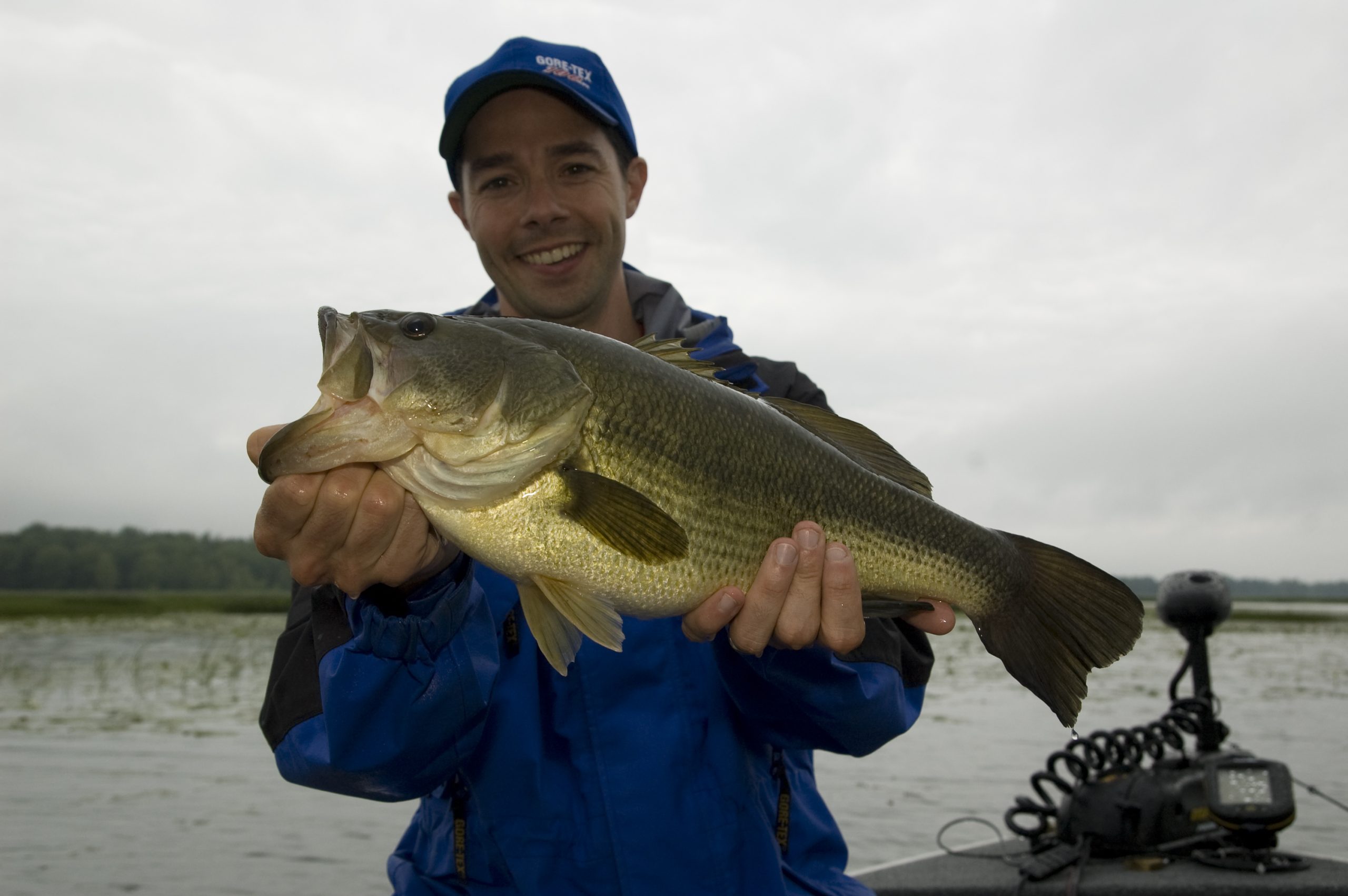
Suddenly, Wally set the hook. Erupting from the misty haze of the rain-pelted water, a largemouth broke the surface. The spinnerbait held on between the fish’s headshakes and tail-dancing. The show had started. The bite was on. Wally quickly played the fish and removed the hook from the 4-pounder. He slid it back into the water – the rock star released.
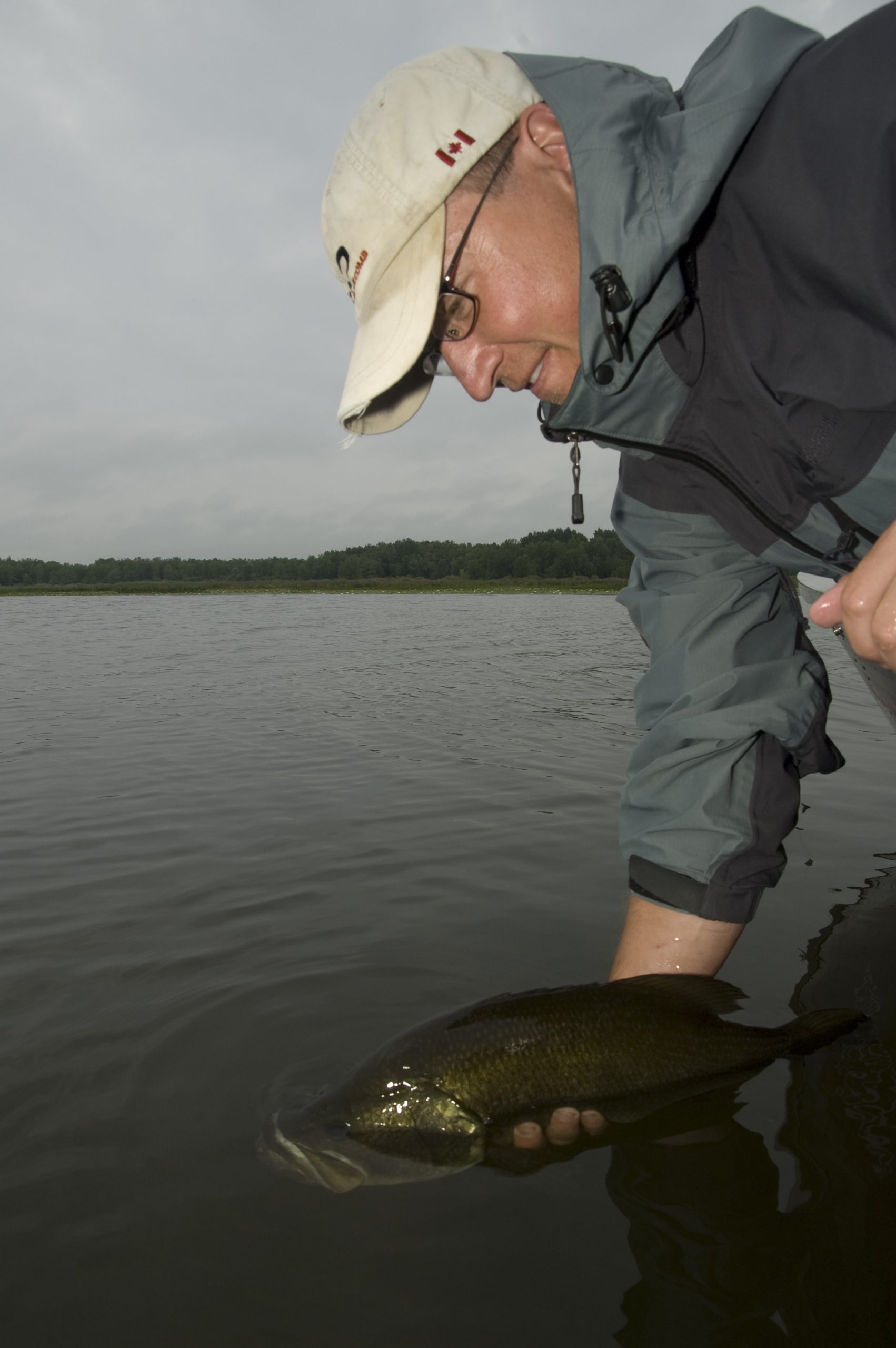
At this point the rain was steadily falling. “Fish on,” I said as I swept the rod. The fish tried to bury itself in the weeds, but I applied some pressure with my baitcasting rod and steered her back toward the boat. As I leaned over to land the fish, the creases in my rain jacket straightened and rivulets of water ran down the water-repelling fabric. The single hook easily popped free, and the fish leisurely swam back down toward the weeds. I Texas-rigged another soft-plastic jerkbait.
Wally and I had timed our attack just right. We had came upon a small rock hump in the weed flat just as the rain started. The change in the weather triggered fish to feed, and in about 20 minutes we boated several decent bass. Unfortunately, the storm was intensifying. A cool breeze mixed with the rain. Suddenly a loud boom cracked in the distance.
Getting off the water when we did was wise, and we had given ourselves plenty of time to scoot back to the cottage. Sticking it out and getting a little damp was worth it though. The quality of the fishing right before the storm eclipsed the start of the day.
Fishing in the rain requires a delicate balance on behalf of the angler. You must consider the type of weather system you’re dealing with and how it will affect fish activity, while simultaneously keeping personal safety as your priority. Thunderstorms can quickly turn a calm, scenic lake into a perilous situation. Always carefully monitor weather forecasts leading up to your planned outing. This said, not all rainy days are stormy ones, and fishing them will not only improve your overall angling prowess, it will boat you more quality largemouth each season. Let’s look at three different rain-system scenarios and how to integrate precipitation into your largemouth strategies.
Pre-Front Bonanza
Being on the water in the hours leading up to a major weather front can often put you in contact with active fish. The more dramatic the impending change in weather, the better the chances for excellent angling. Over the years I’ve had some phenomenal action from largemouth bass and other species of freshwater fish as well when a large weather system is approaching the area.
In general, fish activity is often elevated leading into and sometimes during the initial onset of a major weather change. When an impending front enhances fish activity, you’ll catch them in various areas. Experienced anglers, however, won’t just flog the water aimlessly but will focus on key zones. To better your chances at intercepting a trophy fish, concentrate on time-proven spots. You likely know a few: a wood-laden back bay on the river, a series of docks, a weed-choked flat, or any other area on a lake where you’ve found quality fish in the past. It’s these areas you should concentrate on as a weather system approaches.
Be sure to factor in the effect of the weather when deciding where to fish instead of just heading straight for your favorite spots. This is particularly true when it comes to wind and waves. I’ve done well fishing shallow to mid-depth points being pelted by wind at the start of a front. The turbulent water stirs up sediment, uproots aquatic insects and bullies minnows. The chaos created proves an advantage for largemouths on the prowl.
Cloudy Skies and Rain
Warm rain, low winds and cloudy skies are another one of my favorite inclement weather recipes for largemouth. These conditions are best when there’s minimal change in air temperature. Bass behave very differently in overcast conditions than they do in bright, sunny situations. Clouds diffuse daylight, and rain falling on the water’s surface reduces light penetration. These conditions often encourage largemouth to come out from their shady hiding spots and stalk prey. Hunting fish are active and easier to catch. Dealing with a bit of dampness is worth it for the chance at a great day of fishing.
Hitting your “A-list” spots is always a good strategy. However, when it’s cloudy, I also find that fishing along typically less-productive flats can be just as effective. Be sure to try a variety of depths until you determine a pattern. Fish may be cruising the outside edge of shallow surface weeds, or they may be slightly deeper, roaming a slow-tapering flat off a shoreline mixed with rock and wood.
It’s worth pointing out that fish will feed in a variety of rainy conditions. A light mist is often more comfortable to fish in than a steady downpour, but don’t allow yourself to be discouraged when the weather is less than hospitable. Some of my biggest summertime bass were caught before, during or after a mid-day downpour. Fact is, you never really know how the fish will bite in the rain until you go out and try. Just be sure to put the odds in your favor by picking your days and focusing on stable, wet weather instead of going out after a dramatic climate change.
After the Rain
Fish location and activity following a rainstorm varies dramatically. One pattern to watch for may occur if the rainfall brings about a rise in water level. Any newly flooded land is prime territory to target largemouth bass. Worms and other menu items are dislodged from previously dry land, attracting baitfish and bass alike. Keep in mind it can take largemouth longer to return to or become active again in shallow water after a significant cold front. However, put your time in working newly flooded shorelines, and you’ll eventually be rewarded with some big bass.
Another important area to focus on after the rain is a major inlet or any inflowing tributaries. Runoff will create elevated current areas and wash nutrients and oxygen into lakes and rivers. Baitfish and panfish are often drawn to these areas. Bass will follow.
Rainbaits
As with any fishing situation, choose your lures to match the mood of fish. The scenarios I’ve described above often spur bass activity. So, generally speaking, faster-moving baits that are retrieved horizontally through the water column are more effective than slow, vertically retrieved lures. Here are some of my favorite rainy-day search baits.
Topwater lures can be deadly in the rain over surface weeds or shallow flats when conditions are relatively calm. Opt for a bait you can work quickly, like floating frogs, buzzbaits and poppers. Bass that have left overhead cover and are wandering the flats as a result of overcast skies are likely to be tempted by topwater baits.
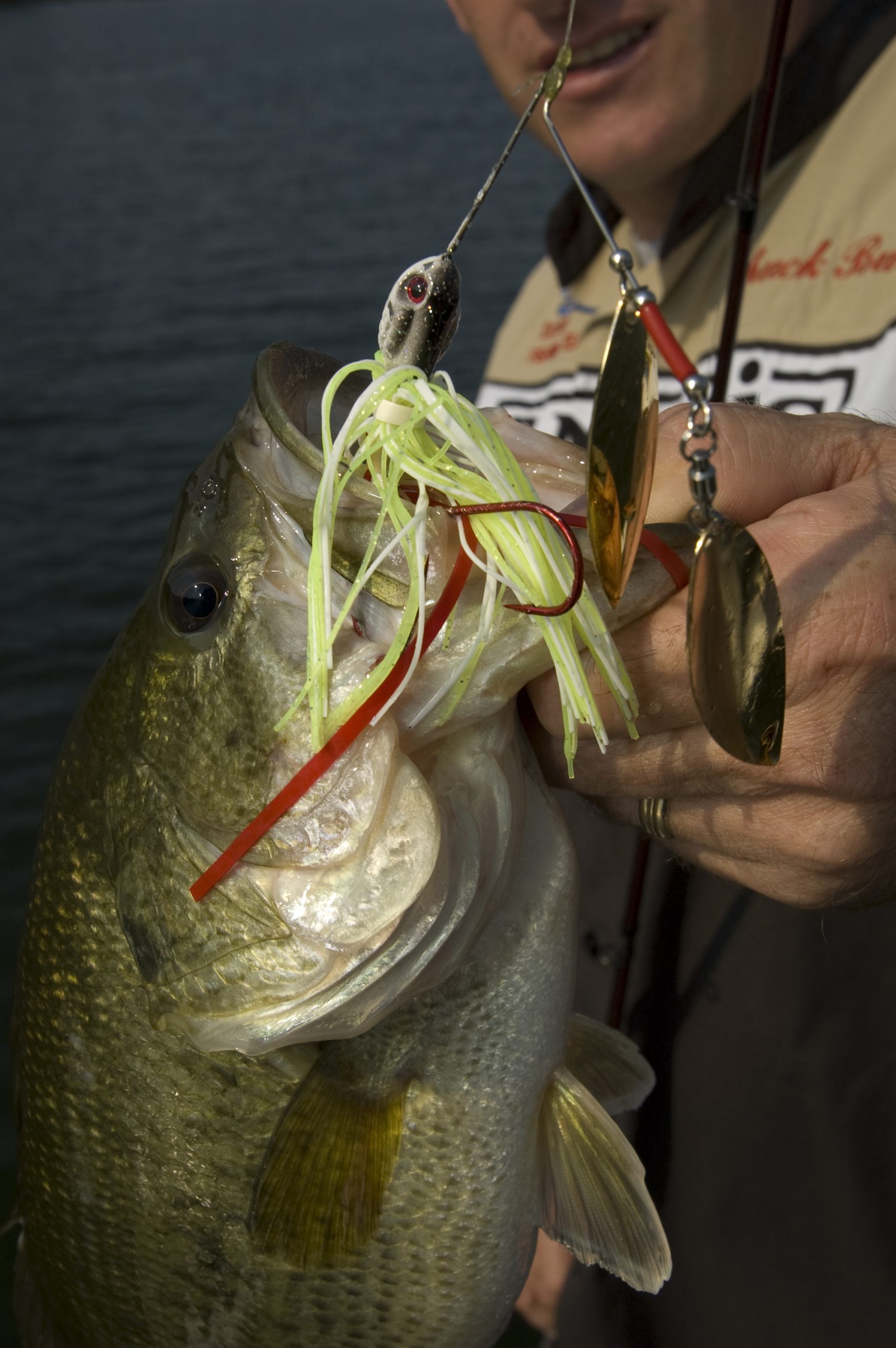
Spinnerbaits are another excellent rainy-day lure. Try a steady retrieve over the tops of weeds on a flat, or yo-yo them around wood stumps. Add occasional twitches or fast cranks during retrieves to impart a skittish scurry to the bait. This erratic action often triggers hits. Experiment with blade and skirt color, but be sure to give gold blades a try in overcast conditions.
Crankbaits are another deadly option for covering more water, and rattles will help largemouth hone in on your offering if the water is murky and visibility is low. White, pink, red, chartreuse and other bright colors will increase the visibility of your offering as well. I’m a fan of fat, wobbling, shallow-running crankbaits for most skinny-water situations and for dissecting the perimeter of docks. Diving models get the call when I’m working mid-depth rock or wood areas. I also like lipless cranks. Straight retrieves or rip-pauses both work well for these lures.
When fish are active and it’s rainy or overcast, the above baits are my go-to choices. Yet, if largemouths are in a neutral mood, I’ll work in a few vertical presentations to see if they yield better results.
Flipping jigs or Texas-rigged craw and creature baits are both good options for working the edges of cover. Flipping and pitching is a good technique for an aggressive search option when fish aren’t as active. In rainy or overcast conditions, look for more active bass to relate to edges and not be buried as deep in the cover.
Soft-plastic jerkbaits are another lure I’ll have tied on if fish are less aggressive. Although you can’t cover water as quickly with these lures as you can with the above search baits, their slow-falling action can attract fish from a considerable distance. This longer hang time in the water column can sometimes help pick off a few less aggressive fish from flats.
Lastly, the other benefit to having a Texas-rigged plastic rigged up and ready to go is the advantage of having a throw-back bait at the ready. Should a bass miss a more-aggressive presentation, like a topwater lure, you can often hook them on a follow-up cast with a different presentation. Of course, when largemouth are extremely aggressive, they’ll sometimes hit the same lure they missed the first time if you toss it back at them.
Fishing in the rain can be fantastic. Overcast skies diffuse sunlight and the disturbance caused by rain on the water surface reduces light penetration. These two factors often encourage an increase in largemouth bass activity, especially during stable weather or at the onset of a dramatic climate change. Your safety should always take priority over good fishing. So closely monitor weather stations. If a storm is forecasted, don’t stray too far from shore and leave yourself ample time to make it back to land before the tempest. Stay safe when dark clouds roll in, and get ready for some lunker largemouth action.
Macro vs. Micro Weather
Don’t focus only on macro weather changes, like an approaching cold front or low-pressure system. Micro weather, which is a term used to describe small weather changes that may occur throughout the day, can also spur largemouth feeding activity. Examples include a sudden increase in the wind speed or a change in wind direction, a brief period of overcast skies, or a small cell of passing rain. Learn to pay attention to these subtle weather changes, look for them in the weather forecast, and be ready to fish hard when they arrive.
