
While the trout bite continues at Connetquot for fly fishermen this winter, other anglers await the stocking trucks to make their rounds. Typically, late March or very early April is primetime for trout, especially in local lakes and ponds.
Temperatures have been warmer for the most part, but in anticipation of cold rain and possible snow this weekend, it doesn’t look like there will be any headboats making it out. Captree and Montauk are mostly stagnant and docked for now, but March will bring preparations for tautog and the arrival of striped bass.
This weekend Long Island should see mostly rain, but some snow is possible. When there’s a storm coming, white perch are the number one fish to target this time of year. Before the striped bass move in, perch get riled up in tidal rivers and ponds where bait like grass shrimp and other small forage get trapped with the moving tides.

White perch can even be found in Lake Ronkonkoma, often in massive schools. As the freshwater fishing scene begins to pick up, anglers can also enjoy Lake Ronkonkoma’s bass fishery and of course, the elusive walleye.
From the Shore
This week Tim Regan fished Long Island’s tidal waters in search of gigantic white perch, and he reported fantastic fishing on the east end. As waters thawed out, white perch were on the feed and even some of their distant family members joined the party.

But the stripers were not the only ones to take the intended white perch offering. Warmer waters and sunshine had multiple species of fish feeding actively.
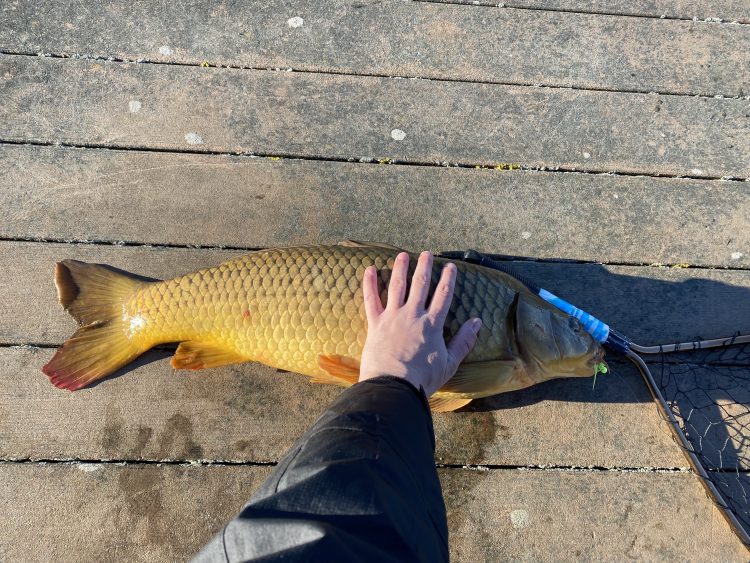
Although the fishing has been slow overall, the reward for fishing hard is a great one. If there’s one way to keep morale high during the off-season, it’s by grinding through the often difficult conditions for a reward that may or may not come. However, with March on the horizon the fishing won’t remain quite as challenging.
From the Shops
Andrea Caruana at White Water Outfitters shared that although white perch are still being caught, it’s in spotty patches. Moving water will be the best bet in locating them, as some of the tidal ponds on the east end are still locked up with skim ice. He said other anglers in the area have had mild success with largemouth bass and yellow perch on freshwater ponds, but it’s still a game of locating fishable water for the most part. That should change in the coming week or so.
Paul McCain at River Bay Outfitters shared reports of excellent freshwater fishing in the rivers. Connetquot has been producing well, with more brook trout in the mix. Tidal sections of the Carmans River, Rattlesnake Creek, and Nissequogue River have yielded plenty of white perch and even some trout. Also, coming up on Saturday, March 26 is the Fly Fishing Expo of Long Island, which is Pauls show. It will be taking place at the Radisson Hotel in Hauppauge and is a great resource for learning more about the opportunities for fly fishing on Long Island.
Long Island Fishing Forecast
There are plenty of options for freshwater fishing this time of year to keep things interesting before the salt bite begins again. New Jersey begins their striped bass season this coming week, but we’ll have to wait a little more than a month until our season begins here.
Until then, largemouth bass are a viable option amongst almost all Long Island ponds and lakes. Trout fishing will be picking up soon, and there’s plenty of holdover action to be had on the rivers and ponds within those river systems. If you’re looking for some fishing off the beaten path, try fishing for walleye in Fort Pond or Lake Ronkonkoma. They’re a “Long Island exotic” being that those are the only two lakes in which they can be caught. They bite well during the night time and will come in shallow, but they spook easily. If you’re not keen on fishing at night, walleye can be best targeted on cloudy, overcast days with minimal light; lipless crankbaits, blade baits and soft plastics like keitechs work well, but soft plastics often get trimmed down by these fanged fish.
Don’t hesitate to get in a kayak or small watercraft to target some yellow perch or pickerel as well. Sometimes, all it takes to produce a bite is accessing new waters or new depths you wouldn’t otherwise reach with a cast from shore.
Once again, thanks for your much-appreciated Long Island reports.