
The wind’s blowing a gale, it’s been raining on and off, and daytime temperatures in the 50’s drop well into the 30’s at night. These conditions aren’t exactly conducive to good fishing, and with limited options, many of us probably opted for picking up the TV remote over the ultralight wand.
I look at the shoddy weather and think two things: first, this is an opportunity to clean out the trunk of my car, which has become a mound of miscellaneous surf, kayak and freshwater gear. Second, I think about scouting locations I have been planning to fish an haven’t gotten to yet. It’s a fun challenge to pack a couple tackle trays into a backpack, grab a rod or two, and explore some sheltered freshwater spots. It just takes a bit of planning ahead, and I hate to admit that my cell phone is an important tool in such planning.
A series of cell phone apps and weather reporting services lay out the foundation for most of my fishing excursions a this point in the season. MyRadar, Navionics and an ensemble of other downloadable applications help me formulate a plan. Because most of these outings will take place in freshwater, tides are of no concern to me. Instead, I check the radar for storm systems, observe changes in air pressure and air temperature, check wind direction and speed, roughly estimate water temperatures, and lastly, take a peek outside to check for cloud cover or sunlight. These are the driving factors that help me to decide what my target species will be, and where I will fish for them. Then, once I have decided on a location, I’ll scan Navionics to observe the contour maps of the selected water body and plot out the most likely areas where fish would be holding.
Depending on your target species, consider depth, bottom structure, water movement and what types of lures will work in your favor based on the conditions and the surrounding environment. The process is similar to planning a saltwater outing, only this time you’ll have to bundle up. A week after Thanksgiving, I’m thankful for these resources that help us make educated decisions as to where to fish.
After going through the above process several times this past week, I unlocked a couple new spots to catch white perch and even put together a few solid trout outings (tr-outings). Finding pockets of water that were sheltered from wind was crucial; 20 m.p.h. winds are not conducive to casting 2-pound-test fishing line and 1/16th-ounce jigs.

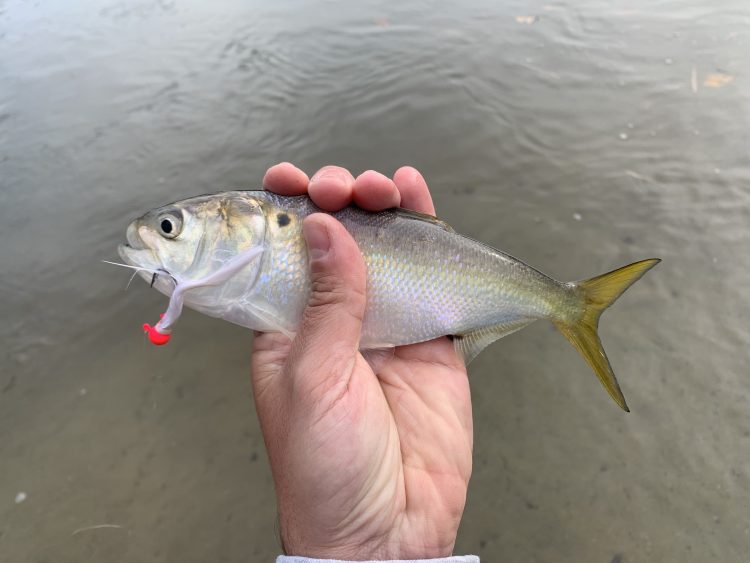
The sun didn’t want to shine that day, but that was okay. In my experience, white perch, like stripers, feed more aggressively under cloudy conditions. After the bite slowed, I changed spots to fish a less-sheltered pond for perch, and found success there as well.

White perch are a good time, but on sunny days, I find that trout, pickerel and largemouth bass are more likely contenders. The wind might hinder our fishing in some cases, but I’ve found a slight breeze to produce better bass fishing than calm, glassy conditions. One day last week, I struggled to put together a bite through low wind and cloud-less skies. Jerkbaits, Kastmasters and Ned rigs weren’t doing it at a nearby bass pond. So, I tied on a Rapala Rippin’ Rap— a lipless crankbait—found some deeper water, and began fan casting in hopes of drawing a reaction strike. The lipless crank is loud, has a tight wobble and can be retrieved through different levels of the water column making it a versatile lure for a multitude of species and environments. It bumps off of rocks and downed timber, or you can swim it just over the top of weedbeds and grasses. On this day, it was the right choice. A long, gentle sweep backward with the rod imparted the action I wanted, then I’d reel in slack, and repeat the process til the lure was at my feet. As I watched it wobble toward me through the crystal clear pond water, my polarized glasses allowed me to see a shadow in pursuit. Upon reaching my feet, a large yellow perch halted behind the lure, then engulfed it after one tiny twitch.

After a quick photo and release, I repeated the process; my next cast found a healthy largemouth bass. The plan was coming together, and I was glad that my lipless crankbait —a favorite to throw for bass in the spring— was getting it done under the bright, autumn sky.

I hooked another, but once those bass saw the lure swim by a few more times, the bite died. It was time for a move. This is sort of like run and gun fall run fishing in a way; pond hopping to keep a rod bent can be fast paced, and different ponds hold different species. This bass pond is a reliable spot, but the conditions on that day were particularly trout-y, so I moved to a large kettle lake to target rainbows which would require switching rods and lures. The sunny skies called for my favorite lure: ol’ reliable, also known as a golden 1/4-ounce Kastmaster.
It didn’t take long to notice that the warmer weather had led to a hatch of some sort; small black flies flew close to the pond’s surface, and trout were rising to slurp up the ones that got a bit too close. I was on the north side of the lake with the wind at my back, so I took out my 5 wt. and tied on a wooly bugger. No luck. I downsized to a small Prince Nymph, and then a small, floating ant fly, still to no avail. Finally, my spinning rod came out and the gold Kastmaster put two trout in the net. Despite their focus on black flies, I knew that these stocked trout would chase anything that resembled a shiner, and with cloud-less skies overhead, the spoon reflected sunlight perfectly.

Sun, clouds, windy, or still, there’s always something willing to bite. Even the night bite will produce some solid fish this time of year. Big, holdover brown trout frequent the shallows at night in many of the kettle ponds to feed on small baitfish. Success hasn’t lined up for me just yet, but my friend Jack knows the late-night brown bite very well. He and I headed out with 2-dozen live shiners and unfortunately, found nothing but some overzealous yellow perch.

I share all of these unique freshwater experiences to demonstrate that we can use our cell phones and electronics to help us deem where the most successful bite will be on a given day. Maybe you’re a hardcore bass fisherman, but the conditions are more conducive to white perch fishing; you could stay home with your slippers on and wait for the next good bass fishing window, or, try something new that might push you slightly out of your comfort zone. It’s the best way to keep our skills sharp, put some different gear to good use and get outside.
Here are this week’s fishing reports from our local tackle shops:
Connor at Red Top Sporting Goods in Buzzards Bay reports:
“We’ve got the trout crowd in store now for sure. Everyone has pretty much switched from stripers to trout, and there’s a couple freshwater bass guys shopping around. Striped bass stopped biting in the Canal around Thanksgiving which was likely due to the mild fall weather and no hurricanes that kept fishing good til then. The trout ponds are all fishing really well for rainbows right now, but if you’re looking for a challenge, use the Massachusetts trout stocking map to see where there might be brown trout or tiger trout stocked in your area. We have all your trout gear, live shiners and more in stock.”
The live shiners at Red Top were fat, I can attest… and so can the handful of yellow perch that gobbled them down before any trout could.
Evan at Eastman’s Sport and Tackle in Falmouth reports:
“It’s been very slow recently, and most of what I’ve been hearing from customers is trout related. I’d guess there are still some tautog around the Elizabeth Islands, but the wind has been honking for so long that nobody’s been out there to find out. There are whispers of stripers lingering in the Canal but it’s nothing like it was prior to Thanksgiving, so be prepared to put in your hours if you want a fish or two. Freshwater fishing is the best bet if you want to bend a rod, as most of the saltwater crowd has pulled their boats.”
Canal Bait and Tackle in Sagamore reports:
“The Canal dropped off about a week ago and there hasn’t been much of any activity down there since, with the exception of a few guys getting mackerel on sabiki rigs. There’s been a surprising amount of them still around. It’s not unreasonable to think that there are still some bass with them too.”
Sports Port Bait and Tackle in Hyannis reports:
“Most anglers are out there getting trout these days. There are a few anglers still fishing in the Canal getting bass, but it requires hard work. Time and effort are the two deciding factors that make a difference between skunking and catching the last bass of the year. It’s early December, but there are apparently still some mackerel around, so it’s not entirely out of the cards. Otherwise, check out the local trout ponds where rainbows are biting well, along with yellow perch. We have all your trout gear and baits in stock!”
-
Want to get in on the bite? Find an OTW-approved Charter Fishing Captain around Cape Cod and the Islands!
Cape Cod Fishing Forecast
Your freshwater fishing options are virtually endless. The Cape is dotted with kettle ponds, many of which are connected to river systems.
In the tidal or brackish portions of these rivers, white perch can be found using lightweight hair jigs or soft plastics, spoons, spinners and even small crankbaits. Move further upstream and you’ll find ponds filled with largemouth and smallmouth bass, all sorts of stocked trout, yellow perch, and maybe even a few pickerel or black crappie. Low and slow is generally the best way to fish these ponds this time of year, but it’s worth playing around with retrieve speeds and fishing different levels of the water column. Sometimes trout are on top feeding on small flies or chasing schools of baitfish around the surface. Other times, they won’t bite unless that spoon or jig is barely touching bottom.
Unless the wind dies down significantly, tautog fishing will be limited to shore, and that bite has dropped off drastically with water temperatures decreasing. Two weeks ago there were keeper tautog biting around inlets and jetties on Upper Cape in Vineyard Sound and Buzzards Bay, but anyone still getting into keeper blackfish is likely keeping it a secret. Can you blame them? I don’t. Tautog don’t school, they take a long time to grow, and they’re downright delicious as most anglers know.
Your best bets this weekend are to utilize those handheld computers in your pocket, plot out a few freshwater options and keep an eye on the wind and weather. Saturday isn’t looking too great with temperatures in the high 50’s and rain in the forecast; but if the wind is low, warm weather could lead to another insect hatch, which may ignite a trout bite. Sunday looks like it will be sunny and comfortable, but heavy rain may hamper the fishing in our bass ponds. The only way to find out for sure is by getting out there and making a few casts.
Wherever your weekend fishing adventure finds you, respect the fish, respect each other, be safe and fish hard.
Can you give the area/town where you saw the large bunker.