

Maryland DNR Fishing Report
Maryland Fishing Report is written and compiled by Keith Lockwood, fisheries biologist with the Maryland Department of Natural Resources.
As a reminder, all areas of the Chesapeake Bay will be closed to any targeting of striped bass from July 16 through July 31. As we advise anglers every year, high summer air and water temperatures increase catch-and-release mortalities in striped bass. This closure takes place in the hottest part of the year.
Upper Chesapeake Bay
The Conowingo Dam is currently operating on an afternoon power generation schedule and the recent releases have been substantial due to the hot weather. This means a lot of cool water coming down the lower Susquehanna River and rousting up the fish into increased activity. Anglers in the dam pool at the crack of dawn enjoy fishing for striped bass, and the evening bite in the lower Susquehanna is very popular.
Topwater lures, crankbaits, and jerkbaits are popular lures to cast in the current of the river. Anglers are also finding smallmouth bass in the deeper pools of the river. Along the channel edges of the Susquehanna near the river mouth, striped bass are being caught on a variety of lures. Topwater lures are a good choice in the early morning and evening, and soft plastic jigs and paddletails are preferred when the sun is higher in the sky.
There are always plenty of blue catfish in the lower Susquehanna, the northern waters of the Bay, and all the region’s tidal rivers. Most anglers use cut bait when fishing for a mix of channel and blue catfish, but others enjoy good luck with scented baits and chicken liver.
The concentration of striped bass and anglers continues to hold at the mouth of the Patapsco River this week. Careful catch-and-release practices, which you can find on the Department of Natural Resources website, will help reduce mortality during high summer water and air temperatures. As a reminder, the two-week summer closure in the Chesapeake Bay starts July 16. Some anglers are opting to stay clear of the fleet and jigging or trolling along the channel near Fort McHenry. Soft plastic jigs in shades of chartreuse and yellow are popular colors, skirted jigs are also a good choice.
There is plenty of good fishing for white perch in the upper Bay on some of the lumps and shoals and in the lower sections of the region’s tidal rivers. Bottom rigs baited with pieces of bloodworm are popular, and spot and small croakers are often part of the mix. Casting small spinnerbaits and jigs along shoreline structure is another productive way to catch white perch. The best fishing for spot occurs at the mouth of the Curtis Bay area of the Patapsco River, in the Magothy River, near Podickory Point, off Sandy Point State Park, and at the shallow west end of the Bay Bridge.
Middle Bay
Striped bass fishing in the middle Bay has been fair at best, and fortunately speckled trout, bluefish, and Spanish mackerel are filling the gap. There is early morning and late evening striped bass action along the Bay Bridge piers where anglers are live-lining with spot or drifting soft crab baits towards the pier bases near the 35 foot drop-off at the east end. Other anglers are casting skirted soft plastic jigs close to the bridge piers.
At sunrise, anglers are finding striped bass action along the shorelines of the Bay and lower sections of the tidal rivers as well as the rocks at Poplar Island and Thomas Point. Casting poppers and paddletails tends to be the most popular way to fish. The stump fields along the lower Eastern Shore provide another good place to fish and cast Zara Spook topwater lures for striped bass and speckled trout.
Bluefish and Spanish mackerel are showing up in the middle Bay in increasing numbers and can be spotted chasing schools of bay anchovies. Anglers are casting metal jigs and soft plastic jigs into breaking fish and speed reeling to entice Spanish mackerel to strike, or using a slower retrieve for bluefish. Trolling at about 6 to 7 knots with small Drone spoons behind No. 1 planers is the most popular way to catch Spanish mackerel.
White perch are providing plenty of fun fishing and they are some of the best eating fish in the Bay. Fishing from docks and piers with a bottom rig baited with pieces of bloodworm close to the piers is a tried-and-true method for catching white perch. Fresh grass shrimp make excellent bait if you can catch them.
Blue catfish have moved down to the lower sections of the Choptank River from the town of Choptank to Chancellor’s Point; fishing for them can be difficult at times due to crabs chewing on bait. Channel catfish can be found farther up the river from the Dover Bridge to the town of Denton.
Lower Bay
The Potomac River below the Wilson Bridge closed to striped bass fishing on July 7 and will remain closed until August 20. Virginia waters remain closed to striped bass fishing with only catch and release allowed until October 4.
Currently the best striped bass fishing occurs during the early morning and late evening hours along the shorelines of the St. Marys and Patuxent rivers on the western side of the Bay, and near Hooper Island and Tangier Sound on the Eastern Shore. Most anglers are having good success with a mix of striped bass and large speckled trout. Soft plastic jigs and paddletails along with Zara Spooks are the most popular lures being used for casting. Drifting peeler crab baits is an effective way to target speckled trout along the marsh creeks and Tangier and Pocomoke sounds. Slot size red drum can also be part of the mix.
Bluefish and Spanish mackerel can now be found in the lower Bay along channel edges where they are chasing schools of bay anchovies. Trolling small Drone and Clark spoons behind No. 1 planers is one of the most popular ways to catch them. Bluefish will be caught at slower trolling speeds, the Spanish mackerel at faster speeds, usually around 6 or 7 knots. Gold and silver spoons are a good choice, and some Drone spoons can be purchased with a chartreuse stripe, which many favor.
Cobia fishing is improving each week and they are being caught near Smith Point, Pocomoke Sound and near the Target Ship. Most anglers are chumming and fishing with live eels in the back of their chum slicks; others are having good luck sight fishing and casting with live eels or fishing large soft plastic jigs. Large red drum are also being spotted on the eastern side of the Bay.
Recreational crabbing is good this week in all regions of the Bay. In the upper bay the mouth of the Chesapeake and Delaware Canal, the Middle River, Gunpowder, Patapsco, and Chester are good places to crab. In the middle Bay, all the tidal rivers south of Kent Island are reporting good catches as well as all the tidal rivers and creeks of the lower bay region. Reports say the best crabbing occurs in 6 feet to 10 feet of water and the large 6-inch-plus crabs are full of meat.
Atlantic Ocean and Coastal Bays
Surf fishing along the Assateague beaches holds a typical summer mix of fish species. Kingfish and spot are being caught on bloodworms, bluefish on cut bait, flounder can be caught on squid, and inshore sharks on large cut bait.
At the Ocean City Inlet, anglers are catching sheepshead on sand fleas along the jetty rocks and bridge and dock piers. Those casting jigs and Got-Cha plugs are catching striped bass and large bluefish. Flounder are always moving through the inlet and casting Gulp baits across current and working along the bottom is a great way to target them.
The back bay channels are providing plenty of opportunity to catch flounder this week, with the East Channel and Thorofare at the top of the list. Traditional baits of squid and minnows work well but many anglers are using live spot, mullet, or small menhaden to target larger flounder.
Outside the inlet anglers who are trolling Drone and Clark spoons behind planers are catching Spanish mackerel and bluefish. The boats headed out to the wreck and reef sites are finding good fishing for sea bass and a mix of triggerfish and large flounder for their anglers.
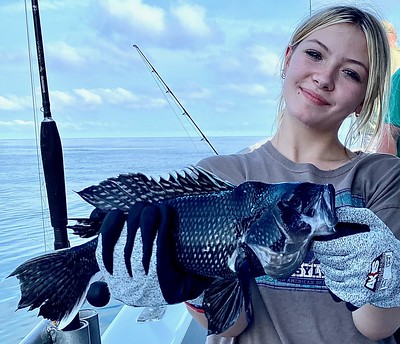
The fleet heading out to the canyons are finding a mix of yellowfin and bigeye tuna and a few white marlin when trolling. Deep drop anglers are catching a mix of golden and blueline tilefish.
Freshwater Opportunities
A new Maryland state record for Northern snakehead was set on July 5 by Damien Cook, with the fish weighing 21 pounds even. Damien caught his northern snakehead by hook and line, and it has the potential to establish a new world record, if confirmed to beat one caught in Northern Virginia in 2018. It would be an honor for the world record to have been caught in Maryland, but of course this invasive species remains a problem in our waters.

The Department of Natural Resources encourages anglers to join an invasive fishing derby July 23 on the Nanticoke River, targeting northern snakeheads and blue catfish. This event, sponsored by Dr. Noah Bressman at Salisbury University will be held at the Cherry Park Boat Ramp, 100 Cherry Beach Road in Sharptown. There is no entry fee, fishing starts at 5 am., the weigh-ins are at 1:30 p.m., and prizes will be awarded. The focus of the derby is research – anglers can keep filets from their catch but the rest of the fish will be used to learn more about the effects of these species on the local ecosystem, what they are eating, and how fast they are growing and reproducing. More information is on the Salisbury University website.
Largemouth bass are holding to their typical summer mode of behavior and providing plenty of good fishing for anglers. Largemouth bass roam the shallows at night when water temperatures are cooler. Anglers out during the early morning or late evening can fish poppers, buzzbaits, frogs, and chatterbaits near shallow grass and shorelines. During the heat and brightness of the day, the largemouth bass will be looking for cool shade under floating mats of grass, docks, fallen treetops, and other deep structure. Good tactics to catch them include dropping wacky rigged plastics through the grass mat with plenty of weight, or flipping them under the shade of a dock and overhanging brush – just take it slow.
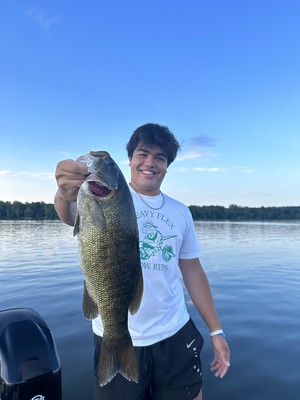
Despite an increase in flows from recent rain, the upper Potomac continues to show typical low summertime flows. This makes for some fun wading if one is careful. Low water usually dictates long casts with light lines. Target pools behind large boulders, submerged ledges, and current breaks. At first and last light, casting poppers is a fun way to target smallmouth bass; tubes and swimbaits can also work well.
Maryland Fishing Report is written and compiled by Keith Lockwood, fisheries biologist with the Maryland Department of Natural Resources.
Angler’s Sport Center Fishing Report – Annapolis, MD

The Angler’s Sport Center fishing report is compiled and written by Anglers Team Member, A.J. Lewis.
Upper and Middle Bay
The mouth of the Potapsco River is proving to be your best bet for getting on some striped bass. Live-lining spot seems to be the most effective while other methods like jigging or trolling are also still viable for landing some keeper sized striped bass as well. Deeper inside the Magothy and Severn Rivers are also showing promise in good rockfish fishing!
Spot are being caught in water that’s around 10 to 15 feet deep. Some hot spots include the western part of the Chesapeake Bay Bridge, off Sandy Point State Park, and around Podickory Point. You may even find a couple white perch or small croaker mixed in as well. Anglers are catching them with bottom rigs or Chesapeake sabiki rigs tipped with either lugworms or bloodworms.
White perch are always a fun catch when other forms of fishing are slow. Casting spinners around shallower structure like piers, reefs and fallen trees are a great way to get your fill. When it comes to deeper waters such as channel edges or deeper structure, a classic bottom rig or a Chesapeake sabiki rig is perfect.
Anglers are finding success fishing the channels inside rivers for blue catfish. The preferred method is drifting cut bait such as alewife or soft crab on the bottom! Blue catfish are invasive, and as always put up a good fight when hooked!
South Bay
Anglers are reporting a strong cobia bite at the Chesapeake Bay Bridge Tunnel. Eels and bucktails are proving to be the most effective method for getting onto the biggest cobia. Anglers are also reporting lots of sheepshead around the pilings, as well as a solid red drum and black drum bite at night while chunking soft crab.
The striped bass bite in the lower bay this week was a little tougher than usual. The bite has been better inside the tidal rivers of the lower bay along the shorelines. Anglers are finding success using smaller paddle tails earlier in the morning in shallow waters.
The white perch fishing all over the South Bay is excellent! Anglers are finding success in more shallow waters using spinners or small shad darts around structure, or in deeper waters using Bottom rigs or Chesapeake sabiki rigs. You may even find spot or croaker mixed in if you’re fishing in the deeper waters.
Additional Info.
NOTE: Starting July 16th, all areas of the bay will be closed for striped bass fishing so make sure to get your fill before then!
The Angler’s Sport Center fishing report is compiled and written by Anglers Team Member, A.J. Lewis.
Reel Chesapeake Fishing Report – Annapolis, MD
The Reel Chesapeake Fishing Report is written and compiled by writer and media professional, James Houck. Find the full report here, at reelchesapeake.com.
Chesapeake Bay anglers have just a few days left to enjoy the consistent action for striped bass before the fishery shuts down in Maryland for two weeks, beginning July 16th. With summer in full swing and temperatures soaring into the real-feel 90s (even 100F), the state mandates the mid-summer break, which will offer the beleaguered stripers a break from fishing pressure.
Nevertheless, the striped bass fishery continues to produce schoolies from dinks up to 30 inches in all the middle Chesapeake rivers, especially the Patapsco (still!), where the charter fleet shows up in droves. Eastern Bay action has been reportedly hot, as well as Bloody Point and Poplar Island south. Topwater and jigging produce and the pattern of walking or popping at dawn and dusk, and dropping plastics in deeper water midday, has been the ticket.
In the Severn River on Wednesday, we saw an incredible amount of baitfish in the Round Bay vicinity and picked off plenty of striped bass feeding on them. There were mini-blitzes of generally smaller sized fish (<17 inches) occurring 360-degrees around the boat at one point. Dawn was the magic hour for walking a spook, before switching gears and jigging around deep points and docks. These patterns will continue to improve, as well as the size of fish, come late-summer into fall.

In other news—very big news—Maryland has a new northern snakehead record holder. Damien Cook of Rhodesdale caught a 21.0-pound specimen on July 5th while fishing a Dorchester County river (note exact location not given). Maryland Department of Natural Resources has recognized the catch as the new state record (breaking the previous record 19.9-pound snakehead caught in 2018 by Andrew D. Fox). He made his catch using a modified chatterbait, which are popular for snakes when the sun gets over the horizon. Congrats to Damien, who was one of many anglers enjoying the huge uptick in snakehead fishing during this past week. We expect early morning topwater frog fishing to keep producing good sized fish in all the snakehead hotbeds, including Blackwater on the east side and the Potomac watershed on the west. The “Baltimore rivers” (upper Patapsco, Back, Middle, Gunpowder, and Bush) are also big producers. All of these waters are also good largemouth bass fisheries.
Spotted sea trout (aka specks) are being caught in water accessible to middle Chesapeake anglers. Renowned angling family, the Rudows, ran down to tiny James Island near the Little Choptank and had success pitching paddletails into structure. The eastern Chesapeake shorelines from the lower 80 buoys on down have produced nice specimens in the mid-20s. Of course, the best action for specks—and red drum, bluefish, Spanish macks, and possibly cobia—is even further south, in the Tar Bay, Honga, Bloodsworth, and Tangier areas. Time to tie on your Zman plastics to hold up to these chompers and brutes! Good luck!
View the full Reel Chesapeake Fishing Report, written and compiled by writer and media professional James Houck, at reelchesapeake.com.