
Tochterman’s Fishing Tackle Report — Baltimore, MD
The Tochterman’s Fishing Tackle Fishing Report is written by Tochterman’s team member, Kevin Trupia.
While the closure for the striped bass fishing is still in effect until August 1st, anglers have been targeting white perch, blue and channel catfish, and snakeheads.
White perch can be caught just about anywhere in the bay and its tributaries. Spinners, spoons, and small grubs are a fun way to catch them around pilings and rock piles, in deeper water use a top and bottom rig tipped with a lug worm, night crawler, and peeler crab.
Blue cats and channel cats are all over the bay and its tributaries with a large majority of them up towards the Susquehanna River, and the Conowingo Dam. Cut bait is best and also chicken livers.
Northern snakeheads can be found in all the rivers off the bay. They have been spawning and protecting their fry balls. So throwing a top water bait like a frog, mouse, or buzz bait can entice them to bite. They get very protective around the fry balls.

The Tochterman’s Fishing Tackle Fishing Report is written by Tochterman’s team member, Kevin Trupia.
Maryland DNR Fishing Report
Maryland Fishing Report is written and compiled by Keith Lockwood, fisheries biologist with the Maryland Department of Natural Resources.
Summertime fishing is in full swing, and anglers have been finding many adventures with other species of fish during the two-week striped bass closure in the Chesapeake Bay.
Bay waters will continue to heat up with high temperatures, and a small chance of thunderstorms throughout the week. Main Bay surface water temperatures cooled slightly from recent rains but will likely increase back to the mid 80s later this week. The coolest main Bay surface waters are still found between the Patapsco River and Annapolis.
Upper Chesapeake Bay
During the current striped bass closure, upper Bay anglers are focusing their attention to fishing for white perch, blue and channel catfish, and northern snakeheads. Striped bass targeting in Maryland’s portion of the Chesapeake Bay resumes August 1.
White perch are always an abundant Bay species to fish and they provide some excellent eating. All the tidal rivers in the upper Bay contain populations of white perch and they can also be found on oyster reefs and knolls. When fishing in the Bay or in the deeper waters of the tidal rivers, bottom rigs baited with grass shrimp, peeler crab or pieces of bloodworm are standard fare. Just enough sinker to hold bottom and one or two No. 4 hooks or dropper rigs with small soft plastic jigs or flies will do the trick. In some areas of the Bay and near the mouths of the tidal rivers, spot can be part of the mix.
Perhaps the most fun way to fish for white perch is to use a light-tackle spinning rod and cast beetle-spins, small spinnerbaits, spinners, and small plastic jigs along shoreline structure in the Bay and tidal rivers. Rock jetties, breakwaters, steep edges, bulkheads, piers, areas with old pilings, and almost any kind of structure that might harbor food for white perch are good places to target. The best fishing success occurs during the morning and evening hours when a good tide is running.
There are plenty of blue catfish in the upper Bay and they are worthwhile targeting since they make good table fare. One of the secrets to preparing catfish – either blue or channel – is to remove all the red meat and silver skin when fileting them. The lower Susquehanna River and the Chester River have large populations of blue catfish, and they can be found in all the region’s tidal rivers in substantial numbers. Cut bait is the most popular, but many anglers have good luck with chicken liver and scented baits.

At the Conowingo Dam pool, flathead catfish can be found below the tailrace of the power generating turbines, picking up pieces of fish that happen to come through the turbines. In the dam pool, the flathead catfish can grow large foraging on the abundant gizzard shad, which is why it makes one of the most popular baits. Many anglers also have good luck with live bluegill sunfish.
Northern snakeheads are in various stages of spawning this week – either actively spawning, protecting fry balls, or in a post-spawn mode of behavior. Heavy grass is the place to find them, and they can be found in all the region’s tidal rivers and creeks. Casting annoying topwater lures like buzzbaits or chatterbaits is a good way to get their attention. Soft frogs are another good choice. If they are protecting fry balls it may take several casts to finally upset them enough to strike.
Middle Bay
White perch are big on anglers’ list in the middle Bay this week. They can be found in the tidal rivers, at the west end of the Bay Bridge, and in Kent Narrows to name a few places. In deeper waters, bottom rigs baited with grass shrimp, peeler crab, small minnows, or pieces of bloodworm are very popular. Oyster reefs, shoals, dock piers, rocks, jetties, and channels in the tidal rivers are good places to look for white perch during a running tide.

Casting small lures along shoreline structure during the morning and evening is a wonderful way to fish for white perch with light spinning gear. Beetle-spins and small spinnerbaits are great lures to use for this way of fishing. Prominent points, dock piers, rock breakwaters, and bulkheads are all good examples of structure that white perch like to frequent when feeding. A flood or ebbing tide is always important when fishing for white perch.
Bluefish and Spanish mackerel are slowly moving into the middle Bay and providing some fishing action. At times they can be found chasing schools of baitfish and their presence is often revealed by diving gulls. To entice a Spanish mackerel to strike, casting small but heavy flashy jigs or Got-Cha lures into the breaking fish and allow it to sink a bit, then speed-reel to retrieve it. A slower retrieve will catch bluefish.
Trolling is a popular way to fish for Spanish mackerel and bluefish when they are spread out over a wide area. Small Drone and Clark spoons in gold are very popular and usually pulled behind No. 1 or No.2 planers at about 6 to 7 knots. Slower speeds will allow bluefish to catch up. It often pays to pull a couple of spoons behind inline weights to fish the upper column of water.
Channel catfish can be found in all the region’s tidal rivers and blue catfish can also be found. The greatest concentration of medium to large blue catfish is in the lower Choptank River currently. Fresh cut bait and chicken liver are hard to beat for bait.
Lower Bay
The most abundant fish in the lower Bay right now are spot and white perch. The lower Patuxent River has been a sort of ground zero for the best spot fishing. These fish are getting larger and if you can filet a mess of them for tasty bites. Others just remove the head, scale them, and cook them that way. Fried spot is right up there with white perch as a tasty treat. Bottom fishing for spot is also a great introduction to fishing for kids or adults who have never been fishing before. White perch will be mixed in with the spot, along with the occasional kingfish and small croaker.
Spot and white perch can be found in Tangier Sound, Pocomoke Sound, and often near the mouth of the Potomac and Nanticoke rivers. Pieces of bloodworm or the artificially scented imitation bait work well.
The mid-summer months find us welcoming visitors from the south such as cobia, large red drum, speckled trout, the occasional flounder and sheepshead, and of course Spanish mackerel and bluefish.

White perch can be found in all the region’s tidal rivers and can be caught on grass shrimp, small minnows, peeler crab, and of course pieces of bloodworm when fishing deeper waters around docks, piers, rocks, bulkheads, and almost any kind of structure. Tide is always important– both ebb and flood are good for white perch. Casting beetle-spins, small spinnerbaits, and small jigs is a fun way to catch white perch along shoreline structure during the morning and evening.
Speckled trout are being found along shoreline grass flats and stump fields on the eastern side of the Bay, from Pocomoke Sound north to Taylors Island. Anglers are casting Zara Spooks into stump fields or over grass during the early morning and late evening hours. Fishing soft plastic shrimp and paddletails under a popping cork is a good way to fish over grass without your lure running through the grass and the cork attracts the trout. There is also some speckled trout action on the western side of the Bay near Point Lookout and the mouth of the Patuxent River.
Cobia are being found at Smith Point and from the Target Ship to the Middle Grounds. The action is sparse but a few nice cobia are being caught mostly by chumming and fishing with live eels at the back of the chum slick. Red drum are being spotted here and there by the Target Ship and Mud Leads. Most anglers are either jigging with large soft plastics when they spot them or dropping soft crab baits.
Atlantic Ocean and Coastal Bays
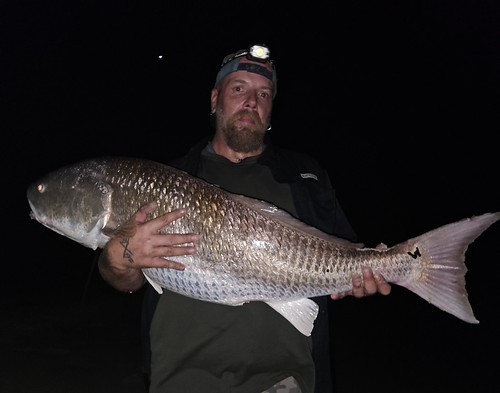
Along the beaches of Assateague, anglers continue to catch a mix of kingfish, spot and croaker, flounder, and small bluefish. The action is reported to be slow but worthwhile. There has been a recent run of large red drum along the beaches during the evening, which offers exciting catch-and-release action.
At the inlet and Route 50 Bridge area sheepshead are being caught near the jetties, bridge piers and bulkheads on sand fleas. Large bluefish are an exciting addition this week and are being caught on Got-Cha plugs, soft plastic jigs, or drifting cut bait. Striped bass are also being caught on soft plastic jigs.
In the back bay channels, flounder fishing has been good due to clear water this week. Drifting traditional squid and minnow baits are catching plenty of flounder but those seeking larger flounder are using live spot, finger mullet, or menhaden.
Outside the Ocean City Inlet, a mix of Spanish mackerel and bluefish are being caught by those trolling silver Clark and Drone spoons behind No. 2 planers. The shoal areas are a good place to fish, and flounder are also being caught in these areas.
At the wreck and reef sites anglers are catching black sea bass, triggerfish, cutlassfish, and some large flounder. Farther offshore at the canyons, those trolling are catching a mix of wahoo, bigeye, and yellowfin tuna. Lately the yellowfin tuna have been scarce – hopefully their numbers will improve soon. Anglers are loading up and often catching limits of chicken dolphin near the lobster buoys or any other floating material they can find. Deep dropping for blueline and golden tilefish has been good.
Freshwater Opportunities
The trout management waters of the western region are experiencing typical low summer flows this week but do offer some challenging fishing in the fly-fishing catch and release management areas. Light tippets and a stealthy approach are usually the norm. This is a great time of the year to cast terrestrials, caddis, and streamers.
The upper Potomac River is experiencing low summer flows, which opens the opportunity for wading and casting for smallmouth bass. If you can get on the river at dawn or late evening, casting poppers can be an exciting way to catch smallmouth bass. Tubes, swimbaits, spinnerbaits, and small crankbaits work well near current breaks, underwater ledges, and the deeper pools. The water is very clear, so long casts and a light line can be an advantage.

Largemouth bass are holding tight to a typical summer mode of behavior. This means they are active in the morning and evening, and during the heat of the day they’re holed up somewhere in the best cool shade they can find. Casting frogs over grass in the early morning or evening can elicit some fun surface action. Buzzbaits can also be a good choice. Spinnerbaits and jerkbaits are a good choice outside of grass, and spatterdock beds and grubs and stick worms can be a good choice when working deep cover. Flipping wacky rigged stick worms through grass mats, under overhanging brush or under shaded docks is another good tactic when largemouth bass are lounging in the shade.
Northern snakeheads are in various stages of spawning this week but in all cases, they will be found in thick grass. Casting buzzbaits, chatterbaits, and soft plastic frogs over and through the grass is the best way to arouse a snakehead into charging a bait.
Maryland Fishing Report is written and compiled by Keith Lockwood, fisheries biologist with the Maryland Department of Natural Resources.
Angler’s Sport Center Fishing Report – Annapolis, MD
The Angler’s Sport Center fishing report is compiled and written by Anglers Team Member, A.J. Lewis.

Upper and Middle Bay
The Conowingo Dam pool is the perfect place to get your fill of snakehead and catfish. Anglers are finding luck by drifting cut bait or casting and retrieving paddle tails. This style of fishing offers a great substitute to targeting striped bass, which is currently closed until August 1st.
Bue catfish are being found all along the shores of the lower Susquehanna River. Towards the middle Bay area, the Choptank River is home to a significant amount of medium to large sized blue catfish. Blue catfish are invasive, but they always put up a good fight while offering large amounts of meat!
Wherever there’s structure in shallower waters, you’re going to find white perch. Pulling small spinners past shallow structures such as piers or oyster beds are an easy way to net tons of white perch. When it comes to targeting them in the deeper water, however, a simple bottom rig or a Chesapeake sabiki rig tipped with bloodworms, lugworms or Fishbites, jigged around deeper water structure at channel drop-offs will net you some larger perch.
Anglers are also reporting success while trolling for Spanish mackerel and bluefish in the middle Bay area! Anglers Pro Staff, Ben, suggests that when it comes to trolling for these fish, a 1/30-ounce G-Eye jighead with a Chartreuse Z-Man MinnowZ is key.
Areas like the Chesapeake Bay Bridge are proving to be excellent for catching white perch, spot, and small croaker. You can find great success targeting the western part of the bridge casting around pilings and dropoffs. Closer toward Sandy Point, you can find good sized blue catfish by casting cut bait such as bunker or soft crab!
South Bay
White perch can be found inside all tidal rivers of the South Bay. Targeting structures like piers, reefs, or fallen trees that are submerged is bound to net you lots of perch. The favored tactic for shallow water is small spinners and shad darts. When it comes to the deeper water, bottom rigs or Chesapeake sabiki rigs tipped with bloodworms or lugworms are the key to success.
Anglers also report cobia from Target Ship to Middle Grounds. The most effective method for catching cobia there, at this moment, is to fish live eels behind a chum slick. You may even find some red drum mixed in as well.
Blue catfish continue to be found in large numbers in the Potomac. The mouth of the Potomac up to areas like Fletcher’s Boathouse are where you’re going to find the bigger blue cats. The Wicomico River has been found to have an increasingly big number of blue cats show up as well!
Additional Info.
Remember Anglers, fishing for striped bass is closed until August 1st! Then they’ll return to their normal 19- to 31-inch slot with a limit of 1 rockfish per day, per angler.
The Angler’s Sport Center fishing report is compiled and written by Anglers Team Member, A.J. Lewis.
Reel Chesapeake Fishing Report – Annapolis, MD
The Reel Chesapeake Fishing Report is written and compiled by writer and media professional, James Houck. Find the full report here, at reelchesapeake.com.
Action has been big hits or huge swings-and-misses this past week for anglers throughout the middle Chesapeake Bay region. There’s a wide and varied amount of reporting for several species, with a few exceptional catches, a few skunks, and some old-standby patterns in between.
Bluegill, crappie, and perch fishing in the upper eastern shore creeks—Tuckahoe, Marshyhope, and others off the Choptank, Nanticoke, and Chester rivers—has been consistent. Fish the shaded shoreline and/or cover no matter the time of day to find pockets of fish holding in water a degree or two colder than sun-soaked environs. A moving tide often helps. Small jig/grub/worm/minnow combos of the 1/16- to 1/8-ounce variety work well (2-inch Gulp minnows have been excellent), as do other small offerings like Kastmasters, beetlespins, and stumpjumpers. For a fun challenge, try fly casting small offerings like beadhead woolly buggers to entice strikes. We’ll be giving this a shot in the coming week and will report back.

White perch and a few yellows are also drawn to these offerings throughout the western shore tributaries and most freshwater impoundments. The key—as mentioned—is shaded water. Those that have tried for jumbo whites at deep water structure and reefs in the main Bay haven’t fared as well as creek anglers this week. One Bay angler reported an empty day (and fuel tank) running from oyster bars in the Chester to Love Point to Belvedere Shoals to Podickory Point to the Bridge pilings, plus a few more spots—catching nothing but small fish (>10 inches). I advise plying the banks and cover in the rivers.
Right now, there is so much baitfish in the rivers—way up the rivers, and particularly the Severn—that sightings of dolphin pods are becoming common. They were spotted in The Narrows of the Severn this week, for example, which has been unheard of until now. The bait is drawing them and other feeders upriver. We actually caught a couple bycatch striped bass up to 21 inches in the Valentine Creek headwaters while chicken necking for crabs. And schoolie blitzes are happening everywhere. Hopefully the fish—all fish—hold in these areas on through the 7/31 moratorium and into late-summer/early-fall. If the Severn is any indication, the western shore tribs should be fire this fall season.
Speaking of the Severn, angler Eddie Weber caught a 30-inch, 10-pound dragon snakehead in the river a few days ago, on a frog, which proves big fish are lurking there. Northern snakehead have been an enigma in some tributaries, like the Severn, despite their widespread distribution in adjacent watersheds. It’ll be interesting to follow catches like Weber’s to see if an uptick in the population materializes. Elsewhere, in known snakehead havens like the Potomac, Patuxent, Gunpowder, and Blackwater coves and creeks, now is the time to get a rise out of big snakehead protecting their fry. Sight fishing for fry balls bubbling on the surface and repeat casting topwater frogs or subsurface shads can irritate mama or papa into striking. Big hookups have been the norm lately.
Mid-bay anglers also have Spanish mackerel on their mind and those that have tried for them from Annapolis south haven’t had much luck…yet. Right now, small bluefish have been the bag, caught with the planer/drone setups that most speed trolling vessels employ. But the Spanish are expected to move into the water from the low-80s buoys and Poplar Island up to the Bay Bridge any day (minute?!) now. So, keep trying. The action should ignite in August.
Speckled trout have kept those anglers within reach of them happy. The fish could be anywhere from shallow grass flats to holding bottom at deeper structure in 40’ depths, so good electronics can certainly go a long way toward finding them. Areas to investigate include the rivers and creeks at the mouth of the Potomac River/Point Lookout (St. Jerome’s Creek!) and, of course, the east side islands from Bloodsworth to Tangier. We haven’t heard of specks being caught north of the Choptank region, but it’s possible to hook into them in the middle Chesapeake. Swimming or jigging brightly colored paddletails can get the bite.
And much lower into Virginia waters near the Bay’s mouth and into the Atlantic, cobia have been seen in decent numbers. A nice report from the CBBT came in with a healthy specimen caught. Around the bend on the Atlantic side, summer flounder continue to be caught in all the coastal back bays. Lastly, the Assateague Island beaches are producing an early bull red run. Angler David Moore and his buddies have gotten an early start hunting for the bigs. Usually a September game, fishing for bulls has already taken flight, with Moore reporting consistent catches all month long. Chunks and fleas on stout fish finder rigs are pulling them in…and it’s usually during the darkest hours of night. Good luck!
View the full Reel Chesapeake Fishing Report, written and compiled by writer and media professional James Houck, at reelchesapeake.com.