
Maryland & Chesapeake Bay Fishing Report
Anglers Sport Center Fishing Report – Annapolis, MD
The Anglers Sport Center fishing report is written by Anglers Team Member & OTW Columnist, Alex Gallardo-Perez.
As we get to the striped bass closure things are picking up with other species around the region. We’ve been having some heavy rain at times, but before the rain most rivers had some good action going on with some left over white perch spawning and more shad showing.
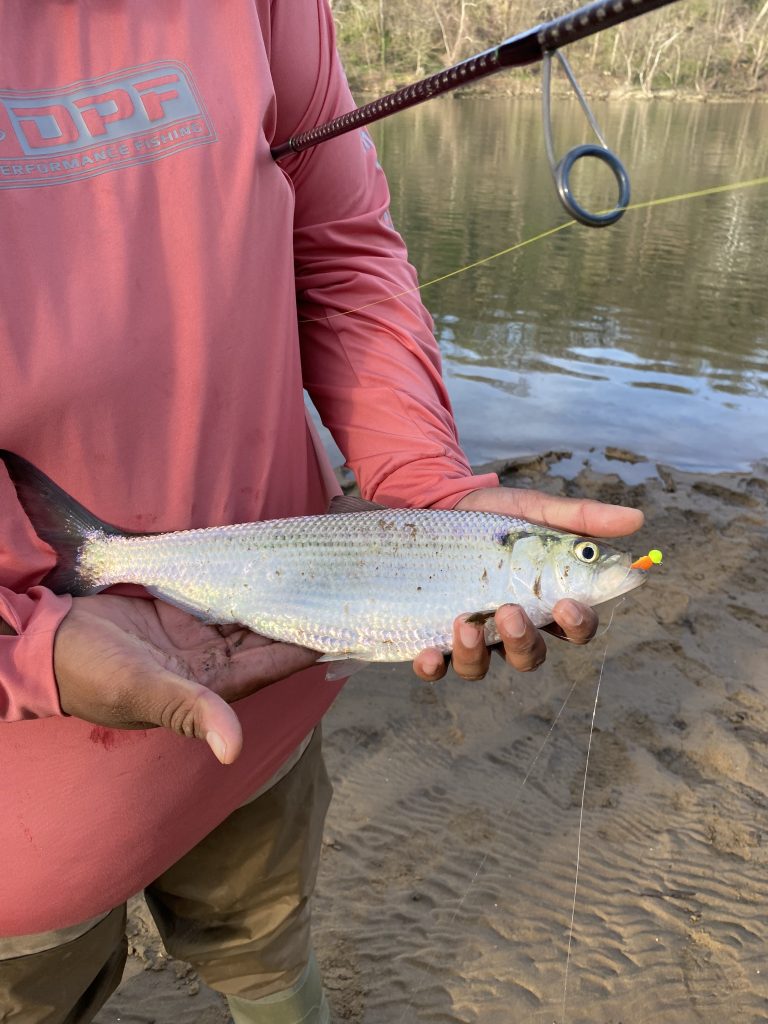
The Patuxent river still has some left over white perch pushing up north of jug bay, most been in the 7-10 inch range. Using grass shrimp on a bottom rig was the ticket to get them to bite, or a tandem rig with two shad darts also tipped with grass shrimp. The hickory shad and even some American shad have been pushing upstream in the Patuxent River as well. Casting gold spoons or tandems with a 1/16 to 1/8-ounce shad darts has been a good option when targeting shad. The Potomac river has also been producing a good amount of hickory shad and some American shad.
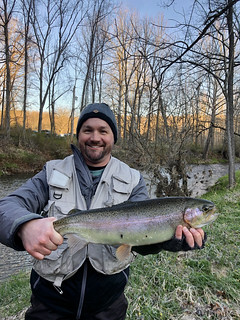
We had the opening of trout fishing for all of the areas that had been stocked in the past week or two. Most anglers got to enjoy some of the trout fishing before the streams got flooded. Most creeks and rivers were stocked with rainbow, golden and some brown trout. PowerBait in the corn or garlic flavor is a good option if you want to sit and wait for a bite on a deep pool, but if you want to cast around and cover water, small inline spinners can produce some quality fish as well.

The Angler’s Sport Center fishing report is written by Anglers Team Member & OTW Columnist, Alex Gallardo-Perez.
Reel Chesapeake Fishing Report – Annapolis, MD
The Reel Chesapeake Fishing Report is written and compiled by writer and media professional, James Houck. Find fishing reports and more at reelchesapeake.com.
Anglers who have long vied for their bank spot to hook into one of the most anticipated species migrations each spring—that of American and hickory shad—know well that their runs from the Atlantic up and into the spawning tributaries of the Chesapeake Bay usually begin sometime between the bloom of cherry blossom and dogwood trees. At the Tidal Basin in Washington, D.C., where some of the world’s most renowned cherry blossom trees exist, peak blooming reportedly occurred on March 17th—the second earliest peak on record (first being March 15th, 1990).
With the mild winter and recent warmup the region has experienced, it came as little surprise that the blossoms arrived early. So, too, did we hear the first fishing reports of shad running Potomac waters at Fletcher’s Cove—another location equally renowned for being a harbinger of spring’s arrival. Hickories started making their presence known a full two weeks ahead of Fletcher’s boathouse opening for the season (opening day was March 23rd). A couple anglers also reported consistent catches of hickories at Mason Springs (also on the Potomac/Mattawoman Creek).
A few miles eastward, on the Patuxent River, I hooked into my first hickory shad on March 21st—almost a full month ahead of the past two seasons’ runs along the same stretch of river I fish. I felt this was a rogue catch, a loner, as I was unable to get another fish to hit a lure on that outing. But good news…
Within a week’s time, the hickory shad were running pretty well along the upper portion of the Patuxent River. Personally, I enjoyed a fantastic morning of shad fishing on Good Friday (March 29th). Though I hooked into only five solid fish, landing three, I considered the outing a wild success, if only because catching these shad nearly a month ahead of schedule is quite exciting.
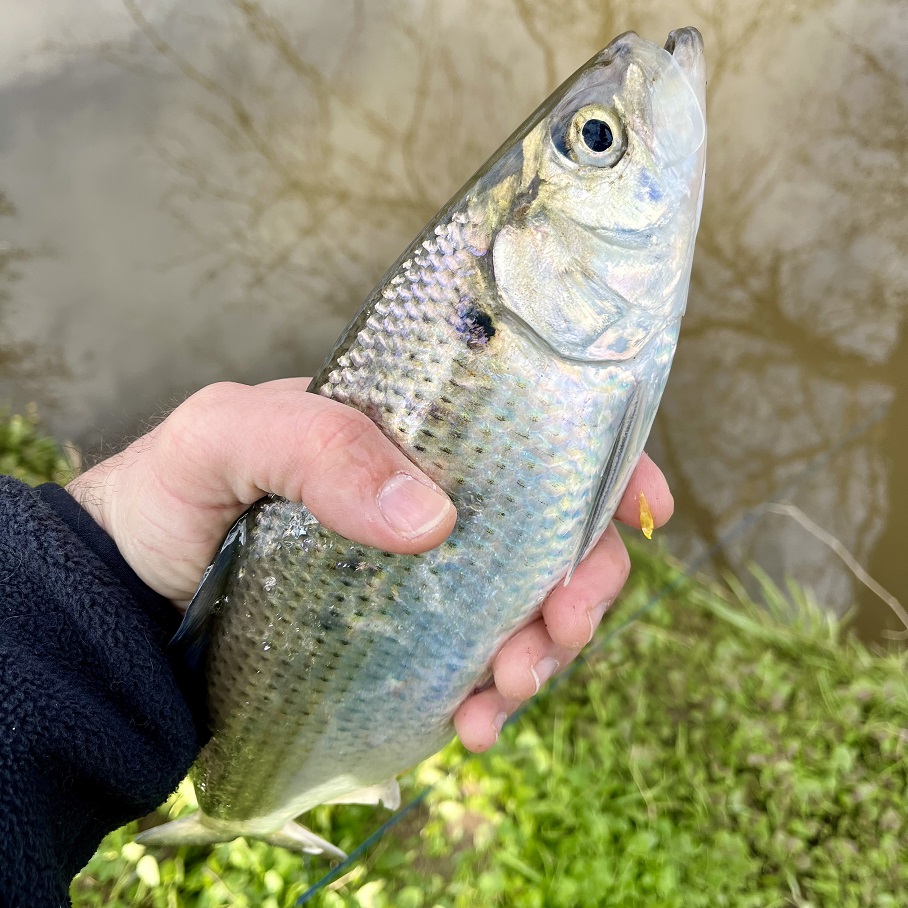
The shad reports have also increased at Fletcher’s—and more anglers are reporting catches at their other hotspots throughout the Chesapeake watershed. The first American was also reported last Friday at Fletcher’s, so it won’t be long before we see more of these larger shad in the mix. I recommend subscribing to Mark Binsted’s weekly Shad Report presented by Friends of Fletcher’s Cove. Binsted’s report is chock full of angler anecdotes and detailed catch information, including the hot lures of the week.
If you’re itching to know a few of the public hotspots to try your hand at shad fishing, there are five detailed at the Maryland Department of Natural Resources website. For gear, I enjoy the fight of both hickory and American shad on light-fast rods of 6-foot length. Spinning reels in the 1000 to 2500 size work quite fine. Set the drag to medium tightness, as you’ll want to wrangle in the fish relatively quickly before they have a chance to dive deep or into cover (fallen trees along the banks, rocks, etc.). The fight will be a short frenzy and can be acrobatic. It’s fun.
I always take at least two rods (same setup, except lures); one to accommodate a classic tandem shad rig, which entails a shad dart tied to the mainline leader (8# test fluorocarbon) with a foot-long section of same material tied from the dart’s hook shank to a gold or silver nungesser spoon—sometimes another dart. (There are many ways to tie these rigs, but I defer to the simplest.)
In the water I fish most often for shad, I may shorten my leader to 8-inches due to the shallower environs and avoiding bottom snags. In deeper water, you may want to lengthen the leader between dart and spoon. Lure weights could be anywhere from 1/32-ounce to 1/8-ounce. At Fletcher’s, some anglers may upsize to 1/4-ounce darts for distance casting and to reach deeper pools of water.
My second setup usually has a 1/8-ounce stump jumper tied on—it’s a small underspin jig with a curly tail or stinger soft plastic tipped on. My best morning of shad fishing in 2023 had most catches coming on the stump jumper.
Bring many colors of these lures with you in various bright and dark shades. The shad can be finicky—electing to hit a single “color of the day”…or several. You’ll never quite know until you start fishing.
Often the shad are situated—that is to say, buoyantly hovering and facing upstream—in the line of water between current and slack. When approaching your fishing spot, observe the water for a few minutes to see where this distinction occurs in the water. Cast out and upstream. Feel your lure drift along as it swings back toward you and the demarcation between the current it’s in and the slack water closer to you. Pay attention to the depth you’re fishing. Give the lure a few twitches. You’ll feel the fish grab your offering and with a snappy hookset, it’s game on! (Note: do not use a power hookset like in largemouth bass fishing as the shad’s mouth is rather delicate).
If you’re lucky enough to net a shad, savor the moment, albeit quickly. In Maryland, this is a catch-and-release fishery only. Safe handling and a quick release will help ensure the frisky buck and roe shad may swim away, upstream, and reproduce the next generation of fish for anglers to pursue…just as the cherry blossoms begin to bloom anew.
View the Reel Chesapeake Fishing Report, written and compiled by writer and media professional James Houck, at reelchesapeake.com.
Maryland DNR Fishing Report
Maryland DNR Fishing Report is written and compiled by Keith Lockwood, fisheries biologist with the Maryland Department of Natural Resources.
Freshwater
The traditional opening day of trout season has come and gone, and most anglers had a great time in the put-and-take trout management waters this past weekend. The fun is far from over as stocking crews are out every day this week and will continue in earnest for the next couple of months. Specific trout stocking details and locations can be found on our trout stocking map.
Walleye are spawning at Deep Creek Lake this week and yellow perch are soon to follow. Once spawning is completed, these fish will be actively feeding along steep shorelines and grass lines. Drifting live minnows is a popular way to fish for them. Smallmouth bass are active near rocky points and largemouth bass can be found near shoreline structure.
Largemouth bass are becoming very active in their aggressive, pre-spawn feeding behavior throughout the day, caused by almost ideal water temperatures They will be patrolling along the shallower water and if emerging grass beds can be located, those areas can provide good fishing opportunities. Working spinnerbaits and jerkbaits along these edges is a good tactic. Largemouth bass will also be exploring small feeder creek mouths and can be found holding near sunken wood or similar structure. Casting soft plastics is a good tactic in these locations. Deeper structure can also hold largemouth bass and craw jigs or crankbaits can be good lures to use there.
Northern snakeheads are slowly becoming more active, and without their favorite grass beds to hide in, they can be found near shoreline structure. Fallen brush and sunken wood will fit the bill and some of the best opportunities can occur during the afternoon on the sunny side of tidal creeks, where the waters are slightly warmer. Fishing large minnows under a bobber is a good tactic while casting white paddletails near shoreline structure. Just keep a sharp eye on that bobber.
Chain pickerel are one fish that does not mind cold water and they can be found holding near sunken wood until summer grass beds reach full growth. Casting a variety of lures outfitted with single hooks can offer a lot of fun fishing with chain pickerel.
Springtime and crappie naturally go together and the season offers one of the best times of the year to catch the largest crappie. Shoreline structure in the form of fallen treetops and rocks, or deeper structure in the form of bridge piers and marina docks. all can offer excellent fishing. Small minnows or marabou jigs under a slip bobber are a good way to explore locations where crappie might be holding. A slow retrieve with small lures is also a good tactic.
Atlantic Ocean and Coastal Bays
Recent gusty winds made fishing along the beaches a bit uncomfortable, but hopefully nicer weather will be in the forecast. Anglers are fishing baits of clams, sand fleas and cut bait in search of the first black drum to move along the beaches. Dogfish and clearnose skates have been keeping anglers busy.
Tautog are being caught inside the Ocean City Inlet near jetty rocks, bridge piers and bulkheads. A fair portion of the tautog being caught measure a bit shy of the required 16 inches, but most anglers can bring two or three legal fish home for dinner. Sand fleas and pieces of green crab are popular baits.
Anglers headed out to the offshore wreck and reef sites report good fishing for tautog when the weather allows boats to head outside the inlet. Some of the tautog being caught are large, often weighing in the double-digits, which is a beautiful sized fish. Pieces of crab are the most popular baits being used.
Maryland DNR Fishing Report is written and compiled by Keith Lockwood, fisheries biologist with the Maryland Department of Natural Resources.