
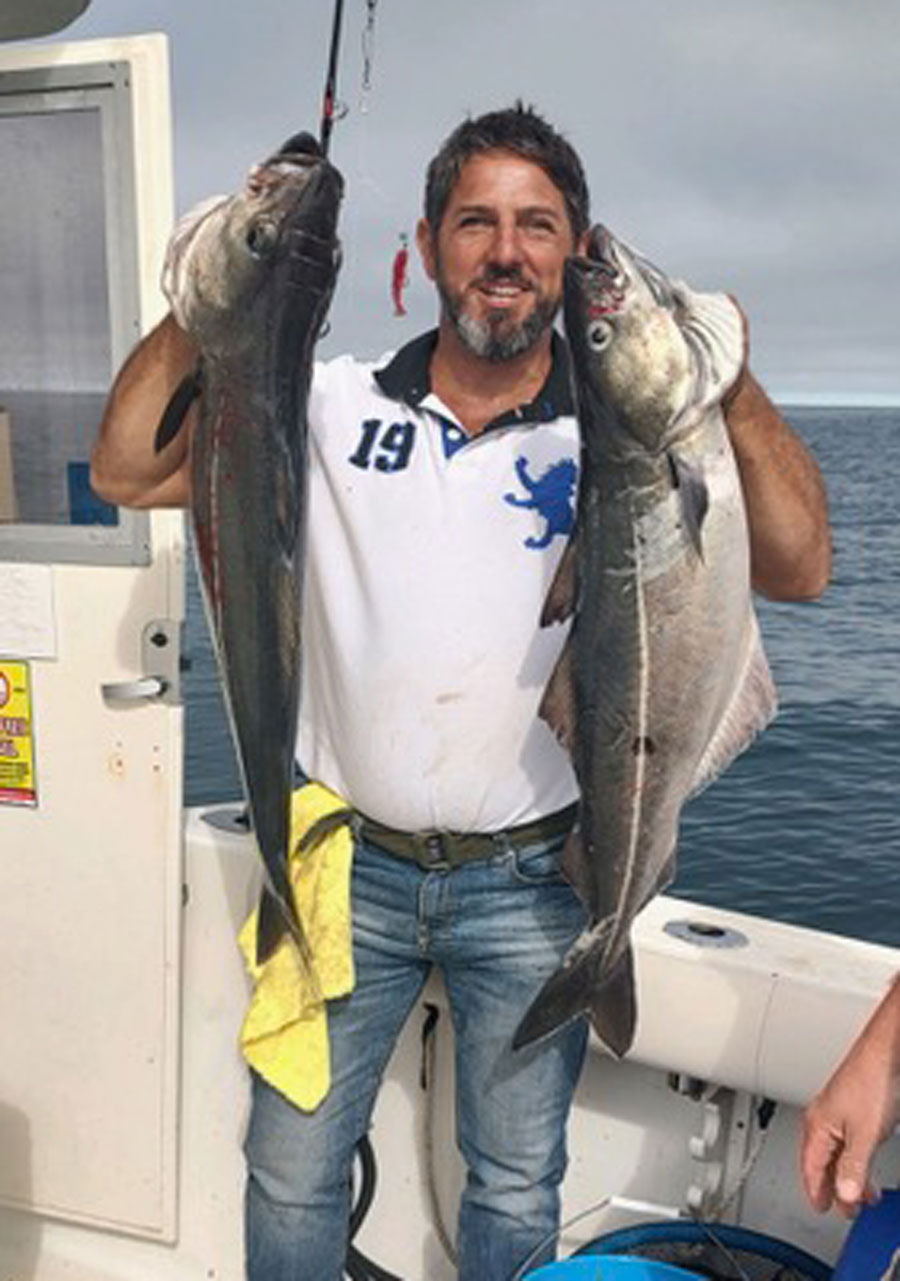
In baseball vernacular it could be said that we are in the bottom of the ninth and while the game is not over regarding striped bass it’s nearing the end. Fortunately, when seas settle, the offshore fishery is still solid with big pollock among the highlights.
New Hampshire Fishing Report
Captain Andy from Adventure and Catch Charters told a tale of good news and bad news when we spoke. The bad news is that Andy is no longer seeing striped bass activity as he tends to his ride at Great Bay Marina. As per usual Andy spends a lot of time at nights keeping his boat in ship-shape and all season long has been seeing blitzes under the marina nights but that has come to an end. Odds are that you can still find stripers nearer the mouth of the Piscataqua River where mackerel aren’t far away. In addition to the Isles of Shoals you can also find plenty of macks by Boone Island. A few pollock can be found off Tantas Ledge with a smattering of cod also. For more of a mixed bag including bigger pollock and haddock set your sites on Platt’s Ledge while The Flag has been holding big bluefin.
Captain Bob Weathersby of Seacoast NH Sportfishing is calling it a season and this will be his final addition to this column. He said that coastal bass fishing is still blown out by large swells and brown weed. Mackerel continue to be packed around the Isles of Shoals, as well as on the offshore Ledges. Jigging deep on the offshore ledges has been the ticket to getting tanker mackerel preferred for bluefin, as the Shoals population continues to be tinker-ish. Offshore bottom fishing continues to be a healthy mix of cod and haddock, with the addition of increasingly large pollock. Jeffreys, the Prong, and Cove are a few favorites. Blue shark issues seem to be waning as the surface water temp drops below 60. Commercial-sized bluefin have been solid on central Jeffreys. Best bait is fishing a live groundfish (haddock or whiting) 120-150′ down around the 30fm curve. The deep bait has the added benefit of fishing below the cruising level of many blue sharks. Rec-sized tuna have been making regular but not necessarily daily visits to Pigeon Hill. Focus on fishing the mackerel concentrations in 100-140′ water, with at least one live mackerel fished way back unweighted. Rec-tuna are also available on central Jeffreys. Live mackerel unweighted, as well as 60′ down, have been producing.
Southern Maine Fishing Report
When Captain Lou Tirado of Diamond Pass Outfitters begins to talk of togue, you know that inshore salt options have grown cold. The togue fishing he is referring to takes place on Sebago Lake as the lakers chase down alewife fry as they travel downstream towards natal rivers. The feeds are similar to a striper blitz in the salt as the predators push the prey onto the surface with gulls swooping down to pick up the fry. Sonar is essential for this fishing as jigs are worked over marked fish. There are still reports of stripers running the beaches but few are bothering now as many downeast sportsmen have taken to hunting. The bass are in full migration mode now and prone to chasing down mackerel. Some liken their movements to fishing for false albacore – now you see them, now you don’t!
Zach from Saco Bay Tackle Company didn’t have much to add this week save a few reports of some stripers in the Saco River as well as nearby Camp Ellis. While Zach couldn’t comment on it, historically at this time of the year fly fishers have found willing sea run brown trout in the Mousam and Ogunquit Rivers.
New Hampshire And Southern Maine Fishing Forecast
While the bulk of the bass population has migrated south, you can still find some chasing mackerel off area beaches. Mackerel are still plentiful off the Isles of Shoals as well as Boone Island. Thankfully October is prime time for tuna with reports of recreational and commercial fish off the Flag, the Prong and Central Jeffrey’s. Expect pollock to increasingly be part of the groundffish catch while dogfish and blue shark numbers wane.