

Maryland & Chesapeake Bay Fishing Report
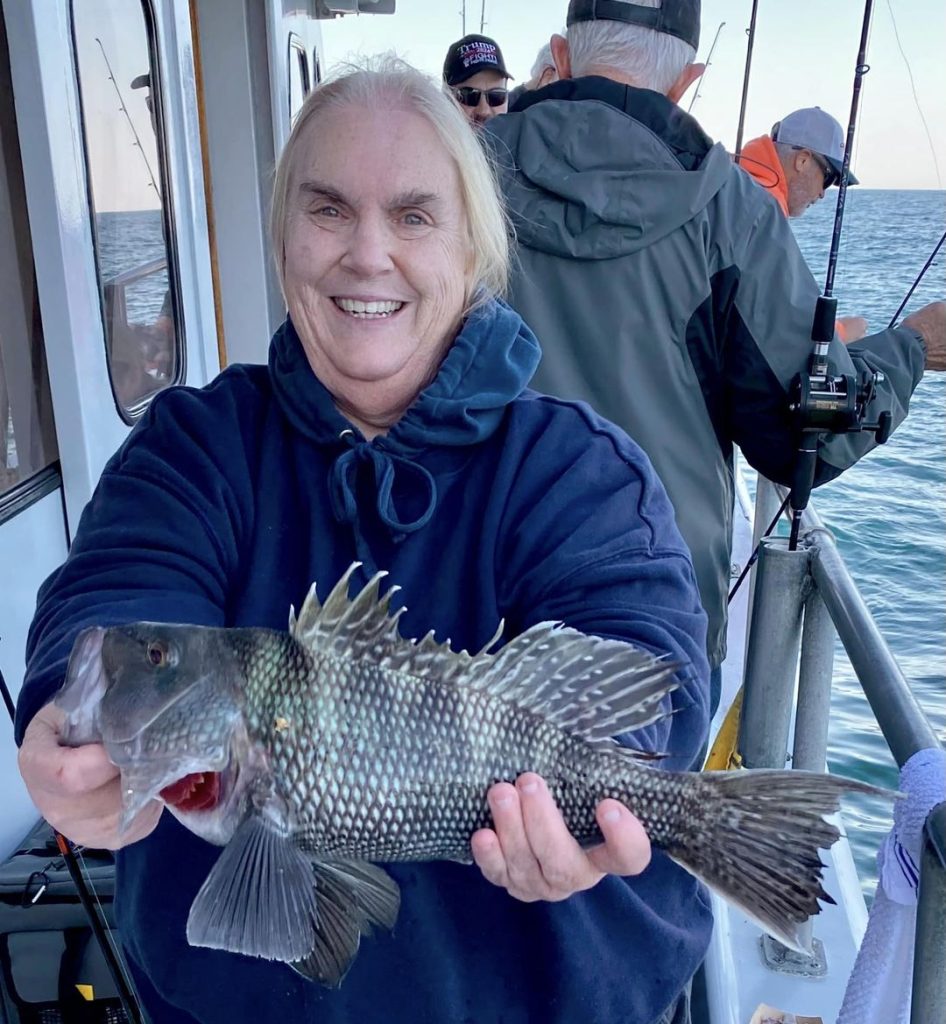
Sailing out of West Ocean City, Captain Monty Hawkins of Morning Star Fishing reported that the theme lately has been a slow start to bottom fishing in the morning with the bite progressively improving throughout the day. Monday’s fishing saw only one limit taken. On Tuesday, their group worked hard for barley any bites during the first few drops of the day, but after making a move quite a ways from the original grounds, they were able to put together a good bite with quality fish up to a pool-winning 24 inches. They had moderately good sea bass fishing to start the day on Wednesday after a deckhand injury forced them back to the dock, leading to a late start. The pattern had changed though, as the fish were now chewing well early on in calm and comfortable conditions, but eventually by mid-afternoon Wednesday, the bite slowed down despite the skipper marking a ton of fish. On the way in, the captain stopped to gaff some floating trash and they noticed a school of mahi beneath it. One angler picked a good one on a sea bass jig before the rest of the school spooked, but it was a nice surprise in 68-degree water! Over the course of the week, there have also been a few flounder and porgies in the mix, as well as cutlassfish. They’ll be sea bass fishing again on Friday with hopes of stumbling into some more late-to-leave mahi, so give them a ring to get in on the bottom fishing action—and perhaps, one last shot at mahi this season.

In Ocean City, Taylor Bakke from Always Bent Fishing OC reported: “The bluefin tuna are here! They’re airing out of the water going nuts on top as close as 8 to 10 miles off the beach. Hopefully this is a great sign for winter! Unfortunately, we weren’t able to get one to bite the last couple days, but skirted ballyhoo is still the most productive bait—you’ve just got to wait your turn! Some boats are using live bluefish on kites and getting bit, but a lot of them are big and breaking off. That said, we’ve seen close to a dozen make it to the dock in the last 3 to 4 days.

There has also been some awesome fishing back in the Bay. A great class of stripers came through at the bridge the last couple nights, from slot to over-slot fish. There are also still a lot of flounder around, and even some red drum in the mix, locally.”
Anglers Sport Center Fishing Report – Annapolis, MD
The Anglers Sport Center fishing report is written by Anglers Fishing Manager & OTW Columnist, Alex Gallardo-Perez.
This week we saw a lot of changes in water temperature in the upper and middle parts of the Chesapeake Bay; water temperatures began in the lower 60s and climbed to the upper 60s by the middle of the week. This drastic change made for some on and off striped bass action with some bird activity during the first-light hours around the mouth of Eastern Bay down to Buoy 84. Topwater can still be productive around shallow-water structure, and the best reports came from the Patapsco River and inside the Choptank River. Fishing around the Bay Bridge pilings is a good safety net since there are always some striped bass that hold around the structure all year long. Anglers in the area have been catching striped bass in the 18- to 24-inch range with some bigger fish around the 30-inch mark.
White perch are beginning to move into slightly deeper water, but some can still be found in shallow water. This is one of the best times of the year to catch bigger white perch. Bottom rigs with grass shrimp and small spinners are still the tickets to get in to some quality white perch.
Maryland DNR Fishing Report
Maryland DNR Fishing Report is written and compiled by Keith Lockwood, fisheries biologist with the Maryland Department of Natural Resources.
Lower Bay
The large bluefish that have dominated the fishing scene out in the bay channels have headed south this week as water temperatures steadily decline. There are still some smaller bluefish to be found in the lower Potomac River and Tangier Sound this week, but they will also head south shortly.
Anglers are enjoying good fishing for slot size red drum and ones smaller than the 18-inch minimum in the shallower portions of the region’s tidal rivers and sounds. Striped bass, small bluefish, and speckled trout are rounding out the mix for those casting paddletails, soft plastic jigs, topwater lures, and crankbaits. Popping corks with a soft plastic shrimp as a trailer is a favorite for speckled trout and red drum when fishing over grass. The lower Potomac River, the Patuxent River, the Hoopers Island area and Tangier Sound are several of the best locations to get in on the action.

Jigging in the deeper waters along the main channels in the Bay has also been very productive this week. Many of the striped bass being caught are over the 24-inch maximum but offer plenty of fun catch-and-release action. Trolling along the deeper channel edges in the lower bay and lower Potomac River is also a productive method to catch striped bass and bluefish this week. To get down deep to where the fish are suspended, umbrella rigs pulled behind heavy inline weights are preferred, and white sassy shads are the preferred lure for a trailer this week. There are still some large red drum in the lower Bay near the Target Ship providing some catch-and-release action, and trolling large spoons or jigging with large soft plastic jigs tends to be the best way to target them.
The spot, croaker, and kingfish are on the move to more southerly and warmer waters this week, so catches have declined in the past week or so. There are still some small black sea bass around the reef sites, and it is hoped that larger black sea bass will move into the lower bay in the next few weeks. The minimum size for black sea bass is 13 inches excluding the tail filament, so there will be a lot of throwbacks if you fish for them. The daily bag limit is 15.
White perch are feeling the urge to move to deeper waters as water temperatures decline. They can be found near some of the deeper structure in the region’s tidal rivers and creeks. Fishing with small jigs or spin jigs tipped with grass shrimp or peeler crab is a good way to target them. A bottom rig baited with grass shrimp, peeler crab or small minnows works well also.
Atlantic Ocean and Coastal Bays
Most surf anglers are fishing the tail end of the southerly push of large red drum along the beaches of Assateague Island. Using cut mullet has been the most popular bait and a mix of stingrays and small inshore sharks have been keeping anglers busy. A bluefish can be thrown into the mix also at times.
There continues to be plenty of action in the Ocean City Inlet and Route 50 Bridge area this week. Anglers are enjoying good fishing for sheepshead along the South Jetty and bulkheads. Sand fleas have been the most popular bait and at times tautog can be part of the mix. Striped bass and bluefish are being caught by anglers casting soft plastic jigs and bucktails dressed with twistertails.
The waters of the back bays are beginning to show significant cooling and as the daylight photo period shortens, flounder are going to feel the urge to move out of the back bays and travel through the inlet to their offshore spawning grounds. The channels leading to the inlet would be a very good place to consider drifting baits for flounder this week. Live spot, finger mullet, Gulp baits, and even large minnows are a good choice to target the largest flounder.
The anglers headed out to the wreck and reef sites are experiencing mixed results when fishing for black sea bass. At some sites, the fish do not seem to be interested in biting so sometimes a move to another location means all the difference. Anglers are reporting large bluefish can be pesky at times, chomping sea bass in half before they can be reeled to the surface.
We’ve not heard much from boats headed out to the canyons this week, but a few boats tangled with some impressive bluefin tuna inside the 30 Fathom Line this week. This weekend promises to offer some tuna and deep drop action for anglers if good sea conditions prevail.
Maryland DNR Fishing Report is written and compiled by Keith Lockwood, fisheries biologist with the Maryland Department of Natural Resources.