
Maryland & Chesapeake Bay Fishing Report
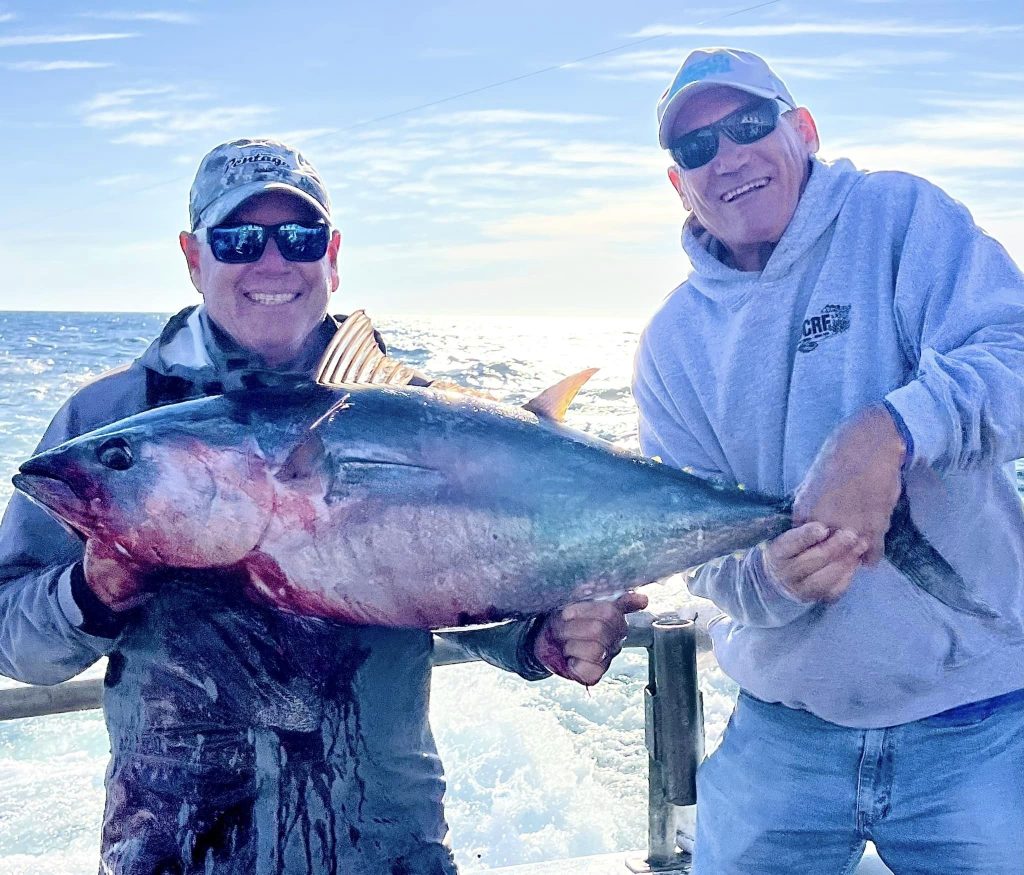
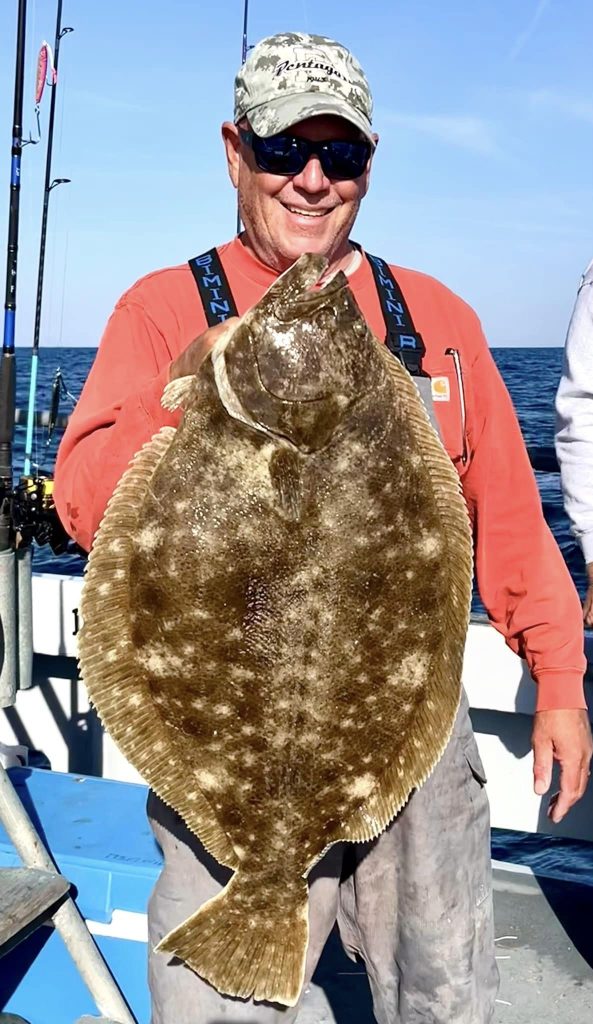
Sailing out of West Ocean City, Captain Monty Hawkins of Morning Star Fishing reported tough sea bass fishing on Monday the 18th when they last got out, but there was a silver lining! Inside of 3 miles, the crew had a dolphin riding the bow as they set up to troll for bluefin tuna while the skipper pressed on south and east. Anglers on board spotted tuna breaking within range of the boat, including one that popped up close to port as they dropped a 24-block unit over Rambler Reef. Shortly afterwards, the tuna was in their spread and hooked, and they were able to safely net a 40-inch, 47-pound bluefin tuna! It was a nice bonus to a sea bass and flounder-focused bottom fishing trip. Unfortunately, the sea bass fishing left much to be desired, so the captain decided to include fluke in the day’s pool. While a few anglers caught enough keeper sea bass to take home for dinner, it was the lone keeper fluke caught by boat regular George Guthridge that won the pool. It also happened to be the largest fluke ever taken aboard the Morning Star, measuring 30 inches and weighing a whopping 13.5 pounds! Talk about a doormat. All in all, a slow pick of sea bass was made up for with a couple surprising catches. They’ll be sailing the next time conditions allow. Give the Morning Star a call to inquire about availability and book a trip!
In Ocean City, Taylor Bakke from Always Bent Fishing OC reported: “Inshore we saw a nice mix of tautog, a few black drum, some bluefish, and striped bass! We heard whispers of a couple boats finding small schools of migratory bass off the coast while looking for bluefin, but not quite the numbers we are used to seeing in the ocean later in the season (Dec.-Feb.). The ocean is still around 60 degrees but is dropping, with the bay temps fluctuating with each tide, and as the sun heats different areas up, we’ve seen as cold as 50 degrees and as warm as 65 degrees depending what tide and location. Speckled trout and red drum are still being caught—they stuck around till November/December last year, so we’ll see how late in the season they stick around this year.” Visit the Always Bent website for detailed fishing reports, videos and more.
Anglers Sport Center Fishing Report – Annapolis, MD
The Anglers Sport Center fishing report is written by Anglers Fishing Manager & OTW Columnist, Alex Gallardo-Perez.
We are finally on track with our fall patterns as more fish are chasing schools of bait in open water as they move south and water temperatures cool. Water temperatures have dropped into the mid-fifties and most of the striped bass can be found in deeper water around points or shipping channel edges. However, there are also plenty of birds diving on bait over schools of surface-feeding striped bass. The hot bite areas have been to the south, anywhere from the mouth of the Choptank River to the Patuxent River. Some areas to keep in mind are Chesapeake Beach and the power plant, which always holds fish. Most anglers are using 3/4- to 1-ounce jigheads with 5- to 7-inch plastics like the Z-Man DieZel MinnowZ and StreakZ, but metals have been working well too, including one of the local favorites, the Shimano Current Sniper jig.
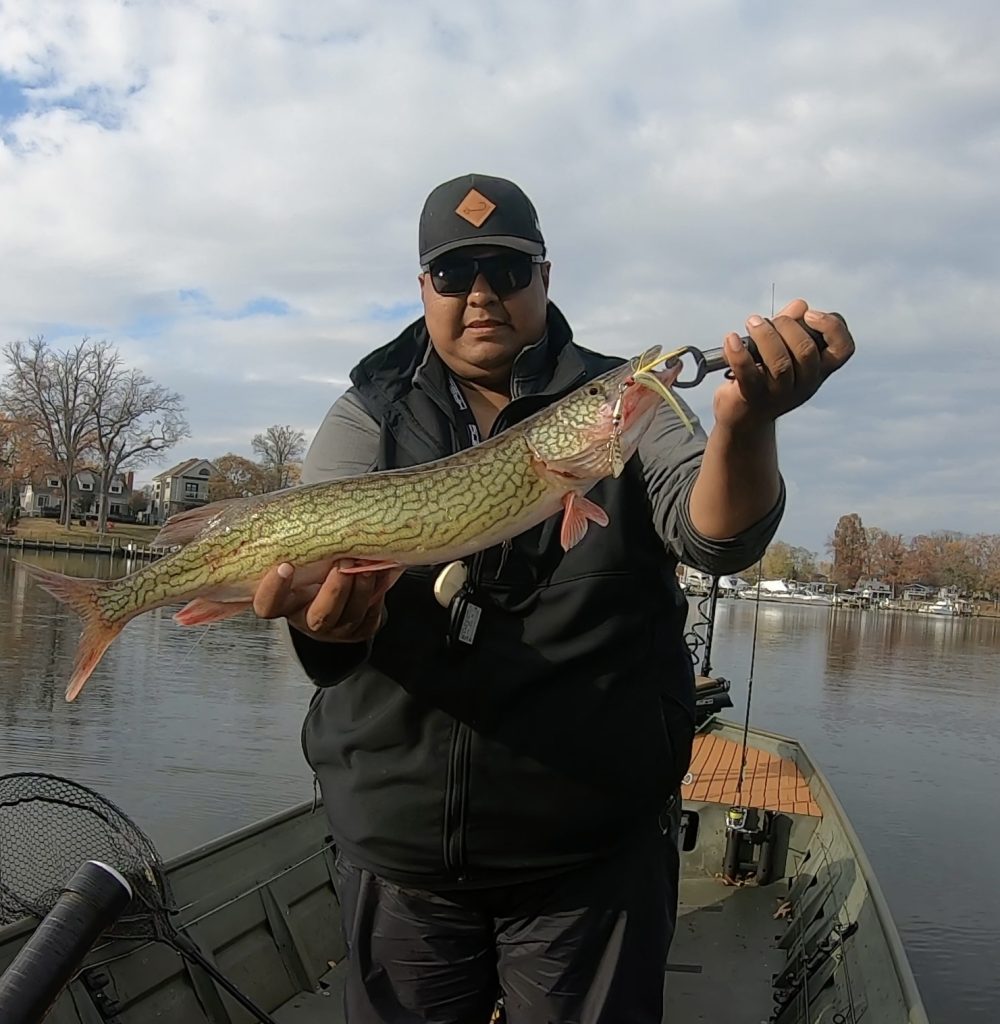
Pickerel fishing has been hit or miss the past week with the feeding windows being closer to sunrise and sunset. Inline spinners always work great, as well as small 3- to 4-inch jerkbaits. The Severn River seems to be holding good numbers of pickerel, as well as the Magothy River.
Maryland DNR Fishing Report
Maryland DNR Fishing Report is written and compiled by Keith Lockwood, fisheries biologist with the Maryland Department of Natural Resources.
Lower Bay
Anglers are experiencing exciting fishing for striped bass and the last of the red drum that are still hanging around in the lower Bay. Anglers are spotting schools of juvenile menhaden being harassed by striped bass along the steep channel edges of the main bay channels and in the lower Potomac River. Once striped bass are detected, either by observing sea gulls diving on bait that has been pushed to the surface or deep by watching depth finders, they can be caught by casting soft plastic and metal jigs. Casting to breaking fish is an exciting way to get in on the action, but jigging deep to suspended striped bass also offers great light tackle fun. Juvenile menhaden are being swept south by strong currents along the steeper channel edges of the bay and the lower Potomac River.
Trolling with umbrella rigs pulled behind heavy inline weights is a very popular way to fish for striped bass this week along the deeper channel edges, 30 feet tends to be the best depth to locate striped bass suspended close to the bottom. Skirted jig heads and bucktails dressed with sassy shads are popular trailers being pulled behind umbrella rigs. The east side of the shipping channel below Buoy 72 to Buoy 76, the Cove Point channel edge, and the steep channel edge from St. Georges Island to Piney Point are all good places to check for striped bass.
Anglers are still enjoying shallow water action in the lower sections of the region’s tidal rivers and the Tangier Sound waters. Casting topwater lures, paddletails, and jerkbaits during the early morning and late evening hours offers plenty of fun with a mix of striped bass and puppy drum. A portion of the puppy drum are falling short of the 18-inch minimum but offer plenty of fun catch and release action.
White perch can be found in the deeper waters near the mouths of the region’s tidal rivers this week. The perch are staged in the deeper waters often over oyster bottom or hard bottom, always looking for warmer water. Jigging with metal jigs with a small plastic jig teaser tied in above is an excellent way to fish for them, once a school is located on a fish finder.
Fishing for blue catfish in the tidal Potomac, Patuxent, and Nanticoke rivers is a worthwhile endeavor this week and a great way to stock up on filets that freeze well. The waters from the Route 301 Bridge to the Wilson Bridge hold a lot of blue catfish and they can be found along the channel edges. The middle section of the Patuxent from Benedict to Jug Bay is an excellent place to fish as well as the Sharptown area of the Nanticoke. Cut bait of menhaden, gizzard shad, eel or other fresh fish work well for bait, chicken liver can work well in a pinch.
Freshwater
Anglers at Deep Creek Lake are seeing better fishing for walleye as cooling water temperatures are making it more comfortable for walleye to explore shallower waters near steep rocky edges during the evening hours. Casting sinking jerkbaits and crankbaits is a good way to fish for them.
Fishing for smallmouth bass and walleye is good, despite low and clear water conditions. Long casts and light lines are required when casting tubes, small crankbaits and jigs that resemble crayfish. Walleye can be found behind the dams and one of the best baits to use are fathead minnows if you can acquire some.
Trout fishing in the delayed harvest and catch-and-release trout management waters is good this week. Low water conditions require some stealth when approaching waters that might hold trout. Casting streamers, emergers, and even dry flies can be good choices when fly fishing. There are some new trout stocking regulations on the horizon for anglers. The proposal and a link to public comment is on the DNR website.
Largemouth bass are very active throughout the ponds, reservoirs and tidal waters of Maryland this week. Any existing grass is a good place to target as largemouth bass will be often found outside these areas waiting for baitfish and crayfish to move to deeper cover as the shallow water grass beds diminish. Casting spinnerbaits, lipless crankbaits, soft plastic craws, grubs and jerkbaits can all be good choices to work the transition waters between diminishing shallow grass and deeper cover.
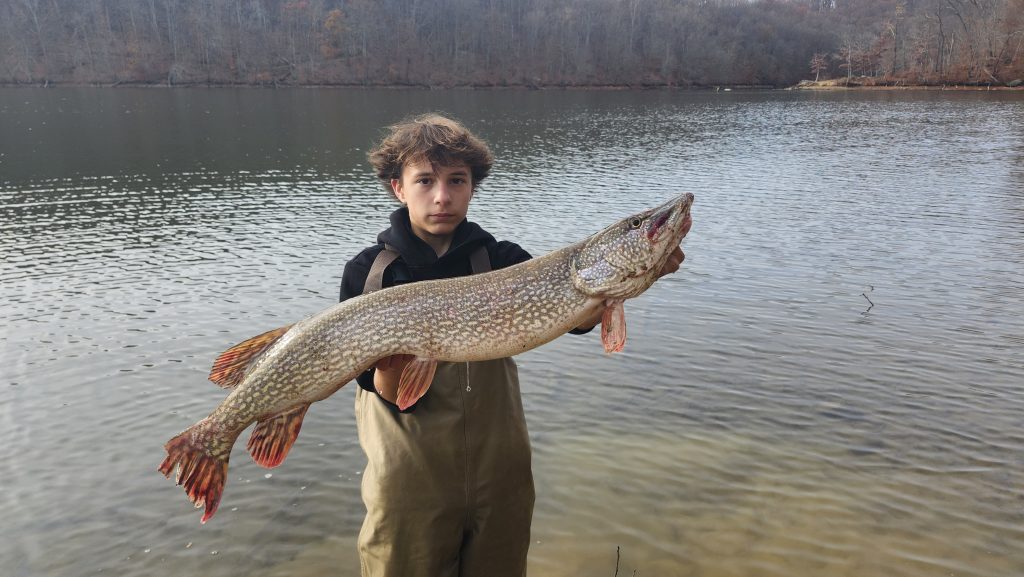
Several central region reservoirs have been stocked with landlocked striped bass and northern pike. Triadelphia and Liberty reservoirs are noted for their landlocked striped bass, Loch Raven for northern pike. These reservoirs and others also have healthy populations of chain pickerel. Colder water temperatures are much to the liking of chain pickerel and they can be found holding near sunken wood during the fall and winter months.
A mix of channel and blue catfish are ready this week to offer anglers plenty of good fishing in the tidal rivers of the Chesapeake. Every river system has channel catfish and now blue catfish. The tidal rivers of the upper bay all hold both catfish species. The Chester, Choptank, Nanticoke, Patuxent and Potomac rivers are standouts for blue catfish.
Atlantic Ocean and Coastal Bays
Surf anglers are patiently waiting for the southbound migration of striped bass from our northern neighbors and the vanguard of these fish should start arriving any day. In the meantime, there are some bluefish being caught on cut mullet baits.
Anglers fishing at the Ocean City Inlet and Route 50 bridge area are enjoying good fishing for a mix of striped bass, large bluefish and small puppy drum. Casting soft plastic jigs is the most popular way to fish near the jetties, bridge piers and swift current areas. Tautog fishing is good this week, the south jetty has been a standout for those fishing with sand fleas and pieces of crab. The Route 50 Bridge piers, various bulkheads and pier pilings are all good places to fish for tautog. Flounder continue to move through the inlet and most of them have left the back bay areas, so the inlet is the best place to fish for them.
The offshore wreck and reef sites are providing good fishing for black sea bass this week. Anglers are enjoying good catches of sea bass and a mix of flounder and porgies. Some anglers are focusing on flounder fishing at some of the reef sites and bottom mounts and catching good quantities of large flounder. Bluefin tuna continue to be caught within a few miles from the Ocean City beaches out to the 30 Fathom Line.
Maryland DNR Fishing Report is written and compiled by Keith Lockwood, fisheries biologist with the Maryland Department of Natural Resources.