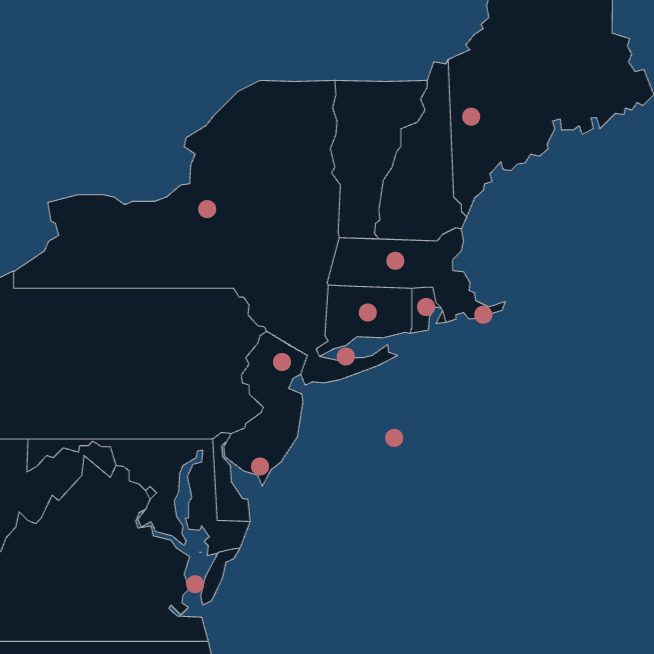

Maryland and Chesapeake Bay Fishing Report
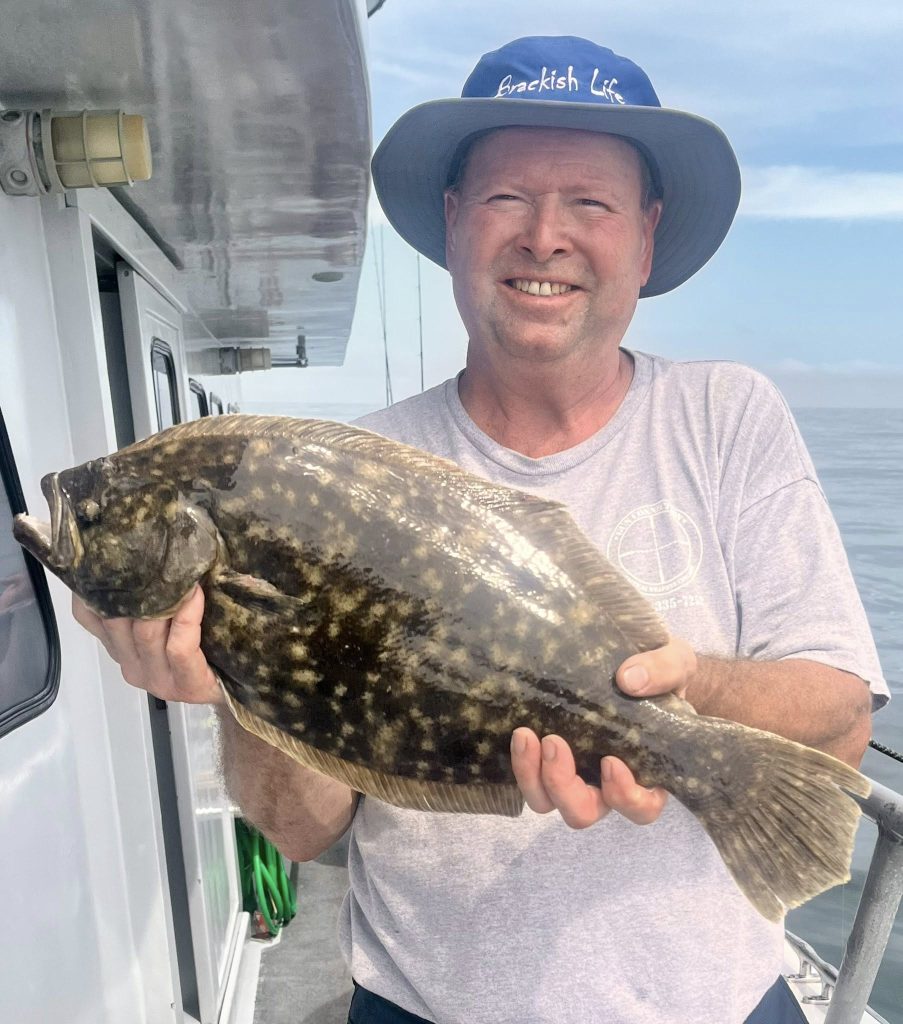
Sailing out of West Ocean City, Captain Monty Hawkins of Morning Star Fishing reported spotty sea bass and flounder action at the offshore reef sites, which he attributes to the cold bottom temperatures; according to divers whom he spoke to on Sunday’s reef monitoring trip, the water temperature at the sea floor was just 49 degrees, which is at least 10 degrees cooler than standard bottom temps for this time of year. On Friday 7/11, the best action of the day came as the tide started running hard. A few keepers came up along with a nice fluke… the fishing was, as the captain put it, “slow but productive”. A bonus: they spotted several hammerhead sharks—one of which ate a banana that was tossed overboard—and a loggerhead turtle! Then, on Monday 7/14, brought calm seas and unfortunately, slower fishing. Anglers picked away at sea bass, triggerfish and fluke with less-than-ideal results. The skipper hopes that some warmer water will bring in the mahi and get the sea bass bite back up and running. The Morning Star is sailing for sea bass, and soon, mahi, when conditions allow. Give them a shout at (443) 235-5577 between 8 AM and 8 PM to reserve your spot on the rail.
From Ocean City, Taylor Bakke of Always Bent Fishing OC said his team on the Bad Habit unfortunately didn’t catch any prize-worthy fish during the OC Tuna Tournament last weekend. They did catch a nice mahi and a yellowfin, but the fish just weren’t worth weighing in. Bakke said they also hooked a roughly 500-pound blue marlin on the last day of the tournament, but the fish bested their landing efforts. The marlin bite, he said, is certainly heating up, but the tuna seem to have spread out a bit.
View this post on Instagram
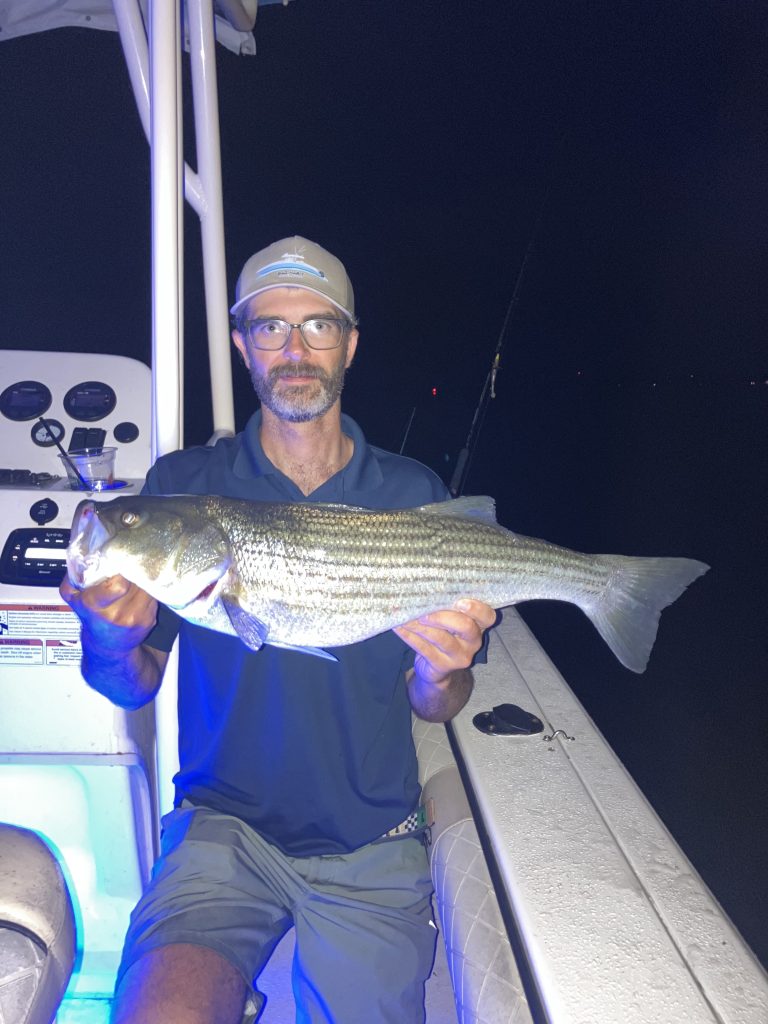
Back on the inshore scene, he added, schoolie- and slot-size stripers continue to feed after dark around Ocean City inlet. The fish are hanging tight to hard structures like docks and bridge pilings, and often can be seen feeding in the dock/bridge lights. Casting soft-plastics and bucktail jigs around the shadow lines is a great way to connect with striper at night.
Anglers Sport Center Fishing Report – Annapolis, MD
The Anglers Sport Center fishing report is written by Anglers Fishing Manager & OTW Columnist, Alex Gallardo-Perez.
We have come to our summer closure for striped bass in Chesapeake Bay from July 16-31, meaning we are not allowed to target striped bass per state regulations. But there are other species to go after like bluefish, white perch, and some speckled trout.
Before the summer closure for striped bass, the bite was primarily a morning bite with some topwater action around shallow water structure that would only last until the sun was high. Live-lining spot was a good technique around the old Key Bridge in the Patapsco River.
The bluefish bite seems to be great down south, from the Solomon’s area down to the Target Ship. We have not seen any consistent blues north of Chesapeake Beach just get. Spanish mackerel have not shown up in any numbers, but we hope that they show up in the next week or two. The speckled trout bite also seems to be spotty compared to last year’s season; Tangier Sound, and the Honga and Potomac rivers seem to be the most consistent areas.

We hope more of the summer species, like puppy drum and bluefish, show up in the upper Bay in the next few weeks.
Maryland DNR Fishing Report
Maryland DNR Fishing Report is written and compiled by Keith Lockwood, fisheries biologist with the Maryland Department of Natural Resources. Read the full DNR report here.
Anglers fishing the Chesapeake Bay and its tributaries are reminded that all fishing and targeting of striped bass is closed from July 16 through July 31. Striped bass fishing resumes Aug. 1 through Dec. 10 with a slot size of 19-24 inches and a limit of one fish per day per angler.
Middle Bay
Anglers in the middle Bay will be fishing for a couple of species during the striped bass closure. Bluefish in the 3/4-pound size range are roaming the channel edges, for example in the area from Buoy 83 south to Sharps Island Light. Trolling with medium-sized red and green surgical tube lures behind inline weights is a good way to target them. Anglers are also encountering bluefish chasing bait on the surface, which makes for some fun casting action.
There are plenty of spot and small croaker in the middle Bay; there are reports that some of the spot are large enough to eat and a few croakers are exceeding the 9-inch minimum. Spot prefer bloodworms but croakers can be caught on peeler crab.
Blue catfish can be found in the Choptank River in the area from Dover Bridge to Denton. Cut bait and various other scented baits are good choices to be fished close to the bottom. White perch can be found in the lower sections of the tidal rivers near deepwater docks, oyster bars, and shoreline structure. Peeler crab, grass shrimp, and pieces of bloodworm are excellent baits to use. Casting small spinnerbaits and jigs is another good option in the morning and evening. Finding white perch has been tough this year; the likely culprit was blue catfish eating them when they were staging to spawn in the Choptank River last spring. It was common to find adult white perch, yellow perch, and river herring in the stomachs of blue catfish.
Lower Bay
Anglers in the lower Bay have several fishing options during the striped bass closure. There are reports of bluefish being found in excellent numbers throughout the lower Bay region. The mouth of the Potomac and the east side of the bay from Buoy 76 south past Buoy 72B. Trolling red or green surgical tube lures of appropriate size for one-pound bluefish behind inline weight has been a very popular way to fish. At times bluefish can be found chasing bait on the surface and casting metal jigs into the fray is always a lot of fun.
Cobia are being found in the general area of the Target Ship this week and south near Pocomoke Sound. On calm days, sight fishing is popular and casting large soft plastic jigs or live eels to cobia is always exciting. Large red drum can be found in the deeper waters of Tangier and Pocomoke sounds and near the Target Ship and Middle Grounds. At times they can be caught by trolling large chrome spoons, but most anglers move in on slicks and disturbed water and jig with large soft plastic or use soft crab baits.
Speckled trout can be found in the shallower waters of the region, often over grass. Casting paddletails or topwater lures or using popping corks trailing peeler crab or soft plastic shrimp are good tactics. There are a lot of spot and small croakers in the region; the mouth of the Patuxent and Point Lookout area are two excellent places to fish. The spot and croaker are getting larger as the summer months pass by, and a few croakers are reported to exceed the 9-inch minimum size.
The tidal Potomac, Patuxent, and Nanticoke rivers are loaded with blue catfish and anglers are encouraged to fish for them. As summer progresses, they will be found in the lower parts of the tidal rivers along the edges of the channels. White perch continue to be hard to find, some are being caught at the mouths of the region’s tidal rivers and others when fishing for a mix of spot and croakers and others are offering opportunities in the more confined tidal creeks.
Atlantic Ocean and Coastal Bays
Surf anglers are catching bluefish and the occasional inshore sharks on cut bait this week. Flounder can be part of the mix when fishing smaller baits, and croakers are arriving in the surf. At the Ocean City Inlet, a mix of striped bass and one-pound bluefish are entertaining anglers casting and jigging. Striped bass may be caught in the Atlantic Ocean and coastal bays, with a limit of one fish per person per day, slot size 28–31 inches. Sheepshead and a few spade fish are being caught near the South Jetty.
In the bay channels flounder fishing has been very good this week and croakers and bluefish are part of the mix. Boat traffic can be heavy at times near the inlet so be careful when fishing in the channels.
Outside the inlet, Spanish mackerel and bluefish are being caught by trolling Drone and Clark spoons behind inline weights near the shoal areas. Fishing for black sea bass and a mix of flounder and triggerfish is good at the wreck and reef sites. Boats targeting flounder at these sites are finding good fishing for large fish.
Farther offshore at the canyons anglers are catching yellowfin tuna, bigeye tuna, dolphin, and both white and blue marlin. Deep drop fishing is producing golden and blueline tilefish.
Maryland DNR Fishing Report is written and compiled by Keith Lockwood, fisheries biologist with the Maryland Department of Natural Resources. Read the full DNR report here.