
Maryland and Chesapeake Bay Fishing Report
From Ocean City, Taylor Bakke of Always Bent Fishing OC relayed that the local tautog bite has been excellent lately, both inshore and out front, beyond the inlet. And while plenty of boats have been getting in on the action, Bakke cited a specific catch made by Dominic Cannuli and his father, Captain Vince Cannuli of Running Tide Charters. The two ventured to a nearshore wreck and managed to hook and land a 32.5-inch tog this week. They were fishing in 45 to 50 feet of water with a mix of green crabs, white leggers, and mole crabs, and had released over 100 fish before they made a couple of moves to find some bigger fish. That’s when Dominic got bent by the jumbo male tog (pictured below). According to the captain, the bruiser blackfish weighed 20 pounds on their hand scale.
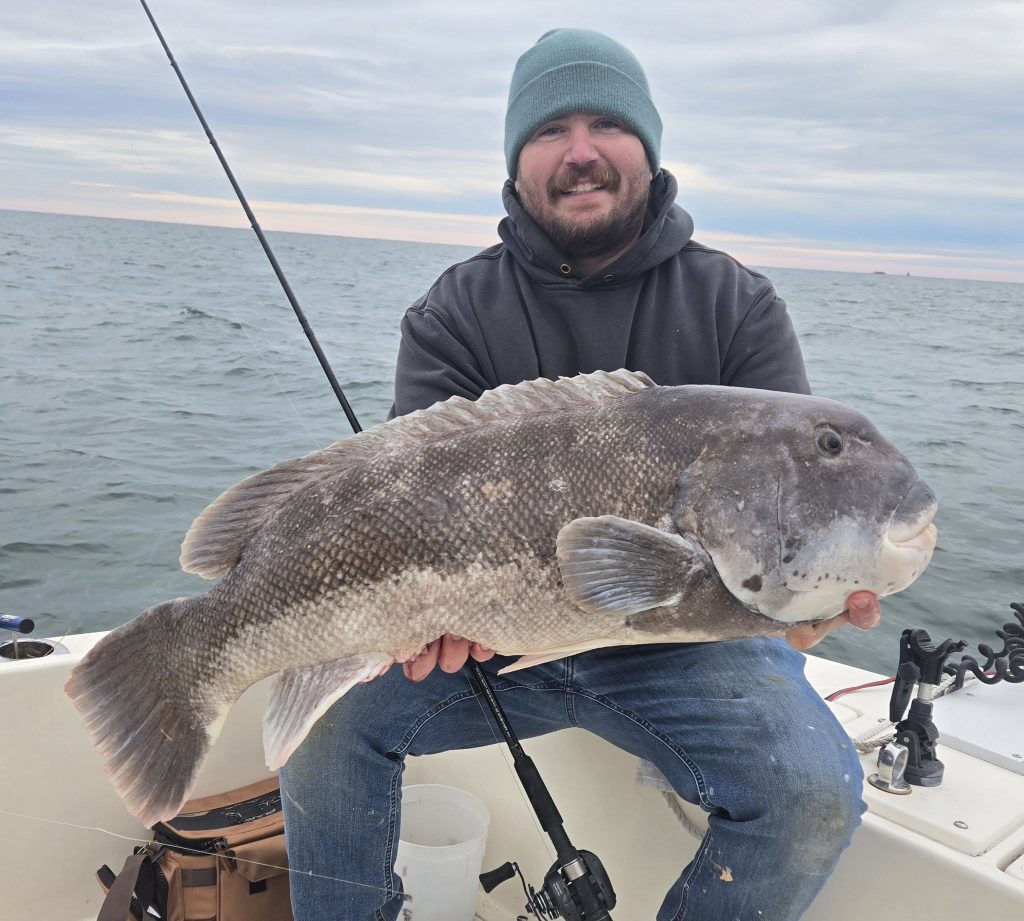
Bakke said it’s one of the biggest tog he’s ever seen caught off Ocean City, and Captain Vince said it was not only Dominic’s personal best, but the largest tog ever landed on his boat. The inshore bite has been good, too, Bakke added. Anglers local to Ocean City are still catching their share of keepers, but they’re not as large as the wreck-dwelling tog of the ocean. The striper bite, he said, continues to ramp up. Surfcasters are catching bass on the area beaches and jetties, and fish are filling into the marshes and being picked off on the bridges. As far as big game, Bakke said, tog fishermen are spotting bluefin tuna airing out within 5 or 10 miles of the beach and even though the season has been closed for some time, their presence has excited the catch-and-release crowd. Late fall/early winter fishing is in full swing!
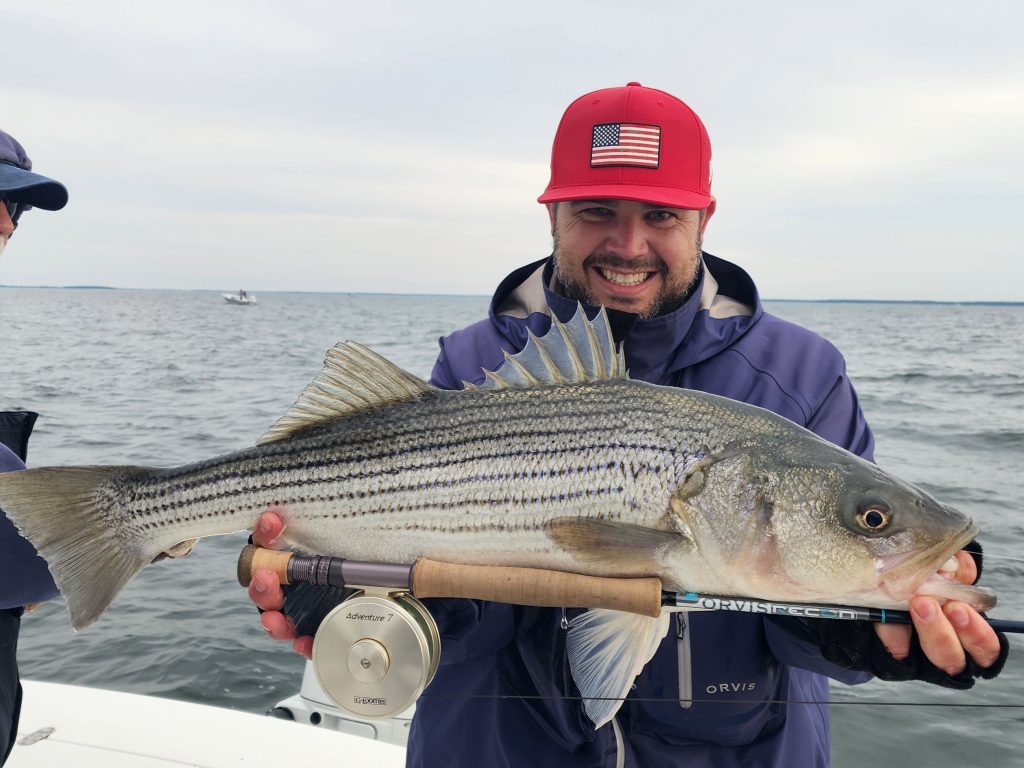
Captain Jamie Clough of Eastern Shore Light Tackle Charters said the striper bite in the bay has blown wide open. Resident fish continue to move out of the rivers and as they do, they’re feeding heavily on bunker. While the same 7- to 8-inch paddletails are getting the job done, the skipper mentioned that they’ve also spent time throwing the fluffy stuff and have been able to convince a few nice-size bass to commit to flies. Like the soft plastics they’re casting on spin gear, larger profile fly patterns are the key to getting the bass to bite. Capt. Jamie will continue running striper trips whenever conditions permit, even as the weather gets colder, so head over to his Facebook page for trip rates and contact info. if you want to get in on the action.
Maryland DNR Fishing Report
Maryland DNR Fishing Report is written and compiled by Keith Lockwood, fisheries biologist with the Maryland Department of Natural Resources. Read the full DNR report here.
Middle Bay
The striped bass action at the Bay Bridge continues to be good for anglers jigging with soft plastics near the deepwater pier bases, the rock piles, and concrete bridge abutments. Live-lining eels or small white perch or even cut bait to the pier bases can also work well. Large white perch are holding deep at the rock piles and anglers are catching them on heavy but small jigs.
Anglers can find striped bass spread throughout the middle Bay but the two best places to find concentrations are the mouth of Eastern Bay and the mouth of the Choptank River. Striped bass can be found suspended along channel edges intercepting baitfish moving out of those waters. Jigging with soft plastic and metal jigs is an excellent way to fish for them. At times diving sea gulls are involved when the baitfish get pushed to the surface by the striped bass.
The main channel edges from Bloody Point south to the False Channel at the mouth of the Choptank River and near Thomas Point have been some of the better areas to troll for striped bass this week. Most anglers are using tandem rigged bucktails and umbrella rigs pulled behind inline weights to get them down deep where the striped bass are holding.
Lower Bay
Fishing for striped bass in the lower Potomac River continues to be good this week. The waters from the mouth of the Wicomico north to the Route 301 Bridge and south to Piney Point have been good to jig and troll for striped bass this week. The striped bass are holding deep so jigs up to ¾-ounce are needed to get down to the fish.
The lower Patuxent River has been another good place to fish for striped bass. The area around the Route 4 Bridge has been a very productive area for anglers jigging for striped bass lately. The fish are going deeper as water temperatures drop. Depth finders are a major help in locating suspended fish.
Striped bass are being found at the mouth of the Nanticoke River, the Hoopers Island cuts, the Target Ship area, and the main channel in Tangier Sound. Jigging is the most popular method when the fish can be detected on depth finders. Trolling with tandem rigged bucktails and umbrella rigs down deep is another way striped bass are being caught in the channel waters.
Atlantic Ocean and Coastal Bays
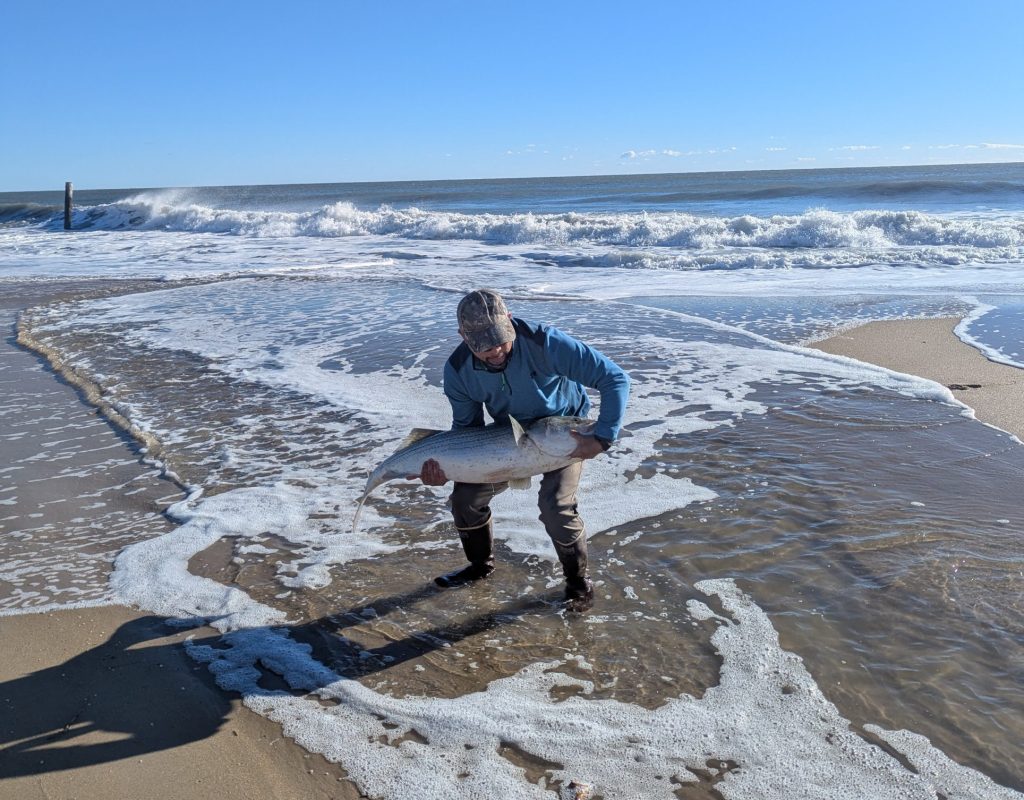
The strong westerly winds we’ve been experiencing have flattened the surf to quite an extent and surf anglers are able to fish with less sinker weight. Anglers using pieces of bloodworms for bait are still catching a few kingfish. Those using larger baits of cut mullet are catching some bluefish and the first of the southerly migrations of coastal striped bass. Of course, spiny dogfish and clearnose skates are going to compete for baits.
The tautog fishing inside the inlet near the jetty rocks, docks, Route 50 bridge piers, and bulkheads has been very good this week. A fair percentage of the tautog caught miss the 16-inch minimum, but most anglers are able to go home with several fish. Pieces of green crab and frozen sand fleas have been popular baits.
Striped bass are being caught inside the Ocean City and near the Route 90 bridge piers by anglers casting soft plastic jigs; not all meet the 28-inch minimum but the catch-and-release fishing is good fun. A few flounder are still moving through the inlet, but most are now offshore.
The strong winds have been tough on anglers trying to vent the inlet to fish the wreck and reef sites for black sea bass. When they are able to get out, the catches have been very good with limit catches being common. Flounder can be in the mix and those who are targeting flounder are catching some nice ones. The canyon fishery is now focused on deep dropping for blueline tilefish and swordfish.
Maryland DNR Fishing Report is written and compiled by Keith Lockwood, fisheries biologist with the Maryland Department of Natural Resources. Read the full DNR report here.