
Blackfish are still binging, while thanks to big black bass, freshwater is hardly a trout-or-bust affair. Tog aside, mackerel have taken center stage in the salt, while the angling-obsessed when shore-walking are still seeing diving birds as well as hearing “splats” and wondering – is that a striper calling me?
Massachusetts South Shore and South Coast Fishing Report
Tautog are transitioning now out to deep water, where they will eventually drop down into a crevice or other sheltered sanctuary in 80-100’ of water and ride out the winter. During that time, they will cease to feed sans an unweary crab which wanders too close. Meanwhile, just like pre-hibernation Yogi, they are in feed-mode, making it prime time to catch limits or achieve that personal best white chin. While those tog in the Narragansett area can breathe a sigh of relief because Captain Brian Coombs has wrapped up his Get Tight Sportfishing reign of terror on local fish populations, tog along the Westport side of Buzzards Bay have no such quarter. When the blow relents, Captain Jason Colby’s Little Sister continues to achieve limits and personal best check-offs for charters. However, just like Drake Maye’s receiving core, you can expect to go deep if you’re looking to score. Forty to sixty feet will be the sweet spot for the remainder of the season, which will end for the captain at the end of the month and for the tog sometime in next month.

Pete from Belsan Bait and Tackle in Scituate said that there are bird shows close to the South Shore coast, but not surprisingly, there are no anglers quickly suiting up to see what all the fuss is about. It could very well be stripers finally moving southward as they reluctantly leave hapless herring fry throughout Bay State river systems. More than likely, it’s mackerel with the outside possibility of it being whiting, pushing small sea herring or silversides. The few who still have their rides at the ready continue to find tautog among deep water structure beyond the Gurnet, High Pine Ledge, the Glades, and Minot. A few of them are also encountering C&R (catch and release) cod.
Rivers and upstream tailwater, which harbor herring runs, are giving up some impressive Larrys! Some possibilities are the plethora of ponds that are part of the North River/Indian Head River watershed. A few of Pete’s picks are Furnace Pond, Oldham Pond, Factory Pond, and Indian Head Pond. Of course, there is no shortage of anglers targeting trout, with Little Pond, Long Pond, and Fearing Pond being a few favorites.
Greater Boston Through North Shore Fishing Report
In spite of a determined effort to avert his eyes from the ocean, my buddy Dave Flaherty of Nahant is finding it easier said than done. While his eyes remain steadfast, his ears aren’t doing him any favors. One recent betrayal took place at Lynn Harbor, as the sound of screaming gulls proved too strong to resist, and he found himself ogling some sort of feed. Another deal-breaker took place during his morning walk by 40 Steps as he thought he heard the tell-tale sound of a tail slap – or was it just the result of an overactive imagination? Regardless, it’ll probably take just one more signal for his mothballed gear to be back in service!
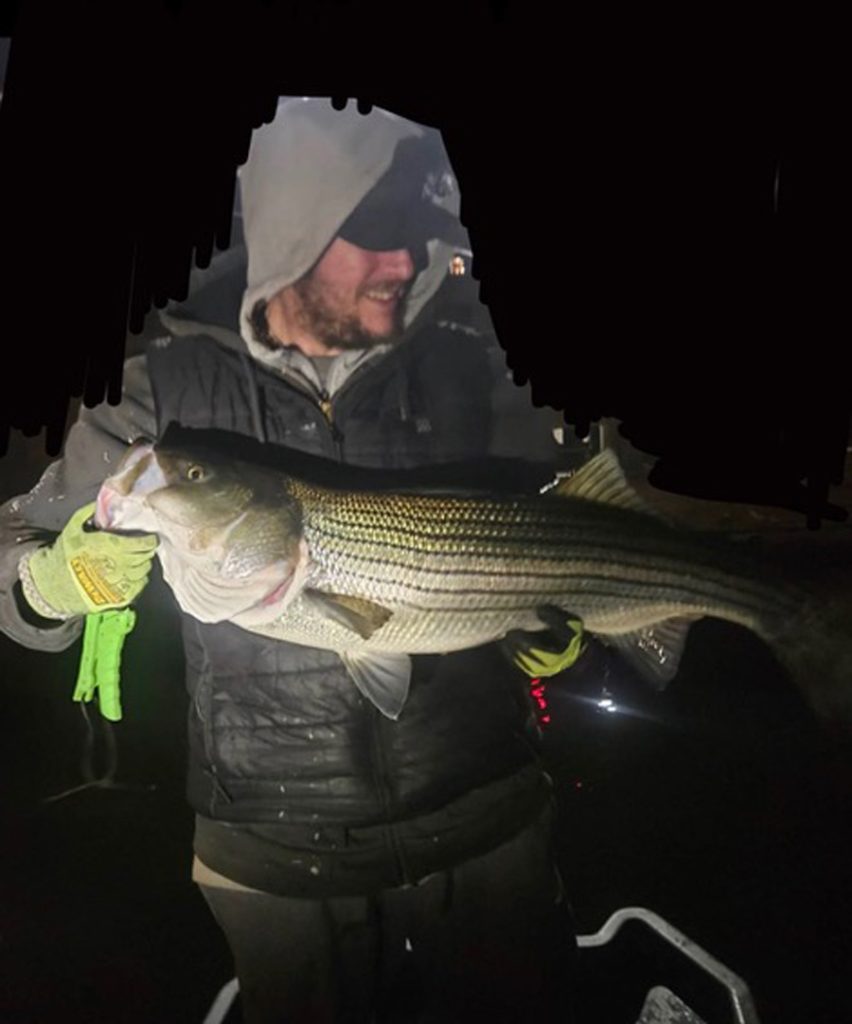
As told to me by Tomo of Tomo’s Tackle in Salem, another “Dave” – Dory Dave – recently spotted a full-on feed among the shallows of King’s Beach in Lynn. Had it been deeper water, the culprit might have been mackerel, but they are adverse to moving into such skinny water. Mackerel remain the principal quarry for anglers who want to continue to get salty with Salem Willows as well as the Dogbar Breakwater, giving up a good pick at daybreak.
Garret from Three Lantern Marine in Gloucester told me that anglers working bait and jigs/spoons off that very same breakwater are catching and releasing small cod.
As far as other gadoids, Summer Street Bridge in South Boston has willing whiting as it generally does this time of the year, according to Lisa from Fore River Fishing Tackle in Quincy. They are cool little critters and scrumptious when they friend up like smelt. Whiting (silver hake) are not fussy, as they’ll willingly take down any bait on the bottom. Smelt and mackerel are the draws for most other saltwater anglers, with piers throughout Hull, Hingham, and Quincy giving up fish. For most fans of Fore River, it’s all about freshwater with bass and other warm water species competing with trout for angling attention. As for Larry and company, anglers are doing well with shiners from Lilly Pond, Cushing Pond, Turner Pond, and Hobart Pond.

It’s never too late to try to tempt a last-ditch striper with a Santini tube! While you’ll have to do some digging on your own for seaworms, stripers will hit a crawler on a tube. An old trick smelt anglers employed, which may work in this capacity, was to soak the worms in iodine, which added a salty sensation to the worm. In addition to harbor estuaries, the swath from the mouth of the Charles River out through the Tobin Bridge, the Chelsea Creek, and onto the Alford Street Bridge historically has yielded swan song stripers. Elsewhere, it’s all about trout with Sluice, Horn, Walden, Houghton’s, and Jamaica Ponds all potentially productive trout water. You’d have to play nice and release them, but November has always been the time for cod to cruise in from the North Channel through President Roads and in close to Castle Island. The action was always at night, but oddly differed from a daytime bite when the cod returned again in March. If more convenient, the Deer Island Pier might work as well.
Massachusetts Freshwater Fishing Report
Rick from Jerry’s Bait and Tackle in Milford said that some are loading up with shiners and giving warm water species options a go in such spots as Dudley Pond. Lake Chauncey, the A-1 Site, Heard Pond, and the Sudbury River. The latter two are noted to have northerns in them as well as bass and panfish. The shop continues to move all sorts of Power Bait for those targeting trout in Ashland Reservoir, Hopkinton Reservoir, and Lake Cochituate. Other anglers are skipping out on the small stuff and aiming for larger at Wachusett Reservoir and Quabbin Reservoir. One of the shop’s patrons is still grumbling about what looked to be a 10-pound laker that fell off at the shoreline not far from the Fish and Game gate. For more on the Chu, Eddie of B&A Bait and Tackle Co. in West Boylston weighed in with reports of better-than-average lakers now up to 4 pounds. Just be prepared to launch your cast for the horizon since the fish seem to be far out. In addition to the added tail dressing he’s putting on select metallic perch Kastmasters, he’s doing the same with chrome/blue versions, which are a standard issue for anyone who really knows this place. Smallmouth bass are still hanging in there, as are those colorful rainbows which are particular to Wachusett Reservoir.

A few are taking advantage of the shoreline season extension at Quabbin Reservoir, with lake trout the primary quarry. Gates 16, 22, and 35 have been among the most consistent. Pike in the Barton Cove/Turner Falls area of the Connecticut River are becoming more active. The same can be said for the river’s thriving channel cat population, with bridge areas fishing best.
Massachusetts Fishing Forecast
It may be wishful thinking or merely an apparition, but some are swearing that they are still seeing signs of striped bass feeding off our coast. But for a few, those experiences are a lot more concrete. For a surer thing in the salt, there are willing tautog off Westport and the South Shore, but as the fish transition towards eventual winter-time dormancy, expect to find those fish in water of at least 50’. Hull Piers, Hingham Piers, and Quincy Piers are holding smelt and mackerel. Smelt can also be found off Summer Street, but are occasionally pushed away by larger, more aggressive whiting. More than one report puts interesting feeds in the Lynn area, which could be the hallmarks of the tail end of the striper migration.
Wachusett and Quabbin Reservoirs continue to serve up the Bay State’s best blue ribbon cold water species fishing, with big black bass always a possibility. River pike are picking up their feeding intensity in the Connecticut River with bait on the bottom near bridges, possibly yielding a double-digit channel catfish.