
Cape Cod Fishing Report
Ice in, ice out, repeat. That’s been the cycle on small freshwater ponds this week as skim ice has finally taken hold of many shallow bass and pickerel waters. It’s getting to be the time of year where anglers are either praying for safe ice or some consistent mild weather to keep us free from “fishing limbo”. In wooded ponds and shallow bogs, the ice is just thick enough to make wading and casting for largemouth bass impossible, which has forced cold-weather fishermen to explore larger, deeper kettle lakes for trout.
I’m sure these late fall/early winter reports are beginning to sound like a broken record, but our cold weather fishing opportunities here on Cape Cod are few and far between. The silver lining is that strong, sustained winds are keeping those larger bodies of water free of skim ice (for now), so shore and wading anglers should be able to continue fishing for trout for the foreseeable future. The upper Cape kettle ponds are giving up plenty of rainbow and brown trout, with rainbows being especially active amid colder temperatures. Further east, the outer Cape ponds that were stocked with brown trout in the spring are yielding some respectable fish on jerkbaits and jointed Rapalas around dawn and dusk, when the browns push into shallow water to feed in low light.
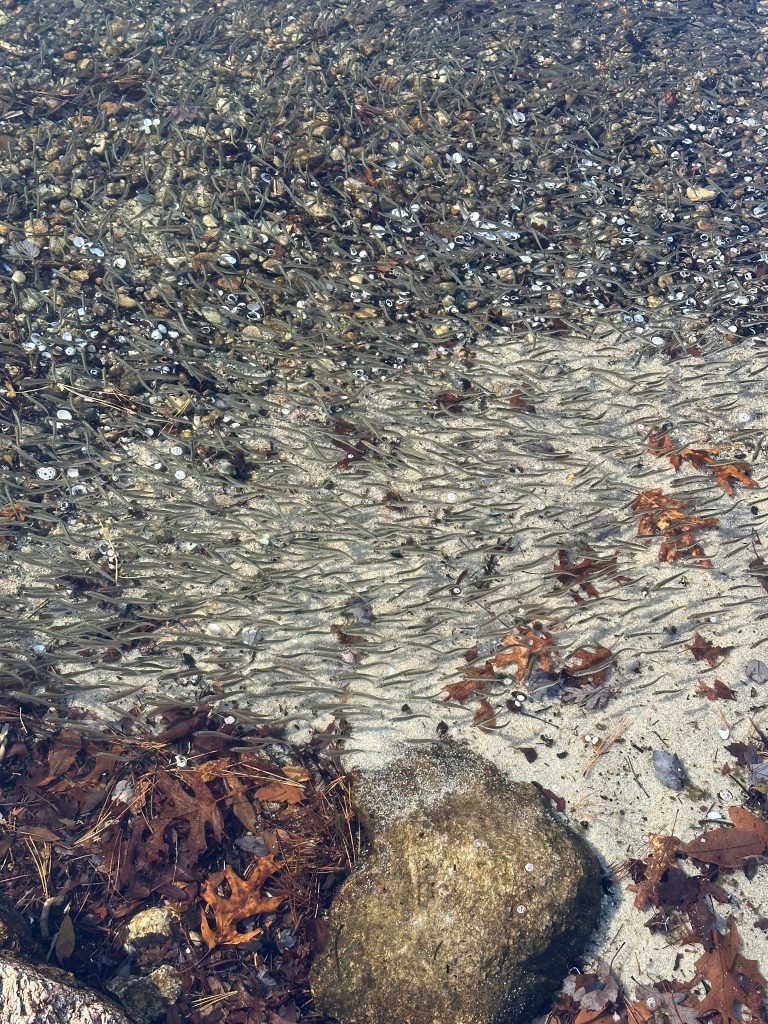
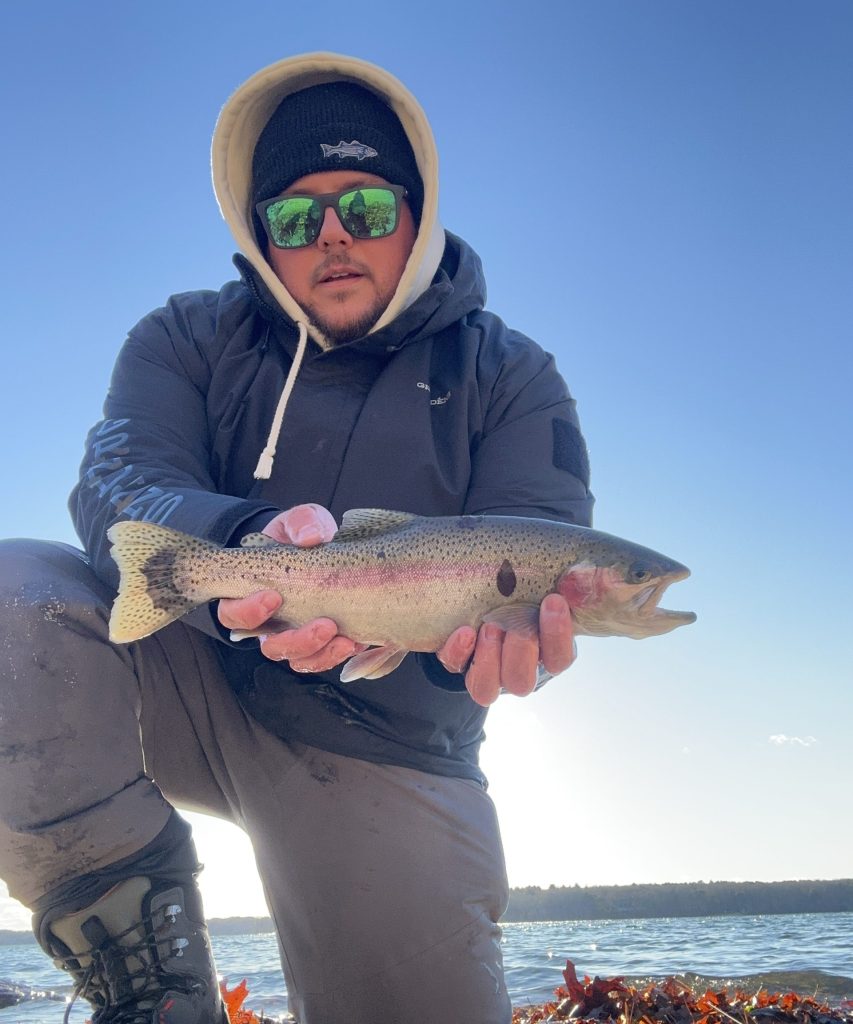
In my experience, rainbow trout fishing tends to be best on wind-blown shorelines, but that wasn’t the case earlier this week. As I waded a glassy kettle pond, rainbows were feeding super aggressively on small river herring and, at times, they crashed through schools of bait in mere inches of water. Every December, the bows seem to put on the feed bags prior to the first deep freeze of the season and it makes for some of the best trout bites of the year. On this day, the sun was shining bright and there was no cloud cover, so I tied on a trusty 1/4-ounce spoon and went to work. It sounds silly to compare the action to blitzing bass and blues, but that’s what these trout were doing. They’d corral a school of herring tight to shore and 2 or 3 fish would launch an assault that looked strikingly similar to a wolf pack of striped bass harassing peanut bunker. Whether I retrieved the spoon slowly just over bottom or ripped it in fast, the trout were undiscerning. In 90 minutes, I caught and released 15 fat rainbows that were spitting up 2- to 3-inch alewives. When they’re fired up like that, one of my favorite techniques is to keep the rod tip high and reel quickly to keep the spoon swimming just barely below the surface. An occasional twitch causes the spoon to skip and the trout, thinking they’re chasing a fleeing herring, follow and wake on the lure until it approaches shallow water and one commits to eating. It’s a unique scenario, but it’s the kind of bite that makes wading in frigid water for stockers a little more exciting.
-
Want to get in on the bite? Find an OTW-approved Charter Fishing Captain around Cape Cod and the Islands
When I returned to the same spot today (Thursday), with a stiff west wind in the face, the fish were right where I left them. Again, spoons were the key under bluebird skies but I’d imagine a small soft plastic, like the Megabass Hazedong Shad, also would have worked extremely well. Matching the size and swimming action of those small river herring seems to be of utmost importance.
It’s not just little alewives that are lingering in the kettle ponds though, and that should excite coldwater bass fishermen. A few groups of adult river herring have been swimming aimlessly along the same stretch of shore, and while largemouth bass won’t venture from their comfortable deep-water haunts to pursue those mature baitfish, slow-rolling swimbaits, blade baits, or dragging jigs over deep offshore humps and along drop-offs can dupe a late season trophy; I’d imagine that’s what the two fellows in a Bass Tracker just beyond my casting range were doing before they broke out jerkbaits and started picking through 1- to 2-pound smallmouth bass and pesky perch.
Launching a kayak or bass boat in larger ponds like Mashpee-Wakeby, Ashumet, or Johns—all of which hold healthy populations of smallmouth (and to a lesser degree, largemouth)—is probably the best bet for some fast-paced action in mid December. Sure, trout fishing in waders (or from shore) can be very productive, but a boat or kayak grants you the luxury of being able to cover more water and utilize electronics to locate deep schools of bass before safe ice takes hold. Cold water bass baits like tubes, finesse jigs, Ned rigs, blade baits, mirco plastics, and deep-diving suspending jerkbaits are all deserving of some time on your line. Trolling stickbaits, spoons, or soft plastics from a boat or kayak is also an effective technique for locating trout if the bass bite is nonexistent. Take advantage of the open water while we have it, because the forecast for the next week calls for overnight temperatures in the 20s. Let’s hope those sub-freezing temps create some safe ice on the Cape’s small bass ponds in the very near future.
If skim ice forms on our larger kettle lakes, winter fishing options will be even more limited for the time being. Should that occur, I’ll be scoping out some brackish ponds and creeks where I’ve caught white perch in seasons past. Areas with slow-moving current over muddy bottom in our tidal rivers are great places to look for white perch, as are mill ponds that receive an influx of salt water on flood tides. White perch are fun to catch and very tasty, and even though you can find them in many kettle ponds on Cape, the fish taste better when they’re eating grass shrimp, silversides and peanut bunker than… well, whatever they’re eating in fresh water. Plus, the white perch in tidal waters tend to grow bigger, and there’s always the possibility of hooking a resident striper or two in the process.
White perch aside, if local ponds are freezing over but you can’t resist the urge to fish on your free time, consider a trip to the Cape Cod Canal. According to AJ Coots from Red Top Sporting Goods, the east end continues to give up some large mackerel, sea herring, and harbor pollock. It’s been the most consistent option for a bent rod since the stripers left in November. All you need is a 7- to 9-foot spinning setup, a handful of Sabiki rigs, and time. If we’re stuck with unsafe ice for a week or two, you know where to find me.
Cape Cod Fishing Forecast
It’s difficult to predict what our freshwater fisheries will look like at this time next week, but judging by the 7-day forecast, we’re going to have more ice on the already skimming shallow ponds. However, come Thursday the 18th, we’ll see a brief 2-day stretch of daytime temperatures in the low 50s. That is the time to hit your neighborhood bass pond with a selection of finesse swimbaits, jigs, and jerkbaits. Largemouth tend to move shallow to feed on yellow perch, sunfish, shiners and alewives during bouts of mild weather, which can lead to a hot 48-hour bite window. Focus on fishing around points, ledges, and coves in proximity to deeper water as largemouth use these areas to pick up quick meals before sliding back to their winter holes. If put-ins on big lakes like Wequaquet, Mashpee-Wakeby, and Long Pond in Harwich remain clear of ice, smallmouth bass are still a reliable option for kayak and boat fishermen.
For now, the safest bet for a bent rod is to hit your local kettle pond and cast around for stocked trout. Depending on the body of water, you may encounter rainbow, brown, brook or tiger trout feeding on alewives, banded killifish, or juvenile sunfish.
Don’t count out the Cape Cod Canal, either! There’s a nice mixed bag of mackerel, sea herring and small pollock still coming over the bulkhead.