
Cape Cod Fishing Report
Baby, it’s cold outside. But, at least at the time of this writing, it’s not cold enough to put skim ice on the ponds… yet.
I feared this moment would come when, last Sunday, I stepped into a glass-calm brackish creek to cast for white perch. The surface was so glassy in fact, that I did not realize it was beginning to freeze until I heard the unmistakeable crunch of hardwater beneath my wading boots. Roughly 10 casts and 2 snagged jigs later, I decided perch fishing could wait for milder days and instead headed for the East End of the Cape Cod Canal with a Sabiki rig already tied to my heavier inshore spinning combo.
Mackerel fishing in the canal is entirely new to me and, despite some sarcastic remarks about the late-season saltwater fishery in a recent OTW Podcast, it’s something I can see myself doing each December if and when the ponds lock up. I’ve always been a fan of history and relics of the past—whether it be material things, like the record player in my living room, a bundle of vintage striper plugs, or “forgotten” pastimes like late fall mackerel fishing. However, the mackerel bite in the Canal is anything but forgotten. It still attracts a cohort of hardy individuals who brave biting wind and frigid weather to take home some fresh fish while the rest of us start to swap out corroded hooks and split rings from a season gone by. The bite was slow on Sunday, but in my rearview mirror, I finally saw a handful of macks come over the dilapidated bulkhead railing as I left for a nearby kettle pond in search of trout. A father and his two kids, both bundled up beyond recognition, jumped gleefully as the the macks dropped from their Sabiki hooks into a bucket. “That’s what it’s all about,” I thought. Cold-weather fishing, whether for trout, panfish, bass or mackerel, is as fun as we anglers make it.
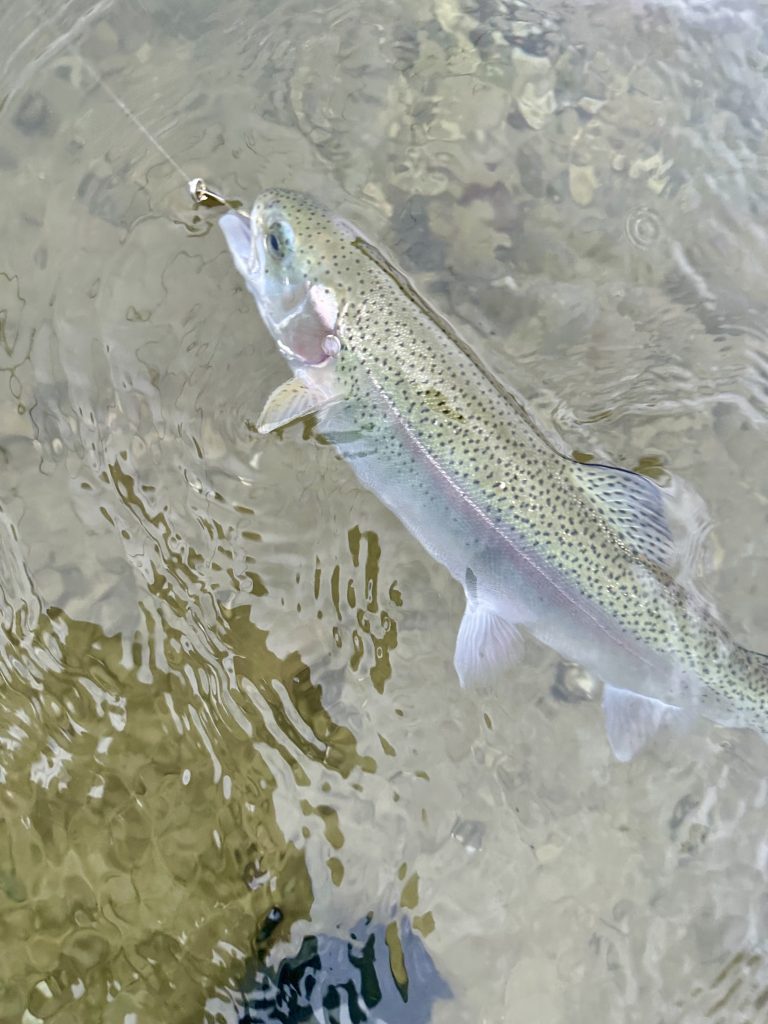
Trout fishing was far more productive than the 90 minutes I spent jigging for macks. Fish rose and boiled all over the quiet corners of the pond, but seemed disinterested in my spoons and jerkbaits. I later discovered they were groups of 6-inch brook trout, feeding alongside larger rainbow trout on banded killifish. The stocked salmonids had pressed schools of 3-inch killies against a nearshore ledge, and my gold Kastmaster did a fine job of imitating the frantic little native baitfish.
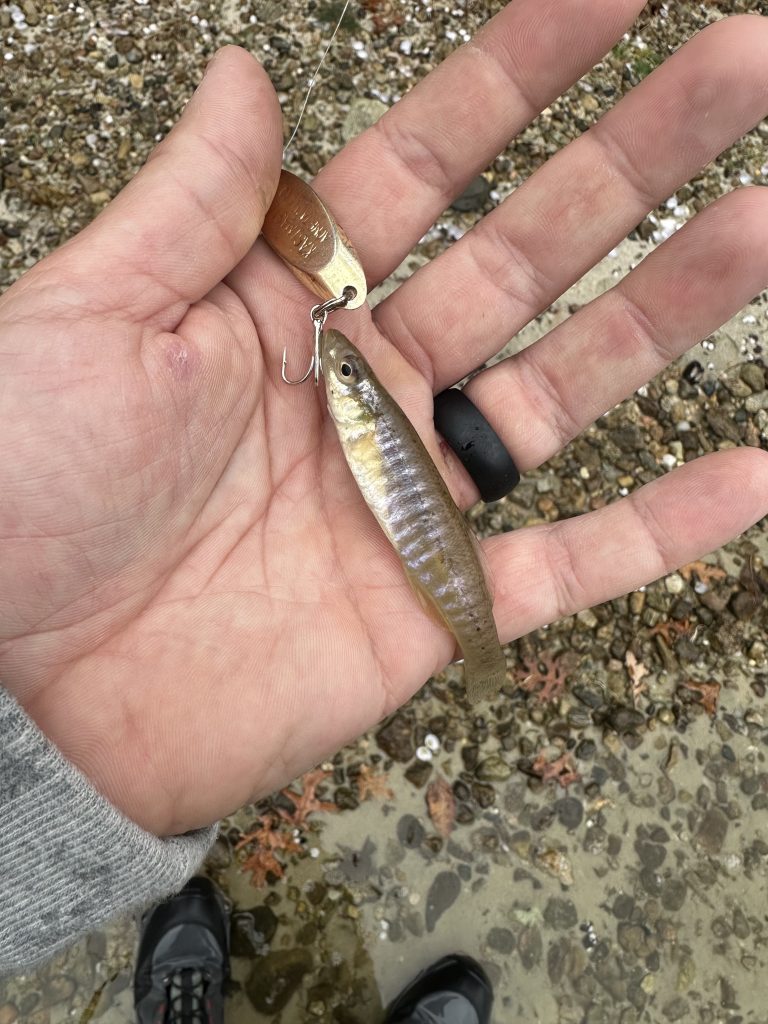
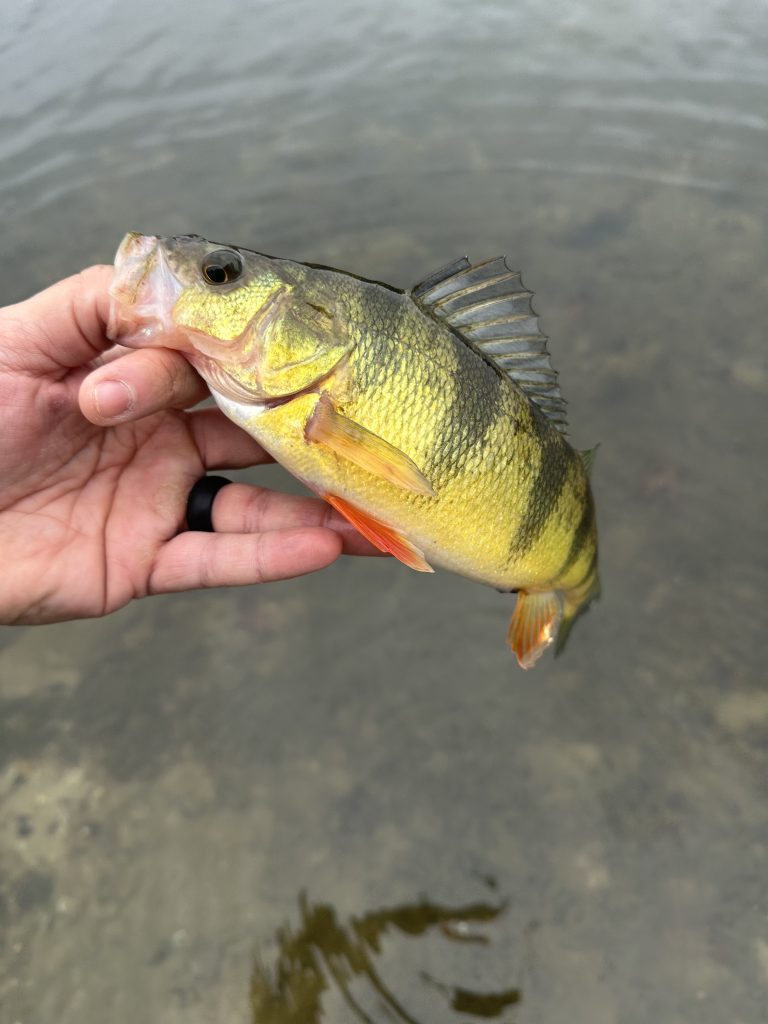
This time of year, finding bait and fish that are actively feeding is no simple task. It took quite a bit of walking and casting before I stumbled upon the action on a rocky point jutting into the main lake. Rainbows, and some of the smallest brookies I’ve ever laid eyes on, chewed until the late afternoon sun could no longer penetrate the thick cloud cover. That’s when the yellow perch came in for cleanups.
A little bit of research on which baitfish species inhabit your nearby ponds goes a long way in helping to maximize your return from late fall to early winter. Each body of water is different, but most lakes and ponds across the Cape have healthy populations of at least one of the following baitfish: alewives, killifish, golden shiners, and juvenile panfish (like yellow and white perch or sunfish). Crawfish, too. Freshwater desirables such as smallmouth and largemouth bass, chain pickerel, crappie, and stocked rainbow, brown, brook and tiger trout, depend on those baitfish throughout the winter months. After a quick Google search for what’s living in your neighborhood pond, scope it out for telltale signs of bait—nervous schools on shallow shorelines, dimples on the surface in open water, or trout rising and chasing “invisible” fish within casting range.
Next, consider how you’ll imitate the bait to set yourself up for a skunk-free outing. A few mainstays in coldwater tackle trays are small to mid-size jerkbaits—some floating, some suspending—micro plastics (paddletails, Neds, tubes, creature baits), hair jigs, and spoons of various shapes, sizes and weights. Regardless of which lure you choose, a good rule of thumb is to fish it slow. Like, really slow. Spoons may be the one exception to this rule, but even trout prefer a low-and-slow retrieve at times.
There are not a ton of fishing opportunities outside of freshwater these days. The two or three exceptions are the still-open tautog season, mackerel in the ditch, and holdover striped bass. Even though the Cape is home to a few decent resident striper populations, reports of a holdover bite are rare. Anglers are wise to keep winter striper spots to themselves to avoid putting excess pressure on these fish, which tend to inhabit more mild, muddy, and quiet backwaters. But don’t let a lack of reports from other anglers or tackle shops deter you from trying. You never know what a quick exploratory mission might unveil. Just ask Bull MacKinnon from Red Top, who caught a few schoolies up on the South Shore on Monday. Were they holdovers heading into a river? Or very late migratory fish sprinting south? Likely the former, but who knows. The point is, Bull went out looking for stripers and made his own report, and the worst-case scenario was winding up skunked and cold.
Resident stripers and freshwater fish aside, a winter headboat trip for pollock and redfish, or a last-minute tautog charter on the Helen H will tide you over for a few days (or weeks). If you’re like OTW’s Anthony DeiCicchi, who enjoys a feast of seven fishes each Christmas, a party boat outing or a trip the east end of the Canal are the best bets for a bent rod and some fresh table fare in December.
-
Want to get in on the bite? Find an OTW-approved Charter Fishing Captain around Cape Cod and the Islands
AJ Coots at Red Top Sporting Goods in Buzzards Bay said mackerel, sea herring and more recently, pollock, are chewing in the east end of the Canal. Tide makes a big difference. The pollock and sea herring were coming up around slack, AJ said, but mackerel can be caught whether the tide is running west or east. In my experience, east was more productive. Other than the mackerel men catching mixed bags of harbor pollock and herring, the main attraction is freshwater fishing for bass and trout. The upper Cape ponds have been fishing really well for rainbows and browns, with Peters, Johns, and Mashpee-Wakeby being standouts. The shop has a good selection of spoons, soft plastics and jerkbaits for trout enthusiasts.
The Helen H out of Hyannis is still running blackfish trips by reservation only, Fridays through Sundays at 7 A.M. through the end of December when the tog season closes. These trips are sailing with an ultra-limited rail, so spots may be tough to come by. Head over to their website to check availability and book your spot before the season ends!
View this post on Instagram
Christian at Sports Port in Hyannis said there’s not much happening these days except for trout and bass fishing in the kettle ponds when the weather allows. The shop carries a solid selection of freshwater lures including soft plastics, jerkbaits, spoons and more. If the ponds are free of ice, swing by to pick up some new baits before your next outing.
Cape Cod Fishing Forecast
It won’t be long before smaller bodies of water ice over, even if only temporarily. The weather forecast calls for overnight lows in the mid teens on Friday, and although it warms up again on Saturday, 16-degree air will likely cause water temps to drop to the freezing mark (or close to it). In fact, for the next week, temps continue to dip below 32 degrees on and off.
If you’re going fishing, steer clear of smaller bass and pickerel ponds, which are the first to lock up with ice. Trout are more active in cold water anyway, and most of the stocked kettle ponds from the upper to outer Cape are significantly larger than the average bass bog, providing better opportunities to find open water, catch fish, and stave off cabin fever. Dress in warm layers, bring a variety of lures to cover all your bases, and try to minimize fish handling out of water when practicing catch and release. Sub-freezing air temperatures can be damaging to the fragile gills of trout if kept out of the water for too long. And don’t forget a net (like me) if you want to feel your fingers for the rest of the day.
To keep your guide train from freezing over, apply a delicate spritz of PAM cooking spray or thin layer of vaseline to each individual guide.
Thanks for reading, and for bearing with us through the earliest leg of the toughest months of the year. Here’s to either a mild winter that allows us to keep casting, or a winter cold enough to enjoy some ice fishing on Cape Cod.