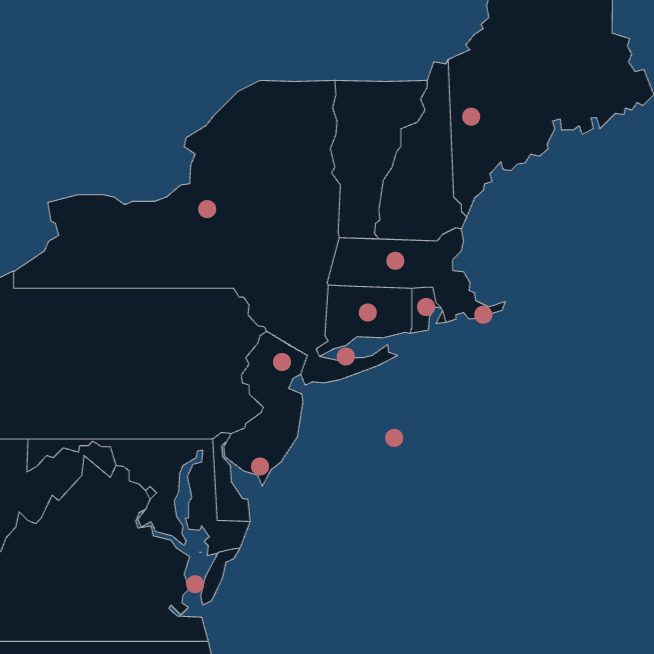

Maryland and Chesapeake Bay Fishing Report
Captain Jamie Clough of Eastern Shore Light Tackle Charters reported that the striped bass bite has been sporadic each day. They’re still finding good numbers of fish, but it requires a bit of searching. The bass are constantly moving between deep and shallow areas, searching for bait. “One thing for sure,” Captain Jamie added, “they’re moving fast heading for the rivers.” The fish they have been catching in deeper water have been on big baits (namely menhaden), and when they find them in the shallows, they’re grubbing on whatever small bait is available. Although they’re racing for the spawning rivers, there’s still plenty of time to catch and release a trophy in the bay this spring. The skipper has some prime April dates available for both boats, so head to their Facebook page for availability, rates, and contact info to get a trip on the books.
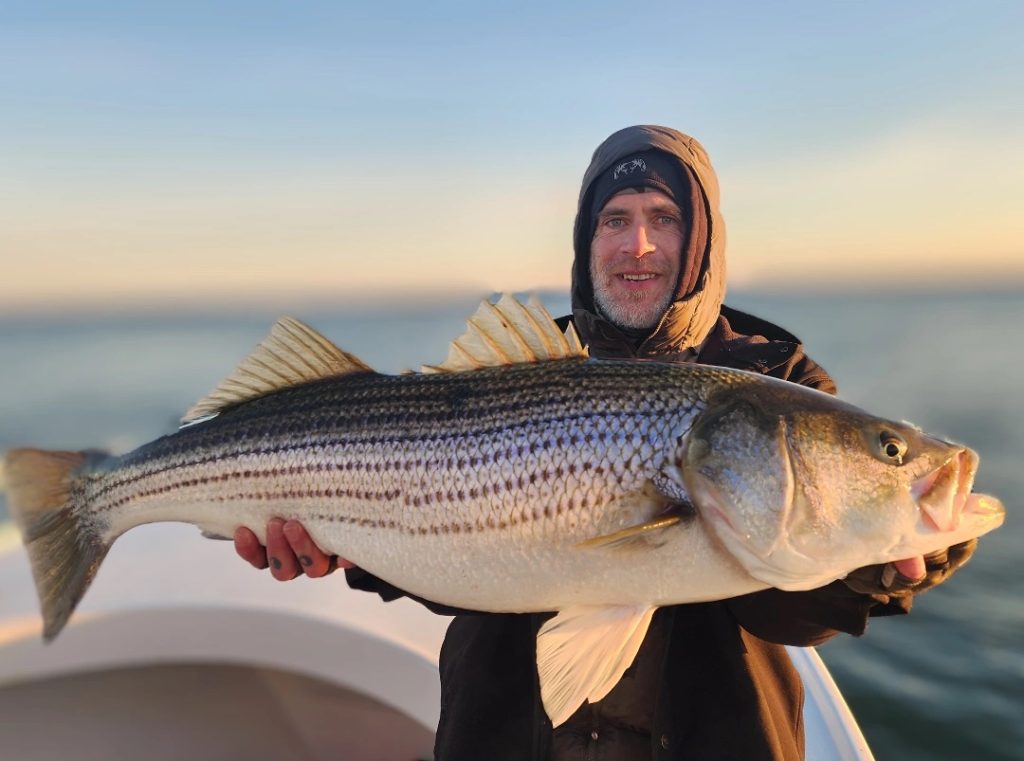
From Ocean City, Taylor Bakke of Always Bent Fishing OC reported the striper bite is noticeably improving due to some warmer weather and an influx of bunker over the past week. The local back bays are producing fish, but putting together a pattern has still been very difficult. One day the fish are chewing toward the end of the incoming tide while other times, the early outgoing seems to be the only bite window. For the most part, he said, casting paddletails and X-Raps from the sod banks around creek channels and choke points is getting the job done. Anglers in boats who are fishing around the bridges from Ocean City to Sinepuxent are experiencing more consistent action on jigs during evening/nighttime outgoing tides. In other news, the first flounder of the season was caught yesterday by Jamie Metz, just behind the airport, which is a sign that water temps are finally reaching a more appropriate range for this time of year.
Anglers Sport Center Fishing Report – Annapolis, MD
Written by Anglers Fishing Manager & OTW Columnist, Alex Gallardo-Perez.
Striped bass have been on the move, especially with the full moon this week. Some anglers ventured out at night when the tides were peaking and got into some quality bass over 40 inches, with a few smaller fish mixed in. The bass are moving fast into major spawning rivers in the area, so fishing at the mouths of the rivers like the Choptank and Patuxent, and Eastern Bay, can be productive. Guys chunking bunker and using whole bloodworms at Sandy Point have also connected with a few big fish over the past week, mixed in with a few small blue catfish.
White perch fishing is in full swing; the bite finally started to pick up in the western shore rivers like the Patuxent and Potomac. Most anglers are using bottom rigs with bloodworms and grass shrimp; some folks also like to use cut Razor clams. Most of the Eastern Shore rivers are at the peak of the spawn, so now is time to get out there.
Hickory shad and some American shad have arrived in most of the tidal rivers; the Potomac has seen the first wave of fish show up over the past week. The fishing has not been red hot, but the fish are there and it will continue to get better over the next two weeks. Over on the Eastern Shore, the Pocomoke and Choptank rivers also saw a small push of shad; shad darts, small spoons and small plastics are getting the job done.

Maryland DNR Fishing Report
Maryland DNR Fishing Report is written and compiled by Keith Lockwood, fisheries biologist with the Maryland Department of Natural Resources. Read the full DNR report here.
Maryland’s portion of the Chesapeake Bay from the between Abby Point to Worton Point in the upper bay down to the Virginia state line and the Potomac River will be open to catch-and-release fishing for striped bass through April 30. The DNR website has a wealth of information about regulations for this recreational striped bass season.
Middle Bay
Anglers looking for some striped bass catch-and-release action will be out on the open waters of the Bay. Many will be trolling along the steep channel edges with barbless bucktails dressed with sassy shads in chartreuse or white – just remember, no more than six lines and no stinger hooks. Jigging with large soft plastic jigs will also be a popular way to fish.
Since this is a catch-and-release season and many of the fish being caught will be large, have a plan of who is doing what as you begin to fish. The angler will most likely want a picture; someone should be ready to assist getting the fish in the boat with a rubber landing net. The fish should be held horizontally by the angler, and someone should be designated to take the picture before the fish is brought into the boat. Get the fish back into the water as quickly as possible. The DNR website provides good catch-and-release information for anglers.
The white perch spawning runs are providing a lot of fun action for anglers in the Choptank River and Tuckahoe Creek this week. The perch have traveled far up the river and creek this week and the larger females are now filling in behind the smaller male white perch.
Denton, Greensboro on the Choptank, and below Hillsboro on the Tuckahoe are good places to fish for them. Casting small 1/16 or 1/8 jig heads tipped with grass shrimp, lip hooked minnows, or a piece of bloodworm close to the bottom are a very popular way to fish for them. White perch anglers in the Denton area may find themselves catching small blue catfish that measure about 10 inches. Please do not release them back into the river, just hold them for disposal.
Lower Bay
The open waters of the lower Bay perhaps holds the greatest opportunity to catch and release striped bass this week. All striped bass heading to the spawning rivers up the Bay must pass through it. Trolling along the steep channel edges will be a popular way to intercept them. Just be sure to handle them with care when practicing catch-and-release. The main portion of the tidal Potomac is also open to catch-and-release fishing. Jigging with large soft plastic jigs will be a popular way to fish for light tackle anglers. The other tidal rivers in the region and Maryland’s tributaries remain closed to all striped bass fishing until May 1.
The annual spawning runs of hickory shad have arrived in the Potomac River in the District of Columbia at Fletchers and Little Falls and the Mason Branch of Mattawoman Creek. Casting small flashy spoons, small shad darts or brightly colored flies is a fun way to catch them on light tackle.
Blue catfish are at the top of the list regarding availability this week. The tidal Potomac is full of them as are the Patuxent and Nanticoke rivers. The blue catfish have an appetite this time of the year and will aggressively go after most any kind of cut or scented baits. Anglers are urged to use circle hooks when fishing for them in the tidal rivers this month.
Atlantic Ocean and Coastal Bays
Surfside anglers continue to keep watch for the first black drum to move along the beaches of Assateague. So far clearnose skates and dogfish are keeping anglers busy. The Ocean City fishing community waits for the first reports of flounder being caught inside the inlet, it very well may happen this weekend. Water temperatures are still cold.
Striped bass are providing exciting catch and release action at the Route 90 Bridge and there should be some action at the Verrazzano Bridge piers as well. Anglers are fishing during the evening hours with paddletails, soft plastic jigs near the bridge piers and marsh sedge banks. Most of the striped bass being caught are below the 28”-inch minimum, but occasionally a fish falls within the 28-inch to 31-inch slot.
Fishing for tautog remains good at the offshore wreck and reef sites for those that can get out to fish for them. The two most popular party boats are out of the water for pre-season maintenance preparing for the May 15 black sea bass opening. A few charter boats and private boats report good catches. As water temperatures warm this month, tautog will move into the Ocean City Inlet and provide action for shore bound and small boat anglers.
Maryland DNR Fishing Report is written and compiled by Keith Lockwood, fisheries biologist with the Maryland Department of Natural Resources. Read the full DNR report here.