
Maryland and Chesapeake Bay Fishing Report
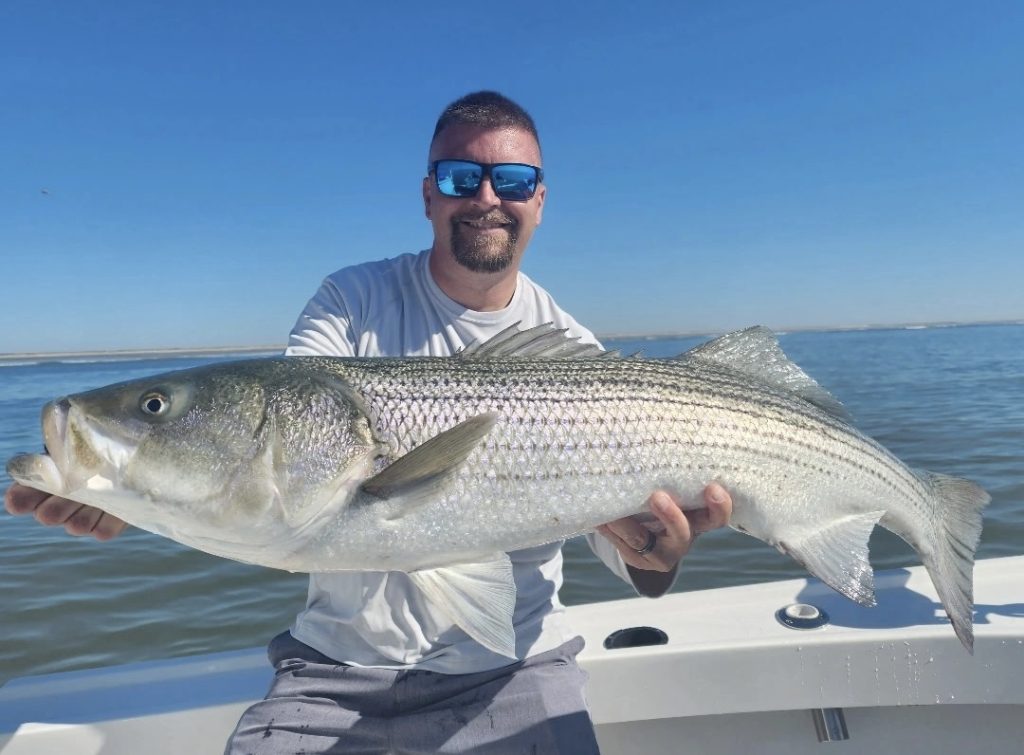
Captain Jamie Clough of Eastern Shore Light Tackle Charters shared a very similar report to last week. Post-spawn striped bass continue to drop out of the rivers in force and head south toward the Chesapeake Bay Bridge Tunnel to begin their spring migration up the coast. The skipper said they are still encountering mixed size classes of fish around the river mouths, but the big girls are the ones they’re after. According to Capt. Jamie, the larger stripers are showing a clear preference for big paddletails and walk-the-dog style topwater plugs that imitate adult bunker. The program won’t change much over the next few weeks; the only change will be his location. While Capt. Jamie heads down to Cape Charles this Sunday to target a mix of big red drum and trophy stripers in May, Capt. Mike will continue running catch-and-release trips in Maryland for post-spawn fish in the Middle Bay region. Big bass and drum have already shown up in the lower Bay, and the skipper is eager to intercept those migratory cows on their way out while reds continue to move in.
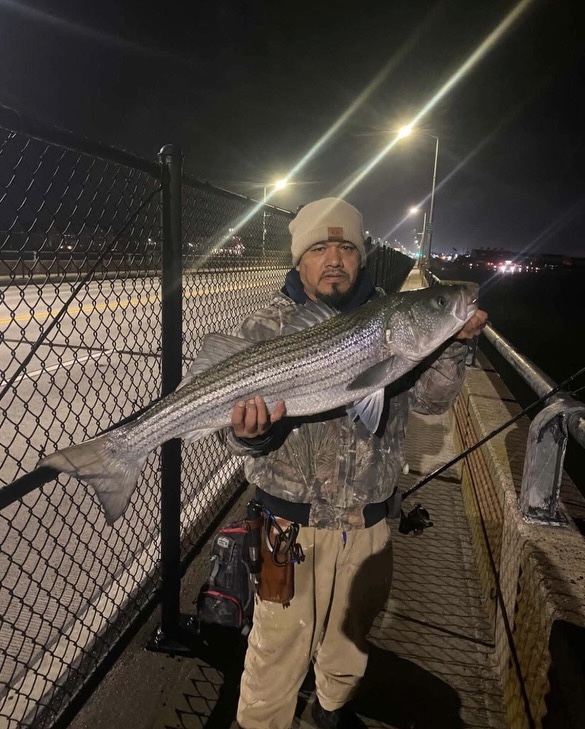
From Ocean City, Taylor Bakke of Always Bent Fishing OC said that the local fishing is getting better on all fronts. Flounder are becoming more abundant by the day—he managed a 17.25-inch keeper flattie for the table earlier this week among a handful of short fish. Tautog fishing in and around the inlet has shown signs of improvement as well, with sand fleas, shrimp, and green crabs all producing bites. But the real highlight has been the striped bass action. The bridges are fishing very well after dark, with bass running the shadow lines and picking off bait on falling tides. Local anglers, like Bakke’s friend Rolando Picardo, have been fishing soft plastic paddletails on jigheads from the bridges with much success. The fish have ranged from the low-30-inch to 40-inch class. There are also plenty of bass to be had in the back bays, he added, and although the bite has been consistent, the fish are generally smaller, ranging from 18 to 25 inches. Bakke also mentioned that Captain Jeff Rosenkilde of Bad Habit Sportfishing, who has been fishing the marshes for bass, landed an unexpected 22-inch speckled trout at his striper honey hole—a nice surprise mixed in with the schoolies, and the first trout they’ve heard of or seen caught in the area this year. There’s plenty of variety for inshore anglers around Ocean City as spring conditions finally settle in.
Maryland DNR Fishing Report
Maryland DNR Fishing Report is written and compiled by Keith Lockwood, fisheries biologist with the Maryland Department of Natural Resources. Read the full DNR report here.
Middle Bay
Anglers are seeing increasing numbers of large post-spawn striped bass leaving the Choptank River this week. Water temperatures in the upper Choptank hit 68 degrees last week and have dropped slightly due to cooler weather. Bay water temperatures are around 60 degrees. There was spawning activity last week that ended last Saturday, and those fish will be found in the middle and lower Bay regions this week.
Trolling along the edges of the main channels is always a popular tactic, but the shallower waters should not be overlooked. Trolling bucktails with sassy shads in chartreuse is very popular, and jigging with 6-inch soft plastic jigs is also popular when fish can be spotted on depth finders. Anglers are urged to keep watch for schools of menhaden that can lead to finding striped bass nearby.
May 1 will be here sooner than we think, at which time anglers will be able to keep a striped bass measuring between 19 inches and 24 inches in the area below the Brewerton Channel south to the Virginia line, with exception to the tidal rivers. To be informed on where to fish, check the striped bass regulation map site.
White perch are making their way down the spawning rivers and will soon spread out to their summer habitat locations around the bay’s tidal rivers and creeks. They tend to be in deeper waters as they move downriver so a bottom rig baited with either grass shrimp, minnows or pieces of bloodworm.
Lower Bay
Anglers looking for striped bass catch and release action this week will see post spawn striped bass moving out of the Choptank, Nanticoke, Patuxent, and Potomac rivers. The fish will not stick around long as they head south towards the ocean. The only thing that will cause them to pause are the schools of menhaden that have moved into the lower bay region. Find the schools of menhaden and you will find striped bass.
Often the schools of menhaden get swept along in the swift current along channel edges, but they can be found in shallower waters as well. Trolling and jigging along the channel edges is a very popular way to fish this week for striped bass. The shallower waters along the Bay shores will be a good place for light tackle anglers to cast a variety of lures for striped bass passing through those areas.
Catch-and-release fishing for hickory shad continues to be very good this week in the Potomac River within the District of Columbia and the Mason Branch of Mattawoman Creek. American shad are also starting to show up in the Potomac River for anglers fishing larger shad darts in the deeper waters.
This month is a great time to fish for blue catfish, the water temperatures are just right, and the catfish are very active. The Potomac from the Route 301 Bridge to the Wilson Bridge, the Patuxent from Benedict to Jug Bay and the Sharptown/Marshyhope area of the Nanticoke are excellent places to fish for them. Anglers are reporting increasing numbers of blue catfish in the Wicomico and Pocomoke rivers.
Atlantic Ocean and Coastal Bays
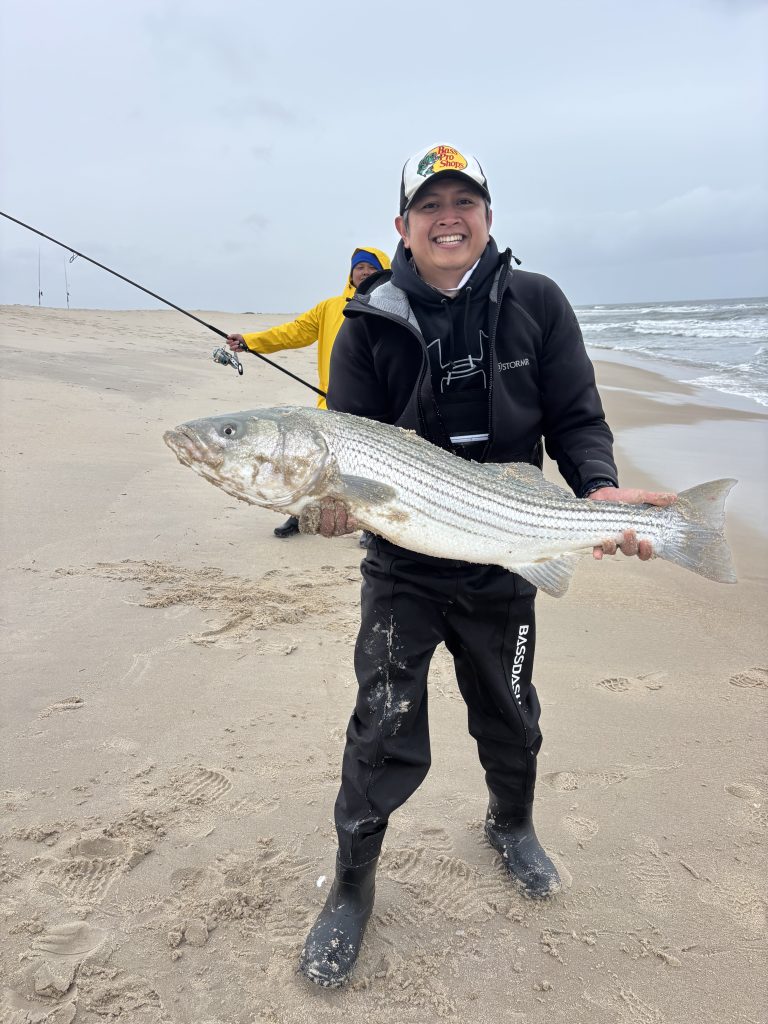
Surf anglers are enjoying excellent fishing for black drum this week along the beaches of Assateague. Sand fleas, peeler crab and clams make good baits. Anglers report there are plenty of dogfish and clearnose skates in the mix. If the dogfish are large enough to fillet the meat makes a wonderful treat when placed in a smoker or used as fried fish nuggets. If they have pups, ammonia levels can be high and sometimes soaking the fillets in milk will help. Anglers are also catching striped bass that are moving up the coast, the creel limit is one per day, measuring 28-31 inches.
Flounder continue to move through the Ocean City Inlet and are providing good fishing in the inlet and the channels leading from the inlet. Tautog are being caught in the inlet and Route 50 Bridge areas, near rocks, bulkheads and dock and bridge piers. Sand fleas have been the most popular bait.
Fishing for striped bass is providing a lot of fun fishing in the inlet area, and the Route 90 and Verrazzano Bridge piers. Casting paddletails and soft plastic jigs have been the most popular way to fish for them. The action is mostly catch and release since striped bass fall short of the 28-inch minimum.
Local charter and private boats have been venturing out to the inshore and offshore wreck and reef sites in search of tautog. Results have been good lately and anglers are finding flounder as well.
Public notices have been sent for the 2026 black sea bass season and summer flounder season – check DNR’s public notices webpage for all updates.
Maryland DNR Fishing Report is written and compiled by Keith Lockwood, fisheries biologist with the Maryland Department of Natural Resources. Read the full DNR report here.