
Maryland and Chesapeake Bay Fishing Report
From Ocean City, Taylor Bakke of Always Bent Fishing OC shared a similar report to last week, noting that there are still tons of large striped bass moving through the area from the surf to the inlet. Most surf anglers are soaking bait like chunked menhaden or clams. Bakke added that there is a slightly smaller class of fish—between roughly 20- to 26-inches—around the bridges and in the back bays. The flounder bite is going steady, although heavy wind this week has churned up the inlet and nearby channels a bit, which temporarily created some dirty water and less-than-ideal conditions. Tautog fishing has been good locally, too, and the offshore wrecks are giving up some quality sea bass already.
Captain Monty Hawkins of Morning Star Fishing out of West Ocean City ran the boat offshore for the first time this year after months of off-season maintenance, and is planning to open sea bass trips through June in the near future. The skipper noted that sea bass have not yet moved very far inshore, but they did manage to secure a few fillets. Head over to the Morning Star’s website for contact info to reserve your spot on the rail for a future trip.
Captain Jamie Clough of Eastern Shore Light Tackle Charters said they have been off the water and unable to run striped bass trips this week due to high winds and poor weather. The skipper said Captain Mike hopes to be back to chasing fish in the middle Bay region as soon as these less-than-ideal conditions dissipate.
Captain Walt of Light Tackle Charters out of Crisfield said that he’s been able to sneak in a few trips between the windy days, of which there have been many. One of the captain’s recent charters caught the first speckled trout of 2026 for his boat, but they have been mostly catching striped bass. All of his trips have been focused on fishing the shallows with artificials, from soft plastics on lightweight jigs to topwater plugs. If shallow, light-tackle striped bass fishing is your speed, head to Capt. Walt’s website and give him a shout to book a trip.
Maryland DNR Fishing Report
Maryland DNR Fishing Report is written and compiled by Keith Lockwood, fisheries biologist with the Maryland Department of Natural Resources. Read the full DNR report here.
Middle Bay
Many anglers are focusing on targeting striped bass within the slot parameters, so they are trolling umbrella rigs with medium sized lures or jigging and casting with medium sized baits. Medium sized bucktails outfitted with sassy shads or twistertails are popular trailers on umbrella rigs. Jigging with 3/4-ounce soft plastic jigs along channel edges when fish can be spotted suspended off the bottom is popular. Casting paddletails near shoreline structure is also a productive way to catch a striped bass within the slot size. The Poplar Island rocks, Thomas Point Light, and the rocks in front of the Naval Academy are a few popular areas. The Choptank River is still closed to the targeting of striped bass.
White perch are showing up in the lower sections of the region’s tidal rivers and are beginning to provide good fishing in favorite locations. Prominent points, deepwater docks and piers, and shoreline structure are good places to target. Often the shallower shoreline water are best targeted during the morning and evening hours by casting small paddletails, jigs, spin jigs and spinners. Deeper waters can be fished with grass shrimp or pieces of bloodworms on a simple bottom rig.
Blue catfish can be found in all the region’s tidal rivers, but the Choptank holds the greatest numbers. The general area from Cambridge to Denton holds large numbers of blue catfish. The salinities in the river are high due to the lack of rain so the area above the Dover Bridge holds a lot of medium sized blue cats. The larger blue cats tend to be a little farther downriver.
Lower Bay
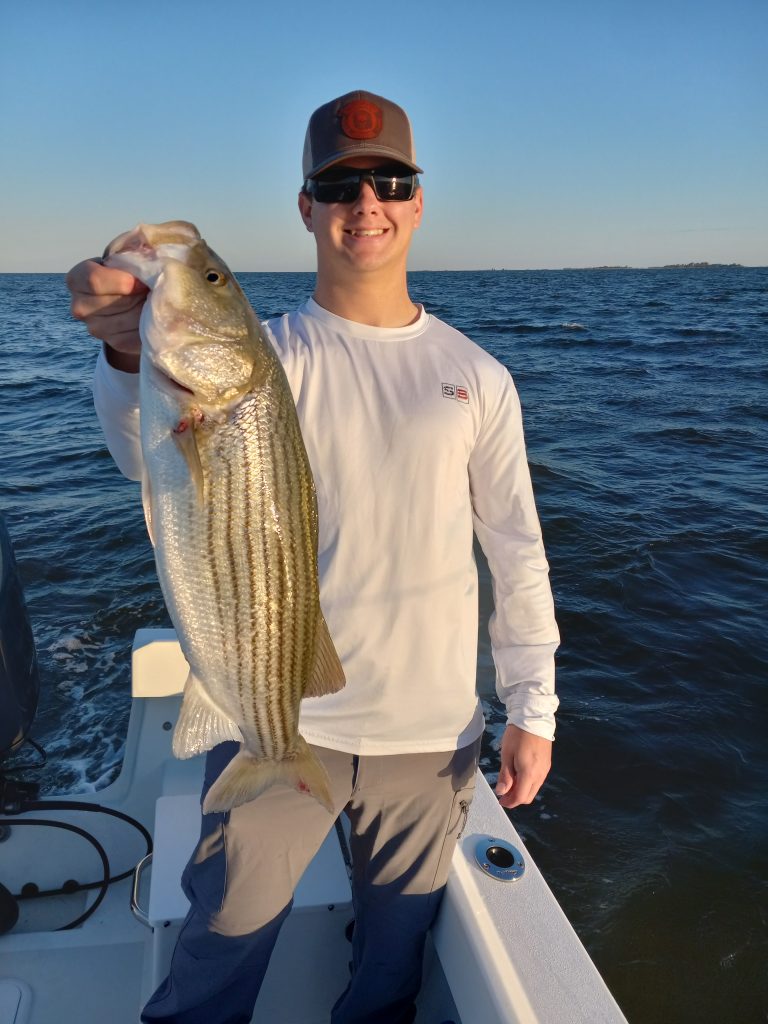
Striped bass anglers in the lower Bay enjoyed their first weekend when they could keep a fish that measured within the 19- to 24-inch slot. Many were trolling with umbrella rigs, while others jigging with soft plastic jigs or fished in the shallower waters of the lower Bay shorelines. Good success was found casting paddletails and poppers in the morning and evening hours.
The Potomac River will not be open to striped bass fishing until May 16. The tidal rivers in Maryland are still closed to targeting striped bass.
The channel edges off Cove Point and the channel edge from the 76 Buoy south to the 72B and 72A buoys were good places to troll. Jigging along those same channel edges where fish that are suspended off the bottom can be located with depth finders also worked well for anglers. Soft plastic 3/4 -ounce jigs in the 5-inch to 6-inch size range and in a variety of bright colors are popular. The cuts through Hoopers Island, the Tangier Sound sedge banks, and the Cedar Point rocks are locations that proved rewarding for anglers casting paddletails, jigs, and poppers this past weekend.
Black drum are reported to be caught in the Tangier Sound area and near the Target Ship at the Mud Leads, which is just north of the Target Ship. Anglers are spotting them on depth finders and using soft crab baits. Large red drum should not be too far behind.
Atlantic Ocean and Coastal Bays
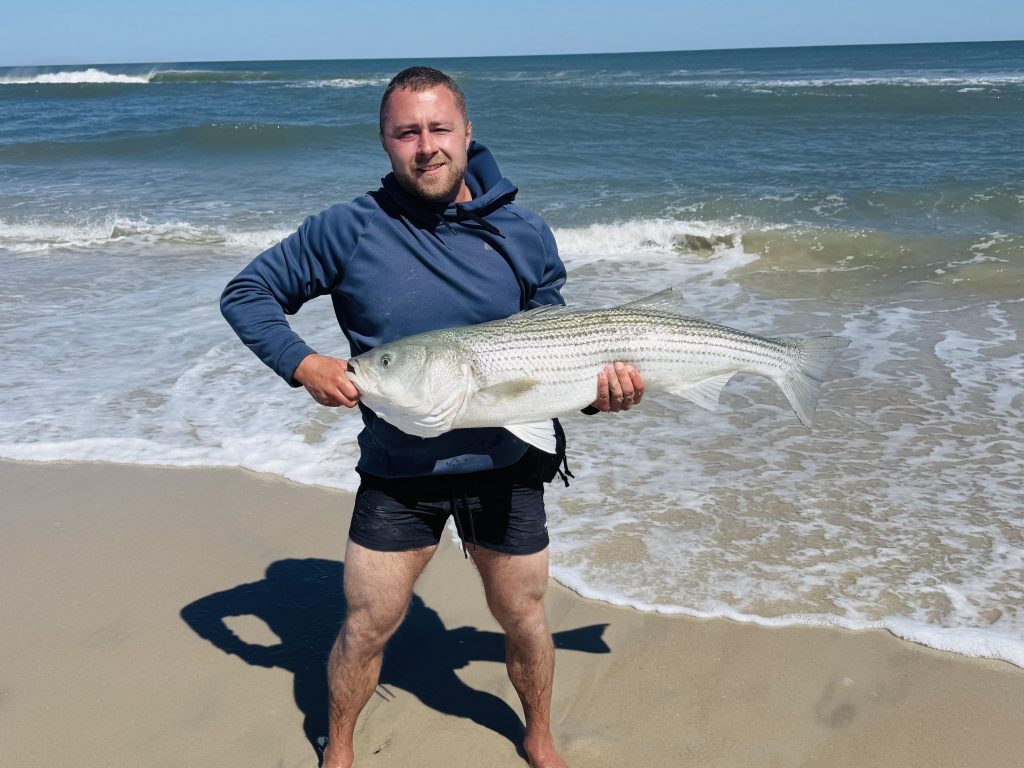
Surf anglers are enjoying a steady run of striped bass, black drum and large bluefish along the beaches of Assateague and Ocean City. The striped bass are usually measuring far beyond the legal slot but provide a catch-and-release thrill. The black drum are of medium size, and the bluefish are large but thin. The striped bass and bluefish are being caught on cut bait, the black drum on sand fleas and clams. Dogfish and clearnose skates are unfortunately present.
At the inlet and Route 50 Bridge area, anglers are catching tautog, flounder, and large catch-and-release striped bass. The tautog are being caught on sand fleas, the flounder on Gulp baits and squid strips, and the striped bass by drifting cut bait. Small striped bass that often fall short of the 28-inch minimum are being caught by casting soft plastic jigs near dock and bridge piers, bulkheads and jetty rocks.
Flounder continue to move through the inlet into the back bay areas. The channels leading from the inlet are the best locations to drift for flounder. Striped bass are providing plenty of fun catch and release fishing at the bridge piers of the Route 611 and Route 90 bridges. Casting paddletails and soft plastic jigs are the most popular way to fish. Most of the striped bass fall short of the 28-inch minimum.
Anglers headed out to the offshore and nearshore wreck and reef sites are enjoying good fishing for tautog, black sea bass, and a mix of flounder when targeting them. The 2026 black sea bass regulations for federal waters finally came into place with a 15-fish per day creel limit per angler and 12.5-inch size limit. The 2026 black sea bass season will run from May1 through December 31. The tautog season will be open until May 16 and then be closed until July 1.
Maryland DNR Fishing Report is written and compiled by Keith Lockwood, fisheries biologist with the Maryland Department of Natural Resources. Read the full DNR report here.