

Maryland and Chesapeake Bay Fishing Report
Captain Jamie Clough of Eastern Shore Light Tackle Charters said they were still catching gator bluefish earlier this week, but a lot of the bigger blues seem to have vacated the area in the last 4 or 5 days. Before the fish moved on, they were on a steady pattern—the blues were eating full-size bunker and spot and, at times, they’d find them blitzing on silversides. Captain Jamie and Captain Mike continued to catch them on Z-Man soft plastics and jigs, which allowed them to target the blues throughout the water column. They’ve also spent some time focusing on red drum, but the action was spotty, with reds showing up in small batches at certain times, making it difficult to pattern a bite. For now, there are still smaller bluefish in the 2- to 4-pound range that are keeping them busy while the striper fishery is closed. The smaller blues, Captain Jamie added, are keyed-in on smaller bait like silversides and sometimes peanut bunker. The same 5-inch Z-Man paddletails that were catching gators are working just fine for these cocktail bluefish, and the skipper said they’re seeing Spanish mackerel in the mix as well. They’ll continue to chase bluefish, Spanish mackerel, and occasionally, red drum, for the remainder of the month until the striped bass fishery in the bay reopens. To get in on the bite, head to the ES Light Tackle Charters Facebook page for trip rates and contact info to inquire about their upcoming availability.
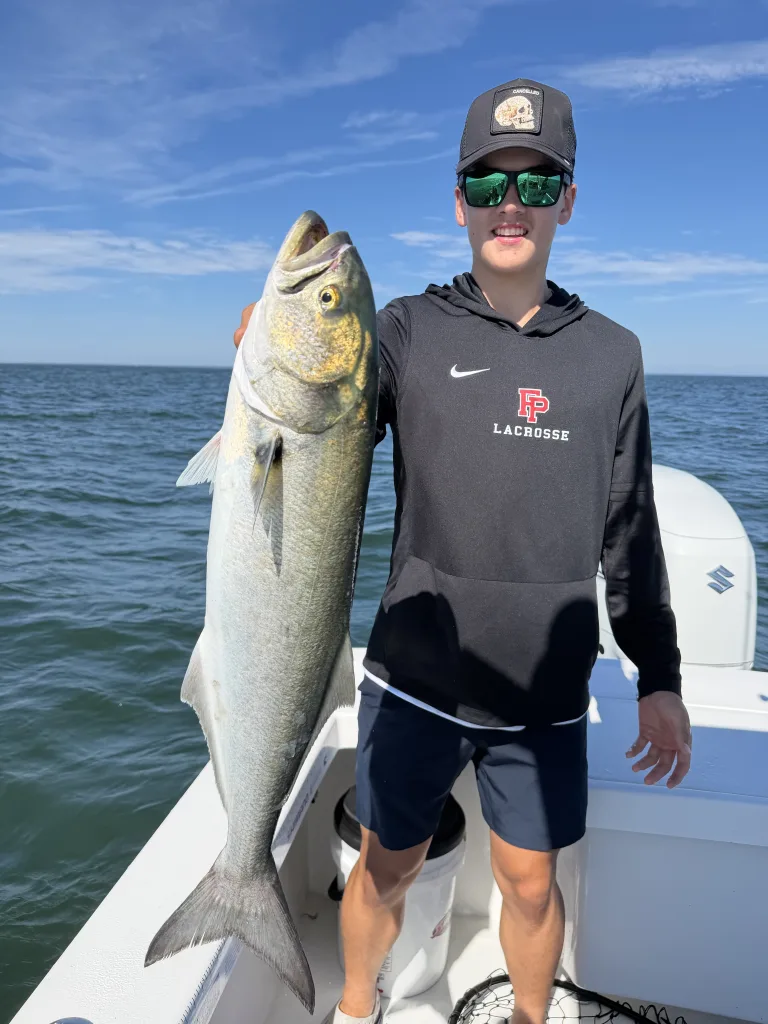
From Ocean City, Taylor Bakke of Always Bent Fishing OC reported a banner day of bluefishing with family out front on Tuesday. Bakke said they had good conditions to hunt for cobia on the wrecks, but the bluefish bite was so good and with his son and nephew on board, they decided to keep the young ones entertained. Their crew of four doubled up and tripled up on bluefish all morning, and wound up catching and releasing upwards of 40 cocktail blues on trolled spoons and jigs with light spinning tackle. Bakke said they could have spent some time casting to breaking fish, but trolling was producing steady results and it’s a safer/easier option for the kids on board. Plus, trolling metals like Drone or Clark spoons is a great way to search for Spanish mackerel which, unfortunately, were M.I.A. on their boat. However, Bakke noted there were other boats that did connect with mackerel. In addition to bluefish and Spanish mackerel, there are sheepshead, triggerfish, and flounder to play with inshore this week. The triggers and sheeps are available in and around the OC inlet, from the bridges to the jetty rocks and out to the nearshore wrecks. Flounder (or fluke), he added, are still available in the back bays, although warm water temperatures are sending them in search of cooler, deeper environs. The back bays are mostly dominated by croaker now, so Bakke suggests fishing closer to the inlet for fluke, where cooler ocean water should keep them biting. If you’re fishing structure for fluke near/in the inlet, it’s also worth bringing some sand fleas or crabs for sheepshead. And of course, there are resident schoolie striped bass in the area, but they are most active after dark and during specific stages of the tide when there is an influx of cooler water. Try jigging for stripers when low light conditions line up with a high incoming into early outgoing tide for the best odds. Offshore, mahi are plentiful from the canyons to the midshore grounds, and there are a few bluefin kicking around in the same areas. Boats out of Ocean City are catching the occasional bigeye or yellowfin, but there’s not a solid, reliable bite pattern at the moment. Check out the Always Bent YouTube Channel and Instagram page to stay in the loop with the local fishing scene, from inshore bites to offshore tournament coverage and more.
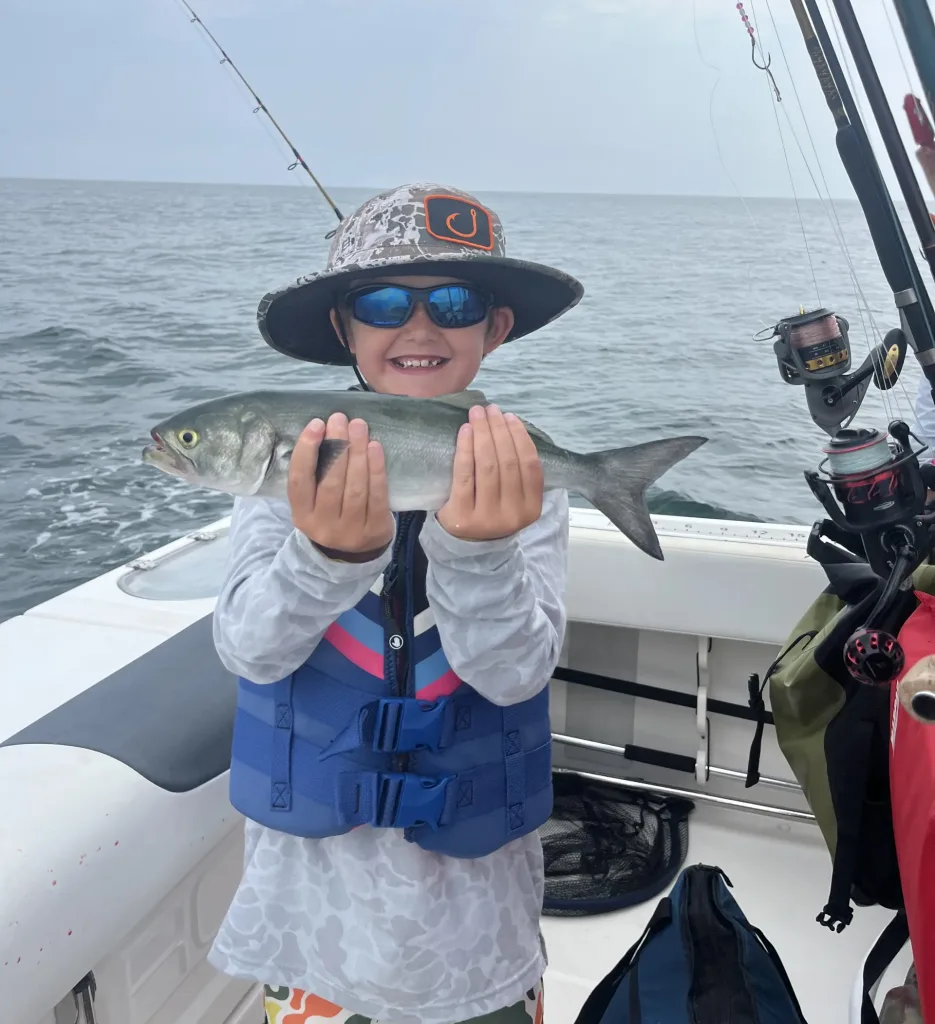
Captain Monty Hawkins of Morning Star Fishing out of West Ocean City reported a productive week for both their mahi trips and sea bass/fluke trips. Last Thursday’s mahi trip yielded tight lines right from the jump, although those early mahi left much to be desired in the size department. The group on board kept grinding away for bites, and the fish obliged, with the captain calling it their new “best day” of mahi fishing in two years. On Friday, they shifted gears to bottom fishing and found sea bass and flounder more than willing to chew. One angler was into double-digits of sea bass before 11 a.m. and the group had collectively landed a half dozen keeper fluke by then. The end result was a few limits of fluke and sea bass around the rail. Saturday was more of the same, although when Captain Monty stopped at a spot that gave up more keeper sea bass than throwbacks on Friday, few sea bass were chewing at all. Thankfully, fluke picked up the slack. Good numbers of keeper flounder came up throughout the day, including one limit, and they even tallied a few mahi. It wasn’t until Tuesday that the Morning Star sailed for mahi again, and the skipper described the fish as fussy, which led to a sporadic bite. There were plenty of mahi schools but few were willing to eat until the drift speed picked up, which put the fish on the feed. Again, anglers on the rail experienced a fantastic day of fast-paced mahi fishing—so much so that they had a few anglers approaching their limits. Finally, on Wednesday’s mahi trip, after nearly a week of steady results, the fish were few and far between, which prompted the skipper to have the mates equip everyone with bottom fishing gear. Some nice fluke and sea bass wound up hitting the deck before they called it a day and headed for port. With the exception of one day, mahi, sea bass, and fluke fishing have been well worth the effort. The Morning Star will continue to sail for mahi every week, Tuesday through Thursday, until early September. Sea bass trips (with flounder in the mix) will be offered Friday through Monday each week. Call 443-235-5577 to reserve your spot on the rail and head to their website for more trip information.
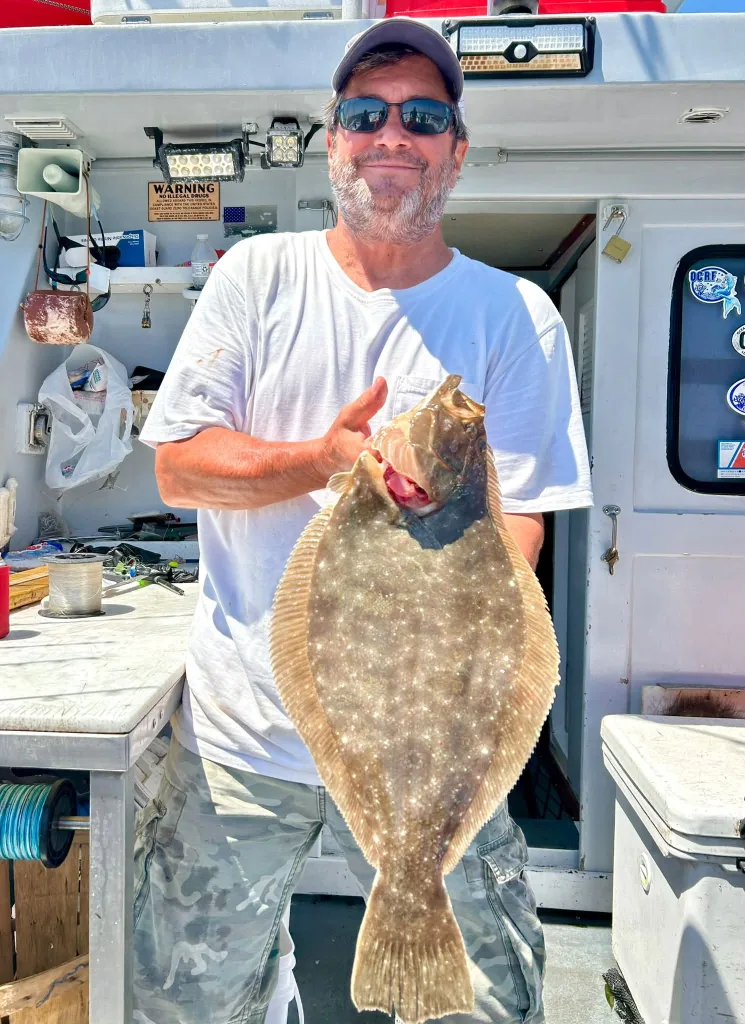
Anglers Sport Center Fishing Report – Annapolis, MD
Written by Anglers Fishing Manager & OTW Columnist, Alex Gallardo-Perez.
With the striped bass fishery closed for the month, most anglers have turned to bottom fishing for some of our summer visitors like spot and croaker, or casting/trolling for bluefish. Some guys have gone north to the Patapsco River, Chester, and Pooles Island area to go after catfish, and many are finding a good amount of channel and blue catfish in those areas with a few white catfish mixed in. Cut baits like bunker, spot, and eels have been the ticket to get them to bite.
Just south of Annapolis around Poplar Island, anglers have reported a few bluefish when trolling spoons under planers. Further south, the Spanish mackerel bite has been outstanding so far this season. Also, the bull reds have shown up again this week, with more reports of them around the Target Ship area.
Maryland DNR Fishing Report
Maryland DNR Fishing Report is written and compiled by Keith Lockwood, fisheries biologist with the Maryland Department of Natural Resources. Read the full DNR report here.
August continues to provide a broad range of fishing opportunities for anglers during the striped bass closure.
The Maryland Department of Natural Resources (DNR) reminds Maryland recreational anglers that targeting striped bass in the Chesapeake Bay and its tidal tributaries is prohibited through August 1 through August 31 to protect the species. This month is an ideal time to fish for Maryland’s multitude of other species, especially Chesapeake Channa and blue catfish.
Middle Bay
Anglers in the middle Bay are fortunate to have bluefish spread throughout the region, and it is doubtful they’ll be leaving anytime soon. They are being caught by trolling surge tube lures and Drone spoons behind inline weights and planers along channel edges. The edge from Bloody Point past Sharps Island and the mouth of the Choptank has been a productive channel edge to troll. The Thomas Point and Breezy Point areas have also been productive for trolling. Other anglers are setting up chum slicks near Sharps Island and Thomas point and drifting cut spot or menhaden. The bluefish have been ranging in size from 0.75 pound to 8 pounds.
Spanish mackerel have moved into the middle Bay in the past week and are providing plenty of fun fishing action. Trolling a mix of Drone spoons and gold Clark spoons behind planers and inline weights has been the most popular way to fish for them. Trolling speeds are a little faster than those for bluefish and the main channel edges near Buoy 83 past the False Channel area and Breezy Point are good locations to find them.
Anglers are catching and releasing red drum in the middle Bay this week. The area near the Little Choptank and Sharps Island are reported to be two of the better locations to find them. Most are being caught on bait or jigging with large soft plastic jigs. A few large, speckled trout are being caught near the mouth of the Little Choptank by drifting soft crab baits.
Fishing for blue catfish has been good this month in the upper Choptank and Tuckahoe. The blue catfish can be found near the town of Denton and above Route 328 on the Tuckahoe. They are seeking cooler waters and can be found in the channels.
Lower Bay
Even though the striped bass season is closed for the month, lower Bay anglers are enjoying excellent fishing opportunities for a mix of Spanish mackerel and bluefish. Anglers have been anticipating the arrival of the Spanish mackerel, and they have moved into the lower Bay in great numbers. The numbers of bluefish in the lower Bay have also increased.
Trolling a mix of Drone spoons and gold Clark spoons behind inline weights and planers has been the most productive way to catch both Spanish mackerel and bluefish. Trolling along the main channel of the Bay has been offering the best opportunities for the Spanish mackerel and the channel edge on the eastern side of the Bay from R76 south to R72 is one of the better channel edges to troll. Spanish mackerel and bluefish can also be caught by casting metal jigs into breaking fish when encountered.
There has been an influx of large red drum in the lower Bay this week and anglers are encountering them in a variety of fishing situations and locations. Shore bound anglers are catching and releasing them when fishing with cut bait. Trolling large chrome spoons or diving plugs is another way to catch them and locating schools of reds feeding and casting large soft plastic jigs is perhaps the most exciting way to catch them. All the large red drum are far beyond the upper end of the slot, which is 26 inches, but offer exciting catch-and-release action.
Anglers are still catching some cobia by chumming and drifting live eels to the back of their chum slick or by sight casting with live eels or large soft plastics in orange or pink. Trolling with surge tube lures is another way to fish for them and bluefish will also hit the surge tube lures.
A few large sheepshead are being caught at the Target Ship on peeler crab or soft crab baits. Speckled trout are also to be found along grass beds in Tangier Sound, Hoopers Island and Point Lookout. Drifting peeler crab or soft crab baits or casting paddletails are popular ways to fish for them.
Atlantic Ocean and Coastal Bays
Surf anglers are enjoying a nice mix of summer species and continue to find some exciting catch-and-release action with large red drum. A mix of kingfish, croaker, and spot are being caught on small baits of bloodworms and peeler crab; squid work well for the croakers. Bluefish are being caught on finger mullet and flounder can be caught by casting jig heads tipped with a strip of squid. The red drum are being caught on menhaden or mullet cut bait.
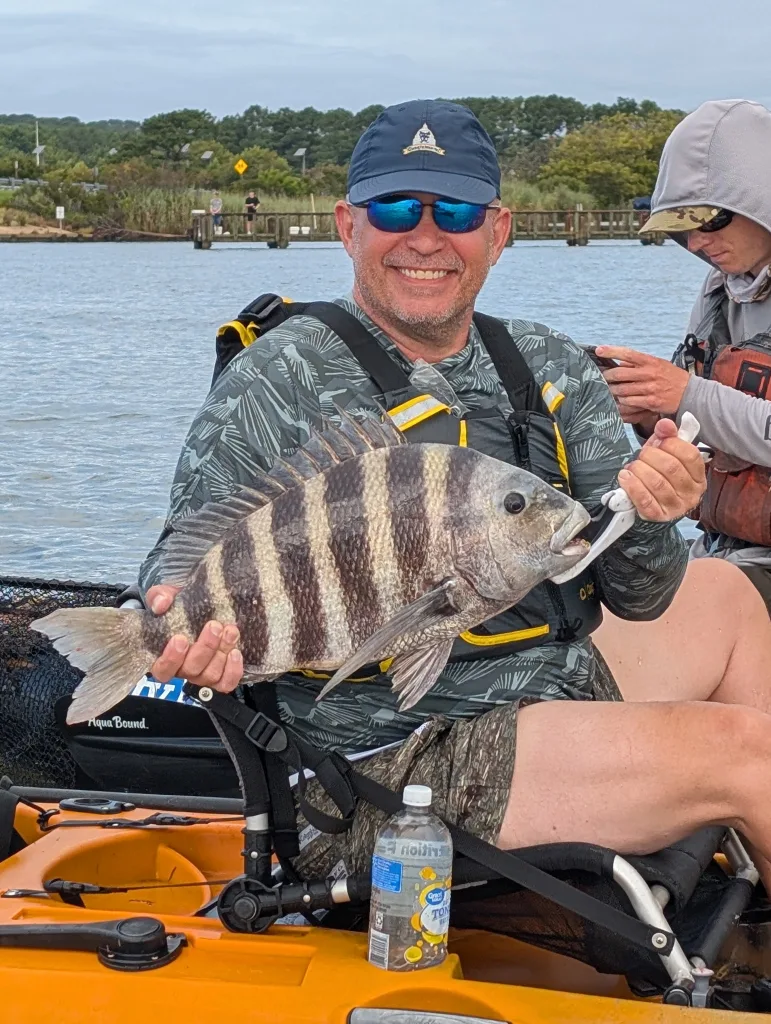
At the inlet and Route 50 Bridge area, anglers are catching sheepshead by using live sand fleas. Flounder are in the inlet area as well as croakers. During the early morning and late evenings striped bass and bluefish are being caught by casting soft plastic jigs. Got-Cha type lures are also working well for the bluefish.
Clarity in the bay waters has improved and flounder fishing has been very good, with some large flounder being caught. The largest flounder are often caught by anglers live-lining spot or using large Gulp baits. The spot can be found at the shallower ends of the Route 90 Bridge. Croakers are entertaining anglers in the channels near the inlet and are being caught on squid.
Outside the inlet anglers are enjoying catching Spanish mackerel and bluefish by trolling a mix of Drone spoons and silver Clark spoons behind inline weights and planers. The inshore and offshore wreck and reef sites are providing excellent fishing for large flounder and a mix of black sea bass and triggerfish.
At the canyons the boats trolling are catching a mix of bigeye, bluefin and yellowfin tuna and a mix of dolphin of various sizes. White marlin are also part of the mix. Deep drop fishing for a mix of golden and blueline tilefish continues to be good.
Maryland DNR Fishing Report is written and compiled by Keith Lockwood, fisheries biologist with the Maryland Department of Natural Resources. Read the full DNR report here.