
Maryland and Chesapeake Bay Fishing Report

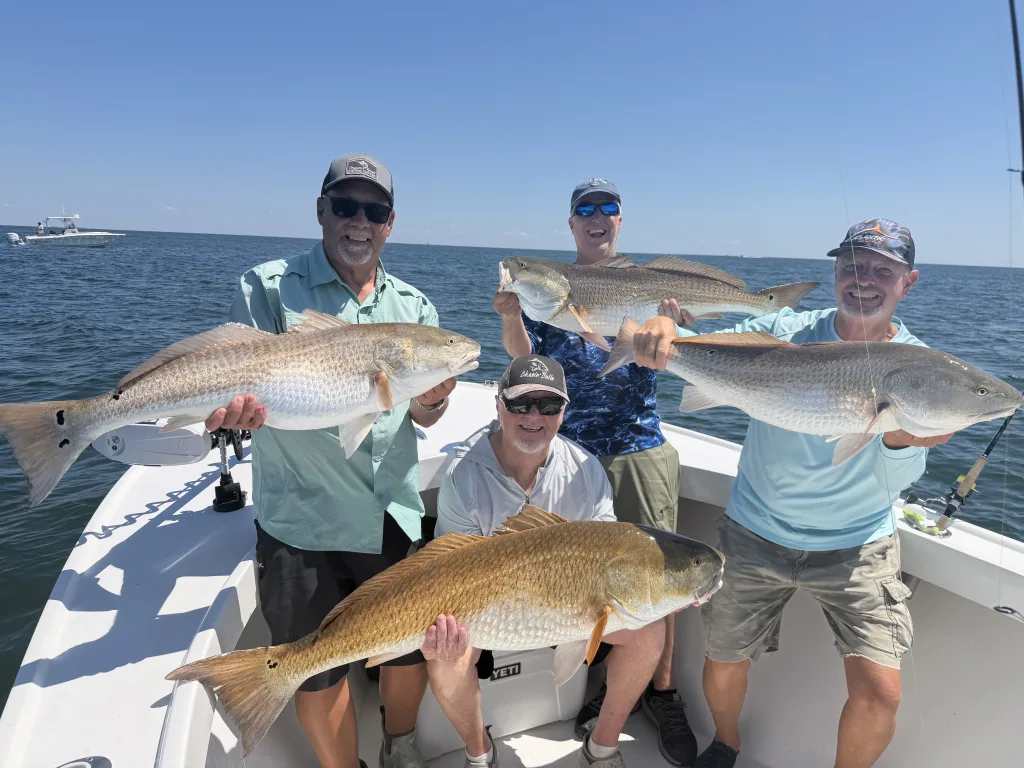
Captain Jamie Clough of Eastern Shore Light Tackle Charters has spent the week fishing for bull red drum in the Bay, and the bite has been exceptional. They are putting their charters on big fish in 45 feet of water by jigging 8-inch chartreuse Z-Man paddletails. He’s using live sonar and side scan to locate deep schools of fish and setting up to jig over them. There are still plenty of bluefish and Spanish mackerel around too, he said, but the red drum fishing has been too good to ignore. Captain Jamie noted that he and Captain Mike Gardner will continue running trips for big reds until September, when the striped bass fishery reopens in the bay. To get in on the bite, head to the ES Light Tackle Charters Facebook page for trip rates and contact info to inquire about their upcoming availability.
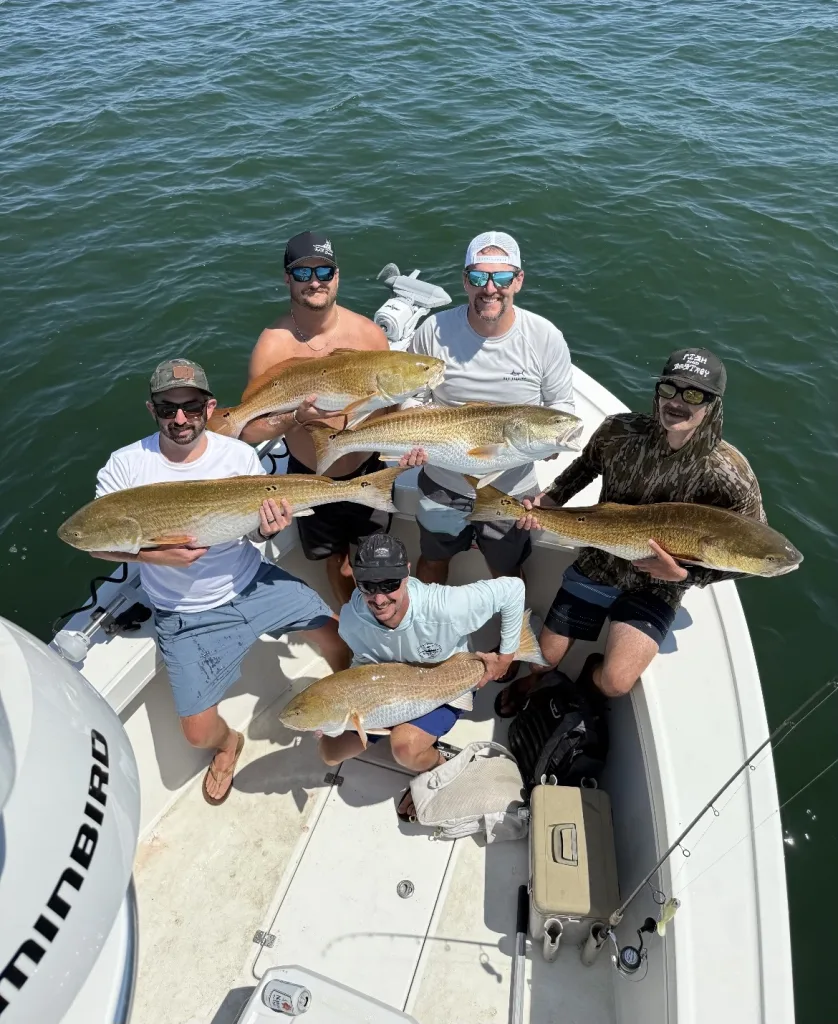
From Ocean City, Taylor Bakke of Always Bent Fishing OC reported that cobia have shown up along the coast as far north as Delaware this past week. However, instead of running out front, Bakke hopped on a trip with Captain Dre of Thomason Tradition Sport Fishing to target trophy red drum (and cobia) in the bay on Wednesday. It turned out to be a great decision. Bakke said they enjoyed a lights-out jig bite on bull reds in flat-calm, sunny conditions in the middle to lower Bay. They used side scan to search for fish in open water and fished strictly artificials—namely 2-ounce jigheads paired with 5- or 8-inch NLBNs. A lot of the fish they encountered were suspended at 30 feet in 40 to 60 feet of water. Just before heading for the dock, they found one last school and all five anglers in his party hooked up simultaneously; even the mate got in on the action, so they ended on a high note, landing all 6 fish. He finished the day with 12 reds to 48 inches, and the 5-man group totaled 35 fish caught and released. Back in Ocean City, sheepshead continue to provide reliable action on the bridge pilings and jetties, and the boats headed out to the reef sites are still catching a good mix of sea bass and flounder. Check out the Always Bent YouTube Channel and Instagram page to stay in the loop with the local fishing scene, from inshore bites to offshore tournament coverage and more.
Captain Monty Hawkins of Morning Star Fishing out of West Ocean City reported spotty sea bass action, decent fluking, and hit-or-miss mahi fishing over the past week. On Saturday’s bottom fishing trip, the skipper noted that they were marking good schools of sea bass but there was very little action around the rail. Anglers on board had to grind hard for their shots at keepers in east/northeast winds, and while the sea bass bite remained spotty throughout the day, fluke picked up the slack. A few limits of fluke were had while others came close to limiting out. The Morning Star sailed again on Tuesday, this time for mahi, and they got the skunk off the boat early but the first stop didn’t amount to much more. They picked away at mahi here and there until 6 or 7 stops into the trip, when they were met with a flurry of action from some slightly larger mahi than the chickens that typically dominate the bite this time of year. On Wednesday’s mahi trip, the first stop again yielded a skunk breaker, but anglers on the rail had to work for their fish the rest of the day. Still, it was a better bite with better quality fish; one angler was halfway to a limit by 10 a.m. Later in the day, when the light wind and tide were working against each other, the fish grew finicky and they caught only a few more before heading for port. The Morning Star will continue to sail for mahi every week, Tuesday through Thursday, until early September. Sea bass trips (with flounder in the mix) will be offered Friday through Monday each week. Call 443-235-5577 to reserve your spot on the rail and head to their website for more trip information.

Maryland DNR Fishing Report
Maryland DNR Fishing Report is written and compiled by Keith Lockwood, fisheries biologist with the Maryland Department of Natural Resources. Read the full DNR report here.
The Department of Natural Resources (DNR) reminds Maryland recreational anglers that targeting striped bass in the Chesapeake Bay and its tidal tributaries is prohibited through August 31 as a conservation measure to protect this species.
Middle Bay
Anglers in the middle Bay are enjoying the influx of Spanish mackerel into the region along with the bluefish that have been in residence for the past month. Trolling has been the most popular and successful way to fish for the Spanish mackerel. Small Drone spoons and gold Clark spoons pulled behind long fluorocarbon leaders and planers are a good setup. The trolling speed is a little faster than what one would employ for striped bass or bluefish.
Bluefish are spread throughout the middle Bay. The larger ones tend to be found along the main channel edges and the smaller ones along the shores in shallower waters. Chumming along channel edges from Bloody Point past Sharps Island Light and down to the CP Buoy is a popular area to chum and drift cut spot for bait. At times anglers have been surprised to catch and release red drum when drifting cut baits in their chum slicks.
Trolling is perhaps the best way to stay away from encountering striped bass when chumming. Trolling surge tube lures behind planers and inline weights is effective. At times anglers may see breaking fish marked by diving sea gulls. This can be a mix of Spanish mackerel and bluefish working over a school of bay anchovies. Carefully moving in upwind and drifting closer while casting metal jigs is a good way to get in on the action.
Blue catfish can be found in the upper Choptank River this week and to a lesser extent in other tidal rivers in the middle Bay. Channel catfish can be found in all tidal rivers in the middle bay region.
Lower Bay
Lower Bay anglers are enjoying an exciting mix of fish this week and beginning August 21 they will be able to legally fish for striped bass in the main stem of the Potomac River. In Maryland’s portion of the Chesapeake, they will have bluefish, Spanish mackerel, speckled trout, cobia, spot, croaker, white perch, and exciting catch-and-release action with large red drum.
The influx of Spanish mackerel has delighted anglers in the lower Bay, and these tasty fish help fill in the gap due to the striped bass closure. Trolling small Drone spoons and gold Clark spoons in the main channels has been the ticket to good catches. Long fluorocarbon leaders and planers are needed to get to the fish, and inline weights help cover the upper water column. Bluefish can be in the mix and can be an indicator that you might be trolling too slow, but if you’re catching Spanish mackerel at that speed, all is good.
When targeting bluefish, trolling at slower speeds with surge tube lures behind planers and inline weights is popular. Anglers who are chumming for cobia will pick up bluefish in their chum slicks when drifting baits back in the slick. Anglers are reminded that they must not use live eels during the striped bass closure. At times anglers might be lucky enough to spot diving sea gulls, which often mark surface action where a combination of bluefish and Spanish mackerel have driven bay anchovies to the surface. Drift in from upwind and cast metal jigs into the melee.
he catch-and-release fishing for large red drum has been spectacular for the past week. Anglers are finding schools of these large fish and jigging with large soft plastics. Shore anglers have also been getting into the action by fishing cut bait. These large fish will really put a bend in your fishing rod. Be sure to use tackle heavy enough that it does not cause undue stress on the fish.
Anglers fishing along the shores of the Bay and sounds with paddletails and similar lures are catching a mix of speckled trout and bluefish. Fishing for white perch along the shores of the region’s tidal river and creeks is a fun diversion, Casting small lures along promising looking shorelines during the early morning and evenings is always fun. Casting grass shrimp and small minnows under a slip bobber along deeper shorelines with structure is a great way to catch larger white perch. Fishing grass shrimp tight to dock pilings is also a good way to catch white perch.
Atlantic Ocean and Coastal Bays
Surf anglers at Assateague are catching a mix of kingfish, spot and croakers with the occasional flounder. Anglers fishing large baits are catching a mix of blacktip, sandbar, sand tiger sharks, and stingrays. The catch-and-release fishing for large red drum seems to have slacked off.
At the inlet and Route 50 Bridge area, large sheepshead and tautog are being caught on live sand fleas and peeler crab. Striped bass are being caught during the early morning and late evening hours but most all fail to meet the 28-inch minimum.
Flounder fishing has been tough due to water clarity issues, so a flood tide often offers the best fishing. Anglers are enjoying good catches of croakers in the channels close to the inlet. Passing rainstorms and wind have caused the back bay waters to be cloudy. Flounder are ambush predators; they can’t go after what they can’t see.
Flounder fishing outside the inlet has been extremely good on shoals, reef sites, and wreck sites. Anglers are catching large flounder and often coming back with limits. Fishing for black sea bass is slow, but anglers are enjoying catching small dolphin and a few triggerfish. Spanish mackerel are being caught by trolling Chrome Clark spoons behind planers. The boats heading out to the canyons are focusing on white and blue marlin. Some yellowfin tuna are being caught and deep drop fishing is producing a mix of blueline and golden tilefish.
Maryland DNR Fishing Report is written and compiled by Keith Lockwood, fisheries biologist with the Maryland Department of Natural Resources. Read the full DNR report here.