
Maryland and Chesapeake Bay Fishing Report
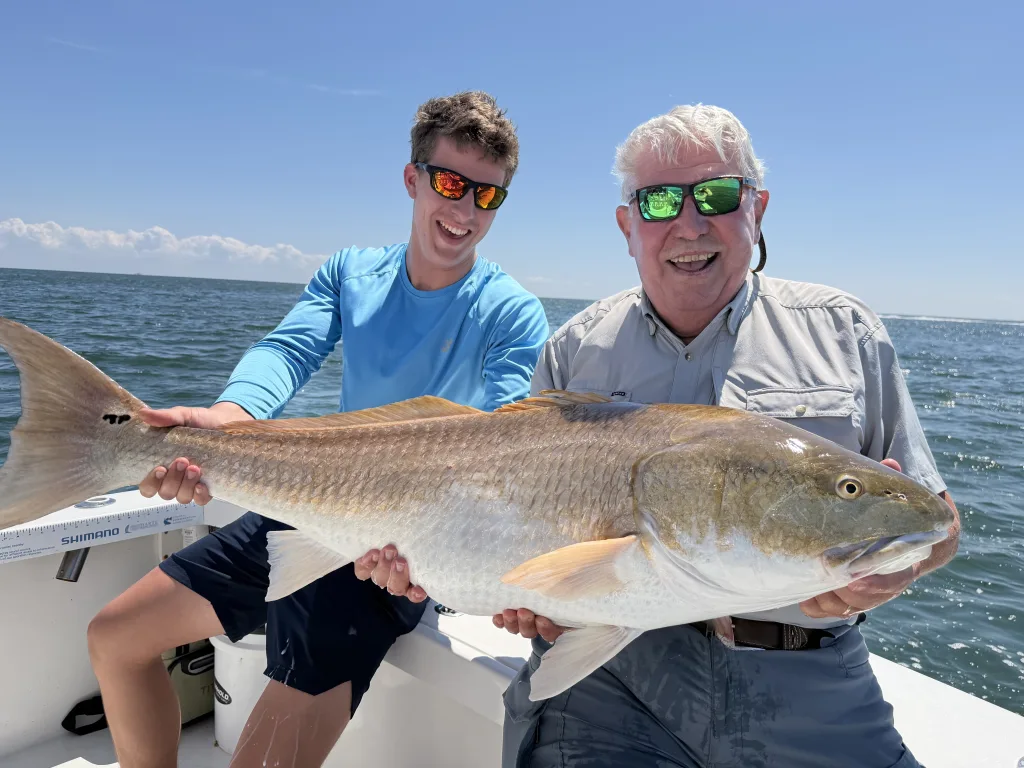
Captain Jamie Clough of Eastern Shore Light Tackle Charters reported that fishing for bull red drum in the Bay continues to get better each week. They’re seeing some truly large, well-fed fish hit the deck and haven’t had to change their approach much. Capt. Jamie and Capt. Mike are using their electronics to locate schools of deep or suspended drum, and when they mark them, it’s time to bust out the jigs and XL soft plastics. They prefer to use 7- to 8-inch Z-Man paddletails, like chartreuse Diezel Minnowz and Mag Swimz, to cull the largest fish from the school and it’s been working like a charm. They’ll continue to target bull reds through the end of the month—and possibly longer if the bite remains this good—before shifting gears to striped bass with the Bay fishery reopening on September 1. To get in on the bite, head to the ES Light Tackle Charters Facebook page for trip rates and contact info to inquire about their upcoming availability.
From Ocean City, Taylor Bakke of Always Bent Fishing OC said boats making the long run offshore are still picking away at marlin in the canyons, and the midshore lumps have been full of mahi as well as some nice wahoo. The tuna bite, he noted, remains tough aside from a couple bigeyes in the canyons, but local anglers are hoping that September will bring yellowfin closer to home. With all the chicken mahi on those midshore lumps, it could happen any day now. Bakke added that settled sea conditions have nearshore anglers out searching for cobia around the wrecks, where triggerfish and some large flounder are providing some reliable action for bottom fishermen—although there’s a lot of pressure on those fluke now, so the bite can be hit or miss. There are also triggerfish in the inlet, as well as sheepshead and tautog. Bluefish are still plentiful locally, and a few anglers hitting the bridges at night are plucking stripers on jigs. Spanish mackerel have also been popping up from the bays to the inlet; seeing them inside the bays is a bit of a surprise, but they are a welcome addition to the late-summer smorgasbord around Ocean City. The next 2 to 3 weeks, Bakke said, is one of the most interesting times of the year, as summer “exotics” from the south (like jacks) tend to trickle into nearshore waters off Maryland. It’s an exciting time to be on the water, so take advantage of the summer weather while it lasts. Check out the Always Bent YouTube Channel and Instagram page to stay in the loop with the local fishing scene, from inshore bites to offshore tournament coverage and more.
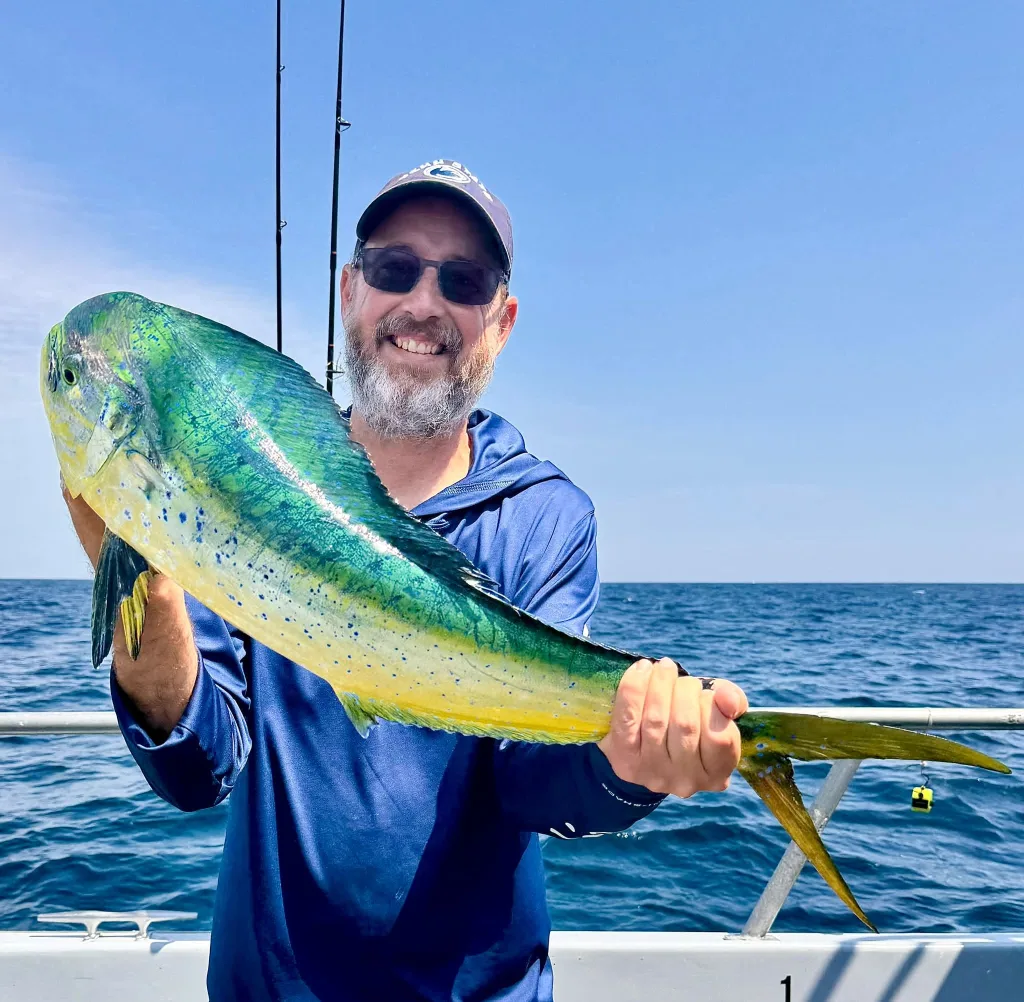
Captain Monty Hawkins of Morning Star Fishing out of West Ocean City reported up and down mahi action over the past week, and some “ok” bottom fishing to help fill the fish box when the mahi played hard to get. Last Thursday, anglers on board had decent shots at mahi and got the skunk off the boat at their first stop, but when the current died, the bite got tough. Thankfully, it was only temporary, because once the tide turned and current picked up, they had the best action of the day with some respectable fish landed in addition to the chicken mahi that are usually available. On Tuesday the 25th, however, mahi fishing was particularly slow. They boated an almaco jack to start, followed by a mahi that the captain described as “fit for tuna bait”, followed by a rogue skate, which was an unexpected harbinger of a slow day to come. While they spotted a few more mahi throughout the day, the skipper had the mates outfit anglers on the rail with bottom fishing rods in an effort to put some sea bass or fluke on ice. Unfortunately, the sea bass were just as finicky, which Captain Monty expects was due to cold water along the bottom. They were able to catch some flounder of mixed sizes before calling it a day and heading in. Back at it on Wednesday, the first stop for mahi was a bust, and the small mahi they spotted throughout the day were picky, but they managed a few. With mahi fishing slow, they set up to fish reef structure and it panned out nicely with some quality sea bass and fluke. Later, the boat was treated to a surprise when they stumbled upon a roughly 7-foot mako shark feeding on a dead swordfish, unbothered by their presence. They’re back on the mahi grounds today and the skipper is hopeful that some warmer water approaching 80 degrees will make for a better bite. The Morning Star will continue to sail for mahi every week, Tuesday through Thursday, until early September. Sea bass trips (with flounder in the mix) will be offered Friday through Monday each week. Call 443-235-5577 to reserve your spot on the rail and head to their website for more trip information.
Maryland DNR Fishing Report
Maryland DNR Fishing Report is written and compiled by Keith Lockwood, fisheries biologist with the Maryland Department of Natural Resources. Read the full DNR report here.
Middle Bay
When the striped bass season reopens September 1, anglers will be exploring locations that produced prior good fishing results. The Bay Bridge Piers will no doubt attract anglers and hopefully they will encounter striped bass. Live-lining spot or drifting baits to the pier bases will be a popular way to fish. The early morning and late evening hours during a strong current flow offer the best fishing. Spot can be found in the shallower waters at the west end of the Bay Bridge.
The channel edge from Buoy 83 south past the Sharps Island Light will be a good place to explore for striped bass. Thomas Point will be worth checking out as will various channel edges throughout the middle bay region. Live-lining spot will be a popular way to fish and spot should be able to be found in the shallower waters of Whitehall Bay, Chesapeake Beach, Eastern Bay, the lower Choptank, and other tidal rivers.
Spanish mackerel and bluefish are still providing good fishing in the middle Bay and anglers are urged to not delay on enjoying their presence. The Spanish are going to exit the middle bay region soon and head south; the bluefish will usually stick around a little longer. Trolling a mix of Drone spoons and gold Clark spoons behind planers and inline weights are working well for the Spanish mackerel. Bluefish will hit the spoons but placing a few surge tube lures in a trolling spread will increase bluefish catches. Chumming for bluefish continues to be popular while drifting cut spot baits.
Lower Bay
Striped bass fishing remains closed in Maryland’s portion of the Chesapeake and all tributaries on the Maryland side of the Potomac River until September 1. The main stem of the Potomac River and all tributaries on the Virginia side of the Potomac opened to striped bass fishing on August 21.
Maryland anglers seeking striped bass in the Potomac River have been working the steep channel edge from St. George Island to Piney Point and off St. Clements Island. Most anglers are live-lining spot or jigging with good results.
Anglers in the lower Bay region are very fortunate that they have several fish species that are in abundance and that they can fish for. Spanish mackerel are at the top of the list since they are only here for a short time and make wonderful table fare. Most Spanish mackerel are being caught by trolling Small Drone spoons and gold Clark spoons behind planers and inline weights. At times anglers may encounter breaking fish consisting of Spanish mackerel and bluefish working over a school of bay anchovies. This is the time to ease up carefully, upwind, and cast metal jigs into the melee. Allow the jig to sink and then rapidly retrieve; a slower retrieve will allow bluefish to catch up to the lure.
Bluefish are spread throughout the lower Bay and most now tend to be in the one-pound size range, but larger ones are being caught. Most anglers are trolling a mix of surge tube lures and small Drone spoons when targeting bluefish. They are being caught along the shores of the bay by casting a variety of lures or by using cut bait.
Large red drum are providing exciting catch and release action this week. Jigging is one of the most popular ways to target them when schools can be located. Large soft plastic jigs are a favorite but heavy Krocodile spoons also work well. They are also being caught by dropping cut bait or soft crab baits down to the red drum when they can be located. Schools of red drum are often located on depth finders, disturbed water, and slicks.

Anglers are chumming for cobia and report that catches have dropped off recently in some areas. Smith Point, the Target Ship, and Point Lookout remain popular areas to chum or sight cast for cobia. Anglers are reminded that they cannot use live eels for cobia bait during the striped bass closure.
Speckled trout are being caught by anglers casting soft plastic jigs and paddletails along promising looking shorelines. Drifting peeler crab or soft crab baits in areas with currents is also a popular way to fish, especially in the creeks draining from the marshes on the Eastern Shore.
Atlantic Ocean and Coastal Bays
Surf anglers are settled into fishing for a mix of kingfish, croakers, and spot in the surf when using bloodworms or bloodworm alternatives. The large red drum have moved to somewhere else for the time being but anglers fishing with large cut bait are keeping busy catching sandbar, blacktip, sand tiger sharks, and sting rays. Casting a jig with a strip of squid in the surf wash is a good way to fish for flounder.
At the inlet and Route 50 Bridge area, sheepshead and tautog are being caught close to the jetty rocks, bulkheads and bridge piers on live sand fleas. Striped bass are being caught, but almost all are below the 28-inch minimum.
Flounder fishing has been fair in the back bay areas; water clarity has been an issue and many of the flounder being caught are below the 17.5-inch minimum. A flood tide offers the best fishing opportunities for flounder and larger baits tend to weed out the smaller flounder. Fishing with squid is a fun way to catch the abundant croaker and blowfish can also be part of the mix as well as small black sea bass and sea robins. Spot can be caught in the back bay waters on bloodworms.
Outside the inlet trolling for Spanish mackerel has been very good relatively close to the beach. Small chrome Clark spoons pulled behind long fluorocarbon leaders, or wire and planers is the best way to target the Spanish mackerel. Bluefish can be part of the mix at times.
The offshore wreck and reef sites are producing excellent catches of large flounder. Fishing for black sea bass has been fair and triggerfish and small dolphin can be in the mix. Farther offshore in the canyons, releases of white and blue marlin are common. Yellowfin tuna have been hard to find.
Maryland DNR Fishing Report is written and compiled by Keith Lockwood, fisheries biologist with the Maryland Department of Natural Resources. Read the full DNR report here.