
Maryland and Chesapeake Bay Fishing Report
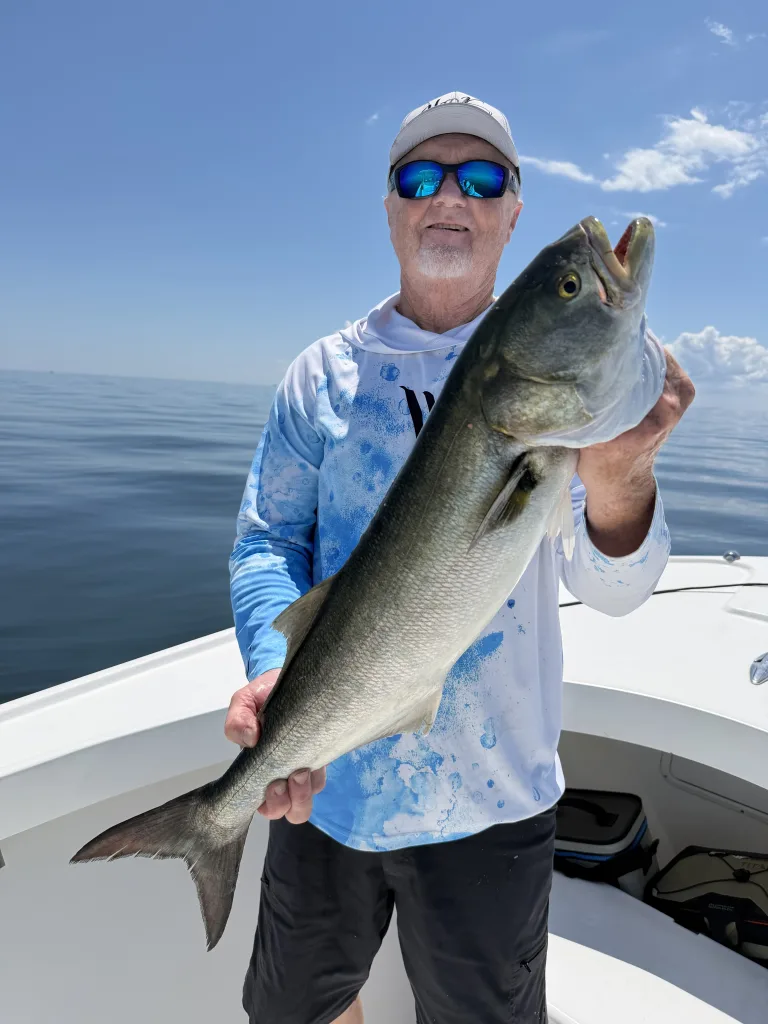
Captain Jamie Clough of Eastern Shore Light Tackle Charters said with the striper fishery in the bay temporarily closed, he and Captain Mike Gardner are focusing on targeting bluefish for the time being. Thankfully, the bluefish bite has been nothing short of excellent. According to the skipper, they’re finding giant schools of gator blues crushing silversides on top, and when they get the fish in the boat, they’re also spitting up spot and sometimes menhaden. Despite targeting bluefish for the month, how Captain Jamie and Captain Mike approach their temporary quarry is not much different from their light-tackle striped bass fishing techniques; they continue to search for bait and stick to casting 5-inch Z-Man paddletails, which do a fine job of holding up to toothy blues. The only difference is they are spending more time in open water, where the blues are pushing bait to the surface, as opposed to hunting for wolf packs of striped bass in shallow water with similar presentations. To get in on the bite, head to the ES Light Tackle Charters Facebook page for trip rates and contact info to inquire about their upcoming availability.
From Ocean City, Taylor Bakke of Always Bent Fishing OC reported that anglers fishing from the jetties of OC Inlet and in boats nearby have been finding good numbers of triggerfish while fishing for tautog and sheepshead. It’s not uncommon, Bakke said, but the triggers are in especially thick this year, and they are a nice bonus for those who are either striking out on keeper tog and/or looking to bring home some extra meat for the table. The flounder bite, he added, continues hold steady for anglers fishing the bays as well as nearshore wreck and reef structure, where sea bass are in the mix. Meanwhile, offshore vessels are picking away at white marlin in the White Marlin Open this week, but there have also been some bigeye and bluefin tuna weighed in at the dock. Most of the action is in the canyons, except for the bluefin, which can be found midshore around the 20-fathom line. That said, mahi have also pushed into midshore range and can be caught off the pots on jigs and live bait, making it manageable for smaller boats to get a taste of offshore fishing without running too far from home. The mahi aren’t huge, but a majority are the perfect eater size and put up a great fight on light tackle. Check out the Always Bent YouTube Channel and Instagram page to stay in the loop with the local fishing scene, from inshore bites to offshore tournament coverage and more.
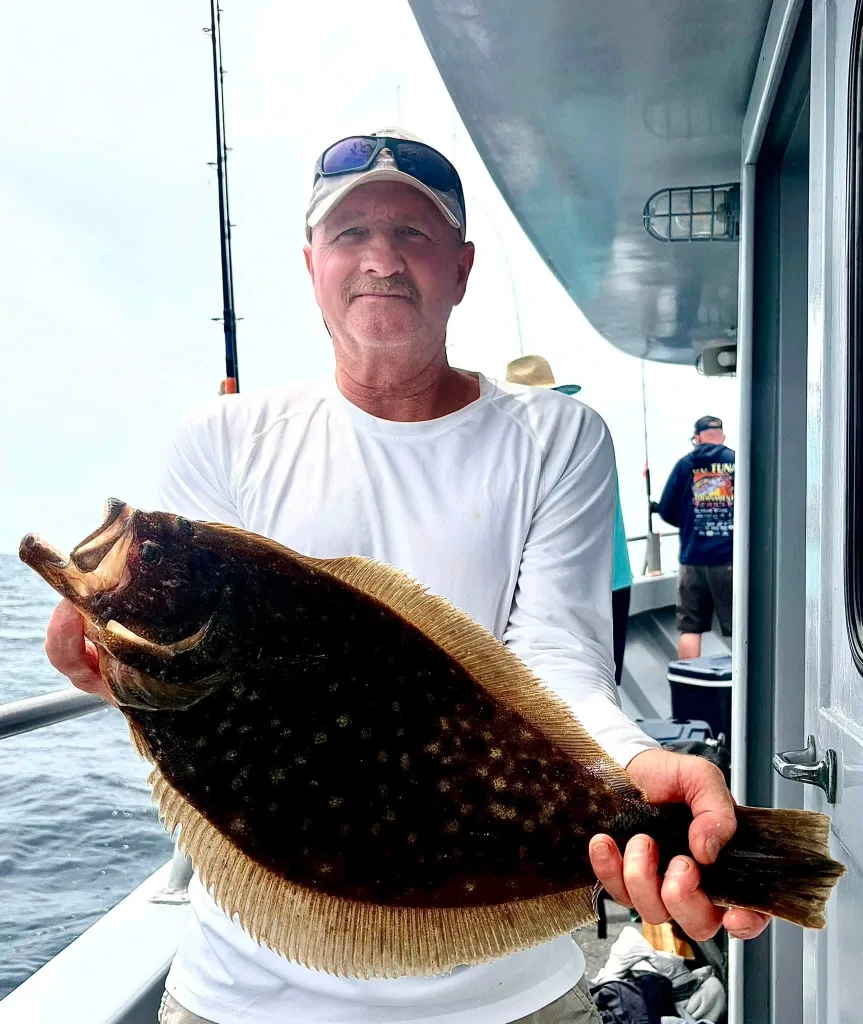
Captain Monty Hawkins of Morning Star Fishing out of West Ocean City reported a steady nearshore mahi bite and mixed results on the sea bass front this week. Friday the 31st saw an excellent bite of black sea bass with fluke in the mix. The high-hook had a near limit of sea bass and anglers around the rail reeled in good numbers of keepers through the tide switch until the afternoon, when the action began to slow down. The following day was a different story—the anglers on board had to work for every bite, but according to Captain Monty, their efforts paid off. One angler caught a limit of keeper fluke and kept at it, playing catch and release even after securing his share for the table, while two others also bagged their flounder limit. After a couple days off the water, the Morning Star sailed again on Tuesday for mahi and had great fishing all around in some snotty sea and weather conditions. It was much of the same on Wednesday’s mahi trip, with fish chewing well from the first stop onward until later in the day. The bite was hot out the gate, hit a lull which turned into a steady pick of fish until the mahi got lockjaw later in the afternoon. All in all, it was a productive week of bottom fishing and mahi hunting. The Morning Star will continue to sail for mahi every week, Tuesday through Thursday, until early September. Sea bass trips (with flounder in the mix) will be offered Friday through Monday each week. Call 443-235-5577 to reserve your spot on the rail and head to their website for more trip information.
Maryland DNR Fishing Report
Maryland DNR Fishing Report is written and compiled by Keith Lockwood, fisheries biologist with the Maryland Department of Natural Resources. Read the full DNR report here.
The Department of Natural Resources (DNR) reminds Maryland recreational anglers that targeting striped bass in the Chesapeake Bay and its tidal tributaries is prohibited from August 1 through August 31 to protect the species. This month is an ideal time to fish for Maryland’s multitude of other species, especially Chesapeake Channa and blue catfish.
Middle Bay
Anglers in the middle Bay are fortunate to have bluefish in the region to take up the slack during the striped bass closure. With a little time and luck Spanish mackerel may also be in the mix. Trolling will be the most popular way to fish for the bluefish. Surge tube lures in a variety of colors with red and green being the most popular. They will be pulled behind inline weights. It is a good idea to place a few Drone spoons in a trolling spread on a single line or behind a spoon umbrella rig as a trailer.
Drone spoons and gold Clark spoons will be the lures to use if Spanish mackerel show up. Both need to be pulled behind inline weights. The single Drone spoons can also be pulled behind planers to get them deep, so all levels of the water column are covered. Trolling speeds tend to be a little faster, usually about 7 knots or so.
Lower Bay
A mix of bluefish, Spanish mackerel, speckled trout, red drum, cobia, spot, blue catfish, and white perch will help keep anglers in the lower bay region busy fishing during the striped bass closure in the lower bay and Potomac River.
Bluefish can be found throughout the lower Bay. They range from a pound to 10 pounds or more. The smaller ones are usually found in shallower waters and in the tidal rivers and the larger ones out in the Bay. Trolling and casting have been popular ways to catch them, since anglers have stopped live lining and drifting cut baits for striped bass. Surge tube lures in a variety of colors pulled behind inline weights or planers are common. Drone spoons pulled behind inline weights and planers are usually part of everyone’s trolling spread, targeting bluefish and Spanish mackerel.
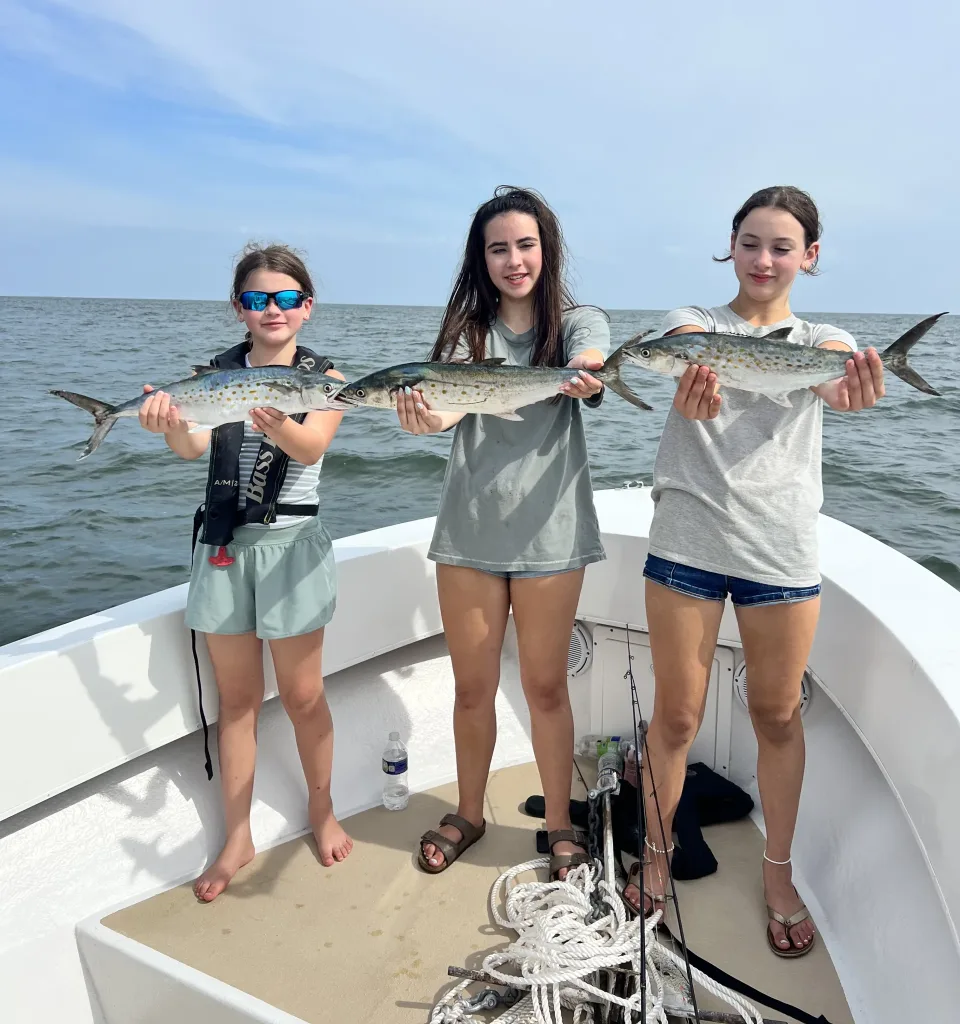
Spanish mackerel are becoming more common in the lower bay this week near the mouth of the Potomac River and along channel edges in the Bay. Trolling small Drone spoons and gold Clark spoons behind inline weights and planers at slightly faster speeds. Anglers may start to see Spanish mackerel mixing it up with bluefish as they attack schools of bay anchovies. Casting metal jigs and retrieving them quickly is a fun way to catch them.
Anglers fishing along the shorelines of the bay and the tidal rivers are catching a mix of speckled trout and small bluefish. Casting paddletails is one of the most popular ways to fish. Anglers are urged to release any striped bass caught by accident to release them while immersed in the water.
Large red drum are providing exciting catch and release action in the lower bay this month. Anglers are finding them by spotting slicks, churned up water, or on depth finders. Most anglers are jigging with large soft plastics or dropping soft crab baits to them. Trolling with large chrome spoons behind inline weights are accounting for some and are commonly part of a trolling spread when trolling for bluefish and cobia. Anglers are also having success by fishing with cut bait from the shores of the bay.
Cobia are still providing fishing action near the Target Ship, the Middle Grounds, Smith Point, and Point Lookout. Most anglers are setting up chum slicks and fishing a live eel at the back of their chum slick on the bottom. On windless days, sight fishing and casting live eels or soft plastic jigs will work. Most of the cobia are falling a little short of 43-inch minimum.
Atlantic Ocean and Coastal Bays
It will be a busy week in Ocean City with the White Marlin Open running this week. Anglers should be vigilant for large offshore powerboats moving through waterways around the inlet.
Surf anglers are enjoying a summer mix of kingfish, spot, and croaker in the surf. The best fishing tends to be during the morning and evening hours. Bloodworms are the preferred bait for kingfish and spot; croakers will also bite on peeler crab. Casting soft plastic jigs tipped with squid is a good way to catch flounder in the surf. Anglers fishing with finger mullet are catching bluefish and those using larger cut bait are catching and releasing large red drum, cownose rays, and a mix of inshore sharks.
At the inlet and Route 50 Bridge area, anglers are catching a mix of striped bass and bluefish early in the morning and late evening when boat traffic is diminished. Casting soft plastic jigs or drifting cut bait has been popular. Anglers fishing with live sand fleas on a light tog jig or hook setup are catching large sheepshead and tautog.
The back bay waters have been cloudy due to rain and wind and can best be fished close to the inlet on a flood tide. Conditions may improve later this week. Be very careful of boat traffic when fishing the channels leading towards the inlet.
Fishing outside the inlet at the inshore and offshore wreck and reef sites has been producing excellent catches of large flounder and some black sea bass and triggerfish. Small dolphin are also entertaining anglers and can be caught by casting small pieces of squid and a jig with spinning gear.
The boats heading out to the 20 and 30 Fathom Line sites such as the Jackspot are finding good action with bluefin tuna. The boats headed to the canyons and beyond are finding a mix of bigeye tuna, white marlin, small dolphin, and a few yellowfin tuna. Deep drop fishing is producing good catches of blueline and golden tilefish.
Maryland DNR Fishing Report is written and compiled by Keith Lockwood, fisheries biologist with the Maryland Department of Natural Resources. Read the full DNR report here.