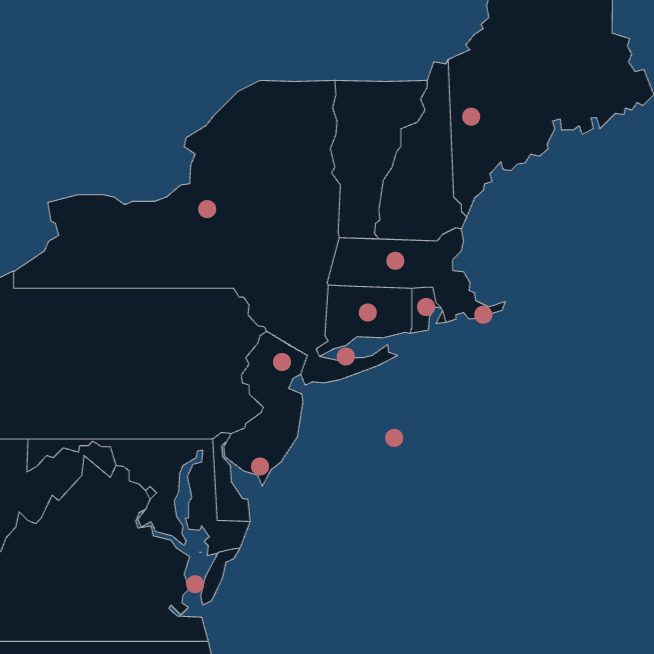

Maryland and Chesapeake Bay Fishing Report
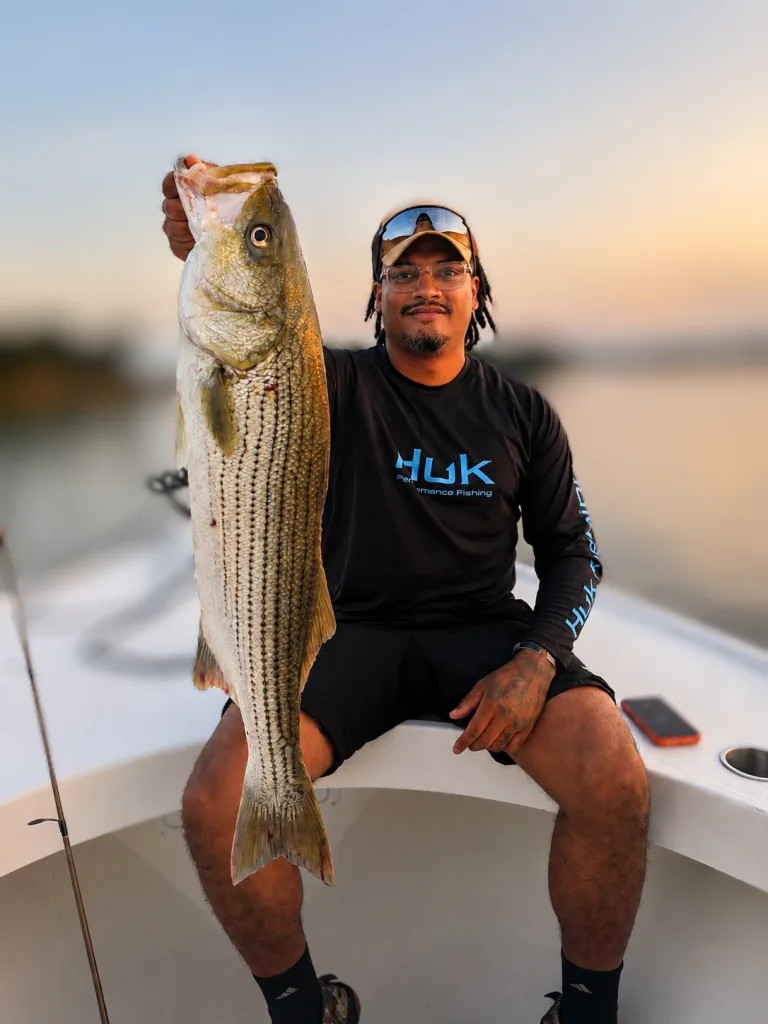
Captain Jamie Clough of Eastern Shore Light Tackle Charters reported that the red drum bite has slowed up a bit since last Friday, when his charter had hundreds of bull reds blitzing around the boat. The skipper believes the bite has suffered due to weaker currents pushing less bait around compared to last week, during which full moon tides influenced the bite and created some impressive surface feeds. Thankfully, the striped bass fishery in the bay has since reopened, and they’ve already had one trip for striper. Captain Jamie said they were met with good topwater action in 2 feet of water as striped bass crashed on schools of peanut bunker. All of their bites came on small spooks cast into and along the edges of the peanut bunker schools. Today, he said, is a different story. Although they have misty, overcast conditions, the bass bite is slower than expected due to those weaker tides pushing less bait. However, he expects the bite for both drum and striper to rebound as the September new moon approaches next week. To get in on the action, head to the ES Light Tackle Charters Facebook page for trip rates and contact info to inquire about their upcoming availability for striped bass and red drum.
From Ocean City, Taylor Bakke of Always Bent Fishing OC said a few marlin are still being caught in the canyons, and the midshore lumps continue to give up mahi and wahoo. Tuna fishing remains very inconsistent, aside from a couple bigeyes in the canyons and the occasional yellowfin keeping hopes alive for a better September bite. For now, some decent mahi and nice-size wahoo are providing entertainment for boats that are unwilling or incapable of making the run to/from the canyons. Bakke added that cobia and triggerfish are still all over the nearshore wrecks, but triggerfish are also being taken from the inlet jetties. The flounder bite is decent, but inside they bays they are experiencing heavy fishing pressure so if you’re looking for big keepers, or a few extra fish for the table, the best bet is to hit the nearshore and offshore reefs. Sea bass and triggerfish have also been in the mix with those ocean fluke, and a handful of cobia—along with a rogue cubera snapper—have been speared on the reefs as well. The most recent change to the inshore scene, he noted, is the influx of speckled trout caught over the past week around Ocean City. There was a flurry of action in the coastal bays and channels close to the inlet, and although they haven’t been very large trout, local anglers are just happy to see them around after last winter’s deep freeze left them MIA for much of this season. Looking ahead, Bakke is hoping the trout bite will continue and that more yellowfin will fill in offshore for an early fall chunk bite. Check out the Always Bent YouTube Channel and Instagram page to stay in the loop with the local fishing scene, from inshore bites to offshore tournament coverage and more.
Captain Monty Hawkins of Morning Star Fishing out of West Ocean City reported up and down bottom fishing for sea bass and flounder this week, along with some very quality mahi. On Sunday the 30th, the bottom fishing was not red hot but good enough to provide some entertainment on the rail. The skipper noted several respectable fluke over 24 inches, along with at least a dozen keeper sea bass that were large enough to be tossed on ice without a measurement—a rare occasion on Captain Monty’s trips since he is adamant about measuring each potential keeper, just to be certain. In addition to a good haul of sea bass and fluke, anglers on board managed one mahi and a false albacore as well. On Tuesday the 1st, the Morning Star sailed for mahi with a light rail and got the skunk off the boat immediately. However, once the skunk was off, they had to do a fair amount of spot hopping to keep putting fish in the boat. Some spots yielded several mahi, others yielded none. When the current slacked out, the bite suffered, but the anglers on board had a solid day overall and went home with some meat for the dinner table. Wednesday’s mahi trip started off much like the day prior, with the skunk off the boat at stop number one. It was tough fishing from there on—with more spot hopping to locate cooperative fish—until the current slacked again. However, this time around it didn’t shut the mahi off; instead, the bite turned on. At one point, the skipper had nine anglers along the rail all tight to mahi, and they continued to catch good numbers at just about every stop for the duration of the outing. The Morning Star will continue to sail for mahi every week, Tuesday through Thursday, until early September. Sea bass trips (with flounder in the mix) will be offered Friday through Monday each week. Call 443-235-5577 to reserve your spot on the rail and head to their website for more trip information.

Anglers Sport Center Fishing Report – Annapolis, MD
Written by Anglers Fishing Manager & OTW Columnist, Alex Gallardo-Perez.
Rockfish season is back, and the bite should only get better as temperatures cool down in the near future. There are plenty of reports of small schoolies breaking on bait throughout most of the rivers, including the Severn and Patapsco, as well as Eastern Bay, with most fish measuring 13 to 16 inches. Early morning continues to be the best time to get out and find some slot fish. The Patapsco is holding a good amount of fish tight to deep structure, including the ship docks around the harbor. Live eels and chunks of bait have worked, as have jigs when fishing this area. Topwater is still a good option along shorelines, with 4- to 5-inch walking plugs producing fish.
Blues and Spanish mackerel have shown up around Poplar Island and Thomas Point, but they can be hit or miss when looking for them. Trolling No. 1 to No. 2 planers with drone spoons is still a great option when targeting them.
Maryland DNR Fishing Report
Maryland DNR Fishing Report is written and compiled by Keith Lockwood, fisheries biologist with the Maryland Department of Natural Resources. Read the full DNR report here.
The striped bass season has reopened, and anglers are free to pursue striped bass in the Chesapeake Bay and its tidal rivers. The slot size remains 19-24 inches to with a limit fish per day. The coastal striped bass fishery remains open with a 28-inch minimum size and one fish per day.
Middle Bay
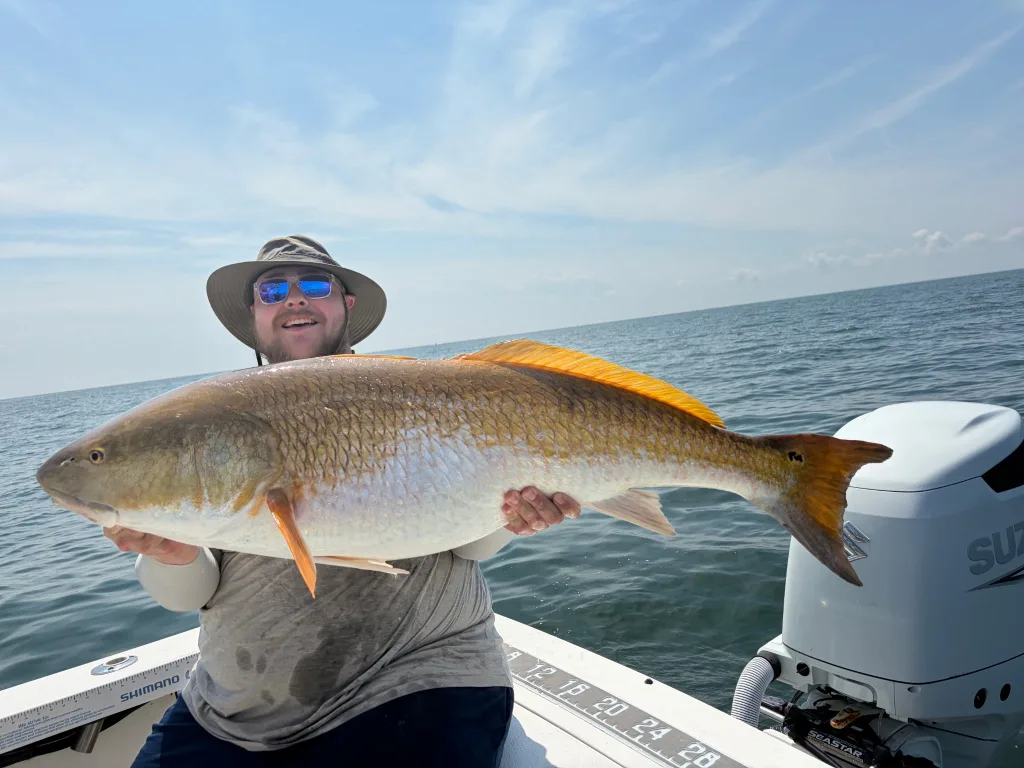
There is exciting catch-and-release action with large red drum erupting as they push baitfish to the surface. Anglers are casting large soft plastic jigs into the mayhem and enjoying tussling with these large fish. Care should be taken in releasing the fish as quickly as possible. Everyone wants a picture of these large and beautiful fish that are not always available in the middle Bay, but keep the welfare of the fish in mind. Anglers should approach the action from upwind, shut the motor off, and slowly drift towards the action. This proper method does not always work out with competing anglers who feel the need to quickly get closer to the action. This type of behavior results in driving the fish deep and curtailing the action. Anglers trolling for bluefish and Spanish mackerel are reporting knockdowns by large red drum, which causes an unexpected struggle.
Trolling for Spanish mackerel has been spotty for many anglers this week. Most anglers are focusing on the main channel edges on both sides of the bay south of Buoy 83 and Thomas Point. The False Channel area at the mouth of the Choptank is also producing Spanish mackerel. Trolling small gold Clark spoons and Drone spoons of various colors behind planers and inline weights is the most popular way Spanish mackerel are being caught.
Bluefish are being caught in the same manner, and it often is a good idea to place a couple of surge tube lures in a trolling spread. If anglers are lucky enough to encounter a mix of bluefish and Spanish mackerel chasing a school of bay anchovies, both can be caught by casting metal jigs into the melee. Bluefish can also be caught by chumming and drifting cut spot in the slick. They are often part of the mix when live-lining spot for striped bass. The Sharps Island Light area continues to be a good location for bluefish. Bluefish are being found throughout the middle bay region but the channel edge from Buoy 83 south past the False Channel has been one of the best places to find them. Trolling surge tube lures behind inline weights or planers is another popular way to target them.
Anglers are quick to start where they left off last month when looking for striped bass this week. The channel edge from Bloody Point past Buoy 83 to the Sharps Island Light will be a good place to start for anglers who are live-lining spot. Thomas Point will be another location worth a look, as well as the mouth of the Choptank and Eastern Bay. Water temperatures are holding around 82 degrees. The shallower waters will be holding striped bass, but the action is generally limited to the early morning hours at dawn and late evening for anglers casting poppers or paddletails. Jigging along channel edges where fish can be found is also a good option for striped bass anglers.
Lower Bay
Anglers in the lower Bay are enjoying an exciting run of Spanish mackerel. The numbers and size of the fish are about as good as anyone could hope for, so don’t miss it! Trolling a mix of small Clark spoons and various colored Drone spoons behind planers is the most popular way to fish for them. Sometimes it can be a good idea to have at least one lure being pulled behind an inline weight to cover all depths. Some anglers are also placing a surge tube lure in their spread for bluefish.
If you’re lucky, you might encounter breaking fish working over schools of bay anchovies, which can be a mix of Spanish mackerel and bluefish. Casting metal jigs into the foray is a fun and exciting way to catch both. Anglers should keep a watch on their depth finders for large solid marks on the bottom that can indicate large red drum attracted by the above action.
Large red drum continue to provide exciting catch-and-release action this week in the lower Bay. They seem to be everywhere and in great numbers. Anglers are catching them from shore in the morning and evening hours on cut bait. The Point Lookout area and Tangier Sound are two good places to fish for them from shore. They are being found out in the main portion of the Bay chasing bait on the surface or are being marked deeper by depth finders. These large red drum are an exciting novelty fish for many anglers, and everyone wants a picture. If you decide to take pictures, be prepared ahead of time as to who is going to take the picture and get the fish back in the water quickly. They do not do well out of the water in the hot air temperatures.
Striped bass fishing in the Maryland portion of the Chesapeake Bay is now open, along with the Potomac River. Channel edges will be the first place anglers will check these locations, whether they are live-lining spot of jigging. Tradition edges in the lower Potomac and the main channel in the bay and especially on the eastern side of the Bay. Fishing in the shallower areas of the Bay should be good for those casting paddletails and poppers during the early morning and late evening hours. Speckled trout and bluefish can be in the mix.
Bluefish of various sizes are spread throughout the lower Bay this week. Some of the largest bluefish are being caught along the eastside channel edge from Buoy 72 south to Buoy 68. Trolling surge tube lures, chumming or jigging are popular ways to fish for them. Smaller bluefish can be found in the lower sections of the region’s tidal rivers and along the shallower bay shores.
Anglers have until September 20 to try and catch a cobia 43 inches or larger. Most cobia anglers are chumming near the Middle Grounds or Smith Point and now that striped bass season is open, it is legal to use live eels for bait in the back of one’s chum slick. Anglers are also drifting cut bait in their chum slicks and enjoying some action from large bluefish. When waters are calm, sight fishing for cobia can be exciting fun. When spotted, anglers will cast a live eel or a soft plastic jig; pink is a popular color.
Atlantic Ocean and Coastal Bays
Anglers fishing the beaches of Assateague Island continue to catch a summer mix of kingfish and spot on bloodworm baits. Casting jigs with strips of squid can be a good way to catch flounder in the surf. Anglers fishing with large baits are catching a mix of inshore sharks and sting rays.
At the Ocean City Inlet, sheepshead and a few legal-sized tautog are being caught near the jetty rocks, bulkheads and bridge piers on live sand fleas. Striped bass and bluefish are being caught in the early morning and evening hours by casting bucktails and soft plastic jigs or drifting cut bait. Flounder are always present in the inlet area and offer shore bound anglers a chance to catch them.
The back bay channels have been offering good flounder fishing recently due to clearer water conditions. The deeper parts of the channels leading from the inlet and in front of the airport are good places to drift. Croakers are in the mix for anglers using squid for bait. Larger baits often catch the larger flounder. Some anglers are finding small spot and live lining them while drifting in the deeper channels with good success. Anglers fishing with live sand fleas are finding sheepshead near the bridge piers of the Verrazano Bridge.
The inshore lumps, shoals and wreck sites have been excellent places to fish for flounder this week. Trolling the inshore waters for Spanish mackerel and bluefish has been good at times. At the offshore wreck and reef sites, anglers often catch limits of large flounder along with fair catches of black sea bass. Small dolphin can also be in the mix at times for anglers drifting strips of squid. False albacore are in the general area for anglers who are trolling.
At the canyons anglers who are trolling are catching a mix of white and blue marlin along with fair catches of yellowfin tuna. Fishing for various sizes of dolphin by trolling or drifting squid baits by the offshore lobster buoys has been good. Deep drop fishing is a popular way to bring some fish back to the dock to take home, including blueline and golden tilefish.
Maryland DNR Fishing Report is written and compiled by Keith Lockwood, fisheries biologist with the Maryland Department of Natural Resources. Read the full DNR report here.