
Maryland and Chesapeake Bay Fishing Report
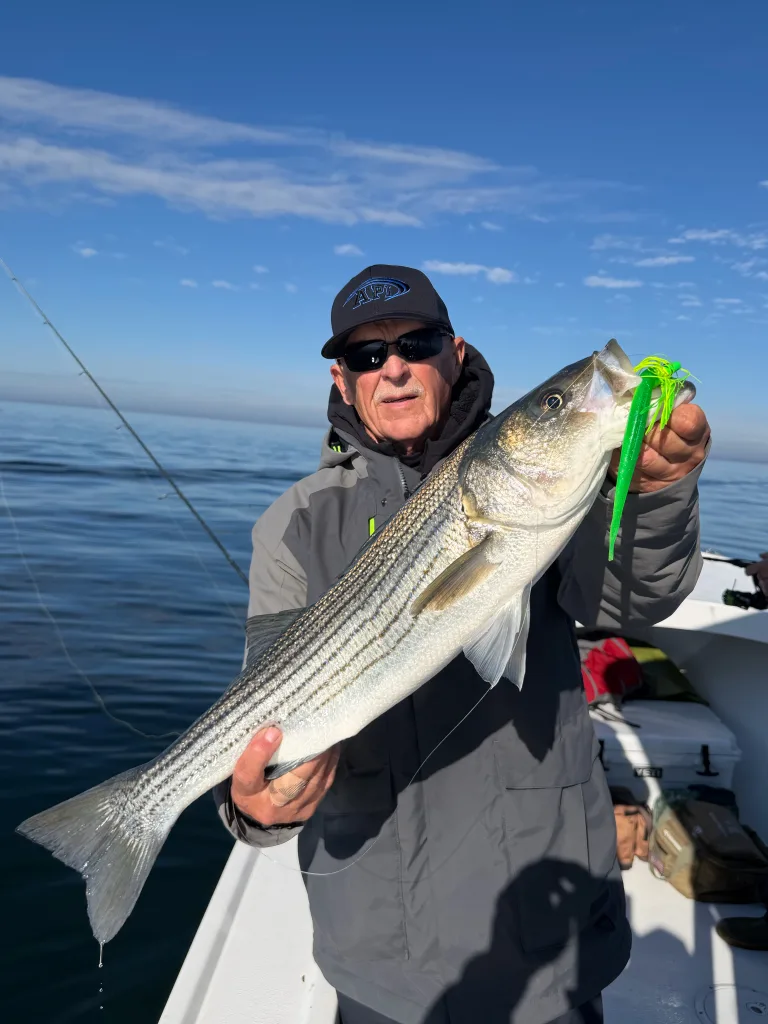
Captain Jamie Clough of Eastern Shore Light Tackle Charters said the wind has kept him at the dock lately, so it has been a few days since he’s been out chasing striped bass,. However, prior to the blow the fishing was outstanding, and he is confident the bite will pick up right where it left off as conditions settle. The recent wind and cooler weather have triggered more fish to move out of the rivers, hot on the tails of peanut bunker and silversides. Those fish that recently exited the bay tributaries are moving very quickly, so the skipper had been covering some ground to locate bait and bass. When they found the fish, his charters continued to put up good numbers of 20-inch-class striper on large paddletails and soft-plastic jerkbaits, often rigged on skirted jigheads to amplify their profiles. To book a trip, head to the ES Light Tackle Charters Facebook page for rates and contact info, and inquire about their upcoming availability for striped bass charters.
On The Water columnist Tim Hesford, at Anglers Sport Center in Annapolis, reported: “Local water temps have been bouncing between 52 to 57 degrees this past week and reports on the striped bass front have been spotty. Some of the folks finding success have been putting in a lot of miles to locate feeding fish. There seems to be no shortage of silversides and peanut bunker in the main Bay and hopefully, when the weather stabilizes after the incoming storm, the stripers will fall into a more consistent pattern. Fortunately, pickerel have been biting well in the local rivers and white perch and yellow perch are still available as they make their way to wintering grounds.”
From Ocean City, Taylor Bakke of Always Bent Fishing OC said the bluefin have arrived in stronger numbers this week. There are plenty of fish showing within 4 to 8 miles of the local beaches while others seem to be further offshore, around 15 to 20 miles. There have been quite a few tuna caught since last week, and the boats headed further out to the canyons are still coming back to port with big swordfish. The striped bass fishing, Bakke said, has plateaued a bit after last week’s push of migratory fish in the Ocean City area, but local anglers can expect another wave of fish over the coming week following Tuesday’s supermoon and a big storm that’s been moving up the coast. Check out the Always Bent YouTube Channel and Instagram page to stay in the loop with the local fishing scene, from inshore bites to offshore tournament coverage and more.
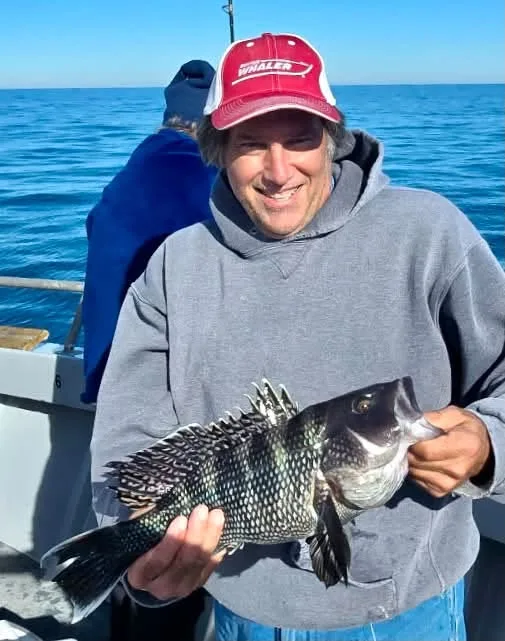
Captain Monty Hawkins of Morning Star Fishing out of West Ocean City was able to sneak in a few offshore sea bass trips late last week which resulted in some decent sea bass fishing and a nice showing of scup to round out the daily catch. Last Thursday’s trip started with loads of short fish, but after a quick move to a nearby wreck, anglers around the rail were into steady numbers of keepers. Eight anglers caught their personal limits and everyone else had double-digit catches. It wasn’t until the next day, Friday 11/20, that scup (thankfully) rejoined the party. There were loads of short sea bass mixed in with the keepers, and anglers on the rail had a tough time keeping the throwbacks off their hooks. Scup, in the skipper’s words, “saved the day, really.” They caught plenty of good-sized porgies for the table, which more than made up for the lack of keeper sea bass. Finally, last Saturday brought the toughest bite of week. The captain had to move around quite a bit to keep rods bent and fish in the box. The high hook for the day had 9 keeper sea bass and one scup. Captain Monty is currently taking some well-deserved time off to be with family, but the Morning Star will continue to fish for sea bass (when conditions allow) until the season ends in December. Call 443-235-5577 to reserve your spot on the rail and head to their website for more trip information.
Maryland DNR Fishing Report
Maryland DNR Fishing Report is written and compiled by Keith Lockwood, fisheries biologist with the Maryland Department of Natural Resources. Read the full DNR report here.
Middle Bay
Water temperatures in the middle Bay are holding around 56 degrees and a few degrees cooler in the tidal rivers this week. Wind and weather this week could make it difficult to go fishing on the open waters of the bay.
The Bay Bridge has been offering good fishing for striped bass this month and the action continues, it will just be a case of Bay conditions. The striped bass are holding tight to the deep bridge piers and the rock piles. Jigging has been the most popular way to fish lately, although some anglers are drifting cut bait, live eels and small white perch to the pier bases.
Reports this week from anglers tell of striped bass being on the move. What was a hotspot three days ago is barren of striped bass on the next trip. One key observation that keeps repeating itself is that the best jigging and casting action to breaking striped bass is occurring early in the morning at dawn, and the last hour or so before dark. The old “early bird gets the worm” adage comes to mind. Trolling tends to offer better success during the daytime hours when trolling deep with umbrella rigs or tandem-rigged bucktails along the major channel edges.
The lower Choptank River tends to be a focal point for many striped bass anglers, but Eastern Bay is another excellent location to explore. Striped bass action is being noted near the Little Choptank and Taylors Island, the mouth of the Severn and off Kent Island and Thomas Point. Thanksgiving’s rough weather promises to stir the Bay up a bit.
White perch have moved deep at some of the tidal river mouths, and into the bay at some locations. A good depth finder is crucial to finding deepwater lumps and structure where they are stacked up. When found, they can offer some excellent fishing opportunities. Dropper rigs with small jigs or shad darts tipped with grass shrimp or pieces of bloodworm or lug worms. Two-hook Sabiki rigs are also a popular dropper rig to use, or two hook bottom rigs. Using 2-inch jigs on a dropper rig will allow faster unhooking and redeployment when you’re on a school of white perch.
Lower Bay
The story this week is that the striped bass are on the move. Anglers locate a school of baitfish, and it is mayhem for a short while and then they’ve gone somewhere else. They seem to be constantly on the move. The anglers who are casting into breaking fish or jigging have been finding the best opportunities at dawn and after sunset.
The lower Potomac and Patuxent rivers have been a focal point for anglers on the western shore in search of striped bass. Tangier Sound, Hoopers Island, and the mouth of the Nanticoke River offer excellent fishing on the Eastern Shore for those chasing breaking fish or jigging to suspended striped bass.
The striped bass are holding more to the deeper edges of the channels, often at about 25-30 feet. The steeper edges often hold the most promise because currents are swifter there where baitfish get swept along by currents. Striped bass can easily move about in the current and pick off struggling baitfish. juvenile menhaden make up the bulk of the baitfish coming down the rivers, but bay anchovies can still be around, and juvenile American shad and river herring can be part of the mix.
Soft plastic jigs and metal jigs work equally well, but if anglers are using metal jigs, they are urged to replace treble hooks with single inline hooks. It makes unhooking fish to be released easier, and they are a lot gentler on the fish. Catch-and-release fishing is generally safe for the fish this time of the year due to cold and salty water. It is a wonderful time of the year for striped bass anglers, and it is good to see the fish full of color and heavy shoulders.
Blue catfish are holding in the channels of the major tidal rivers this week and waiting for an angler’s cut or scented bait. There are blue catfish populations in every tidal river within the lower Bay, but the tidal Potomac, Patuxent, and Nanticoke rivers are standouts.
Atlantic Ocean and Coastal Bays
Fishing for tautog is good this week at the Ocean City Inlet and the Route 50 bridge area. Most of the tautog being caught are measuring a little short of the required 16 inches but there are some legal-sized fish in the mix. Sand fleas and pieces of crab are the most popular baits.
Striped bass are entertaining anglers casting soft plastic jigs and paddletails around the inlet jetties, docks and piers in the general area. Most of the striped bass fail to meet the 28-inch minimum but there are some being caught within the 28-31 inch slot. The piers of the Verrazano and Route 90 bridges are also excellent places to cast for striped bass.
Anglers headed out to the wreck and reef sites are catching a mix of black sea bass, porgies, and flounder. Limit catches of black sea bass are sparse, but most anglers are catching a good amount. Some charter boats are targeting tautog and doing well.
Bluefin tuna are being caught offshore, and anglers report that the bluefins tend to be finicky about taking lures. Currently bluefin tuna measuring larger than 73 inches must be released. Anglers are still heading out to the canyons and fishing for swordfish in the depths. This deep-water daytime fishery has really evolved due to technology advances – 50 to 60 years ago we did not have strobe lights, advanced power assisted reels, braided line and the depth finder technology available today. Back then, swordfish were usually caught at night at depths of around 200 feet. The past two months have seen some amazing swordfish catches in depths of the offshore canyons.
Maryland DNR Fishing Report is written and compiled by Keith Lockwood, fisheries biologist with the Maryland Department of Natural Resources. Read the full DNR report here.